
Safety
General information, not medical advice
Your prescriber and the leaflet in your pack know your situation. This page does not.
- Follow your prescriber and the leaflet
- Don't start, stop, or change a dose on your own
- Doses and warnings differ by country and product
Accutane Capsule: Uses, Dosage, Side Effects, Precautions and Alternates
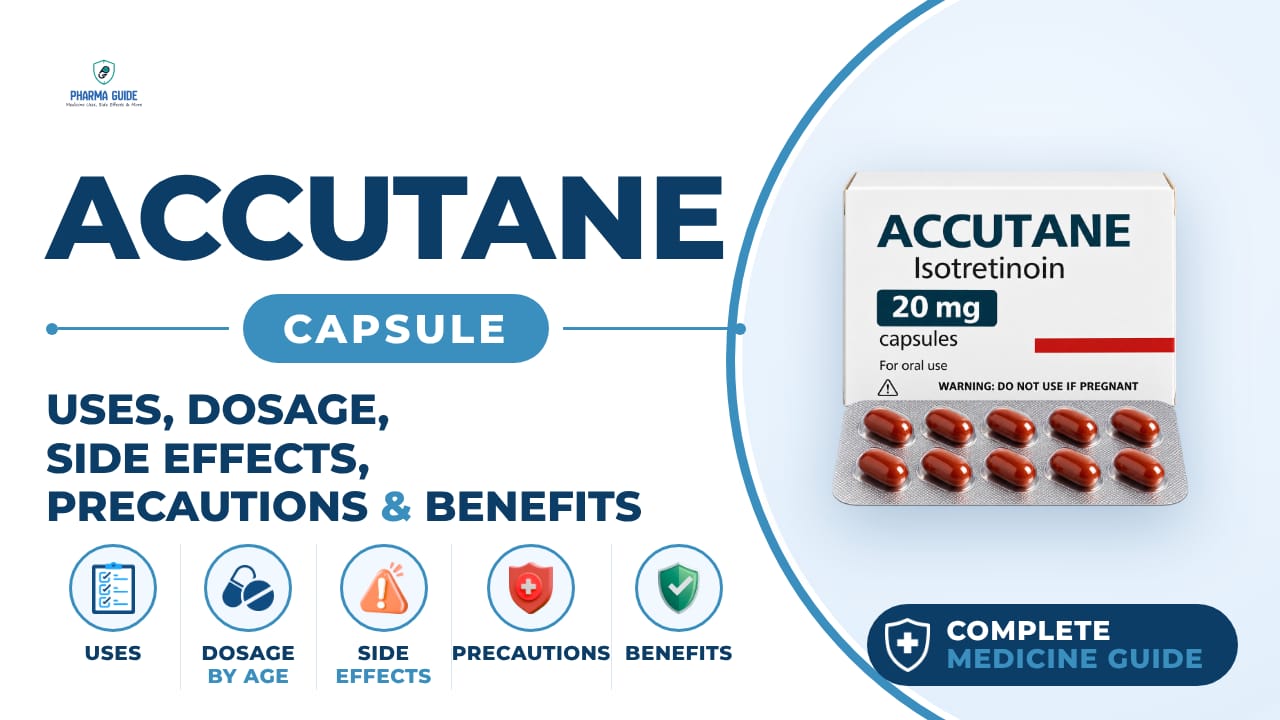
| Generic name | isotretinoin |
|---|---|
| Drug class | retinoid |
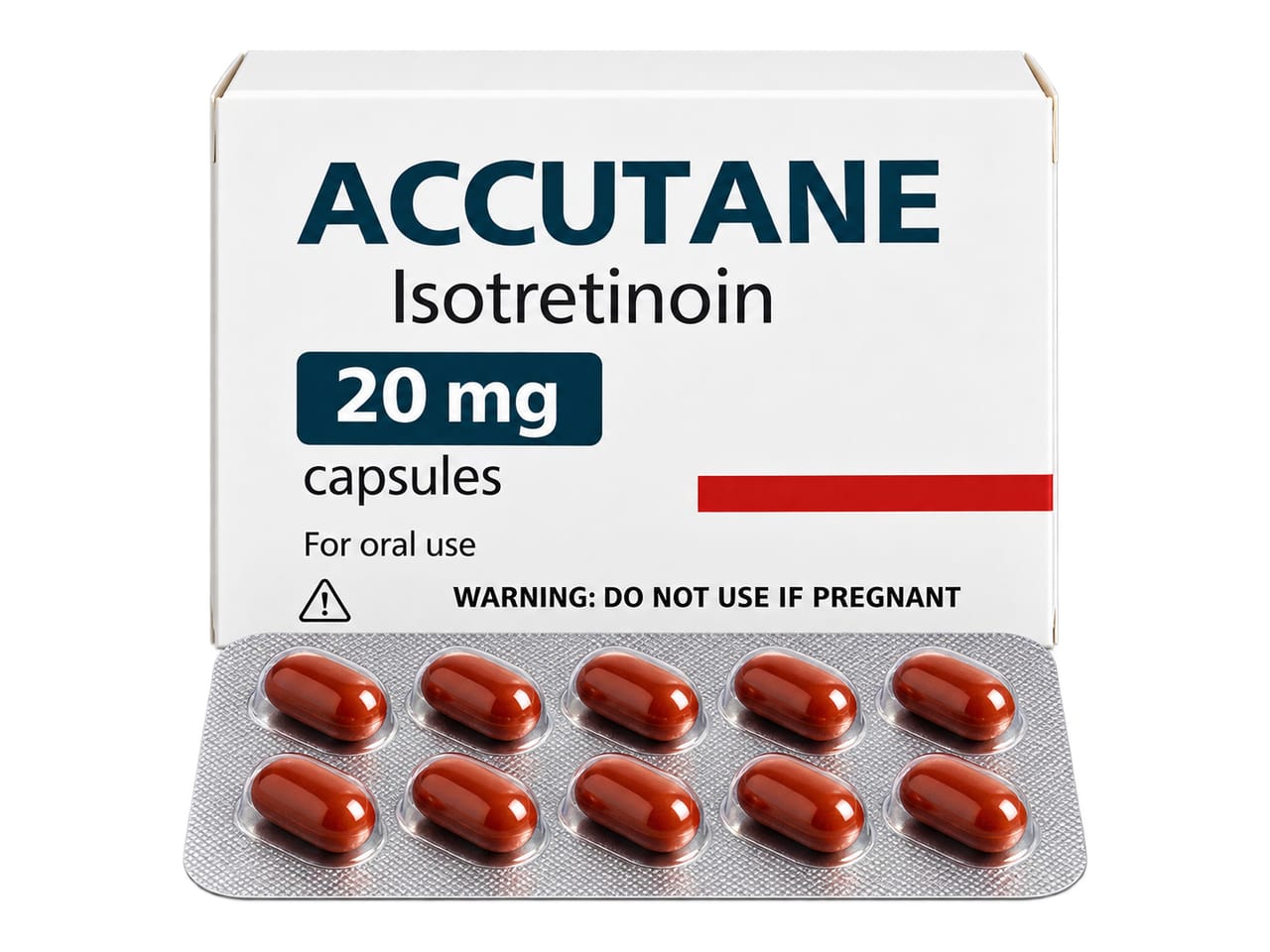
| Forms | Soft gelatin capsules (10 mg, 20 mg, and 40 mg) |
Quick overview
Accutane Capsule (isotretinoin) is a retinoid-class prescription medicine used to treat severe nodular acne that has not improved with other treatments, including antibiotics. It works by reducing oil gland activity and changing how skin cells form. It carries serious risks, including severe birth defects if taken during pregnancy, so it must be used exactly as prescribed and monitored closely by a doctor.
What is Accutane Capsule
Accutane is a prescription medicine related to vitamin A. It is used to treat the most severe type of acne called nodular acne, which does not get better with other acne treatments, including antibiotics.
Accutane Capsule uses
- Treatment of severe nodular acne that has not improved with other treatments, including antibiotics
Benefits of Accutane Capsule
- Significantly decreases sebaceous-gland activity and sebum production
- Helps reduce blockage of hair follicles
- Helps decrease acne-related inflammation
- A prescribed course can produce prolonged improvement in severe acne
How Accutane Capsule works
Accutane reduces the activity of oil (sebaceous) glands in the skin and affects how skin cells form, which helps clear up severe acne. Doctors do not know exactly how it works.
Accutane Capsule dosage
Take this medicine two times a day with a meal, unless your doctor tells you otherwise. Swallow the capsules whole with a full glass of liquid; do not chew or suck on the capsule, to avoid irritating the tube connecting your mouth to your stomach. Taking this medicine without food significantly lowers how much the body absorbs, so always take it with a meal.
If you miss a dose, just skip it — do not take two doses at the same time. Once-daily dosing is not recommended. Your acne may get worse for a short time when you first start treatment; keep taking it unless your doctor tells you to stop.
| Age group | Dose |
|---|---|
| 12–17 Years | 0.5 mg/kg/day initially, adjusted according to response and tolerability |
| Adults (18–64 Years) | 0.5 mg/kg/day initially, commonly adjusted to 0.5–1 mg/kg/day under dermatological supervision |
| Older Adults (65+ Years) | Individualized by a dermatologist, considering overall health and side effects |
Available forms and strengths
- Soft gelatin capsules (10 mg, 20 mg, and 40 mg)
Side effects of Accutane Capsule
Common
- Dry, cracking, or peeling skin
- Dry or inflamed eyes
- Chapped lips
- Dry nose, sometimes with nosebleeds
- Headaches
- Aches and pains in muscles or joints
- Dry mouth
- Increased sensitivity to sunlight
- Trouble wearing contact lenses
- Temporary worsening of acne when starting treatment
Serious
- Birth defects, miscarriage, premature birth, or death of the baby if taken during pregnancy
- Depression, psychosis, and suicidal thoughts or actions
- Increased pressure in the brain (pseudotumor cerebri), which can cause permanent vision loss
- Inflammation of the pancreas (pancreatitis), sometimes fatal
- Liver problems (hepatitis)
- Inflammatory bowel disease
- Severe allergic reactions
- Hearing problems or ringing in the ears, which can be permanent
- Decreased night vision, which may persist
- Serious skin reactions such as severe rash, blistering, or peeling
- Changes in blood fats and cholesterol
- Decreased red or white blood cell counts
- Bone, muscle, or joint problems, including unusual bone fractures or muscle damage
- Blood sugar problems, including diabetes
Warnings and precautions
- This medicine must not be taken during pregnancy because it causes severe birth defects, miscarriage, premature birth, or death of the baby, even with short-term use at any dose.
- Breastfeeding mothers should not take this medicine because it is not known if it passes into breast milk and could harm the baby.
- Liver problems, including hepatitis, have occurred in people taking this medicine, and liver enzyme levels can rise. Liver function should be tested before and during treatment.
- Drinking alcohol should be limited or avoided, as it can raise blood fat levels further and testing for blood fats should be delayed after drinking.
- This medicine can suddenly reduce your ability to see in the dark, so be very careful driving or operating vehicles at night.
- This medicine can cause serious mental health problems, including depression, psychosis, and suicidal thoughts, attempts, or death by suicide, even in people who did not seem depressed before.
- This medicine can raise pressure inside the brain, which can cause permanent vision loss and, rarely, death. Avoid taking tetracycline antibiotics with this medicine, as combining them raises this risk.
- This medicine can cause sudden, serious inflammation of the pancreas, in some cases fatal.
- This medicine has been linked to inflammatory bowel disease, with symptoms that may continue even after stopping treatment.
- Do not take vitamin A supplements while on this medicine, as it can add to side effects.
- Avoid waxing, dermabrasion, or laser skin procedures during treatment and for at least 6 months afterward because of the risk of scarring.
- Do not donate blood while taking this medicine and for one month after stopping, because donated blood could be given to a pregnant person and expose her baby to the medicine.
- This medicine may affect bones, muscles, ligaments and joints, and may stop long bone growth in teenagers who are still growing.
- Never share this medicine with anyone else, even someone with similar symptoms, because of the risk of birth defects and other serious side effects.
Storage
- Store at controlled room temperature (59° to 86°F, 15° to 30°C)
- Protect from light
- Keep this medicine and all medicines out of the reach of children
When to see a doctor
- Stop taking this medicine and get emergency care right away if you develop hives, a swollen face or mouth, or trouble breathing.
- Stop taking this medicine and contact your doctor immediately if you have a bad headache, blurred vision, dizziness, nausea, or vomiting, as these can be signs of dangerous pressure in the brain.
- Stop taking this medicine and call your doctor if you have severe stomach, chest, or bowel pain, trouble or pain swallowing, new or worsening heartburn, diarrhea, rectal bleeding, yellowing of skin or eyes, or dark urine.
- Stop taking this medicine and seek help right away if you feel sad, lose interest in things you enjoy, feel hopeless or worthless, become more irritable or aggressive, or have thoughts of hurting yourself or ending your life.
- Stop taking this medicine and tell your doctor if your hearing gets worse or you notice ringing in your ears, as hearing loss may be permanent.
- Stop taking this medicine and call your doctor right away if you have any problems with your vision, or eye dryness that is painful or does not go away.
- Stop taking this medicine and contact your doctor if you develop fever, rash, or red patches or bruises on your legs.
- Stop taking this medicine and call your doctor right away if you have muscle weakness, which can be a sign of serious muscle damage.
- If you get pregnant, miss a menstrual period, stop using birth control, or have sex without using two forms of birth control while taking this medicine, stop taking it right away and call your doctor immediately.
Alternatives
- Adapalene
- Tretinoin
- Benzoyl Peroxide
Watch the video
FAQs
What is Accutane Capsule used for?
Accutane is used to treat severe nodular acne that has not improved with other treatments, including antibiotics.
How should I take Accutane Capsule?
Take it two times a day with a meal, swallowing the capsules whole with a full glass of liquid. Avoid chewing or sucking the capsule, and do not take it without food since this lowers absorption.
What are the serious risks of Accutane Capsule?
Serious risks include severe birth defects if taken during pregnancy, depression and suicidal thoughts, increased pressure in the brain, pancreatitis, liver problems, inflammatory bowel disease, and hearing or vision problems.
Can I drink alcohol while taking Accutane Capsule?
Alcohol should be limited or avoided because it can further raise blood fat levels, and testing for blood fats should be delayed after drinking.
What should I do if I miss a dose of Accutane Capsule?
If you miss a dose, just skip it and do not take two doses at the same time, since once-daily dosing is not recommended.
General information, not medical advice
Your prescriber and the leaflet in your pack know your situation. This page does not.
- Follow your prescriber and the leaflet
- Don't start, stop, or change a dose on your own
- Doses and warnings differ by country and product
Sources
Video
Related medicines
Differin Gel: Uses, Dosage, Side Effects, Precautions and Alternates
retinoid
Differin Gel (adapalene) treats acne in people 12+. Learn how it works, dosage instructions, side effects, warnings, and skincare alternatives.
Altreno Lotion: Uses, Dosage, Side Effects, Precautions and Alternates
Retinoid
Altreno Lotion (tretinoin 0.05%) treats acne vulgaris including blackheads, whiteheads, and pimples in people 9 and older. Learn dosage, side effects, and