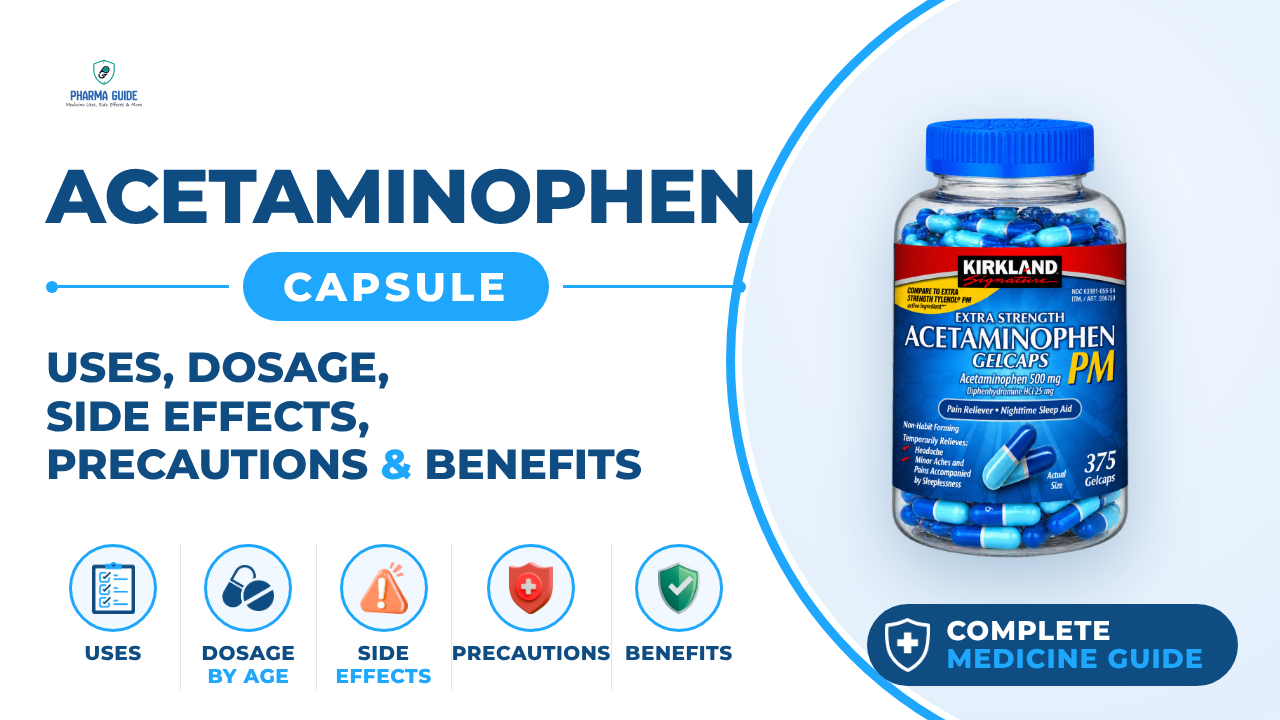
Acetaminophen Capsule: Uses, Dosage, Side Effects, Precautions and Alternates
| Generic name | acetaminophen |
|---|---|
| Drug class | Miscellaneous analgesics (analgesic/antipyretic) |
| Forms | Oral capsule, Oral tablet, Oral caplet, Liquid gel capsule, Oral liquid/suspension, Oral granule (effervescent), Oral powder, Chewable tablet, Orally-disintegrating tablet, Rectal suppository, Intravenous injection (prescription only) |
Quick overview
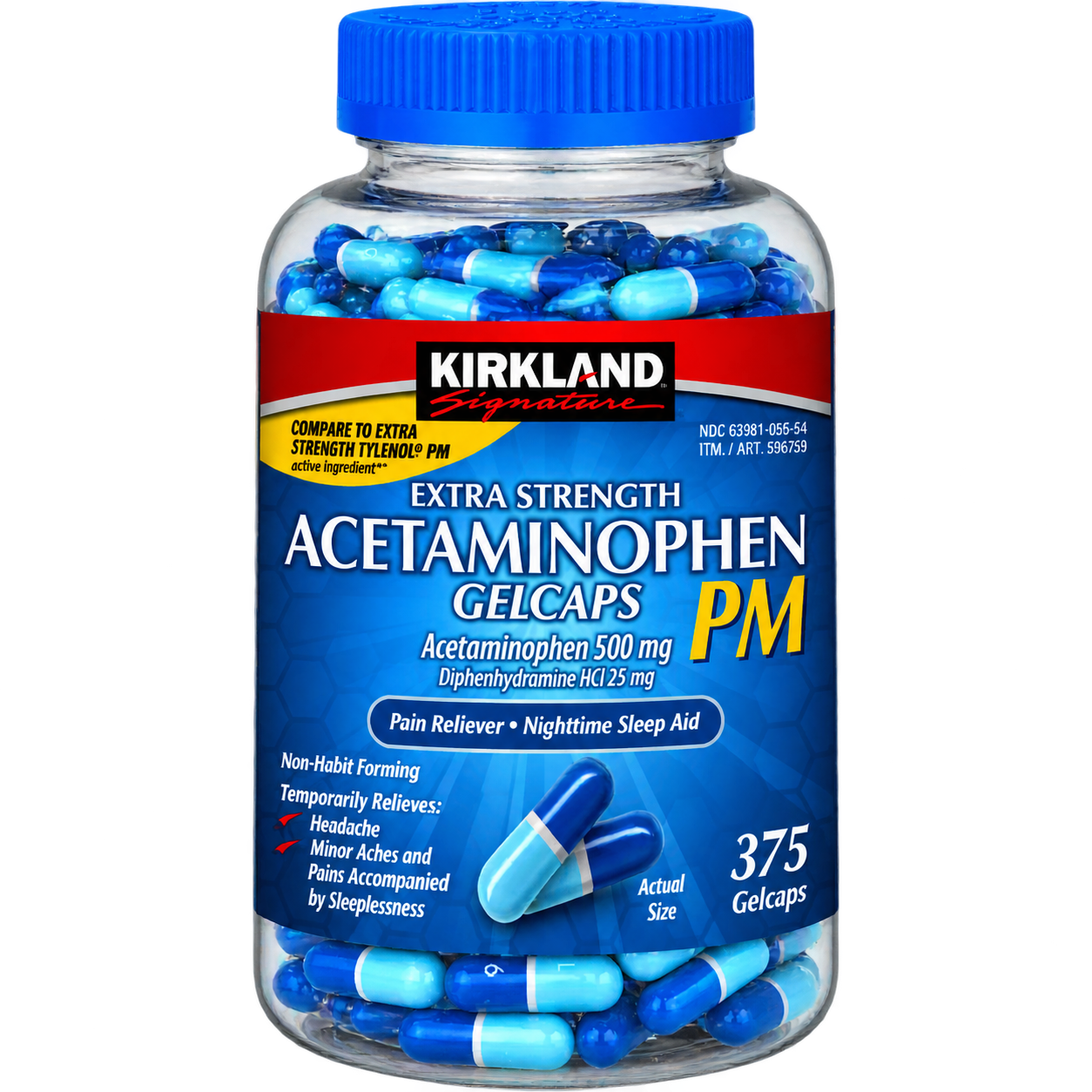
Acetaminophen Capsule contains acetaminophen, an analgesic and antipyretic used for short-term relief of mild to moderate pain and to reduce fever. Outside the United States, Canada, and Japan it is known as paracetamol, and a common brand name is Tylenol. It is generally well-tolerated at recommended doses but can cause serious liver damage if taken in excess or combined with other acetaminophen-containing products.
What is Acetaminophen Capsule
Acetaminophen is a medicine that treats mild to moderate pain and helps reduce fever. Outside of the United States, Canada, and Japan it is called paracetamol. A common brand name is Tylenol.
Acetaminophen Capsule uses
- Short-term relief of minor aches and pains from colds, flu, headache, backache, arthritis, toothache, muscle pain, and menstruation
- Temporarily reducing fever
- Relief of mild to moderate pain in musculoskeletal conditions, earache, low back pain, and menstrual pain
Benefits of Acetaminophen Capsule
- Relieves mild to moderate pain
- Reduces fever
- Generally well-tolerated with few side effects when taken at recommended doses
- Does not cause the stomach irritation, erosions, or bleeding linked with NSAIDs at recommended doses
How Acetaminophen Capsule works
Acetaminophen works mainly in the brain and nervous system. It is thought to raise the body's pain threshold and act on the part of the brain that controls temperature to lower fever. It has little anti-inflammatory effect.
Acetaminophen Capsule dosage
Take this medication by mouth with a glass of water and follow the directions on the label. Take your medication at regular intervals and do not take it more often than directed. Doses may be administered with or without food. Do not use for more than 10 days (5 days for children) unless directed by a doctor. Do not take other medicines that also contain acetaminophen at the same time. For extended release forms, swallow each caplet whole with water on an empty stomach and do not crush, chew, or dissolve it. Talk to your care team about using this medication in children.
| Age group | Dose |
|---|---|
| Under 12 years | Use a weight-based pediatric formulation rather than adult capsules unless specifically prescribed |
| 12–17 years | Usually 325–650 mg every 4–6 hours as needed, depending on weight and product instructions |
| 18–64 years | 325–650 mg every 4–6 hours or 1,000 mg every 6–8 hours, depending on the product |
| 65+ years | Usually the lowest effective dose, with medical advice for regular use |
Available forms and strengths
- Oral capsule
- Oral tablet
- Oral caplet
- Liquid gel capsule
- Oral liquid/suspension
- Oral granule (effervescent)
- Oral powder
- Chewable tablet
- Orally-disintegrating tablet
- Rectal suppository
- Intravenous injection (prescription only)
Side effects of Acetaminophen Capsule
Common
- Nausea
- Stomach pain or upset stomach
- Loss of appetite
- Headache
- Skin rash or itching (occasionally)
- Trouble sleeping
Serious
- Liver damage, especially with overdose or prolonged high-dose use
- Allergic reactions (hives, difficulty breathing, swelling of the face, lips, tongue, or throat)
- Severe skin reactions with redness, blistering, and peeling that can be fatal
- Signs of liver problems such as upper right stomach pain, tiredness, dark urine, clay-colored stools, and jaundice (yellowing of skin or eyes)
Warnings and precautions
- Talk to a health professional before taking acetaminophen if you are pregnant.
- It may be taken during pregnancy for short-term pain and fever and is not likely to harm the baby, but speak with your care team if symptoms do not resolve or you need it often.
- Talk to a health professional before taking acetaminophen if you are breastfeeding. Very low amounts pass into breast milk.
- Acetaminophen can be used in people with chronic kidney disease without a dose change, but long-term use should be supervised by a physician.
- Tell your care team if you have kidney disease.
- Acetaminophen can damage the liver. People with liver disease should consult a physician before use, and those with severe liver disease should not use it.
- Avoid drinking alcohol while taking acetaminophen because it may increase the risk of liver damage.
- Having 3 or more alcoholic drinks every day while taking it can cause severe liver damage.
- Do not take two products that both contain acetaminophen at the same time. Many non-prescription cold, allergy, pain, and sleep medicines contain acetaminophen, so always read labels carefully.
- Do not use acetaminophen if you are allergic to it or any of its ingredients, or if you have severe liver disease.
- Taking more than the recommended dose can cause liver damage, which can be very dangerous even if you do not have symptoms.
- Talk to a doctor or pharmacist before use if you take the blood thinner warfarin or other coumarin anticoagulants.
Storage
- Store at room temperature between 20 and 25 degrees C (68 and 77 degrees F)
- Protect from moisture and heat
- Keep out of the reach of children and pets
- Get rid of any unused medication after the expiration date
- Take unwanted or expired medication to a medication take-back program; if that is not possible, check the label to see if it should be thrown out or flushed, and if unsure ask your care team
- If it is safe to put in the trash, empty the medication out of the container, mix it with cat litter, dirt, or coffee grounds, and put it in the trash
When to see a doctor
- If you take too much acetaminophen, get medical help right away or contact your local poison control center, even if you feel fine. An overdose can be fatal.
- Get emergency medical help if you have signs of an allergic reaction such as hives, difficulty breathing, or swelling of your face, lips, tongue, or throat.
- Stop taking acetaminophen and call your doctor right away if you have skin redness or a rash that spreads and causes blistering and peeling.
- Stop taking acetaminophen and call your doctor at once if you have signs of liver problems such as upper right stomach pain, loss of appetite, tiredness, itching, dark urine, clay-colored stools, or jaundice.
- Stop and talk to a doctor if a sore throat lasts more than 2 days, a fever lasts more than 3 days, pain lasts more than 7 days (5 days in a child), or if you have a rash, ongoing headache, nausea, vomiting, redness, swelling, or new or worsening symptoms.
Alternatives
- Meloxicam
- Celecoxib
- Etoricoxib
- Ketoprofen
- Indomethacin
- Mefenamic Acid
- Aspirin
FAQs
What is Acetaminophen Capsule used for?
It is used for short-term relief of mild to moderate pain, such as headache, backache, toothache, muscle pain, and menstrual pain, and to temporarily reduce fever.
How does Acetaminophen Capsule work?
It works mainly in the brain and nervous system, raising the body's pain threshold and acting on the part of the brain that controls temperature to lower fever. It has little anti-inflammatory effect.
How long can I take Acetaminophen Capsule?
Do not use it for more than 10 days in adults (5 days for children) unless directed by a doctor, and avoid taking other medicines that also contain acetaminophen at the same time.
What are the serious side effects of Acetaminophen Capsule?
Serious side effects include liver damage (especially with overdose or prolonged high-dose use), allergic reactions, severe skin reactions with blistering and peeling, and signs of liver problems like upper right stomach pain, dark urine, and jaundice.
Can I drink alcohol while taking Acetaminophen Capsule?
No, you should avoid alcohol because it may increase the risk of liver damage; having 3 or more alcoholic drinks daily while taking it can cause severe liver damage.
Sources
- Drugs.com - Acetaminophen (https://www.drugs.com/mtm/children-s-tylenol.)
- Cleveland Clinic - Acetaminophen Capsules or Tablets (https://my.clevelandclinic.org/health/drugs/18829-acetaminophen-capsules-or-tablets)
- TYLENOL Full Prescribing Information, McNeil Consumer Healthcare (https://pdf.hres.ca/dpd_pm/00062135.PDF)
Video