
Safety
General information, not medical advice
Your prescriber and the leaflet in your pack know your situation. This page does not.
- Follow your prescriber and the leaflet
- Don't start, stop, or change a dose on your own
- Doses and warnings differ by country and product
Achromycin Ointment: Uses, Dosage, Side Effects, Precautions and Alternates
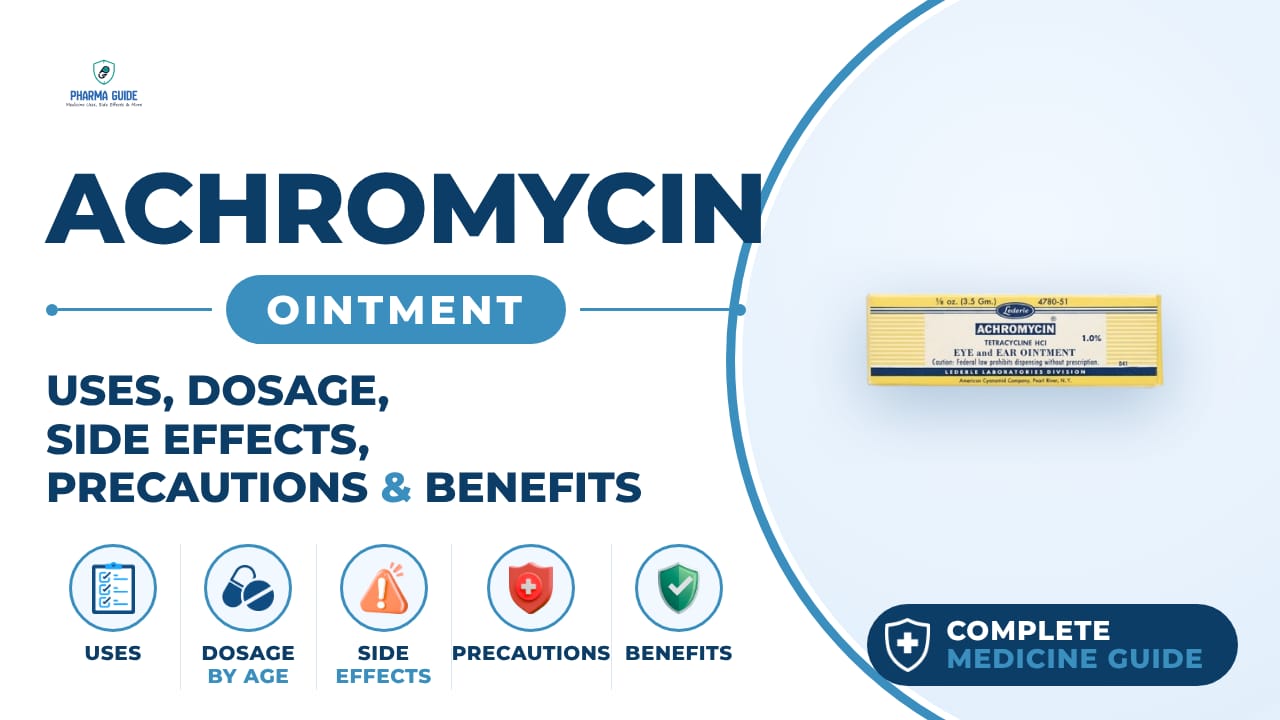
| Generic name | Tetracycline |
|---|---|
| Drug class | Tetracycline antibiotic |
| Forms | Capsule, Tablet, Powder for suspension, Syrup |

Quick overview
Achromycin Ointment contains tetracycline, an antibiotic from the tetracycline class. It is used to treat infections caused by certain bacteria, and in ointment form it may help control susceptible bacteria on the skin and support healing. The dosage for this ointment form is typically a thin layer applied one to three times a day in adults and seniors, and it is not recommended for those under 18. As with other tetracycline products, it carries precautions around sun sensitivity, pregnancy, and use in young children.
What is Achromycin Ointment
Achromycin is a brand name for tetracycline, an antibiotic used to treat infections caused by certain bacteria. Source documents describe the oral capsule form and a 3% ointment that has been studied for use after gum surgery, but do not describe an Achromycin ointment product intended for general use.
Achromycin Ointment uses
- Bacterial infections
- Pneumonia
- Gonorrhea
- Syphilis
- Brucellosis
- Chlamydia
- Severe acne
- Bronchitis
- H. Pylori infection
- Psittacosis
- Epididymitis
- Infections from tick bites, including Rickettsial diseases
- Certain sexually transmitted infections
- Respiratory tract infections such as bronchitis, pneumonia, or sinusitis
- Certain eye infections (trachoma, inclusion conjunctivitis)
- Plague
- Cholera
- Anthrax
- Certain infections spread from animals
- Certain infections when penicillin cannot be used
- Specific infections caused by parasites
Benefits of Achromycin Ointment
- Helps control susceptible bacteria on the skin.
- Helps prevent infection in minor skin injuries.
- Supports healing by controlling bacterial infection.
- Helps reduce infection-related skin irritation.
How Achromycin Ointment works
Tetracycline works by blocking bacteria's ability to make the proteins they need, which stops them from growing.
Achromycin Ointment dosage
This medicine can be taken with or without food, but should not be taken with dairy products or calcium-fortified foods at the same time. Take it with plenty of fluid, as it can irritate the throat. Taking antacids or supplements at the same time can make it not work as well, so ask your doctor about timing. Do not share this medicine with others, and take it exactly as prescribed, since skipping doses or stopping early can make the infection harder to treat later.
If a dose is missed, take it as soon as remembered, but skip it if it is almost time for the next dose; do not double up. Children under 8 years old generally should not take this medicine because it can permanently discolor developing teeth.
| Age group | Dose |
|---|---|
| Under 18 years | Not recommended |
| 18–64 years | Apply a thin layer, 1–3 times/day |
| 65+ years | Apply a thin layer, 1–3 times/day |
Available forms and strengths
- Capsule
- Tablet
- Powder for suspension
- Syrup
Side effects of Achromycin Ointment
Common
- Loss of appetite
- Nausea and vomiting
- Diarrhea
- Rash
- Upset stomach
- Swollen or black hairy tongue
- Mouth sores
- Sore throat
- Dizziness
- Headache
- Difficulty swallowing
- Cramps or burning of the stomach
- Itching of the rectal or genital areas
- Sore mouth or tongue
Serious
- Permanent discoloration of teeth (if taken during tooth development)
- Enamel hypoplasia (affected growth of tooth enamel)
- Antibiotic-associated diarrhea, including watery diarrhea, diarrhea that does not go away, blood in stool, severe stomach cramps, or fever
- Increased pressure around the brain (pseudotumor cerebri) with dizziness, nausea and vomiting, severe headache, or vision changes
- Severe allergic reactions including breathing problems, wheezing, racing heart, fever, swollen lymph nodes, swelling of face/lips/mouth/tongue/throat, trouble swallowing, hives, dizziness, fainting, joint pain
- Photosensitivity (severe sunburn, blistering, or swelling with sun exposure)
- Blurred vision
- Esophagitis or esophageal ulceration
- Yellowing of the skin or eyes (jaundice)
- Hemolytic anemia, thrombocytopenia, neutropenia, eosinophilia
- Liver toxicity or liver failure
- Kidney problems including increased BUN, azotemia, hyperphosphatemia, and acidosis in people with existing kidney disease
- Ringing in the ears or decreased hearing
- Numbness or tingling of the hands or feet
- Chest pain or fast/irregular heartbeat
Warnings and precautions
- This medicine can make your skin much more sensitive to sunlight, leading to severe sunburn, blistering, or swelling, even after short periods outdoors. Protect your skin with sunscreen, hats, and clothing.
- This medicine should not be given to pregnant women or children under 8 because it can permanently discolor developing teeth and affect enamel growth.
- This medicine can cause a serious condition where pressure builds up around the brain, which may lead to permanent vision loss if not caught early.
- This medicine should not be taken with birth control pills containing estrogen, as it may make them less effective and lead to unplanned pregnancy.
- People with kidney disease, ulcerative colitis, gastritis, or sexually transmitted diseases should not take this medicine unless a doctor says it is okay.
- This medicine may cause serious side effects in pregnant women and can harm an unborn baby. Tell your doctor if you are or plan to become pregnant.
- This medicine can pass into breast milk and may cause serious side effects in a nursing baby. Tell your doctor if you are breastfeeding.
- This medicine rarely causes kidney problems, but people with existing kidney disease should use it with caution since it can build up in the body.
- This medicine may have mild effects on the liver in some people, though most will not notice any problems.
- It is not known for certain how alcohol affects this medicine, but heavy drinking can weaken your immune system and make it harder to fight infection.
- This medicine can make you drowsy, so avoid driving or operating heavy machinery until you know how it affects you.
Storage
- Store at room temperature, between 68 F to 77 F (20 C to 25 C)
- It can be exposed to temperatures between 59 F to 86 F (15 C to 30 C) for shorter periods of time, such as when transporting it
- Store in a cool, dry place
- Dispense in a tight, light-resistant container
- Use a child-resistant closure
When to see a doctor
Get medical help right away if you have signs of a severe allergic reaction, such as breathing problems, swelling of the face, lips, or throat, hives, or a fast heartbeat.
Call your doctor right away if you have watery diarrhea that does not go away, blood in your stool, severe stomach cramps, or a new fever, as this can be a sign of a serious gut infection.
Stop taking the medicine and call your doctor right away if you have dizziness, nausea and vomiting, severe headache, or vision changes, as these can be signs of increased pressure around the brain.
Tell your doctor right away if your skin becomes severely sunburned, blistered, or swollen after being in the sun while taking this medicine.
If your child is under 8 years old and taking this medicine, call your doctor right away, since it can cause permanent tooth discoloration.
If you think you have taken too much of this medicine, get medical help right away or contact a poison control center.
Alternatives
- Fucidin Ointment
- Bactroban Ointment
- Tetracycline Ointment
Watch the video
FAQs
What is Achromycin Ointment used for?
It helps control susceptible bacteria on the skin, helps prevent infection in minor skin injuries, and supports healing by controlling bacterial infection.
How is Achromycin Ointment applied?
For adults and seniors, a thin layer is applied one to three times a day. It is not recommended for those under 18 years old.
Can children use Achromycin Ointment?
No, it is not recommended for anyone under 18 years old, and children under 8 generally should not use tetracycline products because it can permanently discolor developing teeth.
Does Achromycin Ointment cause sun sensitivity?
Yes, tetracycline products can make skin much more sensitive to sunlight, leading to severe sunburn, blistering, or swelling, so sunscreen, hats, and protective clothing are recommended.
What are alternatives to Achromycin Ointment?
Alternatives mentioned include Fucidin Ointment, Bactroban Ointment, and Tetracycline Ointment.
General information, not medical advice
Your prescriber and the leaflet in your pack know your situation. This page does not.
- Follow your prescriber and the leaflet
- Don't start, stop, or change a dose on your own
- Doses and warnings differ by country and product
Sources
Video
Related medicines
Demeclocycline Tablet: Uses, Dosage, Side Effects, Precautions and Alternates
Tetracycline antibiotic
Demeclocycline Tablet is a tetracycline antibiotic for infections like Rocky Mountain spotted fever, STIs, and respiratory issues. Learn uses, dosage, and side
Doxy-1 Capsule: Uses, Dosage, Side Effects, Precautions and Alternates
Tetracycline antibiotic
Doxy-1 Capsule (doxycycline) treats bacterial infections, STIs, and prevents malaria. Learn uses, dosage, side effects, and safety precautions.