
Safety
General information, not medical advice
Your prescriber and the leaflet in your pack know your situation. This page does not.
- Follow your prescriber and the leaflet
- Don't start, stop, or change a dose on your own
- Doses and warnings differ by country and product
Acyclovir Eye Ointment: Uses, Dosage, Side Effects, Precautions and Alternates
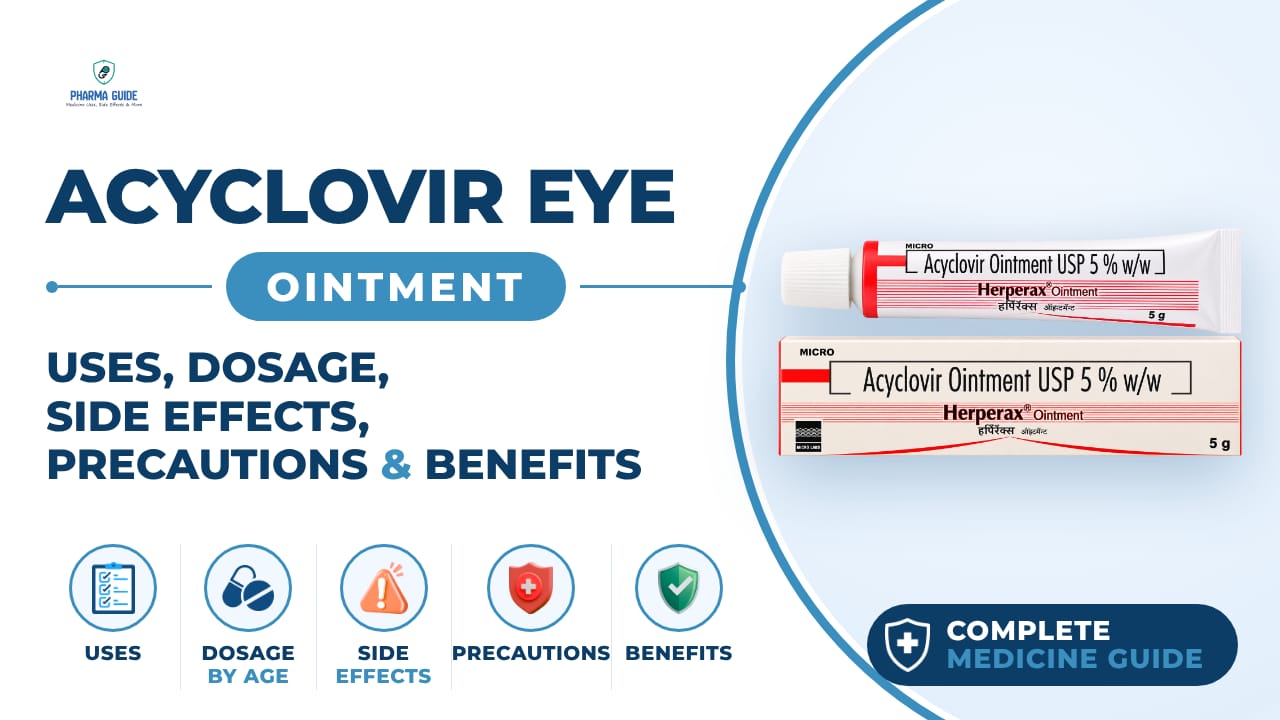
| Generic name | Acyclovir |
|---|---|
| Drug class | Antiviral (nucleoside analogue) |
| Forms | Eye ointment |
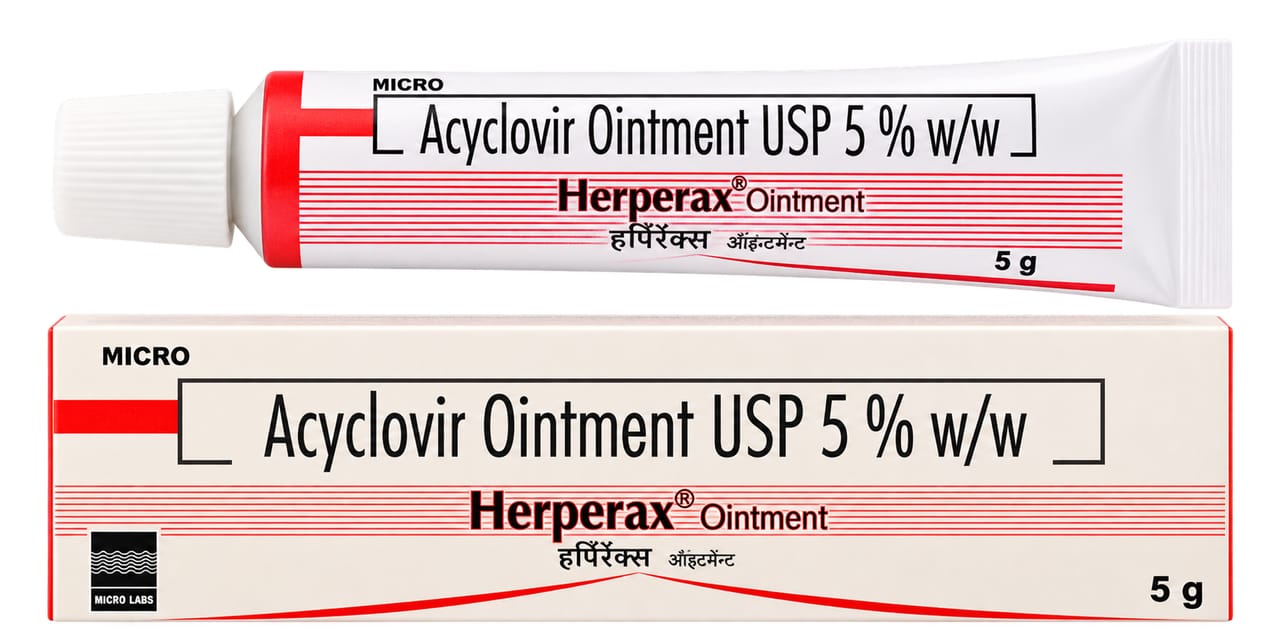
Quick overview
Acyclovir Eye Ointment is a prescription antiviral medicine applied inside the lower eyelid to treat herpes simplex virus infections of the cornea, including dendritic corneal ulcers. It works by blocking the virus from copying its DNA, which helps stop the infection from spreading and allows the corneal sore to heal. It is available as an eye ointment and is used according to a dosing schedule that depends on age.
What is Acyclovir Eye Ointment
Acyclovir eye ointment is a prescription antiviral medicine applied inside the lower eyelid to treat a viral infection of the cornea caused by the herpes simplex virus. Its generic name is Acyclovir, and it belongs to the antiviral (nucleoside analogue) drug class.
Acyclovir Eye Ointment uses
- Treats herpes simplex epithelial keratitis (dendritic corneal ulcer), an infection of the clear front part of the eye caused by herpes simplex virus (HSV-1 and HSV-2)
- Treats acute herpetic keratitis (dendritic ulcers) in patients with herpes simplex virus
Benefits of Acyclovir Eye Ointment
- Specifically targets herpes simplex virus replication
- Helps promote healing of herpetic corneal ulcers
- Provides antiviral activity directly at the affected eye
- May reduce the duration of active superficial corneal infection
How Acyclovir Eye Ointment works
The ointment works by getting inside the virus-infected cells of the cornea and blocking the virus from copying its DNA. Since the virus cannot make new copies of itself, the infection stops spreading and the body can heal the corneal sore.
Acyclovir Eye Ointment dosage
Use only as directed by your eye doctor; do not use more often or for longer than prescribed. Wash your hands with soap and water before and after applying the ointment. Tilt your head back, gently pull the lower eyelid away from the eye to form a small pocket, and place the ointment into that pocket. Close your eyes for one to two minutes after applying, and avoid blinking hard so the ointment is not pushed out. Wipe away any excess ointment with a clean tissue.
Do not let the tip of the tube touch your eye, eyelid, or any other surface, to avoid contaminating the ointment. Keep the tube tip clean and close the tube tightly after each use. Do not wear contact lenses while treating the eye infection.
If you miss a dose, apply it as soon as you remember, but skip it if it is almost time for your next dose - do not double up. Complete the full course of treatment even if your symptoms improve, since stopping early can let the infection come back or become harder to treat.
Studies on children younger than 2 years have not been done, so safety and dosing in this age group have not been established and must be decided by a doctor. No special problems have been found that would limit use of this medicine in elderly patients.
| Age group | Dose |
|---|---|
| Under 2 years | Safety and effectiveness not established under U.S. labeling; specialist-directed dosing required |
| 2–74 years | 1 cm ribbon, 5 times daily until healed; then 3 times daily for 7 days |
| 75 years and older | 1 cm ribbon, 5 times daily until healed; then 3 times daily for 7 days, with appropriate ophthalmic monitoring |
Available forms and strengths
- Eye ointment
Side effects of Acyclovir Eye Ointment
Common
- Mild stinging or burning right after applying
- Redness, itching, pain, swelling, or other irritation of the eye
- Painful irritation of the clear front part of the eye (tiny spots on the cornea)
- Red, watery eyes (conjunctivitis)
- Redness, swelling, or itching of the eyelid
- With prolonged use, tiny spots on the surface of the cornea (punctate keratopathy)
Serious
- Severe or worsening pain in or around the eye
- Sudden vision changes, blurry vision, or increased sensitivity to bright light
- Signs of an allergic reaction such as hives, skin rash, or large swelling of the face, eyelids, lips, tongue, throat, hands, legs, feet, or genitals
Warnings and precautions
- Do not use steroid eye drops while you have an active dendritic ulcer, since they can make the ulcer spread and worsen the infection seriously. Tell your doctor about all other eye medicines you are using.
- This is a prescription eye medicine. Use it only exactly as directed by your eye doctor, and do not self-medicate or reuse an old prescription.
- Do not touch the tip of the ointment tube to your eye, eyelid, or any other surface, and do not share your eye ointment with anyone else, even if they have similar symptoms.
- Serious damage to the eye and possible loss of vision can happen if you use contaminated eye medicine, so keep the container tightly closed and avoid touching the applicator tip to any surface.
- Avoid wearing contact lenses while you have an active eye infection and while using this ointment; your eye doctor will tell you when it is safe to wear them again.
- If you are pregnant or planning to become pregnant, talk to your eye doctor before using this medicine. Studies suggest this medicine poses minimal risk to a breastfeeding infant, but tell your doctor if you are breastfeeding.
- Systemic absorption following ophthalmic application is minimal. No routine renal dosage adjustment is established, and no routine hepatic dosage adjustment is required for ophthalmic acyclovir. No major direct interaction has been established between ophthalmic acyclovir and alcohol.
- This ointment can sometimes cause temporary blurring of vision after you apply it. If this happens, avoid driving or operating machinery until your vision clears.
Storage
- Store the medicine in a closed container at room temperature, away from heat, moisture, and direct light
- Keep from freezing
- Keep out of the reach of children
- Do not keep outdated medicine or medicine no longer needed
- Ask your healthcare professional how you should dispose of any medicine you do not use
When to see a doctor
- Contact your eye doctor right away if eye pain or irritation occurs, or if your symptoms do not improve within a few days or get worse
- Get medical help immediately if you have severe eye pain, sudden vision changes, or intense sensitivity to light
- Contact your doctor if you notice any new or unusual symptoms such as a rash, swelling around the eye, or severe discomfort
- Seek medical help right away if you have signs of an allergic reaction, such as itching, swelling, or difficulty breathing
- Contact your doctor if you accidentally get the ointment in your mouth or swallow it
Alternatives
- Oral Acyclovir
- Ganciclovir Ophthalmic Gel
- Zovirax Eye Ointment
- Avaclyr
Watch the video
FAQs
What is Acyclovir Eye Ointment used for?
It treats herpes simplex epithelial keratitis, including dendritic corneal ulcers caused by herpes simplex virus (HSV-1 and HSV-2).
How does Acyclovir Eye Ointment work?
It enters virus-infected cells of the cornea and blocks the virus from copying its DNA, stopping the infection from spreading and allowing the corneal sore to heal.
What is the usual dosage for Acyclovir Eye Ointment?
For ages 2 to 74, apply a 1 cm ribbon 5 times daily until healed, then 3 times daily for 7 days. The same schedule applies to those 75 and older, with appropriate monitoring. Safety in children under 2 has not been established.
Can I wear contact lenses while using Acyclovir Eye Ointment?
No, you should avoid wearing contact lenses while treating the eye infection; your eye doctor will advise when it is safe to resume wearing them.
What are the common side effects of Acyclovir Eye Ointment?
Common side effects include mild stinging or burning after applying, redness, itching, pain, swelling or irritation of the eye, conjunctivitis, and eyelid irritation.
General information, not medical advice
Your prescriber and the leaflet in your pack know your situation. This page does not.
- Follow your prescriber and the leaflet
- Don't start, stop, or change a dose on your own
- Doses and warnings differ by country and product
Sources
Video
Related medicines
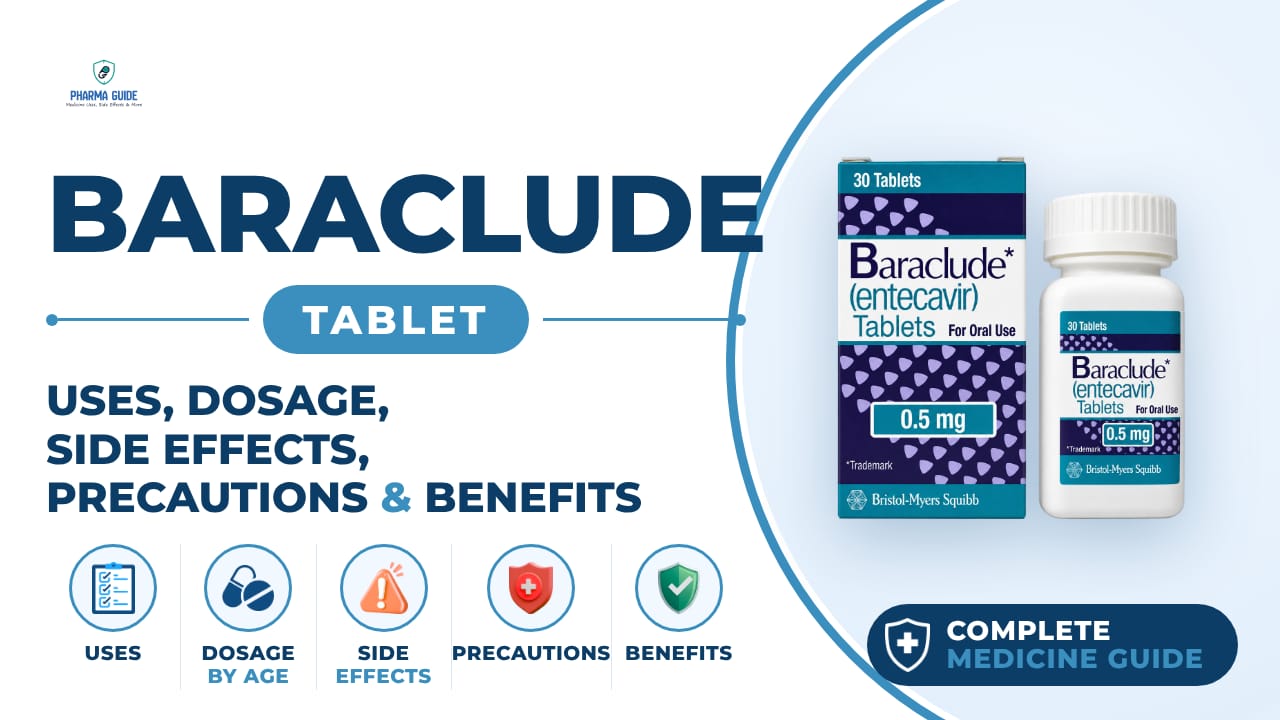
Baraclude Tablet: Uses, Dosage, Side Effects, Precautions and Alternates
Antiviral (nucleoside analogue)
Baraclude Tablet (entecavir) treats chronic hepatitis B in adults with liver damage. Learn how it works, dosage, side effects, and key warnings.
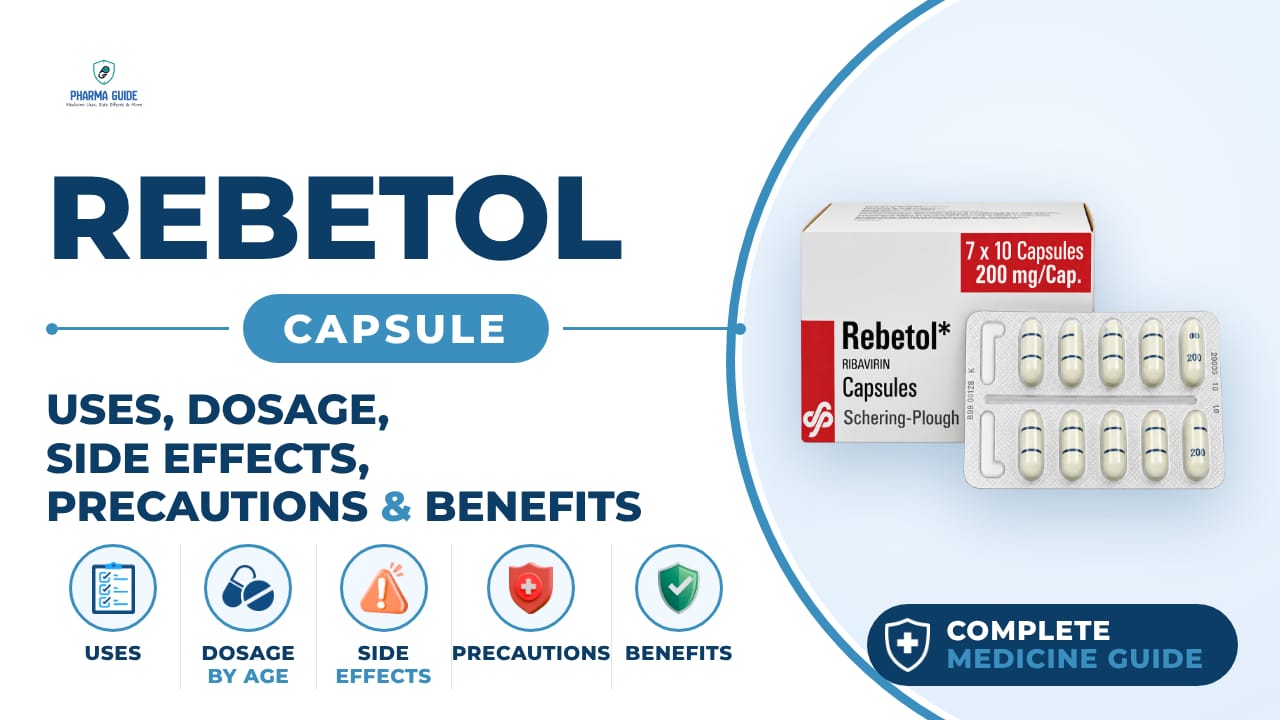
Rebetol Capsule: Uses, Dosage, Side Effects, Precautions and Alternates
Antiviral (nucleoside analogue)
Rebetol Capsule (ribavirin) treats chronic hepatitis C when combined with interferon. Learn its dosage, side effects, pregnancy warnings, and precautions.