
Safety
General information, not medical advice
Your prescriber and the leaflet in your pack know your situation. This page does not.
- Follow your prescriber and the leaflet
- Don't start, stop, or change a dose on your own
- Doses and warnings differ by country and product
Advil Cold and Sinus Tablet: Uses, Dosage, Side Effects, Precautions and Alternates
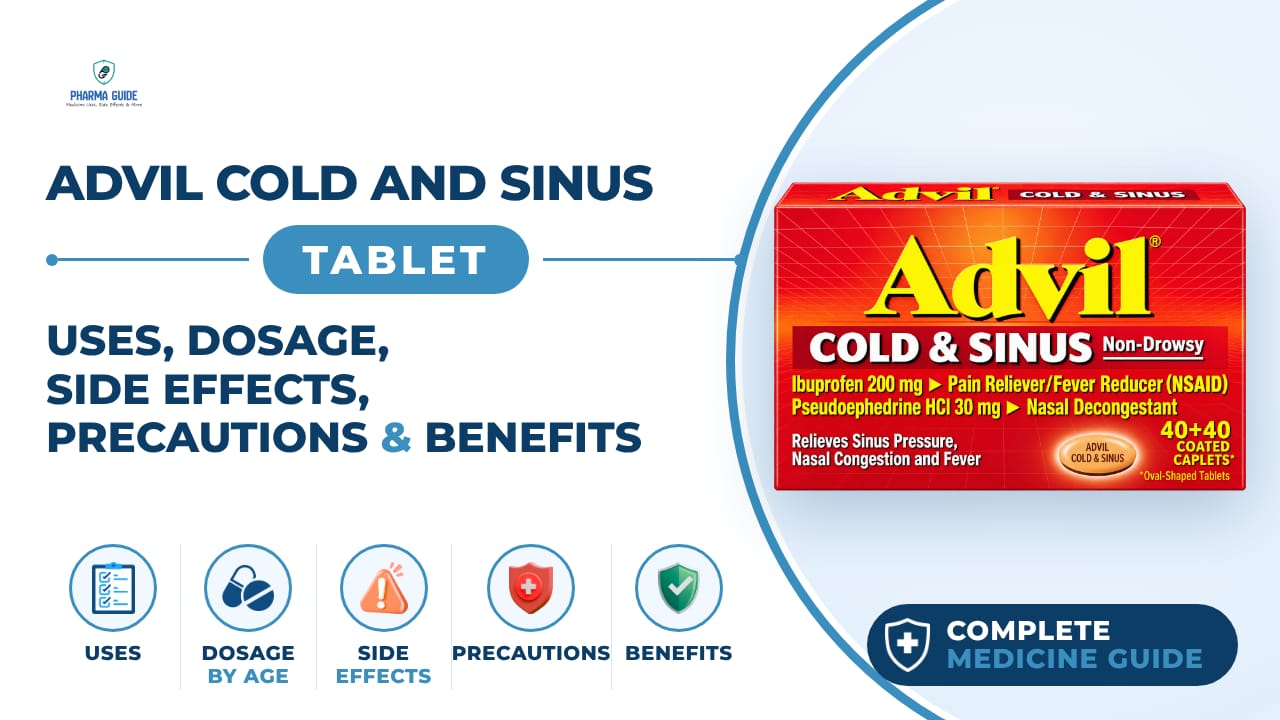
| Generic name | Ibuprofen and pseudoephedrine |
|---|---|
| Drug class | Upper respiratory combinations |
| Forms | Tablet, Caplet, Liqui-Gel |
Quick overview
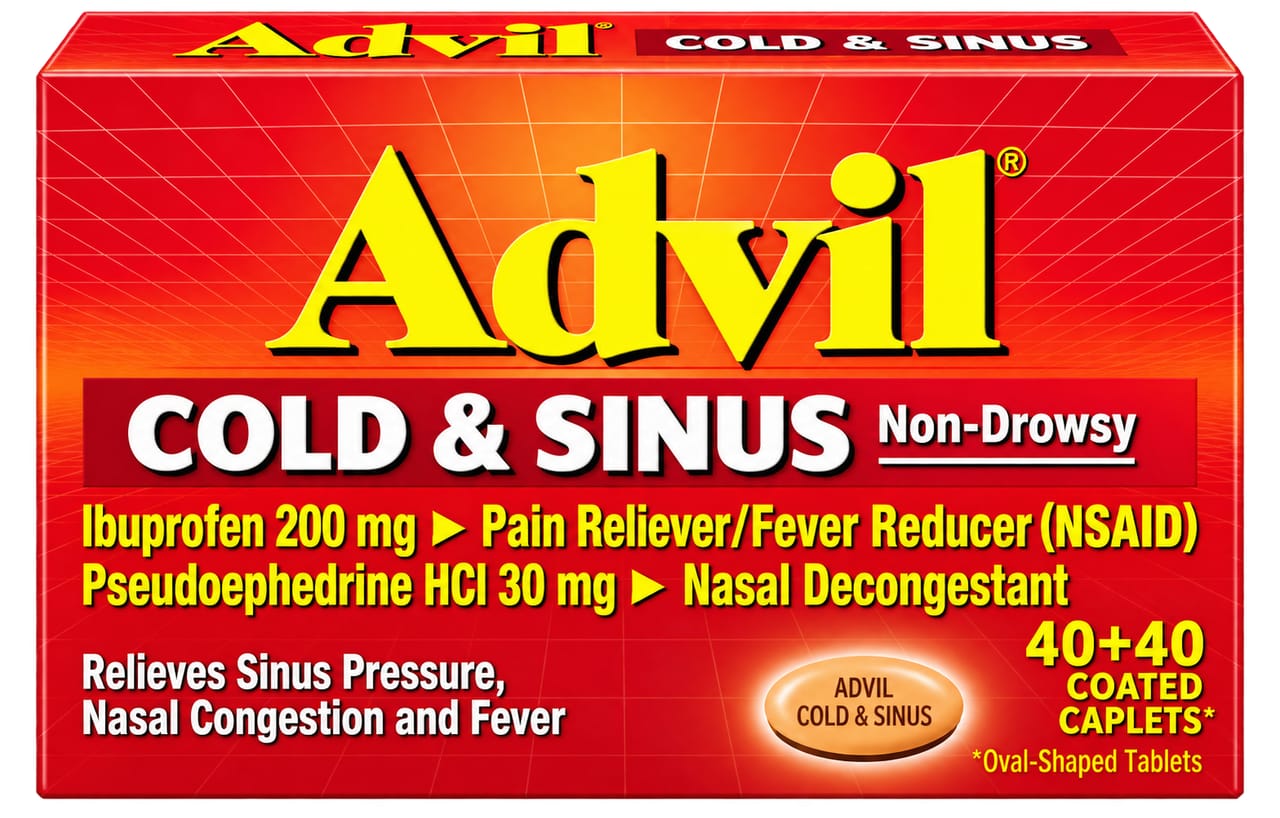
Advil Cold and Sinus Tablet combines ibuprofen, a pain and fever reducer, with pseudoephedrine, a decongestant. It is used to relieve cold, flu, and sinus symptoms such as stuffy nose, sinus congestion, headache, body aches, and fever. It is intended for use in people 12 years and older, and it should be taken with water, with food or after meals to lessen stomach upset.
What is Advil Cold and Sinus Tablet
Advil Cold and Sinus is a combination medicine that contains ibuprofen, a pain and fever reducer, and pseudoephedrine, a decongestant. It is used to treat cold, flu, and sinus symptoms.
Advil Cold and Sinus Tablet uses
- Stuffy nose and sinus congestion
- Cough
- Pain or fever caused by the common cold or flu
- Blocked nose, headache, fever, body aches and pain from colds, sinusitis, or flu
Benefits of Advil Cold and Sinus Tablet
- Relieves sinus pressure by opening airways with a decongestant
- Relieves pain commonly associated with colds and sinus congestion
- Non-drowsy relief of cold and sinus symptoms
- Combines pain relief and nasal decongestion
- Reduces fever
How Advil Cold and Sinus Tablet works
Ibuprofen is a nonsteroidal anti-inflammatory drug that reduces fever and relieves pain, while pseudoephedrine is a decongestant that relieves nasal congestion by reducing swelling in the nose that narrows the airways.
Advil Cold and Sinus Tablet dosage
Take with a glass of water, with food or after meals to lessen stomach upset. Do not take for a cold for more than 7 days or for fever for more than 3 days unless a doctor tells you to. If you have trouble sleeping, take your last dose for the day several hours before bedtime. Do not give this medicine to children younger than 12 years old.
If you miss a dose, skip it if it's almost time for your next dose; do not take two doses at once. Do not take a double dose to make up for a missed dose. Call your doctor if your fever lasts longer than 3 days, if you get new symptoms, or if you don't feel better after using this medicine for 7 days.
| Age group | Dose |
|---|---|
| Under 12 years | Do not use according to the OTC label |
| 12–17 years | 1 caplet every 4–6 hours while symptoms persist; if 1 caplet is insufficient, 2 caplets may be used |
| 18–39 years | 1–2 caplets every 4–6 hours as needed |
| 65–74 years | Label uses the same adult directions, but medical/pharmacist review is advisable because NSAID-related stomach, kidney, heart, and blood-pressure risks increase with age |
Available forms and strengths
- Tablet
- Caplet
- Liqui-Gel
Side effects of Advil Cold and Sinus Tablet
Common
- Diarrhea
- Constipation
- Headache
- Dizziness
- Drowsiness
- Weakness
- Upset stomach, nausea, vomiting, loss of appetite
- Feeling anxious or excited
- Sleep problems (insomnia)
- Flushing (warmth, redness, or tingly feeling)
Serious
- Confusion, severe drowsiness, ringing in your ears, severe dizziness, feeling like you might pass out
- Fast, pounding, or uneven heartbeat
- Easy bruising or bleeding (nosebleeds, bleeding gums)
- A skin rash, no matter how mild
- Signs of stomach bleeding such as bloody or tarry stools, coughing up blood, or vomit that looks like coffee grounds
- Liver problems: loss of appetite, stomach pain, tiredness, itching, dark urine, clay-colored stools, yellowing of skin or eyes
- Kidney problems: little or no urination, swelling in feet or ankles, feeling tired or short of breath
- Nerve problems: fever, headache, neck stiffness, chills, increased sensitivity to light, seizures
- Signs of an allergic reaction: sneezing, runny or stuffy nose, hives, wheezing or trouble breathing, swelling of face or throat
- Signs of a severe skin reaction: fever, sore throat, burning eyes, skin pain, red or purple skin rash with blistering and peeling
- Signs of a heart attack or stroke: chest pain spreading to jaw or shoulder, sudden numbness or weakness on one side of the body, slurred speech, leg swelling, feeling short of breath
Warnings and precautions
- You should not take this medicine if you are pregnant unless your doctor tells you to.
- Taking it during the last part of pregnancy can cause serious heart or kidney problems in the unborn baby and other pregnancy complications.
- Ask a doctor before using this medicine if you are breastfeeding.
- Ask a doctor or pharmacist if this medicine is safe for you if you have kidney disease or liver disease.
- Avoid drinking alcohol while taking this medicine, since it can increase the risk of stomach bleeding.
- Pseudoephedrine can occasionally cause dizziness, nervousness, or sleeplessness; avoid driving if affected.
- This medicine can increase the risk of a fatal heart attack or stroke, even in people with no known risk factors. Do not use it right before or after heart bypass surgery.
- This medicine can cause stomach or intestinal bleeding, which can happen without warning and can be fatal, especially in older adults.
- Do not use this medicine if you've ever had an asthma attack or severe allergic reaction after taking aspirin or another NSAID.
- Do not use this medicine if you have taken an MAO inhibitor in the last 14 days, as a dangerous drug interaction could occur.
- Do not give this medicine to a child younger than 12 years old.
- A severe skin reaction called DRESS syndrome has been reported with NSAIDs like this one. Some cases have been fatal or life-threatening, with symptoms such as fever, rash, swollen lymph nodes, and facial swelling.
- Taking an overdose of this medicine can damage your stomach or intestines.
Storage
- Store at or below 25°C
- Protect from light and exposure to air
- Store in the original package
- Do not use this medicine after the expiry date shown on the carton
- Store all medicines out of reach of children
- Return all unused medicine to your pharmacist
- Do not dispose of unused medicine in drains or sewerage systems (e.g. toilets)
When to see a doctor
- Get emergency medical help if you have signs of an allergic reaction such as sneezing, runny or stuffy nose, hives, wheezing or trouble breathing, or swelling in your face or throat, or signs of a severe skin reaction like fever, sore throat, burning eyes, or skin rash with blistering and peeling.
- Get emergency medical help if you have signs of a heart attack or stroke, such as chest pain spreading to your jaw or shoulder, sudden numbness or weakness on one side of your body, slurred speech, leg swelling, or feeling short of breath.
- Stop using this medicine and call your doctor right away if you have confusion, severe drowsiness, ringing in your ears, severe dizziness, or feel like you might pass out.
- If you think you have taken too much of this medicine, get emergency medical help or contact a poison control center right away.
- Stop taking this medicine and get medical help right away for symptoms such as fainting, facial swelling, fast or irregular breathing, shortness of breath, chest pain, wheezing, fast or irregular heartbeat, unusual flushing of the skin, or swelling of the eyelids, face, mouth, or tongue.
- Call your doctor if your fever lasts longer than 3 days, if you get new symptoms, or if you don't feel better after using this medicine for 7 days.
Alternatives
- Ibuprofen alone
- Pseudoephedrine alone
- Saline nasal spray
- Acetaminophen-based cold products
Watch the video
FAQs
What is Advil Cold and Sinus Tablet used for?
It relieves stuffy nose, sinus congestion, headache, body aches, and fever caused by the common cold, flu, or sinusitis.
What are the active ingredients in Advil Cold and Sinus Tablet?
It contains ibuprofen, a pain and fever reducer, and pseudoephedrine, a decongestant.
How should Advil Cold and Sinus Tablet be taken?
Take it with a glass of water, with food or after meals to lessen stomach upset, and avoid taking it for a cold for more than 7 days or for fever for more than 3 days unless a doctor advises otherwise.
Can children take Advil Cold and Sinus Tablet?
No, this medicine should not be given to children younger than 12 years old.
What are the serious side effects of Advil Cold and Sinus Tablet?
Serious side effects include signs of stomach bleeding, fast or uneven heartbeat, severe dizziness, liver or kidney problems, allergic reactions, and severe skin reactions.
General information, not medical advice
Your prescriber and the leaflet in your pack know your situation. This page does not.
- Follow your prescriber and the leaflet
- Don't start, stop, or change a dose on your own
- Doses and warnings differ by country and product
Sources
Video
Related medicines
NyQuil Liquid: Uses, Dosage, Side Effects, Precautions and Alternates
Upper respiratory combinations
NyQuil Liquid eases cold and flu symptoms like fever, cough, congestion, and sore throat. Learn dosage, side effects, and safety warnings before use.
DayQuil Liquid: Uses, Dosage, Side Effects, Precautions and Alternates
Upper respiratory combinations
DayQuil Liquid relieves daytime cold and flu symptoms like fever, cough, and congestion without drowsiness. Learn dosage, side effects, and warnings.