
Safety
General information, not medical advice
Your prescriber and the leaflet in your pack know your situation. This page does not.
- Follow your prescriber and the leaflet
- Don't start, stop, or change a dose on your own
- Doses and warnings differ by country and product
Amethia Tablet: Uses, Dosage, Side Effects, Precautions and Alternates
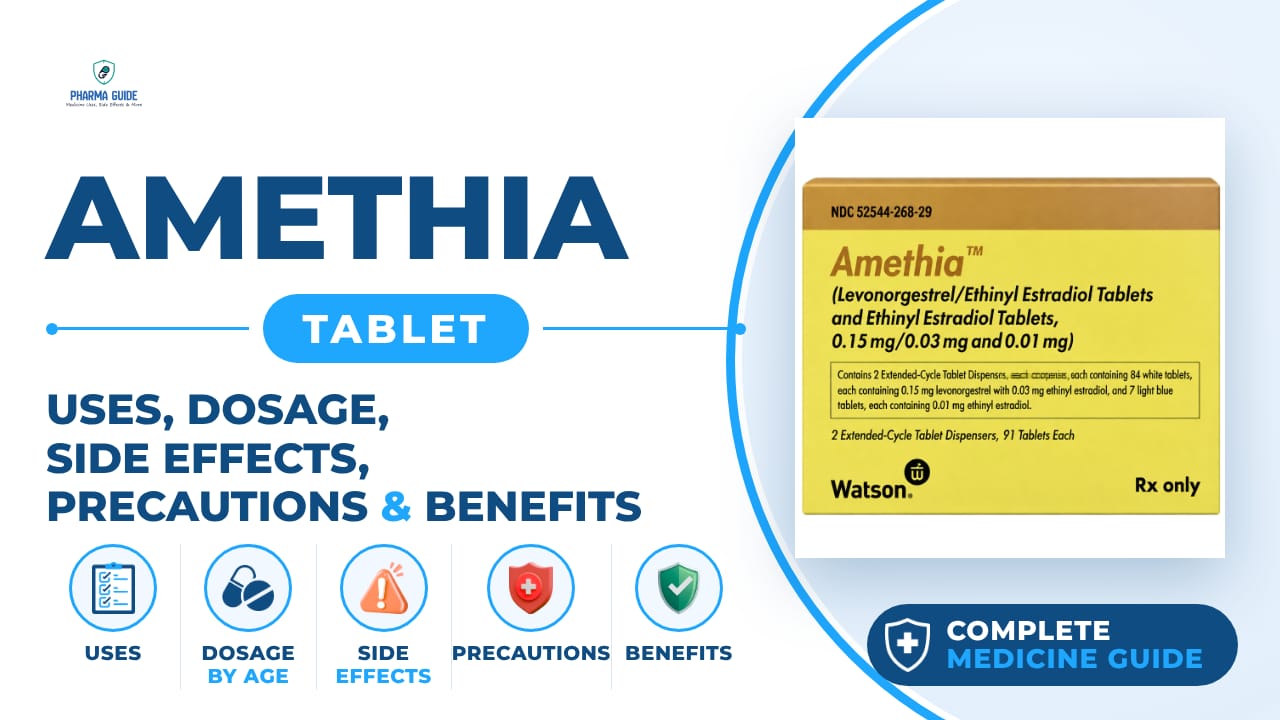
| Generic name | levonorgestrel and ethinyl estradiol |
|---|---|
| Drug class | Contraceptives |
| Forms | Tablet, Tablet, Chewable |
Quick overview
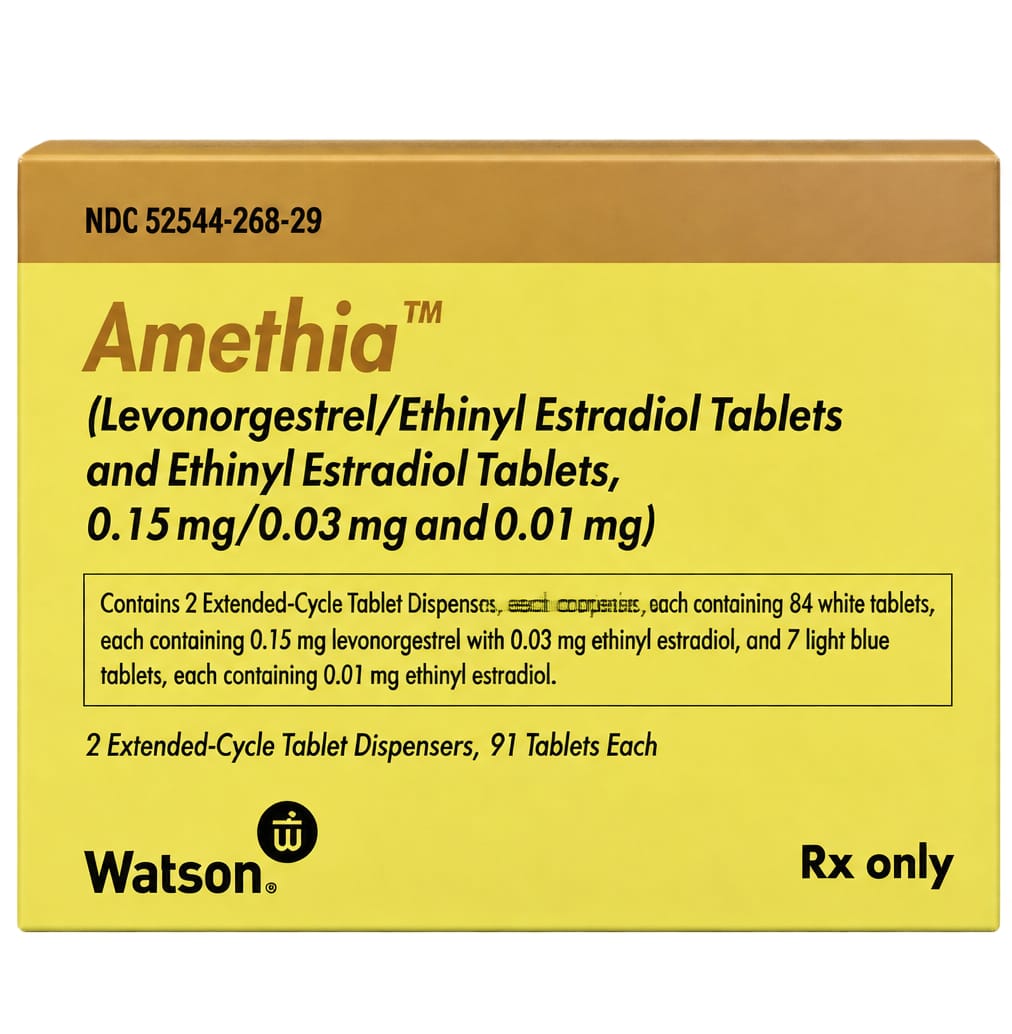
Amethia Tablet contains levonorgestrel and ethinyl estradiol and belongs to the contraceptive class of medicines. It is a combined oral contraceptive used to prevent pregnancy, and it may also help regulate periods, reduce blood loss and cramping, lower the risk of ovarian cysts, and improve acne. It works by stopping ovulation, thickening cervical mucus, and changing the uterine lining. It must be taken exactly as directed, and it carries important warnings, including risks related to smoking and blood clots.
What is Amethia Tablet
Amethia is a combined oral contraceptive (birth control pill) that contains two hormones, a progestin (levonorgestrel) and an estrogen (ethinyl estradiol). It is used to prevent pregnancy.
Amethia Tablet uses
- Prevent pregnancy
- May make periods more regular
- May decrease blood loss and painful periods
- May decrease risk of ovarian cysts
- May help treat acne
Benefits of Amethia Tablet
Besides preventing pregnancy, birth control pills may make your periods more regular, decrease blood loss and painful periods, decrease your risk of ovarian cysts, and also treat acne.
How Amethia Tablet works
Amethia works mainly by stopping the ovaries from releasing an egg each month. It may also thicken cervical mucus so sperm cannot easily reach an egg, and change the lining of the uterus so a fertilized egg is less likely to implant.
Amethia Tablet dosage
Take one pill by mouth at the same time every day so no more than 24 hours pass between doses. Follow the pack's instructions to find the first tablet and take the tablets in the correct order without skipping any. Begin taking the medicine on the first Sunday after your period starts, or that same day if your period begins on a Sunday.
Take the active (hormone) tablets in the pack for the scheduled number of days in a row, followed by the inactive or estrogen-only tablets for the remaining days of the cycle, then start a new pack the day after finishing. Use a backup, non-hormonal method of birth control, such as a condom, spermicide, or diaphragm, for the first 7 days of your first cycle.
If you vomit or have diarrhea after taking a pill, use a backup form of birth control until you check with your doctor, since this can affect how well the medicine works. Taking the pill after your evening meal or at bedtime may help if you have stomach upset or nausea.
Do not change your starting schedule on your own; talk with your doctor if the schedule is not convenient. This medicine should not be used before a girl has started having her period.
| Age group | Dose |
|---|---|
| Under 18 years | 1 tablet once daily in postpubertal adolescents; not indicated before menarche |
| 18–64 years | 1 white tablet once daily for 84 days, followed by 1 light-blue tablet once daily for 7 days |
| 65+ years | Not generally indicated; safety/benefit should be assessed by a doctor |
Available forms and strengths
- Tablet
- Tablet, Chewable
Side effects of Amethia Tablet
Common
- Spotting or bleeding between periods
- Nausea
- Breast tenderness
- Headache
- Weight gain or weight changes
- Bloating or fluid retention
- Acne
- Mood changes
- Decreased sex drive
- Blotchy darkening of skin, especially on the face
- Swelling of the ankles or feet
- Problems tolerating contact lenses
Serious
- Breast lumps
- New or worsening depression, or thoughts of harming yourself
- Severe stomach or abdominal pain
- Unusual vaginal bleeding, such as continuous spotting, sudden heavy bleeding, or missed periods
- Dark urine or yellowing of the eyes or skin
- Chest, jaw, or left arm pain
- Confusion or trouble speaking
- Sudden dizziness or fainting
- Pain, swelling, or warmth in the groin or calf
- Shortness of breath or rapid breathing
- Sudden, severe headache unlike your usual headaches
- Weakness on one side of the body
- Sudden vision changes, blurred vision, or loss of eyesight
- Signs of a serious allergic reaction, such as rash, swelling of the face or throat, severe dizziness, or trouble breathing
- High blood pressure
Warnings and precautions
- This medicine should not be used during pregnancy, because it will not treat or protect an existing pregnancy and could harm an unborn baby. If you think you might be pregnant, contact your doctor right away.
- A small amount of this medicine passes into breast milk and may affect a nursing baby. It can also reduce how much breast milk you make. Talk to your doctor before breastfeeding while using this medicine.
- Tell your doctor if you have kidney disease, since it may need to be considered before you use this medicine.
- This medicine should not be used if you have liver disease or liver tumors. Stop the medicine if you develop yellowing of the skin or eyes, since this can be a sign of a liver problem.
- Do not use if pregnant or if pregnancy is suspected. Do not use if over 35 and smoking, because the risk of serious cardiovascular events increases. Avoid if you have a history of blood clots, DVT, pulmonary embolism, stroke, or coronary artery disease.
- Avoid with uncontrolled high blood pressure. Do not use with current or previous hormone-sensitive breast cancer unless specifically directed by a specialist. Avoid in active liver disease or liver tumors. Migraine with aura or significant neurological symptoms requires medical evaluation before use. Unexplained or undiagnosed abnormal vaginal bleeding should be evaluated before starting.
- Smoking cigarettes while taking this medicine greatly increases the risk of serious heart and blood vessel problems, including heart attack, stroke, and blood clots. This risk is higher with age, especially over 35, and with more cigarettes smoked. Women who use this medicine should be strongly urged not to smoke.
- This medicine should not be combined with certain hepatitis C medicines that contain ombitasvir, paritaprevir, and ritonavir, with or without dasabuvir, because this combination can raise liver enzyme levels.
- This medicine does not protect against HIV or other sexually transmitted infections, and it should not be used as emergency contraception.
- Using this medicine can raise the risk of blood clots, which can lead to serious problems such as heart attack or stroke.
- This medicine may raise the risk of certain cancers of the breast or reproductive organs, and it should not be used by anyone who has or has had breast cancer or another hormone-sensitive cancer.
- This medicine can increase the risk of gallbladder disease.
- This medicine can cause dark, blotchy patches on the skin (melasma), which can be made worse by sun exposure. Limit time in the sun, avoid tanning beds and sunlamps, and use sunscreen and protective clothing.
Storage
- Store the medicine in a closed container at room temperature, away from heat, moisture, and direct light.
- Keep from freezing.
- Keep out of the reach of children.
- Do not keep outdated medicine or medicine no longer needed.
- Ask your healthcare professional how you should dispose of any medicine you do not use.
- Store at room temperature away from light and moisture. Do not store in the bathroom.
When to see a doctor
Get medical help right away if you have chest, jaw, or left arm pain, confusion, sudden dizziness or fainting, pain or swelling in the groin or calf, trouble speaking, shortness of breath or rapid breathing, sudden severe headache, unusual sweating, weakness on one side of the body, or sudden vision changes — these can be signs of a serious blood clot.
Call your doctor right away if you notice breast lumps, new or worsening depression, severe stomach or abdominal pain, unusual changes in vaginal bleeding such as continuous spotting, sudden heavy bleeding, or missed periods, dark urine, or yellowing of the eyes or skin.
Get medical help right away if you notice signs of a serious allergic reaction, such as rash, itching or swelling of the face, tongue, or throat, severe dizziness, or trouble breathing.
Call your healthcare provider right away if you have persistent leg pain, sudden shortness of breath, sudden partial or complete blindness, severe chest pain, a sudden severe headache unlike your usual headaches, or weakness, numbness, or trouble speaking.
Alternatives
- Seasonale
- Seasonique
- Jolessa
Watch the video
FAQs
What is Amethia Tablet used for?
Amethia is used to prevent pregnancy. It may also make periods more regular, decrease blood loss and painful periods, decrease the risk of ovarian cysts, and help treat acne.
How does Amethia Tablet work?
Amethia works mainly by stopping the ovaries from releasing an egg each month. It may also thicken cervical mucus so sperm cannot easily reach an egg, and change the uterine lining so a fertilized egg is less likely to implant.
How should I take Amethia Tablet?
Take one pill by mouth at the same time every day so no more than 24 hours pass between doses. Take active tablets for the scheduled days followed by inactive or estrogen-only tablets, then start a new pack the next day. Use backup contraception for the first 7 days of your first cycle.
Who should not use Amethia Tablet?
Avoid Amethia if you are pregnant, over 35 and smoking, have a history of blood clots, DVT, pulmonary embolism, stroke, or coronary artery disease, uncontrolled high blood pressure, current or previous hormone-sensitive breast cancer, or active liver disease or liver tumors.
Does Amethia Tablet protect against sexually transmitted infections?
No, Amethia does not protect against HIV or other sexually transmitted infections, and it should not be used as emergency contraception.
General information, not medical advice
Your prescriber and the leaflet in your pack know your situation. This page does not.
- Follow your prescriber and the leaflet
- Don't start, stop, or change a dose on your own
- Doses and warnings differ by country and product
Sources
Video
Related medicines
Plan B Tablet: Uses, Dosage, Side Effects, Precautions and Alternates
Contraceptives
Plan B Tablet is an emergency contraceptive that helps prevent pregnancy after unprotected sex. Learn how it works, dosage, side effects, and precautions.
Opcicon One-Step Tablet: Uses, Dosage, Side Effects, Precautions and Alternates
Contraceptives
Opcicon One-Step Tablet (levonorgestrel 1.5 mg) is an emergency contraceptive for use after unprotected sex. Learn dosage, side effects, and warnings.