
Safety
General information, not medical advice
Your prescriber and the leaflet in your pack know your situation. This page does not.
- Follow your prescriber and the leaflet
- Don't start, stop, or change a dose on your own
- Doses and warnings differ by country and product
Amrix Capsule: Uses, Dosage, Side Effects, Precautions and Alternates
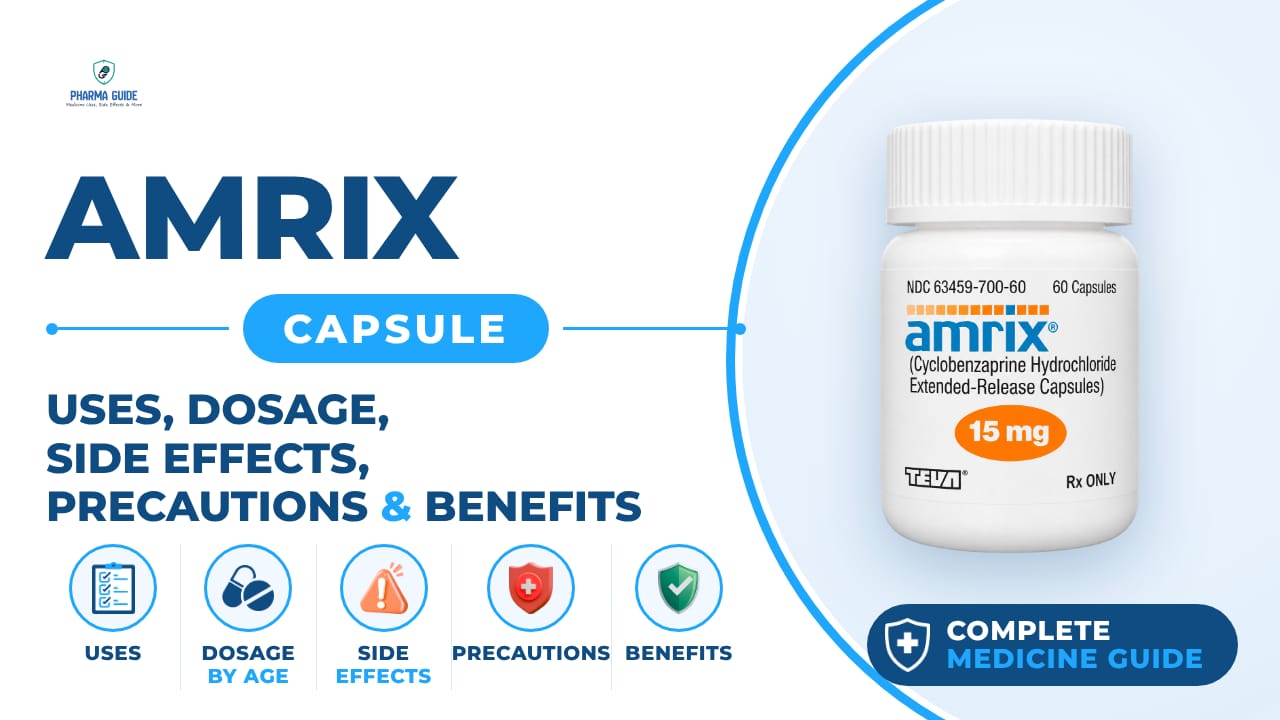
| Generic name | cyclobenzaprine hydrochloride |
|---|---|
| Drug class | Skeletal muscle relaxant |
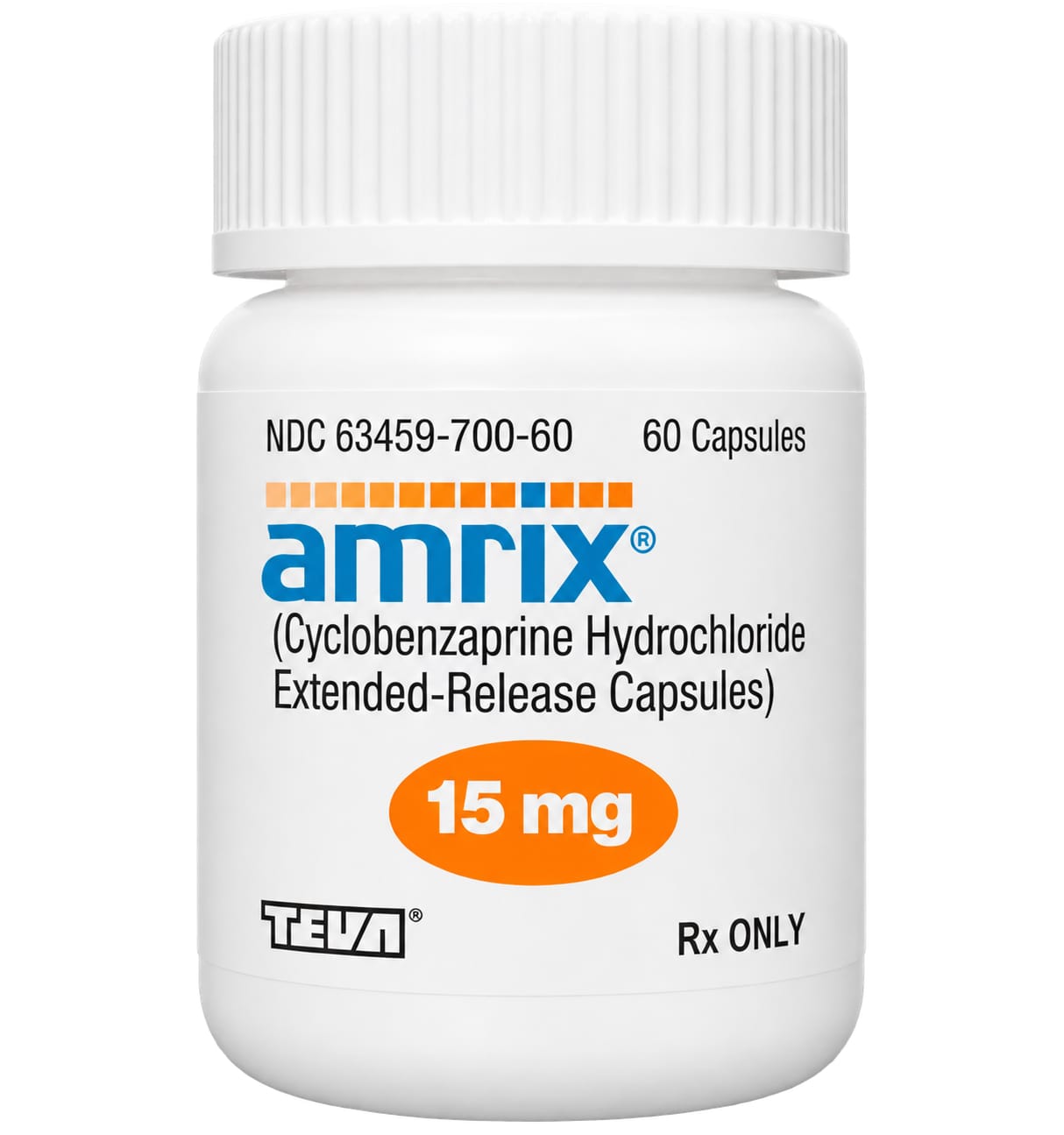
| Forms | Extended-release capsules (15 mg and 30 mg) |
Quick overview
Amrix (cyclobenzaprine hydrochloride) is a brand-name, prescription skeletal muscle relaxant used along with rest and physical therapy to relieve muscle spasms in adults caused by short-term, painful muscle and joint conditions such as a strain or injury. It is an extended-release capsule that releases medicine slowly over the day and is meant to be used only for a short time. Common side effects include dry mouth, dizziness, and fatigue, and it is not recommended for people 65 and older.
What is Amrix Capsule
Amrix is a brand-name prescription muscle relaxant. It is used along with rest and physical therapy to relieve certain muscle spasms in adults caused by short-term, painful muscle and joint conditions such as a strain or injury. It comes as an extended-release capsule that slowly releases the medicine into your body over the day, and it's meant to be used for only a short time.
Amrix Capsule uses
- Relief of muscle spasm associated with acute, painful musculoskeletal conditions such as a muscle strain or injury, used along with rest and physical therapy
- Not effective for muscle spasms caused by brain or spinal cord disease, such as cerebral palsy
- Sometimes used off-label to help with sleep problems in fibromyalgia, though it does not appear to help with fibromyalgia pain
Benefits of Amrix Capsule
- Helps relieve muscle pain, tenderness, and stiffness from acute muscle spasms
- Can improve the ability to move the affected body area
- In studies, more people rated Amrix as helpful for their symptoms compared with placebo after 4 and 14 days
How Amrix Capsule works
Amrix relaxes muscles that are in spasm by acting on the brainstem, an area at the base of the brain, where it reduces the nerve signals that cause muscles to spasm. It does not work directly on the muscles themselves.
Amrix Capsule dosage
Take Amrix once a day at approximately the same time each day. It can be taken with or without food. Swallow the capsule whole; do not crush, chew, break, or open it. If you have trouble swallowing, the capsule can be opened and the contents sprinkled onto a spoonful of applesauce, then swallowed right away without chewing; rinse your mouth with a drink afterward to make sure all the medicine was swallowed. Only applesauce should be used for this purpose; other foods have not been tested.
Amrix should only be used for up to 2 to 3 weeks; call your doctor if symptoms don't improve or get worse. If you miss a dose, take it as soon as you remember unless it is almost time for your next dose; do not take two doses at once. Amrix is not recommended for use in people age 65 years or older and is not approved for use in children.
| Age group | Dose |
|---|---|
| Under 15 years | Not recommended |
| 15–17 years | Not routinely recommended; specialist advice required |
| 18–64 years | 15 mg once daily; may be increased to 30 mg once daily if needed |
| 65 years & older | Not recommended routinely; use only under medical supervision |
| Adults | 15–30 mg once daily |
Available forms and strengths
- Extended-release capsules (15 mg and 30 mg)
Side effects of Amrix Capsule
Common
- Dry mouth
- Dizziness
- Fatigue/tiredness
- Constipation
- Nausea
- Indigestion/upset stomach
- Drowsiness/sleepiness
- Blurry vision (reported with immediate-release cyclobenzaprine, not seen in Amrix studies)
Serious
- Serotonin syndrome (agitation, hallucinations, fever, sweating, fast heartbeat, tremor, muscle stiffness, loss of coordination, nausea, vomiting, diarrhea, confusion)
- Heart problems such as fast or irregular heartbeat that could lead to heart attack or stroke (chest pain, dizziness, fainting, shortness of breath, cold sweats, drooping on one side of the face, sudden weakness or numbness, slurred speech)
- Allergic reaction (rash, itchiness, swelling of face/lips/tongue/throat, trouble breathing)
- Seizures
Warnings and precautions
- Do not use Amrix if you have a thyroid disorder, heart block, congestive heart failure, a heart rhythm disorder, or have recently had a heart attack.
- Do not use Amrix if you have taken a certain type of antidepressant called an MAO inhibitor in the past 14 days, as this can cause a dangerous interaction.
- Amrix should not be used for longer than 2 to 3 weeks, as it hasn't been shown to be safe or effective for longer-term use.
- Amrix is not recommended for people age 65 and older because the drug can build up in the body more than in younger adults.
- Use with caution if you have a history of urinary retention, glaucoma, increased eye pressure, or if you are taking anticholinergic medicines.
- Taking too much Amrix can lead to serious side effects, and although rare, death can occur with overdose.
- It isn't known if Amrix is safe to take during pregnancy. Talk with your doctor about the possible risks and benefits if you are pregnant or planning to become pregnant.
- It isn't known if Amrix passes into breast milk or affects a breastfed child or milk production. Talk with your doctor about the risks and benefits if you are breastfeeding.
- Amrix is broken down by the liver, and using it with liver problems is not recommended because the drug can build up in the body and increase the risk of side effects.
- Alcohol should be avoided while taking Amrix, since both are central nervous system depressants and combining them can increase the risk of serious slowing of brain and body functions.
- You should not drive or operate machinery until you know how Amrix affects you, since it can cause sleepiness, dizziness, and blurry vision.
Storage
- Store at room temperature between 68°F to 77°F (20°C to 25°C)
- Keep in a tightly closed container, away from light
- Avoid storing in areas where it could get damp or wet, such as bathrooms
- Keep out of the reach of children
- Dispose of unused medicine safely to prevent accidental use by others, including children and pets
When to see a doctor
- Get emergency help right away if you have signs of an allergic reaction, such as hives, difficulty breathing, or swelling of your face, lips, tongue, or throat.
- Stop taking Amrix and call your doctor right away if you have a fast or irregular heartbeat, chest pain or pressure, pain spreading to the jaw or shoulder, or sudden numbness, weakness, slurred speech, or balance problems.
- Seek medical attention right away if you notice symptoms of serotonin syndrome, such as agitation, hallucinations, fever, sweating, shivering, fast heart rate, muscle stiffness, twitching, loss of coordination, nausea, vomiting, or diarrhea.
- If you think you've taken too much Amrix, contact your doctor or go to the nearest emergency room right away.
Alternatives
- Cyclobenzaprine (generic versions)
- Flexeril (discontinued brand)
- Carisoprodol (Soma)
- Chlorzoxazone
- Metaxalone (Skelaxin)
- Methocarbamol (Robaxin)
- Orphenadrine
- Orphenadrine, aspirin, and caffeine combination (Orphengesic Forte)
Watch the video
FAQs
What is Amrix Capsule used for?
Amrix is used along with rest and physical therapy to relieve muscle spasms in adults caused by short-term, painful muscle and joint conditions such as a strain or injury.
How long can you take Amrix Capsule?
Amrix should only be used for up to 2 to 3 weeks, as it hasn't been shown to be safe or effective for longer-term use. Call your doctor if symptoms don't improve or get worse.
What is the dosage of Amrix Capsule?
The typical adult dose is 15 mg once daily, which may be increased to 30 mg once daily if needed. It should be taken once a day at approximately the same time each day, with or without food.
Can older adults take Amrix Capsule?
Amrix is not recommended for people age 65 and older because the drug can build up in the body more than in younger adults.
What are the common side effects of Amrix Capsule?
Common side effects include dry mouth, dizziness, fatigue, constipation, nausea, indigestion, and drowsiness.
General information, not medical advice
Your prescriber and the leaflet in your pack know your situation. This page does not.
- Follow your prescriber and the leaflet
- Don't start, stop, or change a dose on your own
- Doses and warnings differ by country and product
Sources
Video
Related medicines
Soma Tablet: Uses, Dosage, Side Effects, Precautions and Alternates
Skeletal muscle relaxant
Soma Tablet (carisoprodol) is a muscle relaxant for short-term muscle pain relief. Learn about its uses, dosage, side effects, and safety warnings.

Skelaxin Tablet: Uses, Dosage, Side Effects, Precautions and Alternates
Skeletal muscle relaxant
Skelaxin Tablet (metaxalone) is a prescription muscle relaxant for short-term relief of painful muscle spasms. Learn uses, dosage, and side effects.