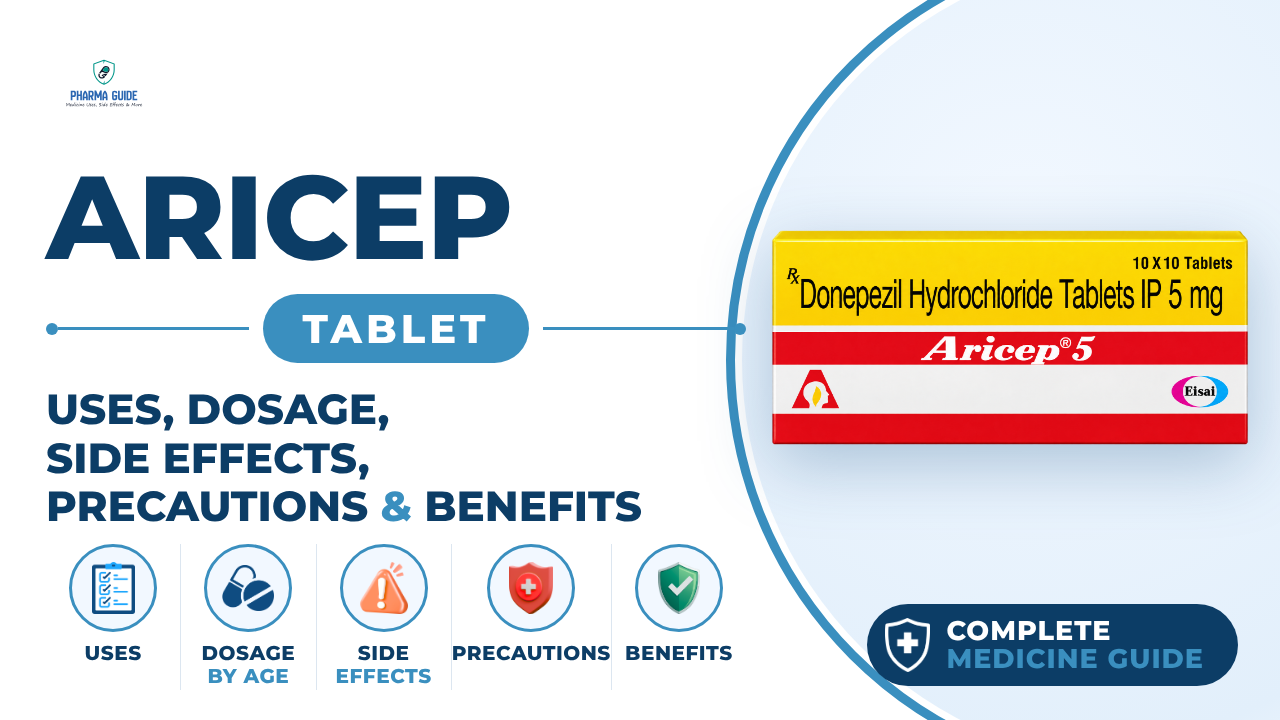
Aricep Tablet: Uses, Dosage, Side Effects, Precautions and Alternates
| Generic name | Donepezil |
|---|---|
| Drug class | Cholinesterase inhibitor |
| Forms | Tablet, Orally disintegrating tablet (ODT), Oral solution |
Quick overview
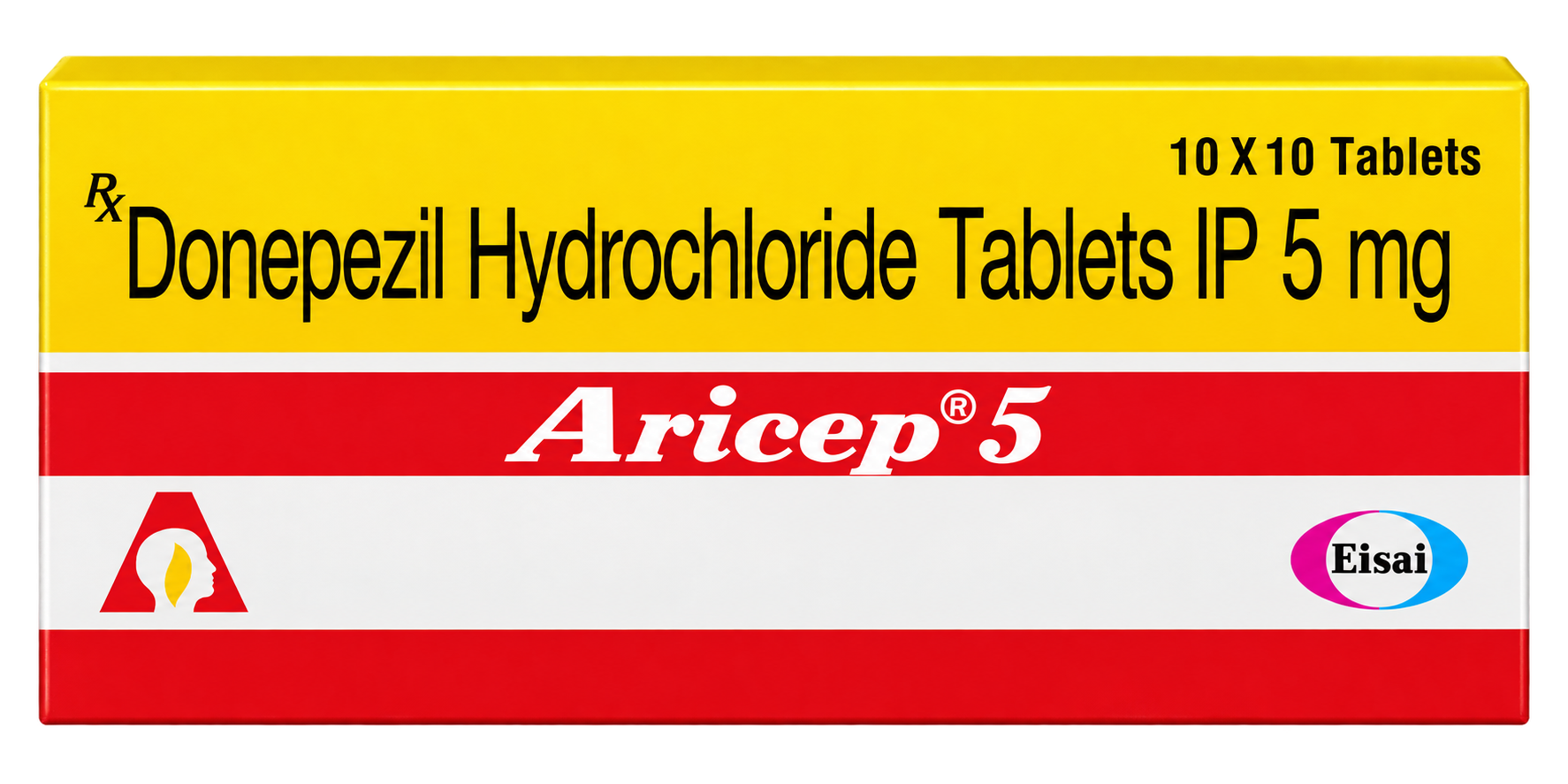
Aricep Tablet contains donepezil, a cholinesterase inhibitor used to treat dementia linked to Alzheimer's disease. It does not cure Alzheimer's disease, but it can help improve symptoms such as memory loss and confusion and slow down how fast they get worse. It is usually taken once a day, and the dose may be adjusted by your doctor based on how you respond to treatment.
What is Aricep Tablet
Aricep is a medicine used to treat dementia linked to Alzheimer's disease. It contains donepezil and belongs to a group of medicines called cholinesterase inhibitors. It does not cure Alzheimer's disease, but it can help improve symptoms and slow down how fast they get worse.
Aricep Tablet uses
- Alzheimer's disease
- Helps with memory loss, confusion, and difficulty with everyday tasks in mild to moderate Alzheimer's disease
- Helps improve attention, memory, behavior, and the ability to do daily activities in dementia patients
Benefits of Aricep Tablet
- Helps improve symptoms and delay the progression of Alzheimer's disease
- Helps improve memory, thinking, and daily functioning in mild to moderate Alzheimer's disease
- Can help improve attention, memory, behavior, and the ability to do daily activities
How Aricep Tablet works
This medicine works by blocking an enzyme that normally breaks down a brain chemical called acetylcholine, which is important for memory and thinking. By raising the level of this chemical, it helps nerve cells in the brain send messages to each other more effectively, which can ease some Alzheimer's symptoms like memory loss and confusion.
Aricep Tablet dosage
- Can be taken with or without food, usually once a day, preferably at bedtime.
- Swallow the tablet whole with a glass of water; do not crush or chew it.
- Do not stop taking this medicine without talking to your doctor first.
- If you miss a dose, just take it at your usual next scheduled time; do not take two doses together to make up for a missed one.
- If you miss doses for more than 7 days in a row, call your doctor before taking the medicine again.
- If you need surgery or dental work, tell your doctor or dentist that you are taking this medicine beforehand.
- Taking it with food or milk may help lessen nausea; taking it at night may help if it disrupts sleep.
| Age group | Dose |
|---|---|
| Under 18 Years | Not routinely recommended; use only under specialist supervision |
| 18–64 Years | 5 mg once daily, usually in the evening; may be increased to 10 mg once daily after medical review |
| Older Adults (65+ Years) | 5 mg once daily initially, may be increased to 10 mg once daily according to response and tolerance |
Available forms and strengths
- Tablet
- Orally disintegrating tablet (ODT)
- Oral solution
Side effects of Aricep Tablet
Common
- Nausea and vomiting
- Diarrhoea
- Loss of appetite
- Headache
- Common cold
- Dizziness
- Trouble sleeping / vivid dreams
- Muscle cramps
- Tiredness
- Weight loss
- Frequent urination
- Unusual bleeding
- Joint pain
Serious
- Signs of an allergic reaction such as hives, difficulty breathing, and swelling of the face, lips, tongue, or throat
- Severe or ongoing vomiting
- A light-headed feeling, like you might pass out
- Slow heartbeats
- Seizure (convulsions)
- Painful or difficult urination
- New or worsening breathing problems
- Signs of stomach bleeding such as severe heartburn or stomach pain, bloody or tarry stools, or coughing up blood or vomit that looks like coffee grounds
Warnings and precautions
- Tell your doctor before starting this medicine if you have a heart condition such as slow or irregular heartbeat, a stomach ulcer, asthma or COPD, epilepsy or other seizure disorder, trouble swallowing, an enlarged prostate, or difficulty passing urine.
- Do not use this medicine if you are allergic to donepezil or to any of its other ingredients.
- Taking NSAID painkillers like aspirin or ibuprofen together with this medicine may increase the risk of stomach bleeding.
- If you need any type of surgery or dental work, let your surgeon or dentist know in advance that you are taking this medicine, as you may need to stop it for a short time.
- Do not stop taking this medicine on your own without checking with your doctor first.
- Because there isn't enough safety information in humans, this medicine is not usually recommended during pregnancy unless your doctor feels it's necessary.
- Talk to your doctor before taking it if you are pregnant.
- It isn't known if this medicine passes into breast milk, so it isn't usually recommended while breastfeeding unless your doctor decides the benefits are greater than the risks.
- If you have a history of kidney problems, talk to your doctor before starting this medicine so they can advise you on whether it's safe.
- This medicine is often given to older patients, who may be more prone to liver problems, so it's important to discuss any liver concerns with your doctor before starting treatment.
- It's best to avoid or limit alcohol while taking this medicine, since it can make side effects worse and may reduce how well the medicine works.
- This medicine may cause dizziness or drowsiness, so be careful when driving or operating machinery until you know how it affects you.
Storage
- Store at room temperature, ideally between 15-30°C
- Keep the container tightly closed to protect it from light and moisture
- Keep this medicine out of sight and reach of children
- Always check the expiry date on the package before use, and do not use the medicine if it's expired
When to see a doctor
- Get emergency medical help if you notice signs of an allergic reaction, such as hives, trouble breathing, or swelling of the face, lips, tongue, or throat.
- Stop taking this medicine and contact your doctor right away if you have severe or ongoing vomiting, feel like you might faint, have a very slow heartbeat, have a seizure, have painful or difficult urination, notice new or worsening breathing problems, or see signs of stomach bleeding like severe stomach pain, black or bloody stools, or vomit that looks like coffee grounds.
- Seek medical help right away if you faint, have a very slow heartbeat, pass black stools, or have a seizure.
- If you think you've taken too much of this medicine, get emergency medical help or contact a poison control center right away.
Alternatives
- Rivastigmine Transdermal Patch
- Memantine
- Galantamine
- Rivastigmine
FAQs
What is Aricep Tablet used for?
Aricep Tablet is used to treat dementia linked to Alzheimer's disease. It helps with memory loss, confusion, and difficulty with everyday tasks in mild to moderate Alzheimer's disease, and can improve attention, memory, behavior, and daily functioning.
How should I take Aricep Tablet?
It can be taken with or without food, usually once a day, preferably at bedtime. Swallow the tablet whole with a glass of water; do not crush or chew it. Do not stop taking it without talking to your doctor first.
What should I do if I miss a dose of Aricep Tablet?
If you miss a dose, take it at your usual next scheduled time; do not take two doses together to make up for a missed one. If you miss doses for more than 7 days in a row, call your doctor before taking the medicine again.
What are the common side effects of Aricep Tablet?
Common side effects include nausea, vomiting, diarrhoea, loss of appetite, headache, dizziness, trouble sleeping or vivid dreams, muscle cramps, tiredness, weight loss, frequent urination, unusual bleeding, and joint pain.
Can Aricep Tablet be taken during pregnancy?
Because there isn't enough safety information in humans, this medicine is not usually recommended during pregnancy unless your doctor feels it's necessary. Talk to your doctor before taking it if you are pregnant.
Sources
Video