
Safety
General information, not medical advice
Your prescriber and the leaflet in your pack know your situation. This page does not.
- Follow your prescriber and the leaflet
- Don't start, stop, or change a dose on your own
- Doses and warnings differ by country and product
Baclofen Tablet: Uses, Dosage, Side Effects, Precautions and Alternates
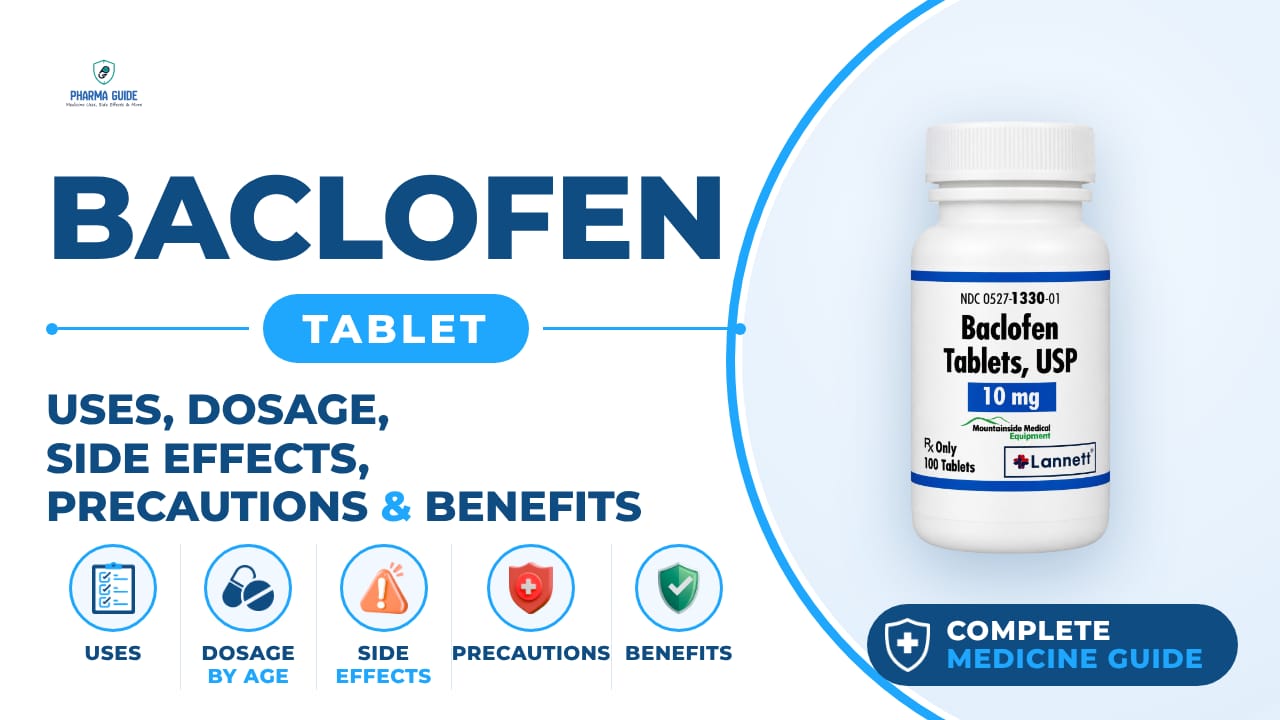
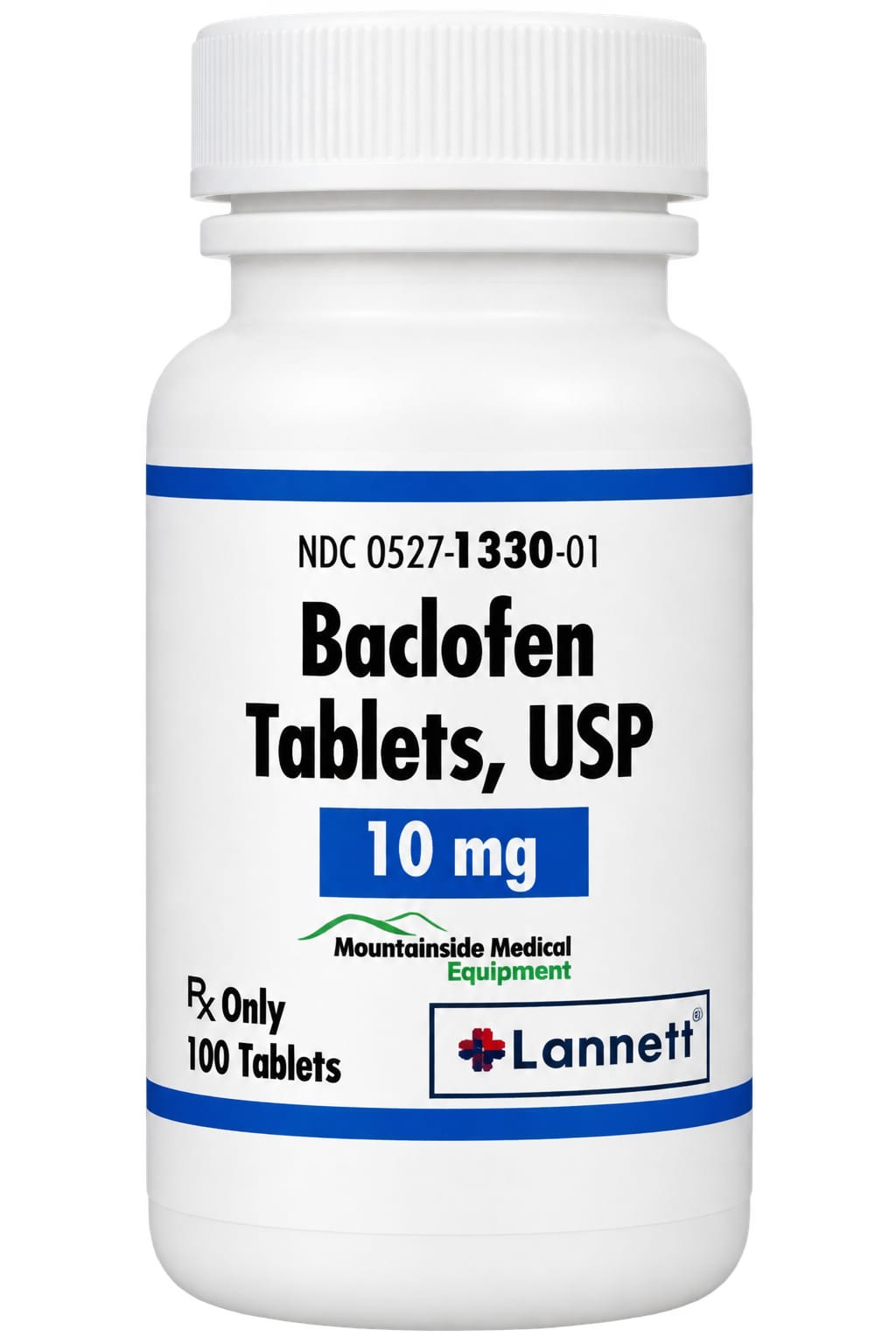
| Generic name | Baclofen |
|---|---|
| Drug class | Skeletal muscle relaxant |
| Forms | Tablet, Oral solution/liquid, Oral suspension, Oral granules |
Quick overview
Baclofen Tablet (generic name: Baclofen) is a prescription skeletal muscle relaxant used to treat muscle spasms, stiffness, and tightness caused by conditions that affect the nerves and spinal cord. It works on the brain and spinal cord to calm overactive nerve signals and relax muscles. It is available as tablets as well as oral solution, suspension, and granules, and should be used exactly as directed by a doctor.
What is Baclofen Tablet
Baclofen is a prescription muscle relaxant that treats muscle spasms, stiffness, and tightness caused by conditions that affect the nerves and spinal cord.
Baclofen Tablet uses
- Muscle spasms, cramps, or tightness caused by conditions affecting the nervous system, such as cerebral palsy, motor neurone disease, and multiple sclerosis
- Spasticity and muscle pain from multiple sclerosis or spinal cord injury or other spinal cord diseases
- Muscle spasticity from multiple sclerosis
- Muscle spasms due to spinal cord injuries
- Muscle stiffness from cerebral palsy
- Muscle spasms after stroke
- Tetanus-related muscle spasms
- Neurological disorders causing muscle rigidity
- Involuntary muscle contractions
- Rehabilitation support after injuries
Benefits of Baclofen Tablet
- Relieves pain and improves muscle movement
- May allow other treatment, such as physical therapy, to be more helpful in improving your condition
How Baclofen Tablet works
Baclofen acts on the brain and spinal cord to calm overactive nerve signals, which relaxes muscles and reduces spasms and stiffness.
Baclofen Tablet dosage
Take this medicine by mouth exactly as your doctor tells you, and keep taking it unless your care team tells you to stop. Try to take it at the same time each day. It's best to take it with food or a glass of milk, particularly if it makes you feel sick. Swallow the tablets whole.
If using granules, shake and pour the entire packet to dissolve in your mouth or swallow whole at once, with or without liquids. Measure liquid forms with the supplied measuring device, not a kitchen spoon.
Do not stop taking this medicine suddenly; your doctor will lower the dose gradually if you need to stop. If you miss a dose, take it as soon as you remember, unless it is almost time for your next dose; do not take a double dose to make up for a missed one. Talk to your care team about use in children; it may be prescribed for children as young as 12 years for certain conditions, with precautions.
| Age group | Dose |
|---|---|
| Under 12 Years | Use only if prescribed by a doctor |
| 12 Years and Above | Initial dose: 5 mg three times daily; adjusted gradually |
| Adults (18–64 Years) | Usually 5–20 mg three times daily (maximum depends on medical condition) |
| Older Adults (65+ years) | Lower starting dose; adjusted based on response and kidney function |
Available forms and strengths
- Tablet
- Oral solution/liquid
- Oral suspension
- Oral granules
Side effects of Baclofen Tablet
Common
- Dizziness
- Drowsiness
- Headache
- Muscle weakness
- Nausea
- Dry mouth
- Feeling tired or weak
- Problems with eyesight
- Mood changes
- Muscle pain
- Confusion
- Constipation
- Feeling faint or lightheaded when standing up suddenly
- Increased need to urinate
- Sweating
- Trouble sleeping
- Unusual tiredness or weakness
Serious
- Allergic reactions (anaphylaxis) - skin rash, itching, hives, swelling of the face, lips, tongue, or throat, and difficulty breathing
- Slow or shallow breathing, shortness of breath, feeling faint, dizziness, confusion, trouble staying awake
- Liver problems, which can cause yellowing of the skin and the whites of the eyes
- Very low mood and suicidal thoughts
- Severe drowsiness or breathing problems
- Confusion or hallucinations
- Muscle weakness, itching, tingling, or twitching in hands, arms, feet, or legs
- Fever
- Seizures
- Unexplained muscle stiffness
- Fainting
- Chest pain, pounding heartbeat
- Bloody or dark urine
- Ringing or buzzing in the ears
- Slurred speech or other speech problems
- Swelling of the ankles
Warnings and precautions
- Do not stop taking baclofen suddenly, as this can cause serious withdrawal symptoms such as hallucinations, seizures, high fever, confusion, severe muscle stiffness, and in rare cases organ failure or death. Your doctor will lower your dose gradually.
- Baclofen can make you drowsy and affect your coordination and judgment, so use caution during activities that require alertness and balance.
- If baclofen is stopped suddenly during pregnancy or continued through delivery, the newborn baby may show withdrawal symptoms like increased muscle tone, tremor, jitteriness, and seizures.
- People with epilepsy should have their condition and brain wave tests monitored regularly, as baclofen has occasionally been linked to worsened seizure control.
- Baclofen may cause ovarian cysts in some patients, though these usually go away on their own while continuing treatment.
- Tell your doctor if you are pregnant or trying to become pregnant. Baclofen may be used during pregnancy if the benefits outweigh the risks, but your baby may need to be monitored after birth for withdrawal symptoms.
- You may be able to take baclofen while breastfeeding, but check with a pharmacist or doctor first, as they may recommend a different muscle relaxant.
- Baclofen is removed from the body by the kidneys, so people with kidney disease may need a lower dose because the drug can build up and its effects may be stronger.
- Tell your doctor if you have liver problems before taking this medicine.
- It is best not to drink alcohol while taking baclofen, since alcohol can increase side effects such as drowsiness, dizziness, and fainting.
- This medicine may affect your coordination, reaction time, judgment, or eyesight. Do not drive, ride a bike, or operate machinery until you know how the medicine affects you.
Storage
- Store at room temperature between 20 and 25 degrees C (68 and 77 degrees F)
- Keep container tightly closed
- Get rid of any unused medication after the expiration date
- Keep out of the reach of children and pets
- Take the medication to a medication take-back program; check with your pharmacy or law enforcement to find a location
- If you cannot return the medication, check the label or package insert to see if it should be thrown out in the garbage or flushed down the toilet; if safe to trash, mix it with cat litter, dirt, coffee grounds, or other unwanted substance, seal it in a bag or container, and put it in the trash
- Store the oral liquid in the refrigerator; do not freeze
- Store the oral suspension at room temperature away from moisture and heat; throw away any unused portion 2 months after first opening
When to see a doctor
- Get emergency medical help right away if you have trouble breathing, are unusually tired or sleepy, or show signs of an allergic reaction such as swelling of the face, lips, tongue, or throat, or a rash with itching and hives.
- Call for emergency help if you think you might be having a severe allergic reaction (anaphylaxis) or are having difficulty breathing.
- If you are having thoughts of harming yourself, or think you may be having another serious side effect, contact a health professional right away.
- Seek emergency medical attention if you think you have taken too much baclofen. Overdose symptoms may include increasing drowsiness, dizziness, sleepiness, trouble focusing, shallow breathing, seizures, or muscle weakness leading to loss of consciousness.
- Contact your doctor right away if you notice confusion, hallucinations, severe drowsiness, breathing problems, muscle weakness, itching, tingling, or twitching in your hands, arms, feet, or legs, or fever.
Alternatives
- Tizanidine
- Methocarbamol
- Dantrolene
Watch the video
FAQs
What is Baclofen Tablet used for?
It is used to treat muscle spasms, stiffness, and tightness caused by conditions affecting the nerves and spinal cord, such as multiple sclerosis, cerebral palsy, spinal cord injury, and stroke.
How does Baclofen work?
Baclofen acts on the brain and spinal cord to calm overactive nerve signals, which relaxes muscles and reduces spasms and stiffness.
What is the usual adult dose of Baclofen?
Adults aged 18 to 64 usually take 5 to 20 mg three times daily, with the maximum dose depending on the medical condition; treatment typically starts at a lower dose that is adjusted gradually.
Can I stop taking Baclofen suddenly?
No, you should not stop taking baclofen suddenly, as this can cause serious withdrawal symptoms such as hallucinations, seizures, high fever, confusion, and severe muscle stiffness. Your doctor will lower your dose gradually if you need to stop.
What are the common side effects of Baclofen?
Common side effects include dizziness, drowsiness, headache, muscle weakness, nausea, dry mouth, tiredness, confusion, constipation, and trouble sleeping.
General information, not medical advice
Your prescriber and the leaflet in your pack know your situation. This page does not.
- Follow your prescriber and the leaflet
- Don't start, stop, or change a dose on your own
- Doses and warnings differ by country and product
Sources
- https://my.clevelandclinic.org/health/drugs/19760-baclofen-tablets
- https://www.nhs.uk/medicines/baclofen/
- https://www.mayoclinic.org/drugs-supplements/baclofen-oral-route/description/drg-20067995
- https://www.drugs.com/baclofen.html
- https://www.marham.pk/medicines/baclofen-tablet
- https://dailymed.nlm.nih.gov
Video
Related medicines
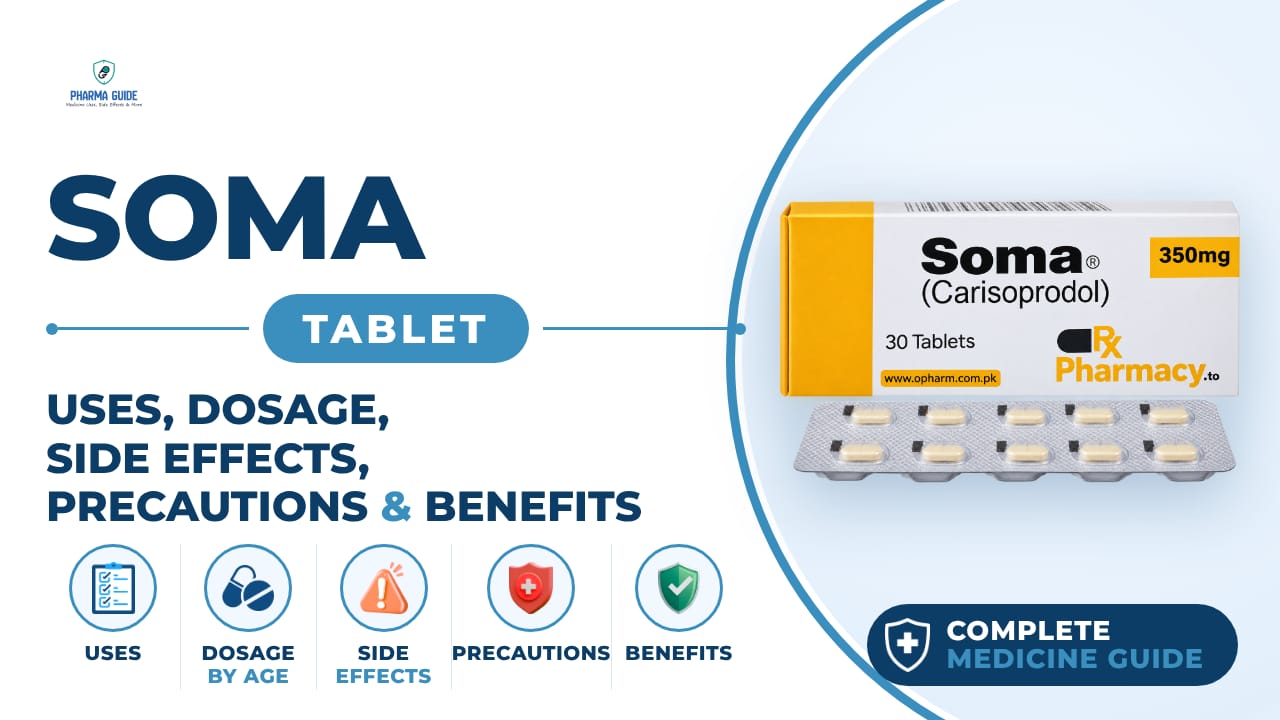
Soma Tablet: Uses, Dosage, Side Effects, Precautions and Alternates
Skeletal muscle relaxant
Soma Tablet (carisoprodol) is a muscle relaxant for short-term muscle pain relief. Learn about its uses, dosage, side effects, and safety warnings.
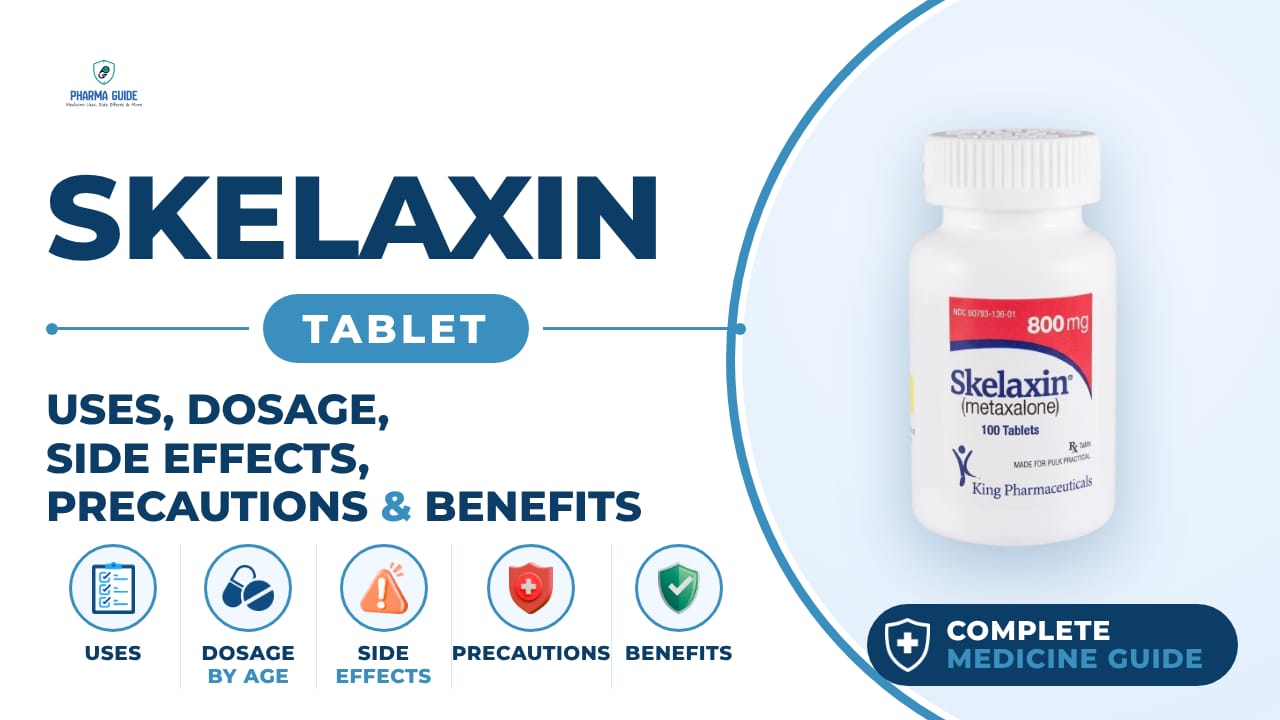
Skelaxin Tablet: Uses, Dosage, Side Effects, Precautions and Alternates
Skeletal muscle relaxant
Skelaxin Tablet (metaxalone) is a prescription muscle relaxant for short-term relief of painful muscle spasms. Learn uses, dosage, and side effects.