
Safety
General information, not medical advice
Your prescriber and the leaflet in your pack know your situation. This page does not.
- Follow your prescriber and the leaflet
- Don't start, stop, or change a dose on your own
- Doses and warnings differ by country and product
Blink Tears Eye Drops: Uses, Dosage, Side Effects, Precautions and Alternates
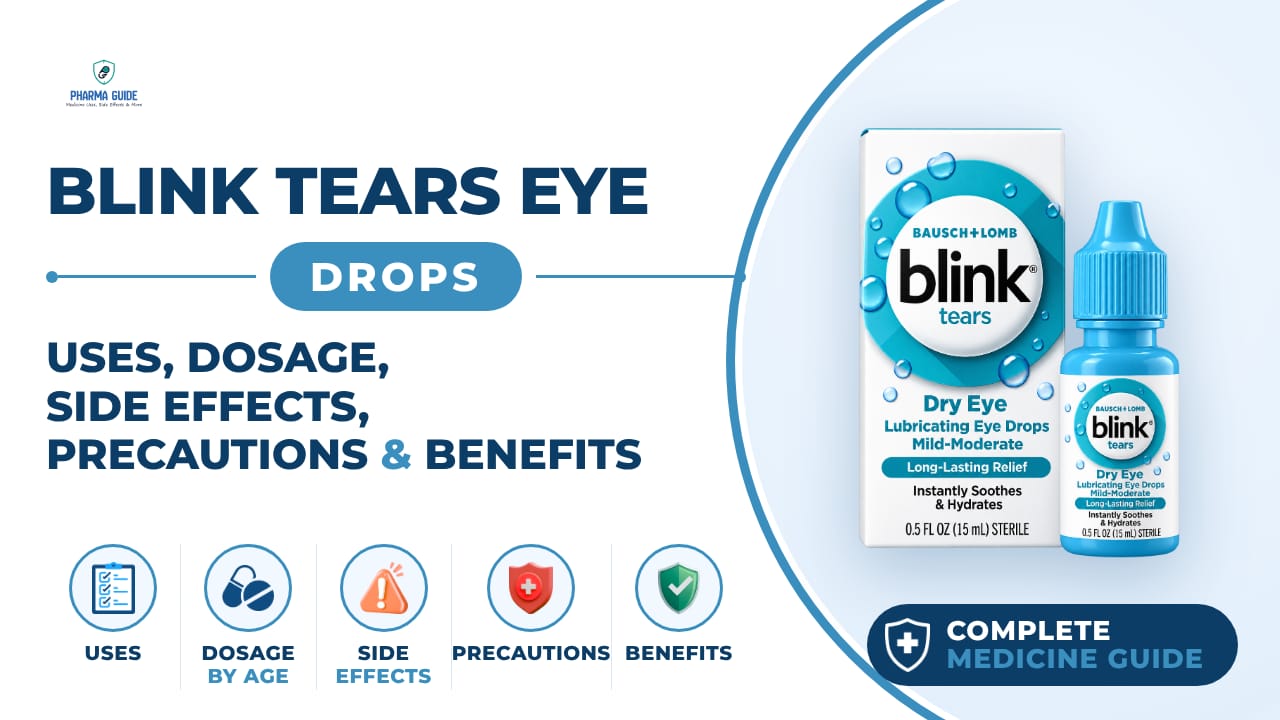
| Generic name | ocular lubricant (Polyethylene Glycol 400 0.25%) |
|---|---|
| Drug class | Ophthalmic lubricants and irrigations |
| Forms | eye drops (solution), single-use preservative-free vials |
Quick overview
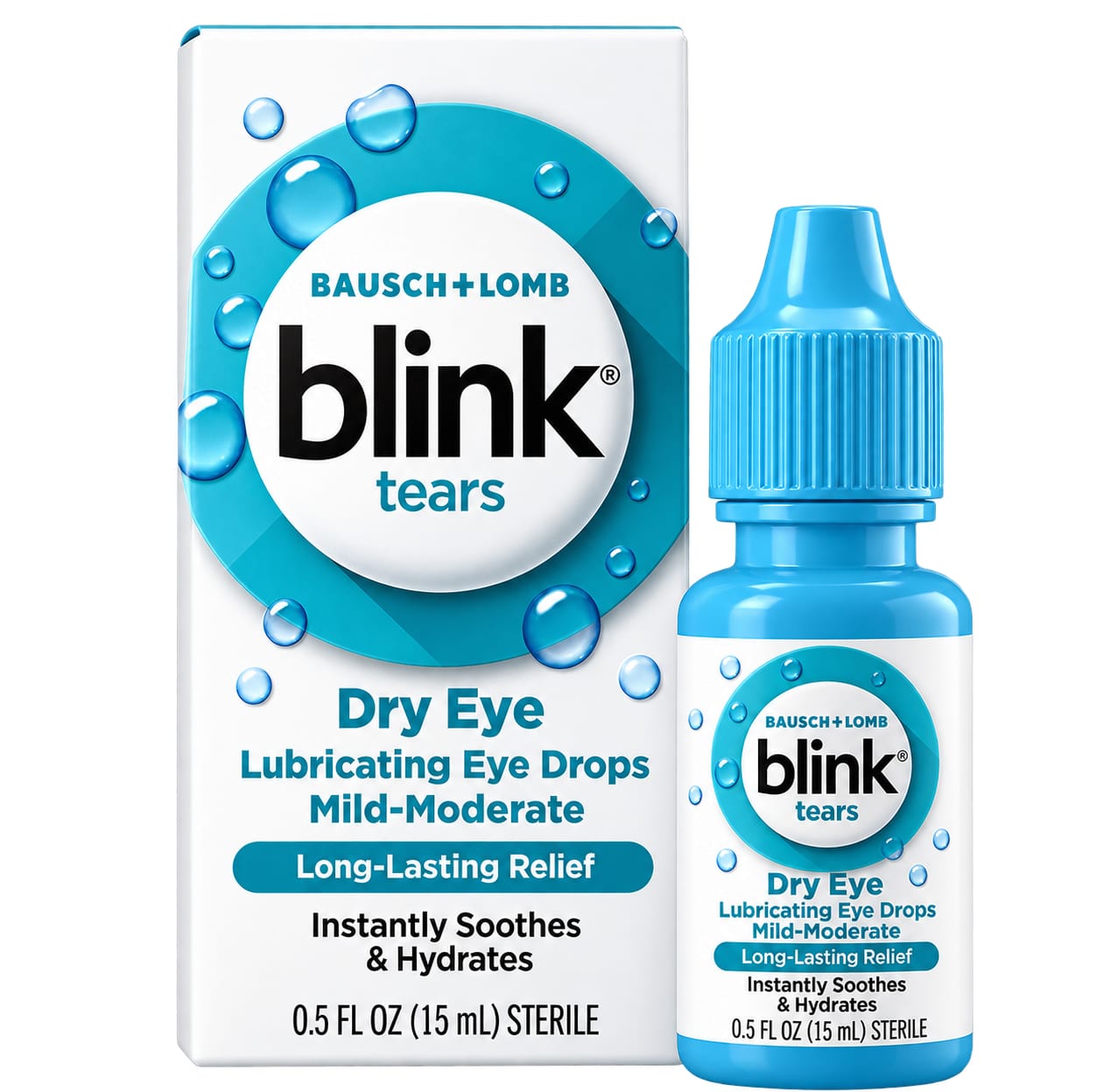
Blink Tears Eye Drops is an over-the-counter ocular lubricant containing Polyethylene Glycol 400 at 0.25%, belonging to the ophthalmic lubricants and irrigations drug class. It is used to moisturize and protect the eyes, relieving burning, irritation, and dryness. The drops work with every blink to help restore the eye's natural tear balance and keep the eye's surface hydrated.
What is Blink Tears Eye Drops
Blink Tears is an over-the-counter artificial tear solution used to moisturize and protect the eyes.
Blink Tears Eye Drops uses
- Relieves burning, irritation, and discomfort caused by dry eyes
- Provides temporary relief from stinging and dryness of the eye
- Soothes and protects eyes against irritation from wind, sun, air conditioning, digital screen use, and post-surgery dryness
- Relieves dry-eye discomfort
- Relieves burning
- Relieves eye irritation
- Relieves dryness caused by wind or sun
Benefits of Blink Tears Eye Drops
- Gives immediate comfort when applied
- Lasts longer than some other lubricating eye drops so you may not need to use it as often
- Many users report less blurring than with other lubricating eye drops
- Lubricates and hydrates dry eyes
- Provides temporary relief from irritation
- Can be used as needed
How Blink Tears Eye Drops works
The drops work with every blink to help restore the eye's natural tear balance and keep the surface of the eye hydrated.
Blink Tears Eye Drops dosage
Wash your hands before using the drops. Do not touch the tip of the dropper or place it directly on your eye to avoid contamination. Do not use the drops if the liquid looks cloudy or has changed color; tell your pharmacist if this happens. Remove contact lenses before use unless the label says they are safe to wear with the drops. If you use other eye medicines, wait several minutes between using this product and the other medicine. Call your doctor if your symptoms do not improve or get worse while using the drops.
| Age group | Dose |
|---|---|
| Children under 12 years | No separate age-specific dose is listed on the OTC label |
| 12–17 years | 1–2 drops in the affected eye(s) as needed |
| 18–74 years | 1–2 drops in the affected eye(s) as needed |
| 75 years and older | 1–2 drops in the affected eye(s) as needed; no separate age-based adjustment is listed |
Available forms and strengths
- Eye drops (solution) — Polyethylene Glycol 400 0.25%
- Single-use preservative-free vials
Side effects of Blink Tears Eye Drops
Common
- Temporary blurred vision right after using the drops
- Mild burning, stinging, or eye irritation
- Mild redness or watery eyes
- Increased sensitivity to light
- Matting or stickiness of the eyelashes
Serious
- Persistent or worsening eye pain
- Lasting changes in vision
- Signs of an allergic reaction such as swelling of the eyelids, face, or severe itching/hives
Warnings and precautions
- Do not use this product to treat or prevent an eye infection.
- Do not use if you are allergic to this medicine or any of its ingredients.
- Do not touch the dropper tip to any surface or your eye, since a contaminated tip can cause a serious eye infection.
- Do not use the drops if the solution looks cloudy or has changed color.
- Pregnancy: Talk with your doctor about whether this product is appropriate if you are pregnant; a risk/benefit review may be needed.
- Breastfeeding: This product is not expected to have a meaningful effect during breastfeeding, but check with your doctor.
- Kidney: No specific kidney-related precautions are generally required because Blink Tears acts locally in the eyes with minimal systemic absorption.
- Liver: No specific liver-related precautions are generally required for standard use.
- Alcohol: No known direct interaction with alcohol. Alcohol may sometimes worsen dehydration or dry-eye symptoms, so symptoms can feel more noticeable in some people.
- Driving: The drops can cause temporary blurred vision, so avoid driving or operating machinery until your vision is clear.
Storage
- Store at room temperature away from moisture and heat.
When to see a doctor
- Get emergency medical help if you notice signs of an allergic reaction, such as hives, trouble breathing, or swelling of your face, lips, tongue, or throat.
- Stop using the drops and call your doctor if you have severe burning, stinging, or eye irritation, eye pain, or vision changes.
- See a doctor if symptoms such as eye pain, vision changes, continued redness or irritation, or worsening symptoms last more than 72 hours after use.
Alternatives
- Systane
- Refresh Tears
- TheraTears
- GenTeal Tears
Watch the video
FAQs
What is Blink Tears Eye Drops used for?
It is an over-the-counter artificial tear solution used to moisturize and protect the eyes, relieving burning, irritation, and dryness caused by wind, sun, air conditioning, digital screen use, or post-surgery dryness.
What is the dosage for Blink Tears Eye Drops?
For ages 12 and older, the typical dose is 1–2 drops in the affected eye(s) as needed. No separate age-specific dose is listed for children under 12.
What are the common side effects of Blink Tears Eye Drops?
Common side effects include temporary blurred vision right after use, mild burning, stinging, or irritation, mild redness or watery eyes, increased light sensitivity, and matting or stickiness of the eyelashes.
Can I wear contact lenses while using Blink Tears Eye Drops?
You should remove contact lenses before use unless the label states they are safe to wear with the drops.
When should I see a doctor while using Blink Tears Eye Drops?
See a doctor if symptoms like eye pain, vision changes, continued redness or irritation, or worsening symptoms last more than 72 hours, or seek emergency help for signs of an allergic reaction.
General information, not medical advice
Your prescriber and the leaflet in your pack know your situation. This page does not.
- Follow your prescriber and the leaflet
- Don't start, stop, or change a dose on your own
- Doses and warnings differ by country and product
Sources
Video
Related medicines
Systane Eye Drops: Uses, Dosage, Side Effects, Precautions and Alternates
Ophthalmic lubricants and irrigations
Systane Eye Drops lubricate and relieve dry eye symptoms like burning, irritation, and grittiness. Learn uses, dosage, side effects, and precautions.
Bion Tears Eye Drops: Uses, Dosage, Side Effects, Precautions and Alternates
Ophthalmic lubricants and irrigations
Bion Tears Eye Drops is a preservative-free lubricant that relieves dry eye burning and irritation. Learn uses, dosage, side effects, and precautions.