
Safety
General information, not medical advice
Your prescriber and the leaflet in your pack know your situation. This page does not.
- Follow your prescriber and the leaflet
- Don't start, stop, or change a dose on your own
- Doses and warnings differ by country and product
Botox Injection: Uses, Dosage, Side Effects, Precautions and Alternates
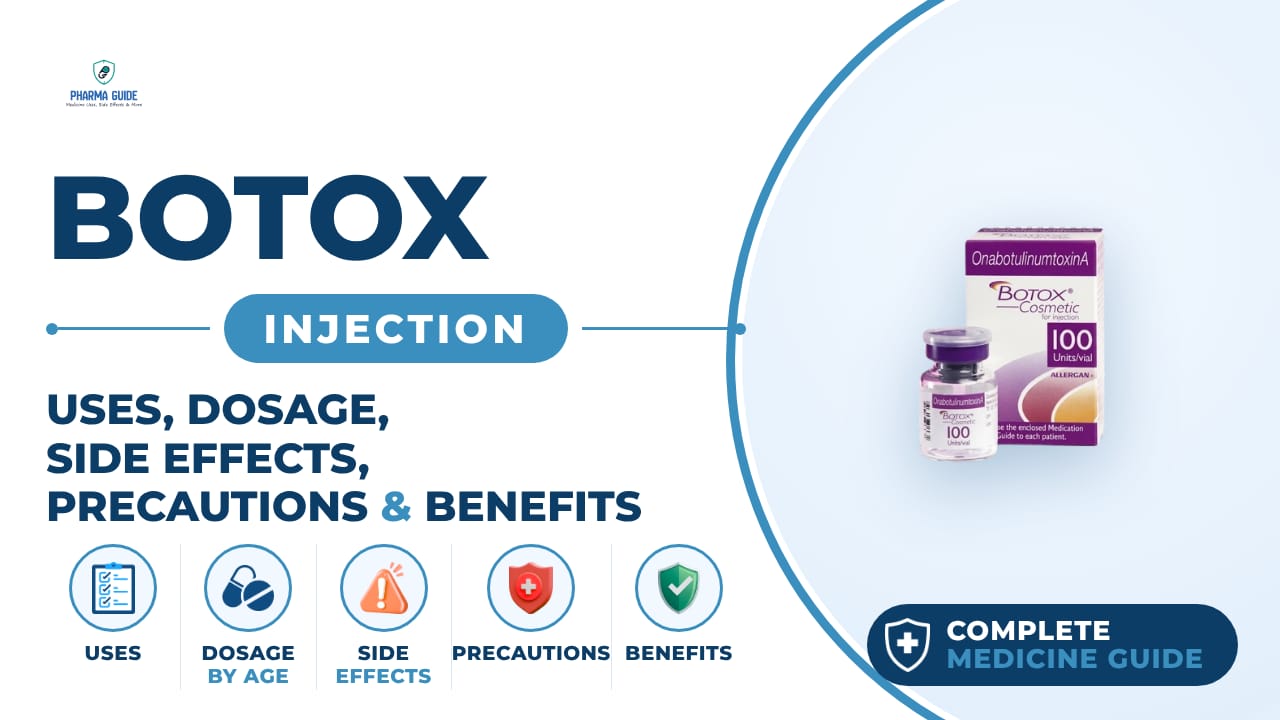
| Generic name | onabotulinumtoxinA |
|---|---|
| Drug class | Skeletal muscle relaxants |
| Forms | Single-dose vial for injection |
Quick overview
Botox Injection (onabotulinumtoxinA) is a prescription injectable from the skeletal muscle relaxants drug class, made from a purified form of botulinum toxin. It is used for conditions such as chronic migraine, excessive underarm sweating, overactive bladder, eyelid spasms, strabismus, spasticity, cervical dystonia, and cosmetic improvement of facial lines. It works by blocking nerve signals to muscles and is given only by a healthcare provider. Botox carries important warnings about the toxin spreading beyond the injection site.
What is Botox Injection
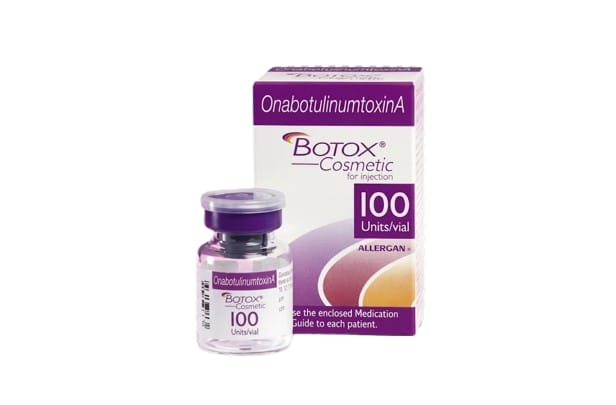
Botox is an injectable prescription medicine used for both medical and cosmetic purposes. It is made from a purified form of botulinum toxin, a neurotoxin produced by the bacterium Clostridium botulinum. It is supplied as a vacuum-dried powder in single-dose vials that a healthcare provider mixes with sterile saline before injecting.
Botox Injection uses
- Chronic migraine prevention (15 or more headache days a month)
- Excessive underarm sweating (hyperhidrosis)
- Overactive bladder and urinary incontinence
- Blepharospasm (uncontrollable eyelid blinking or spasm)
- Strabismus (crossed eyes)
- Spasticity in adults and children 2 years and older
- Cervical dystonia (neck muscle spasms)
- Cosmetic improvement of frown lines, crow's feet, forehead lines, and neck bands
Benefits of Botox Injection
- Temporarily improves the appearance of moderate to severe frown lines, crow's feet, forehead lines, and neck bands
- Reduces the frequency of chronic migraine headaches
- Reduces episodes of urinary incontinence and urgency in overactive bladder
- Reduces severe underarm sweating
- Reduces severity of abnormal head position and neck pain in cervical dystonia
- Improves muscle tone and spasticity symptoms
How Botox Injection works
Botox blocks the signals that nerves send to muscles. It enters the nerve ending and stops the release of acetylcholine, the chemical that tells a muscle to contract. Depending on where it is injected, this can relax a muscle, reduce sweating, or calm an overactive bladder. The effect wears off over time as the body slowly reverses it.
Botox Injection dosage
Botox is given only by a healthcare provider; it is not something you take or apply yourself. It may be injected into muscle, into the skin, or into the bladder wall depending on what is being treated. Your provider may adjust your dose over time until the right amount is found for you.
Before bladder injections, you should not have a urinary tract infection, and antibiotics are usually given before and after treatment. After bladder injections, you will usually be watched for a period of time before going home.
Treating the forehead alone is avoided because it can drop the brow, so forehead lines are always treated together with the area between the eyebrows.
Avoid rubbing or massaging the treated area for about 24 hours after injection. Avoid lying down for a few hours after the injections. Avoid intense physical activity for about a day after treatment.
| Age group | Dose |
|---|---|
| Under 18 years | Not fixed |
| 18–60 years | 155–200 units, once/day |
| 60+ years | 155–200 units, once/day |
Available forms and strengths
- Single-dose vial for injection
Side effects of Botox Injection
Common
- Pain, swelling, redness, or bruising at the injection site
- Headache
- Flu-like symptoms such as nausea, fever, and muscle aches
- Temporary drooping eyelids or crooked eyebrows
- Neck pain
- Upset stomach or indigestion
- Dry eyes or watery eyes
- A crooked smile or drooling
- Infection at the injection site
Serious
- Muscle weakness that spreads away from the injection site
- Vision problems, including blurred or double vision
- Trouble talking or swallowing
- Breathing problems
- Loss of bladder control
- Allergic reaction
Warnings and precautions
- Botox carries the FDA's strongest warning because the toxin's effects can sometimes spread beyond the injection area and cause symptoms similar to botulism, including muscle weakness, double vision, trouble speaking or swallowing, loss of bladder control, and breathing trouble. This can appear hours to weeks after treatment and can be life-threatening.
- Swallowing or breathing problems can occur hours, days, or weeks after an injection, usually because the muscles used for breathing and swallowing become weak. People who already have these problems before treatment are at the highest risk.
- Serious and immediate allergic reactions can occur, including a severe whole-body reaction, hives, swelling, and trouble breathing.
- People with certain nerve and muscle diseases, such as ALS, myasthenia gravis, Lambert-Eaton syndrome, or peripheral motor neuropathy, may be at higher risk of serious effects like widespread muscle weakness, double vision, drooping eyelids, voice changes, and severe swallowing or breathing problems, even at normal doses.
- Botox contains a small amount of human albumin, which carries an extremely small, theoretical risk of transmitting viral infections, though no such cases have ever been confirmed.
- Botox is not usually recommended during pregnancy. Animal studies showed effects on the growing baby at doses relevant to humans, and there isn't enough data in pregnant women to know the risk for certain.
- It isn't known whether Botox passes into breast milk, so most healthcare providers advise against getting Botox injections while breastfeeding.
- Alcohol can make you more likely to have redness and bruising at the injection site, so it's best not to drink for 24 hours before the procedure.
- Botox can cause loss of strength, general muscle weakness, vision problems, or dizziness for anywhere from hours to weeks after an injection. If this happens, do not drive, operate machinery, or do other activities that could be dangerous.
Storage
- Unopened vials are stored in a refrigerator at 2°C to 8°C (36°F to 46°F)
- Once mixed with saline, the solution is stored in a refrigerator at 2°C to 8°C and must be used within 24 hours
- Vials are for single use only; any unused portion is thrown away
- Do not use after the expiration date on the vial
- Botox is handled and stored by the clinic, not by the patient
When to see a doctor
- Get medical help right away if, after treatment, you develop loss of strength or muscle weakness anywhere in your body, double or blurred vision, drooping eyelids, hoarseness or voice changes, trouble speaking clearly, loss of bladder control, trouble breathing, or trouble swallowing.
- Get medical help right away if you develop itching, rash, red itchy welts, wheezing, asthma-like symptoms, or feel dizzy or faint, as these can be signs of a serious allergic reaction.
- Call your healthcare provider right away if you notice vision problems such as blurred vision or drooping eyelids, signs of a urinary tract infection such as blood in your urine, shortness of breath, trouble swallowing, slurred speech, numbness or paralysis in an area that wasn't treated, or severe stomach upset.
Alternatives
- Xeomin (IncobotulinumtoxinA)
- Dysport (AbobotulinumtoxinA)
- Daxxify (DaxibotulinumtoxinA)
Watch the video
FAQs
What is Botox Injection used for?
Botox is used for chronic migraine prevention, excessive underarm sweating, overactive bladder, blepharospasm, strabismus, spasticity, cervical dystonia, and cosmetic improvement of frown lines, crow's feet, forehead lines, and neck bands.
How does Botox Injection work?
Botox blocks nerve signals to muscles by stopping the release of acetylcholine, which relaxes muscles, reduces sweating, or calms an overactive bladder depending on where it is injected.
What are the serious side effects of Botox Injection?
Serious side effects include muscle weakness that spreads away from the injection site, vision problems, trouble talking or swallowing, breathing problems, loss of bladder control, and allergic reaction.
Can Botox Injection be used during pregnancy?
Botox is not usually recommended during pregnancy because animal studies showed effects on the growing baby, and there isn't enough data in pregnant women to confirm the risk.
How is Botox Injection stored?
Unopened vials are refrigerated at 2°C to 8°C, and once mixed with saline, the solution must be refrigerated and used within 24 hours; it is handled and stored by the clinic, not the patient.
General information, not medical advice
Your prescriber and the leaflet in your pack know your situation. This page does not.
- Follow your prescriber and the leaflet
- Don't start, stop, or change a dose on your own
- Doses and warnings differ by country and product
Sources
Video
Related medicines

Flexeril Tablet: Uses, Dosage, Side Effects, Precautions and Alternates
Skeletal muscle relaxants
Flexeril Tablet (cyclobenzaprine) relieves muscle pain and spasms with rest and physical therapy. Learn dosage, side effects, warnings, and alternatives.
Ozobax Solution Liquid: Uses, Dosage, Side Effects, Precautions and Alternates
Skeletal Muscle Relaxants
Ozobax Solution Liquid is an oral baclofen solution that treats spasticity, flexor spasms, and muscle rigidity from multiple sclerosis or spinal cord