
Safety
General information, not medical advice
Your prescriber and the leaflet in your pack know your situation. This page does not.
- Follow your prescriber and the leaflet
- Don't start, stop, or change a dose on your own
- Doses and warnings differ by country and product
Bromhexine Syrup: Uses, Dosage, Side Effects, Precautions and Alternates

| Generic name | Bromhexine hydrochloride |
|---|---|
| Drug class | Mucolytic agent |
| Forms | Tablet, Syrup (oral suspension) |
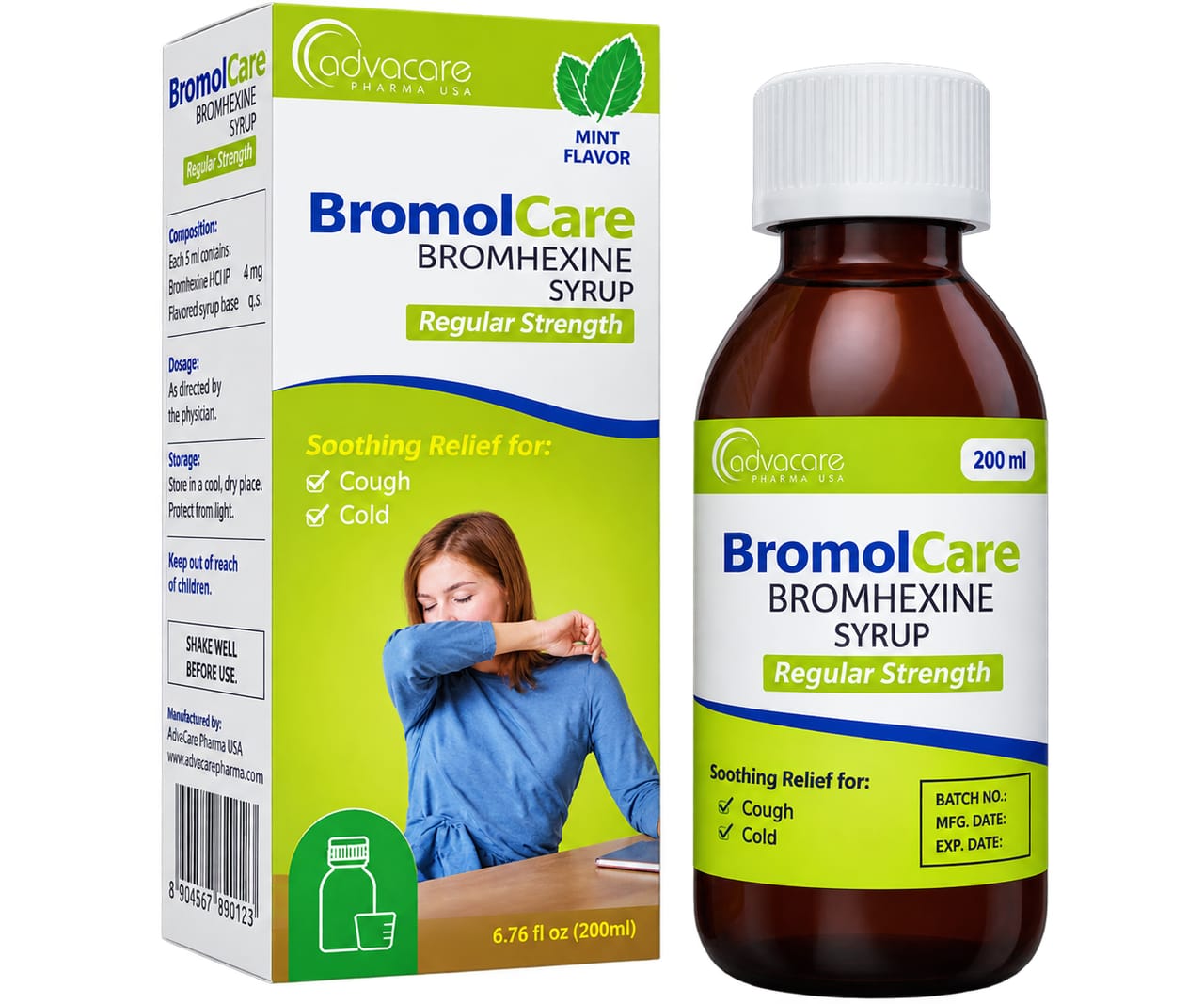
Quick overview
Bromhexine Syrup contains bromhexine hydrochloride, a mucolytic agent that thins and breaks down thick or excessive mucus in the respiratory system to make breathing easier. It is a synthetic version of the alkaloid vasicine and is generally available without a prescription. It is used for conditions such as bronchitis, chest congestion, and productive cough, and is not recommended for children under 2 years old.
What is Bromhexine Syrup
Bromhexine hydrochloride is a medicine used to thin out and break down excessive or thick mucus that gets clogged in the respiratory system, making breathing easier. It is a synthetic version of the alkaloid vasicine and is available without a prescription at most pharmacies.
Bromhexine Syrup uses
- Respiratory tract infections
- Bronchopulmonary diseases such as bronchitis, emphysema, tracheobronchitis and chronic asthmatic bronchitis
- Productive cough
- Common cold and influenza
- Chest congestion
- Chronic respiratory conditions including COPD, emphysema, and asthma
- Preventing respiratory complications after surgery
- Helping clear tracheobronchial foreign substances, such as contrast media used in radiology
Benefits of Bromhexine Syrup
- Reduces mucus thickness and helps clear it from the respiratory tract
- Starts working within 30 minutes of taking it
- Full effect appears after 2-3 days of treatment
- Helps you breathe more easily by thinning sticky mucus
How Bromhexine Syrup works
Bromhexine works by increasing watery secretions in the airways to dilute thick mucus, boosting the activity of tiny hair-like structures (cilia) that move mucus out of the lungs, and breaking down the chemical structure of mucus so it becomes easier to cough up.
Bromhexine Syrup dosage
Take tablets whole with a glass of water. If taking syrup, measure the dose using the measuring cup provided by the manufacturer. This medicine can be taken with or without food, and should be taken before or after meals. It is not recommended for children under 2 years old, and should not be used for more than two weeks without medical supervision.
| Age group | Dose |
|---|---|
| Under 2 years | Not recommended unless specifically prescribed |
| 2–5 years | 2.5 mL 3 times daily |
| 6–11 years | 5 mL 3 times daily |
| 12–64 years | 10 mL 3 times daily |
| 65+ years | Usually adult dosing; medical assessment may be appropriate |
Available forms and strengths
- Tablet
- Syrup (oral suspension)
Side effects of Bromhexine Syrup
Common
- Nausea
- Vomiting
- Diarrhoea
- Abdominal pain
- Headache
- Dizziness
- Skin rash, hives (urticaria), or itching
- Sweating
- Increased liver enzyme (aminotransferase) levels in some cases
Serious
- Severe allergic reactions including anaphylactic shock and angioedema (rapid swelling of skin and tissues)
- Severe skin reactions such as erythema multiforme, Stevens-Johnson syndrome, toxic epidermal necrolysis, and acute generalised exanthematous pustulosis
- Trouble breathing normally
Warnings and precautions
Do not take this medicine if you are allergic to bromhexine hydrochloride or any of its ingredients, if you have an active stomach or duodenal ulcer, or if you have severe liver impairment. It should not be given to children under 2 years old.
- Patients with active tuberculosis and asthmatic patients being treated with bromhexine need special care.
- There have been reports of severe skin reactions with this medicine, including reactions affecting the mouth, throat, nose, eyes, and genitals.
- In some cases, this medicine can increase the amount of fluid mucus in the airways to the point it can't be coughed out, and the patient may need to be intubated to keep the airway clear.
- This medicine should not be combined with cough medicines, especially those containing codeine, or with medicines that act like atropine.
- Patients with a history of stomach ulcers should use this medicine carefully, since it can affect the stomach's protective lining.
- This medicine should not be used together with monoamine oxidase inhibitors (MAOIs) taken within the past two weeks.
- It is not advisable to use this medicine during pregnancy, especially in the first trimester. Talk to your doctor before taking it if you are pregnant or planning a pregnancy.
- Bromhexine passes into breast milk. Since there isn't enough safety information, it's best to avoid using it while breastfeeding, or avoid breastfeeding if you must use it.
- People with severe kidney problems need close medical supervision, as the body may clear the drug more slowly.
- This medicine should not be used by people with severe liver impairment, and those with liver problems need close medical supervision.
- Dizziness is a possible side effect, so avoid driving or operating machinery while taking this medicine.
Storage
- Keep out of the reach and sight of children
- Do not use after the expiry date stated on the package
- Store below 25°C
- Keep at room temperature, shielded from excessive warmth, dampness, and direct sunshine
When to see a doctor
- If you develop a skin rash, including sores in the mouth, throat, nose, eyes, or genitals, stop taking this medicine and contact your doctor right away.
- If you experience allergic reactions or skin reactions, stop taking the medicine immediately and contact your doctor.
- If you take too much of this medicine, get medical help right away, as overdose can cause vomiting, nausea, stomach pain, irregular heartbeat, drowsiness, lightheadedness, coordination problems, or trouble breathing.
Alternatives
- Erdosteine
- Carbocisteine
- Acetylcysteine (NAC)
- Guaifenesin
- Ambroxol
Watch the video
FAQs
What is Bromhexine Syrup used for?
It is used for respiratory tract infections, bronchopulmonary diseases like bronchitis and emphysema, productive cough, common cold and influenza, chest congestion, and chronic conditions such as COPD and asthma.
How long does Bromhexine Syrup take to work?
It starts working within 30 minutes of taking it, with the full effect appearing after 2-3 days of treatment.
What is the dosage of Bromhexine Syrup for children?
Children aged 2–5 years take 2.5 mL three times daily, and children aged 6–11 years take 5 mL three times daily. It is not recommended for children under 2 years unless specifically prescribed.
What are the side effects of Bromhexine Syrup?
Common side effects include nausea, vomiting, diarrhoea, abdominal pain, headache, dizziness, skin rash or itching, and sweating. Serious effects include severe allergic reactions and severe skin reactions like Stevens-Johnson syndrome.
Can Bromhexine Syrup be used during pregnancy?
It is not advisable to use it during pregnancy, especially in the first trimester, so you should talk to your doctor before taking it if pregnant or planning a pregnancy.
General information, not medical advice
Your prescriber and the leaflet in your pack know your situation. This page does not.
- Follow your prescriber and the leaflet
- Don't start, stop, or change a dose on your own
- Doses and warnings differ by country and product
Sources
Video
Related medicines

Ambrolite Syrup: Uses, Dosage, Side Effects, Precautions and Alternates
Mucolytic agent
Ambrolite Syrup contains Ambroxol, which thins thick mucus to relieve wet cough, chest congestion, and bronchitis. Learn uses, dosage, and side effects.

Mucolite Syrup: Uses, Dosage, Side Effects, Precautions and Alternates
Mucolytic agent
Mucolite Syrup contains Ambroxol, which thins thick mucus to relieve cough, chest congestion, and breathing problems. Learn uses, dosage, and side effects.