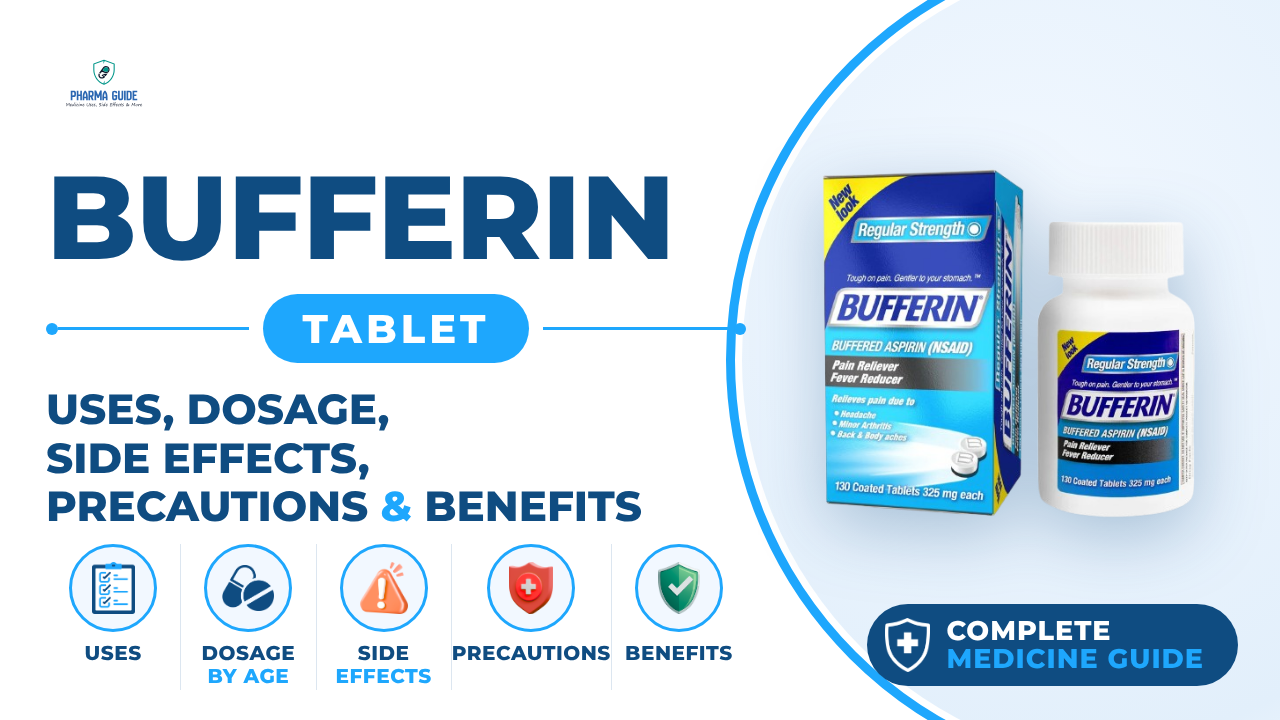
Bufferin Tablet: Uses, Dosage, Side Effects, Precautions and Alternates
| Generic name | Acetylsalicylic acid (aspirin) |
|---|---|
| Drug class | Salicylate / nonsteroidal anti-inflammatory drug (NSAID), combined with a stomach-protecting antacid |
| Forms | Tablet, Chewable tablet, Delayed-release (enteric-coated) tablet, Film-coated tablet, Extended-release tablet, Suppository, Chewing gum |
Quick overview
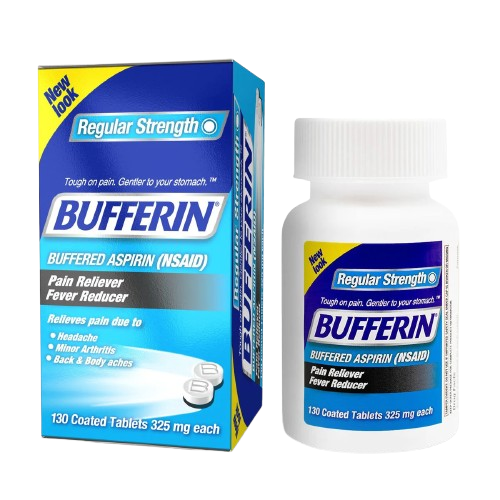
Bufferin Tablet contains acetylsalicylic acid (aspirin), a salicylate and nonsteroidal anti-inflammatory drug (NSAID), combined with a stomach-protecting antacid ingredient. It relieves pain, reduces fever, lowers inflammation, and can reduce blood clotting. The antacid component helps ease the stomach burden that aspirin can otherwise cause.
What is Bufferin Tablet
Bufferin is a combination of aspirin, a pain reliever and fever reducer, and an antacid ingredient that helps protect the stomach. Aspirin belongs to a group of medicines called salicylates and NSAIDs. It relieves pain, reduces fever, lowers inflammation, and can reduce blood clotting.
Bufferin Tablet uses
- Relieving pain such as headache, menstrual pain, joint pain, neuralgia (nerve pain), back pain, muscle pain, and pain from stiff shoulders
- Relieving sore throat, toothache, and pain after tooth extraction
- Relieving pain from bruises, sprains, bone fractures, trauma, and earache
- Reducing chills and fever
- Relieving mild to moderate pain from muscle aches, common cold, and headaches
- Reducing pain and swelling in conditions such as arthritis
Benefits of Bufferin Tablet
- Relieves everyday pain and reduces fever
- The antacid ingredient helps reduce heartburn and stomach upset that aspirin can cause
- Contains no drowsiness-inducing ingredients
How Bufferin Tablet works
Aspirin works by blocking a natural substance in the body that causes pain, fever, and swelling. The added antacid ingredient helps ease the burden on the stomach.
Bufferin Tablet dosage
Avoid taking on an empty stomach. Wait at least six hours between doses. Take with lukewarm or cold water, and drink a full glass of water with it unless your doctor tells you otherwise. Do not lie down for at least 10 minutes after taking this medicine. If stomach upset occurs, you may take it with food or milk. Use only as directed and do not use continuously for extended periods.
To remove tablets, press the tablet through the foil backing rather than swallowing it still in the package, as this can injure the esophagus. Enteric-coated tablets should not be used when fast relief is needed because they take longer to work. Pain medicines work best when taken at the first signs of pain.
| Age group | Dose |
|---|---|
| Under 12 years | Do not use unless directed by a doctor |
| 12 years and older | 2 tablets (650 mg) every 4 hours as needed |
| Adults | 2 tablets (650 mg) every 4 hours as needed |
Available forms and strengths
- Tablet
- Chewable tablet
- Delayed-release (enteric-coated) tablet
- Film-coated tablet
- Extended-release tablet
- Suppository
- Chewing gum
Side effects of Bufferin Tablet
Common
- Feeling faint or dizzy
- Heartburn or indigestion
- Mild-to-moderate abdominal or stomach cramps, pain, or discomfort
- Nausea or vomiting
- Loss of appetite
- Heaviness in the stomach
- Skin rash or redness, itchiness, bruising
- Nosebleed or bleeding from the gums
- Buzzing or ringing in the ears
- Constipation, flatulence, or belching
Serious
- Signs of bleeding in the stomach (bloody, black, or tarry stools; vomiting blood or material that looks like coffee grounds)
- Gastrointestinal bleeding, ulcer, or perforation
- Hearing loss
- Signs of a serious allergic reaction (shock/anaphylaxis): itchy skin, hives, hoarse voice, sneezing, itchy throat, difficulty breathing, heart palpitations, feeling faint
- Stevens-Johnson syndrome or toxic epidermal necrolysis (severe fever, bloodshot eyes, eye mucus, lip sores, sore throat, widespread rash or skin redness)
- Impaired liver function (fever, itchiness, rash, jaundice, brown urine, lethargy, loss of appetite)
- Asthma attack (wheezing, gasping, difficulty breathing)
- Aplastic anemia (bruising, nosebleed, gum bleeding, pale skin, fatigue, palpitations, shortness of breath, dizziness, bloody urine)
- Intracranial bleeding or seizures
Warnings and precautions
- Do not use this product if you have ever had an allergic reaction to it or its ingredients, or an asthma attack after taking a pain reliever, fever reducer, or cold medicine. Do not use this product if you are under 15 years old. Do not take other pain relievers, fever reducers, cold medicines, or sedatives while using this product. Do not use this product continuously for extended periods.
- Children, teenagers, and young adults should not take aspirin when they have chickenpox, influenza, or flu-like illnesses because of the risk of Reye's syndrome, a possibly life-threatening condition. Aspirin should be stopped at least one week before planned surgery, including minor procedures like dental extractions, because of the risk of bleeding. Do not take aspirin if you are prone to bleeding, have an active or past stomach ulcer, or are using methotrexate at 15 mg or more per week.
- Do not use this product if you are pregnant and expecting to give birth within 12 weeks. Using aspirin at 20 weeks or later in pregnancy may harm the baby's kidneys and cause low amniotic fluid. In the third trimester it can increase bleeding risk and cause heart problems in the baby. Use only if the benefits outweigh the risks and talk to your doctor.
- Aspirin passes into breast milk and may affect your baby. Ask a doctor before use if you are breast-feeding, and talk to your doctor about whether you should continue breast-feeding.
- If you have reduced kidney function or kidney disease, talk to your doctor before use. Do not take aspirin if you have severe kidney failure.
- Decreased liver function or liver disease may cause this medicine to build up in the body and cause side effects. Talk to your doctor before use, and do not take aspirin if you have severe liver failure.
- Do not consume alcohol before or after taking this product. Taking aspirin daily with alcohol raises the risk of stomach bleeding, so avoid or limit alcohol.
Storage
- Store out of direct sunlight in a cool, dry place, away from moisture and light
- Do not store in the bathroom
- Keep out of reach of children and pets
- Do not transfer to another container or package
- Do not use after the use-by date on the package
- Do not use any aspirin product that has a strong vinegar-like smell
- Avoid damaging the foil protecting tablets you are not planning to use immediately
- Do not dispose of medications in wastewater or household garbage; ask your pharmacist how to dispose of medicines that are no longer needed or expired
When to see a doctor
- Stop use and consult a doctor, pharmacist, or registered seller if you get symptoms such as rash, itching, bruising, stomach bleeding, dizziness, or unusual bleeding
- Seek immediate medical attention if you have signs of shock (anaphylaxis), severe skin reactions, liver problems, an asthma attack, or aplastic anemia
- If symptoms do not improve after 5 or 6 doses, stop use and consult a doctor, dentist, pharmacist, or registered seller
- Get medical help right away if you are treating a headache and also have trouble speaking, weakness on one side of the body, or sudden vision changes
- Stop taking the medicine and seek immediate medical attention if you have signs of stomach bleeding, hearing loss, or a serious allergic reaction such as difficulty breathing or swelling of the face and throat
Alternatives
- Paracetamol Tablet
- Ibuprofen
- Naproxen
FAQs
What is Bufferin Tablet used for?
Bufferin is used to relieve pain such as headache, menstrual pain, joint pain, back pain, and muscle pain, as well as sore throat, toothache, earache, and pain from bruises, sprains, or fractures. It also reduces fever and chills, and helps with pain and swelling from conditions like arthritis.
How does Bufferin Tablet work?
Aspirin works by blocking a natural substance in the body that causes pain, fever, and swelling. The added antacid ingredient helps ease the burden on the stomach that aspirin can otherwise cause.
What is the dosage of Bufferin Tablet?
For those 12 years and older and adults, the dose is 2 tablets (650 mg) every 4 hours as needed. It should not be used in children under 12 unless directed by a doctor. Avoid taking it on an empty stomach, wait at least six hours between doses, and drink a full glass of water with it.
What are the common side effects of Bufferin Tablet?
Common side effects include feeling faint or dizzy, heartburn or indigestion, mild stomach cramps or pain, nausea or vomiting, loss of appetite, skin rash or itchiness, nosebleed or gum bleeding, ringing in the ears, and constipation or flatulence.
Can children take Bufferin Tablet?
No, Bufferin should not be used in children, teenagers, or young adults with chickenpox, influenza, or flu-like illnesses due to the risk of Reye's syndrome, and it should not be used by anyone under 15 years old.
Sources
Video