
Safety
General information, not medical advice
Your prescriber and the leaflet in your pack know your situation. This page does not.
- Follow your prescriber and the leaflet
- Don't start, stop, or change a dose on your own
- Doses and warnings differ by country and product
Bydureon Injection: Uses, Dosage, Side Effects, Precautions and Alternates
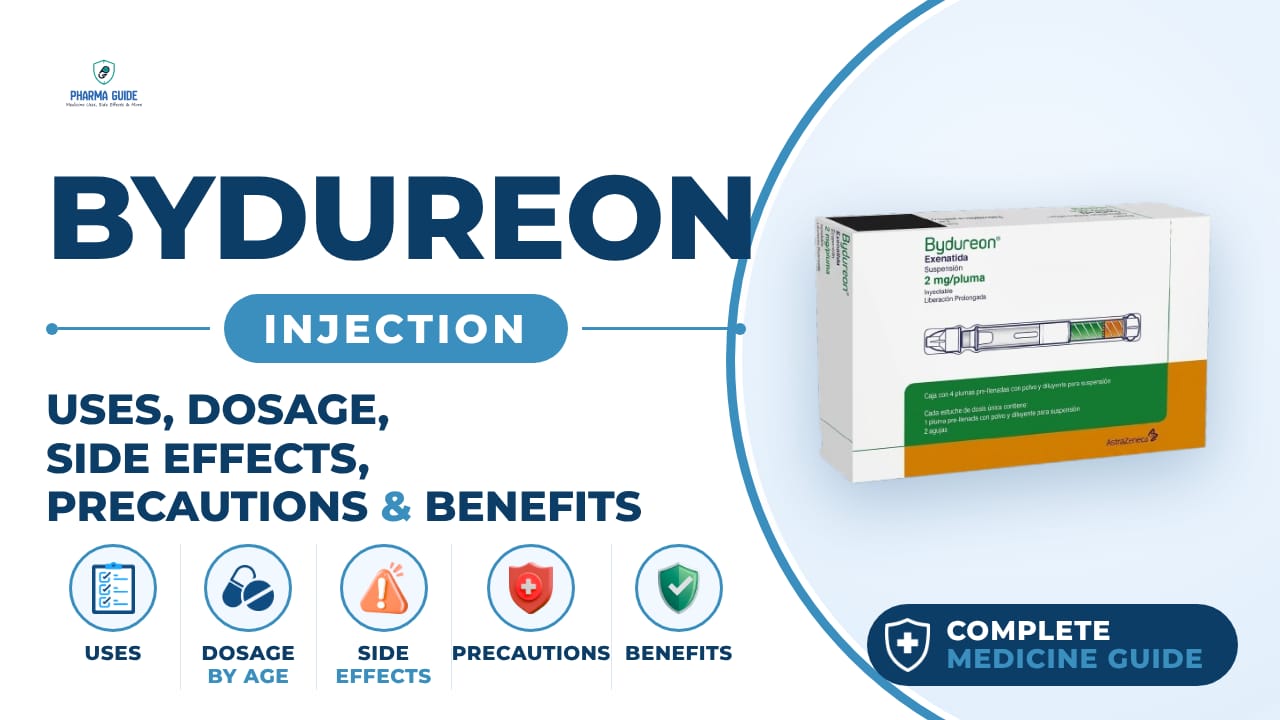
| Generic name | exenatide |
|---|---|
| Drug class | Glucagon-like Peptide-1 (GLP-1) receptor agonist |
| Forms | Injection |
Quick overview
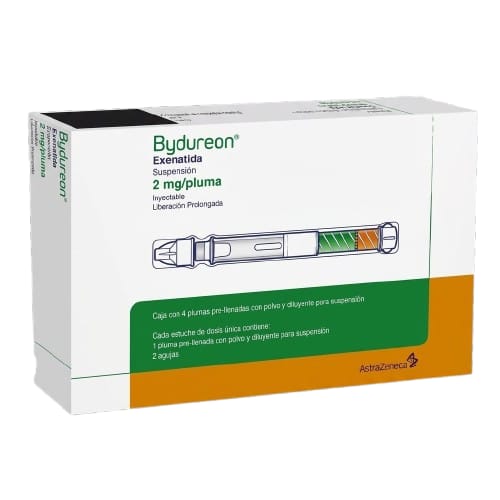
Bydureon is an injectable prescription medicine used along with diet and exercise to improve blood sugar control in adults and children 10 years and older with type 2 diabetes. It is an extended-release form of exenatide given once a week. The generic name is exenatide, and it belongs to the Glucagon-like Peptide-1 (GLP-1) receptor agonist drug class.
What is Bydureon Injection
Bydureon is an injectable prescription medicine used along with diet and exercise to improve blood sugar control in adults and children 10 years and older with type 2 diabetes. It is an extended-release form of exenatide given once a week.
Bydureon Injection uses
- Type 2 diabetes mellitus.
- Improving blood sugar control alongside diet and exercise.
- Additional blood sugar control when other diabetes medicines are insufficient.
Benefits of Bydureon Injection
- Helps lower blood sugar.
- Improves glucose control.
- Supports blood sugar management with diet and exercise.
- May help reduce appetite.
- May support weight reduction in some patients.
How Bydureon Injection works
Bydureon works by mimicking a natural gut hormone called GLP-1. When it attaches to the GLP-1 receptor, it causes the body to release more insulin after eating, which helps lower blood sugar.
Bydureon Injection dosage
Inject Bydureon under the skin of the stomach area, thigh, or upper arm — never into a muscle or vein. Use it one time each week, on the same day each week, at any time of day, with or without food.
Change (rotate) your injection site each week; do not use the exact same spot every time. Do not mix insulin and this medicine together in the same injection, though they can be given in the same body area if not right next to each other.
If you miss a dose, take it as soon as possible if your next dose is at least 3 days away; otherwise skip it and resume your regular schedule. Do not take two doses within 3 days of each other. You may change your weekly injection day as long as the last dose was given 3 or more days before.
Caregivers should help children with mixing and injecting this medicine. Inject the medicine right away after it is mixed — it cannot be saved for later use.
| Age group | Dose |
|---|---|
| Under 18 years | Not recommended |
| 18–64 years | 2 mg, once/week |
| 65+ years | 2 mg, once/week |
Available forms and strengths
Injection.
Side effects of Bydureon Injection
Common
- Nausea (especially when first starting treatment)
- Diarrhea
- Headache
- Vomiting
- Constipation
- Indigestion
- Itching at the injection site
- A small bump (nodule) at the injection site
- Decreased appetite
- Dizziness
Serious
- Possible thyroid tumors, including cancer — lump or swelling in the neck, hoarseness, trouble swallowing, or shortness of breath
- Inflammation of the pancreas (pancreatitis) — severe stomach pain that does not go away, sometimes spreading to the back, with or without vomiting
- Low blood sugar (hypoglycemia), especially when used with insulin or a sulfonylurea — dizziness, confusion, sweating, shakiness, fast heartbeat, hunger, jitteriness
- Dehydration leading to kidney problems — persistent nausea, vomiting, or diarrhea
- Severe or persistent stomach problems
- Serious allergic reactions — swelling of the face, lips, tongue, or throat; trouble breathing or swallowing; fast heartbeat; severe rash or itching; fainting or dizziness
- Low blood platelet count — unusual bleeding or bruising, which can be serious and continue for about 10 weeks after stopping the medicine
- Serious injection-site reactions — severe pain, swelling, blisters, an open wound, or a dark scab, sometimes requiring surgery
- Gallbladder problems — pain in the upper stomach, yellowing of skin or eyes, fever, clay-colored stools
- Increased risk of food or liquid entering the lungs during surgery or procedures using anesthesia or deep sedation
Warnings and precautions
This medicine caused thyroid tumors, including a type of thyroid cancer, in animal studies. It is not known if it causes thyroid tumors in people. Do not use this medicine if you or a family member has had a type of thyroid cancer called medullary thyroid carcinoma, or if you have Multiple Endocrine Neoplasia syndrome type 2.
This medicine has been linked to cases of acute pancreatitis, including rare fatal cases. Watch for persistent severe stomach pain, sometimes spreading to the back, which may or may not come with vomiting.
Using this medicine together with insulin or a sulfonylurea increases the risk of low blood sugar.
This medicine can cause serious allergic reactions, including anaphylaxis and swelling of the face, lips, tongue, or throat.
This medicine can cause a serious, sometimes fatal, drop in blood platelets that can lead to severe bleeding.
Serious injection-site reactions, including abscess, cellulitis, and tissue death, have occurred, sometimes requiring surgery.
This medicine slows stomach emptying, which may increase the risk of food or liquid entering the lungs during surgery or procedures requiring anesthesia or deep sedation.
It is not known if this medicine will harm an unborn baby. Tell your doctor if you become pregnant while using it, and discuss the best way to manage your blood sugar if you are pregnant or planning to become pregnant.
It is not known if this medicine passes into breast milk. Talk with your doctor about the best way to feed your baby if you are breastfeeding.
This medicine is not recommended for people with significantly reduced kidney function, and it has not been studied in people with severe kidney impairment or kidney failure needing dialysis.
This medicine has not been studied in people with liver problems.
Alcohol use can affect blood sugar levels and increase the risk of low blood sugar. Ask your doctor how much alcohol, if any, is safe for you while using this medicine.
If you use this medicine with another drug that can cause low blood sugar, take care while driving or using machinery because low blood sugar can affect your concentration and reaction time.
Storage
- Store in the refrigerator at 36°F to 46°F (2°C to 8°C)
- Can be kept at room temperature not above 77°F (25°C) for up to 4 weeks if needed
- Do not freeze; do not use if it has been frozen
- Protect from light
- Keep in its sealed tray until ready for use
- Keep out of the reach of children
- Dispose of used needles and pens right away in an FDA-cleared sharps disposal container; do not throw loose needles or pens in household trash
When to see a doctor
- Get medical help right away if you have symptoms of a serious allergic reaction, such as swelling of the face, lips, tongue, or throat, trouble breathing or swallowing, fainting, a very fast heartbeat, or severe rash or itching.
- Stop using this medicine and call your doctor right away if you have severe stomach pain that will not go away, with or without vomiting, as this could be pancreatitis.
- Tell your healthcare provider if you get a lump or swelling in your neck, hoarseness, trouble swallowing, or shortness of breath, as these may be signs of a thyroid tumor.
- Stop using this medicine and call your doctor right away if you have unusual bleeding or bruising, which could be a sign of a dangerously low platelet count.
- Call your healthcare provider if you notice severe pain, swelling, blisters, an open wound, or a dark scab at an injection site.
- Tell your healthcare provider right away if you have symptoms of gallbladder problems, such as pain in your upper stomach, yellowing of your skin or eyes, fever, or clay-colored stools.
- Call your healthcare provider right away if you have nausea, vomiting, or diarrhea that does not go away, as this can lead to dehydration and kidney problems.
- Tell all your healthcare providers that you are taking this medicine before any planned surgery or procedure involving anesthesia or deep sedation.
Alternatives
- Ozempic
- Trulicity
- Mounjaro
Watch the video
FAQs
What is Bydureon Injection used for?
Bydureon is used along with diet and exercise to improve blood sugar control in adults and children 10 years and older with type 2 diabetes.
How often do you inject Bydureon?
Bydureon is injected once a week, on the same day each week, at any time of day, with or without food.
What happens if I miss a dose of Bydureon?
If you miss a dose, take it as soon as possible if your next dose is at least 3 days away; otherwise skip it and resume your regular schedule. Do not take two doses within 3 days of each other.
What are the serious side effects of Bydureon?
Serious side effects include possible thyroid tumors, pancreatitis, low blood sugar, dehydration leading to kidney problems, serious allergic reactions, low blood platelet count, serious injection-site reactions, and gallbladder problems.
How should Bydureon be stored?
Store Bydureon in the refrigerator at 36°F to 46°F, though it can be kept at room temperature not above 77°F for up to 4 weeks if needed. Do not freeze it, and protect it from light.
General information, not medical advice
Your prescriber and the leaflet in your pack know your situation. This page does not.
- Follow your prescriber and the leaflet
- Don't start, stop, or change a dose on your own
- Doses and warnings differ by country and product
Sources
Video
Related medicines
Byetta Injection: Uses, Dosage, Side Effects, Precautions and Alternates
glucagon-like peptide-1 (GLP-1) receptor agonist
Byetta Injection (exenatide) is a twice-daily GLP-1 medicine for type 2 diabetes used with diet and exercise. Learn dosage, side effects, and warnings.
Bydureon BCise Injection: Uses, Dosage, Side Effects, Precautions and Alternates
glucagon-like peptide-1 (GLP-1) receptor agonist
Bydureon BCise Injection (exenatide) is a once-weekly GLP-1 medicine for type 2 diabetes in adults and children 10+, used with diet and exercise.