
Safety
General information, not medical advice
Your prescriber and the leaflet in your pack know your situation. This page does not.
- Follow your prescriber and the leaflet
- Don't start, stop, or change a dose on your own
- Doses and warnings differ by country and product
Carisoprodol Tablet: Uses, Dosage, Side Effects, Precautions and Alternates
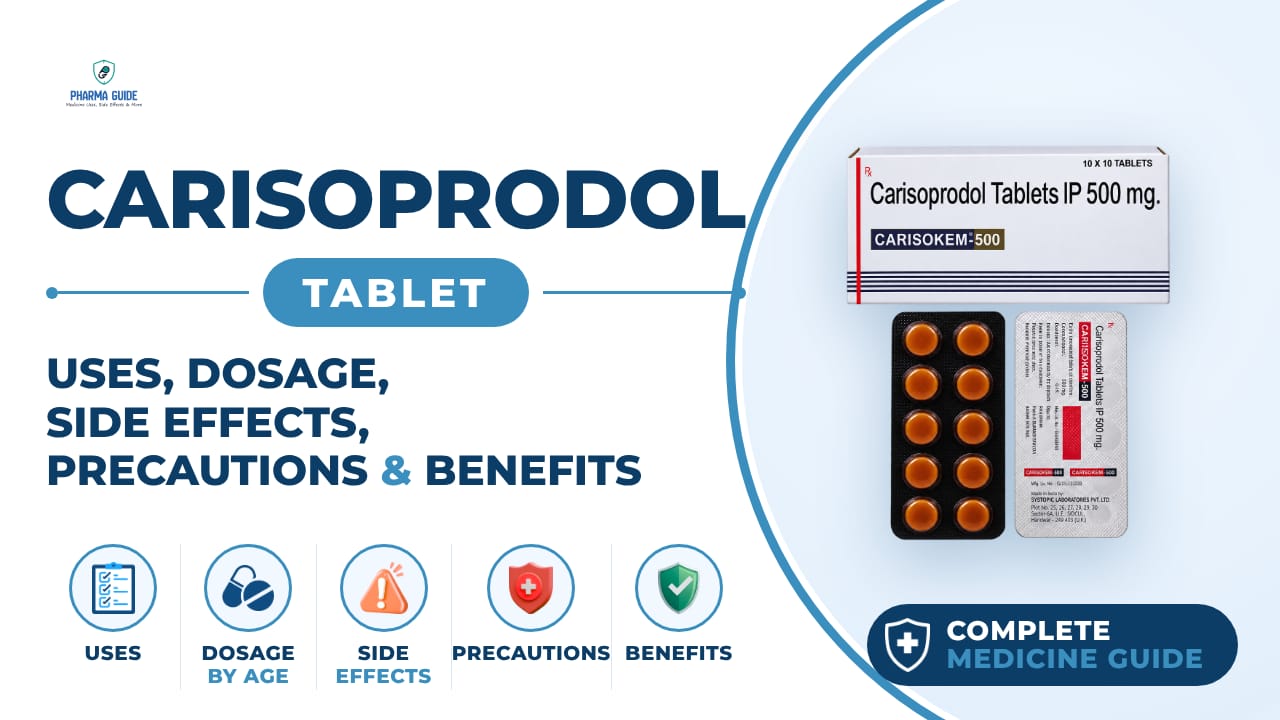
| Generic name | Carisoprodol |
|---|---|
| Drug class | Skeletal muscle relaxant |
| Forms | Tablet (250 mg and 350 mg) |
Quick overview
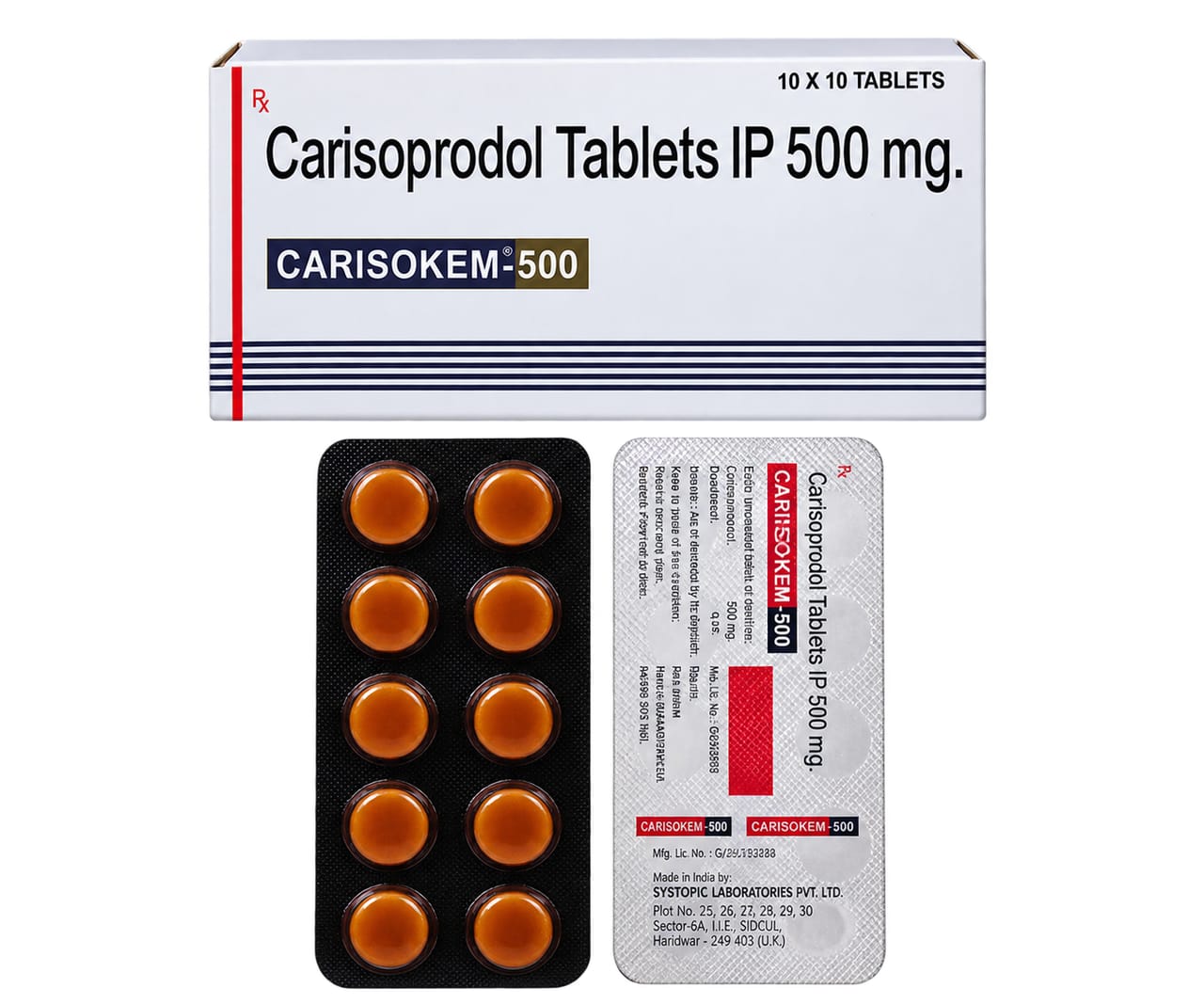
Carisoprodol Tablet is a prescription skeletal muscle relaxant used along with rest and physical therapy to relieve pain and discomfort from muscle strains, sprains, and other injuries. It is a controlled substance because it can be misused or lead to dependence. It is intended for short-term use and should be taken exactly as prescribed.
What is Carisoprodol Tablet
Carisoprodol is a prescription muscle relaxer used with rest and physical therapy to relieve pain and discomfort from muscle strains, sprains, and other injuries. It is a controlled substance because it can be misused or lead to dependence.
Carisoprodol Tablet uses
- Relief of discomfort from short-term, painful muscle, bone, and joint conditions in adults
- Used along with rest, physical therapy, and other measures to relax muscles and relieve pain from strains, sprains, and other muscle injuries
Benefits of Carisoprodol Tablet
- Helps relieve discomfort from acute, painful musculoskeletal conditions
- Patients treated with carisoprodol experienced improvement in function and relief of back pain compared to placebo in clinical studies
How Carisoprodol Tablet works
Carisoprodol works in the brain and spinal cord to help muscles relax, though exactly how it relieves muscle discomfort is not fully understood. It does not act directly on the muscles themselves.
Carisoprodol Tablet dosage
This medicine is taken by mouth, usually three times a day and at bedtime. It can be taken with or without food. It should only be used for short periods, up to two or three weeks, unless your doctor says otherwise. Take it exactly as prescribed; do not take more, less, or more often than directed.
Do not stop taking this medicine suddenly after using it for a long time without talking to your doctor first, since this may cause withdrawal symptoms. It is not recommended for children younger than 16 years old. Older adults should talk with their doctor about the risks and benefits, since this medicine may not be as safe for them as other options.
If you miss a dose, take it as soon as you remember, but skip it if it is almost time for your next dose; do not take two doses at once.
| Age group | Dose |
|---|---|
| Under 16 years | Not recommended |
| 16–64 years | 250–350 mg, 4 times/day |
| 65+ years | 250 mg, 4 times/day |
Available forms and strengths
- Tablet (250 mg and 350 mg)
Side effects of Carisoprodol Tablet
Common
- Drowsiness
- Dizziness
- Headache
Serious
- Severe allergic reaction (hives, difficulty breathing, swelling of face, lips, tongue, or throat)
- Seizures
- Agitation, hallucinations, fever, sweating, shivering, fast heart rate, muscle stiffness, twitching, loss of coordination, nausea, vomiting, diarrhea (signs of high serotonin levels)
- Trouble breathing
- Sudden confusion or feeling disoriented
- Feeling paranoid
- Suicidal thoughts or actions
Warnings and precautions
- This medicine can cause sleepiness and may affect your ability to safely drive or operate machinery, and has been linked to car accidents.
- It can be misused and may lead to dependence or withdrawal symptoms, especially with long-term use. Do not take it for longer than prescribed, and do not stop suddenly without talking to your doctor.
- Seizures have been reported in people taking this medicine, often when combined with other drugs or alcohol. This medicine should not be used by people with a history of a certain blood disorder called acute intermittent porphyria, or by those allergic to carisoprodol or related medicines like meprobamate.
- Combining this medicine with alcohol or other drugs that cause drowsiness (such as opioids, benzodiazepines, or certain antidepressants) can add to the sedative effects and increase danger.
- It is not known for certain how this medicine affects pregnancy. Tell your doctor if you are pregnant or planning to become pregnant so they can weigh the benefits and risks for you.
- This medicine passes into breast milk and may cause drowsiness in a nursing baby. Tell your doctor if you are breastfeeding so your baby can be watched for signs of sleepiness.
- This medicine is removed from the body by the kidneys, so people with kidney problems should use it carefully and talk to their doctor first.
- This medicine is broken down by the liver, so people with liver problems should use it carefully and talk to their doctor first.
- Do not drink alcohol while taking this medicine, as it can increase drowsiness and dizziness and may lead to dangerous or even deadly effects.
- This medicine can make you drowsy or dizzy. Do not drive a car, operate machinery, or do anything that requires alertness until you know how this medicine affects you.
Storage
- Store at room temperature, between 68°F and 77°F (20°C to 25°C)
- Can be exposed to temperatures between 59°F to 86°F (15°C to 30°C) for shorter periods, such as during transport
- Store in a cool, dry place away from moisture and heat (not in the bathroom)
- Keep the medication in its original container, tightly closed, and out of the sight and reach of children
- Dispose of unneeded medication through a medicine take-back program rather than flushing it down the toilet
When to see a doctor
- Get emergency help right away if you have signs of a severe allergic reaction, such as hives, trouble breathing, or swelling of the face, lips, tongue, or throat.
- Stop taking this medicine and call your doctor right away if you have a seizure or signs of high serotonin levels like agitation, hallucinations, fever, sweating, fast heart rate, muscle stiffness, twitching, loss of coordination, nausea, vomiting, or diarrhea.
- Call for emergency help if you suspect an overdose, especially if the person has collapsed, had a seizure, is having trouble breathing, or cannot be woken up.
- Call your healthcare provider right away if you have withdrawal symptoms like trouble sleeping, vomiting, stomach cramps, headache, tremors, trouble with balance, or hallucinations after stopping this medicine.
Alternatives
- Baclofen
- Cyclobenzaprine
- Methocarbamol
Watch the video
FAQs
What is Carisoprodol Tablet used for?
It is used along with rest, physical therapy, and other measures to relieve discomfort from short-term, painful muscle, bone, and joint conditions like strains and sprains in adults.
How is Carisoprodol Tablet taken?
It is taken by mouth, usually three times a day and at bedtime, with or without food, and should only be used for short periods of up to two or three weeks unless a doctor says otherwise.
What are the common side effects of Carisoprodol Tablet?
Common side effects include drowsiness, dizziness, and headache.
Can I drink alcohol while taking Carisoprodol Tablet?
No, alcohol should be avoided while taking this medicine because it can increase drowsiness and dizziness and may lead to dangerous or even deadly effects.
Is Carisoprodol Tablet safe during pregnancy or breastfeeding?
It is not known for certain how this medicine affects pregnancy, and it passes into breast milk and may cause drowsiness in a nursing baby, so you should tell your doctor if you are pregnant or breastfeeding.
General information, not medical advice
Your prescriber and the leaflet in your pack know your situation. This page does not.
- Follow your prescriber and the leaflet
- Don't start, stop, or change a dose on your own
- Doses and warnings differ by country and product
Sources
Video
Related medicines
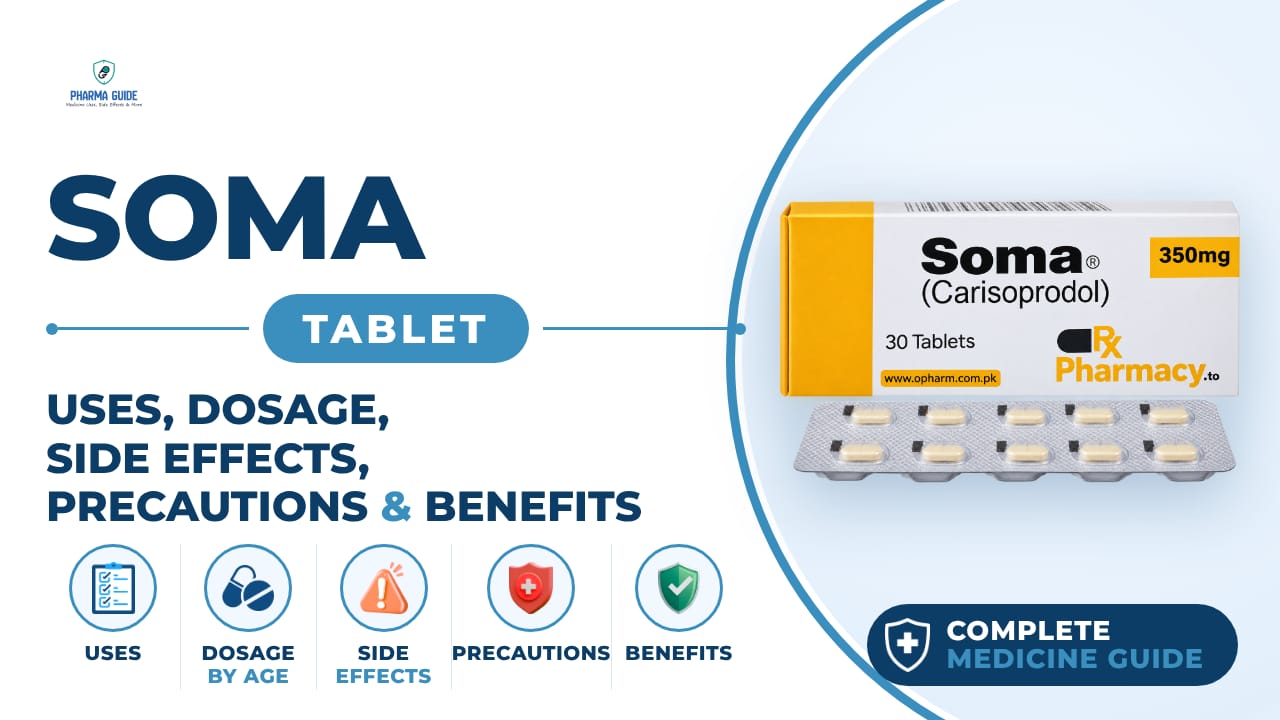
Soma Tablet: Uses, Dosage, Side Effects, Precautions and Alternates
Skeletal muscle relaxant
Soma Tablet (carisoprodol) is a muscle relaxant for short-term muscle pain relief. Learn about its uses, dosage, side effects, and safety warnings.
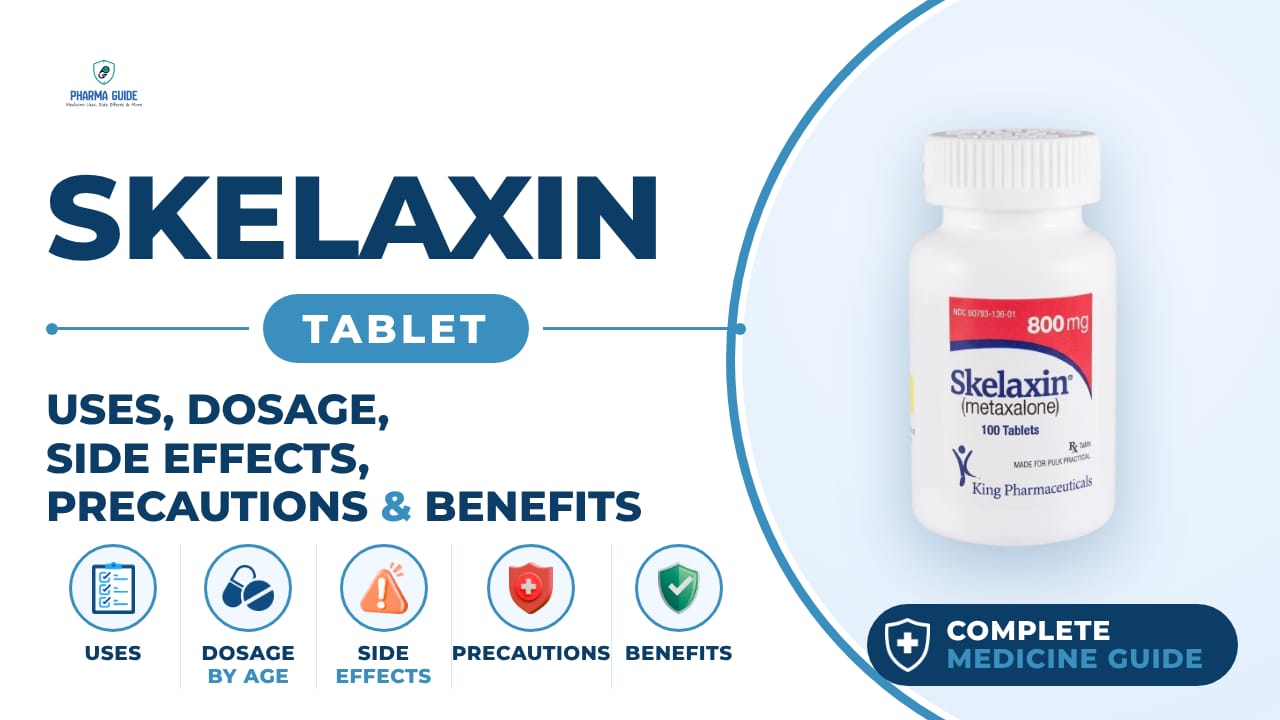
Skelaxin Tablet: Uses, Dosage, Side Effects, Precautions and Alternates
Skeletal muscle relaxant
Skelaxin Tablet (metaxalone) is a prescription muscle relaxant for short-term relief of painful muscle spasms. Learn uses, dosage, and side effects.