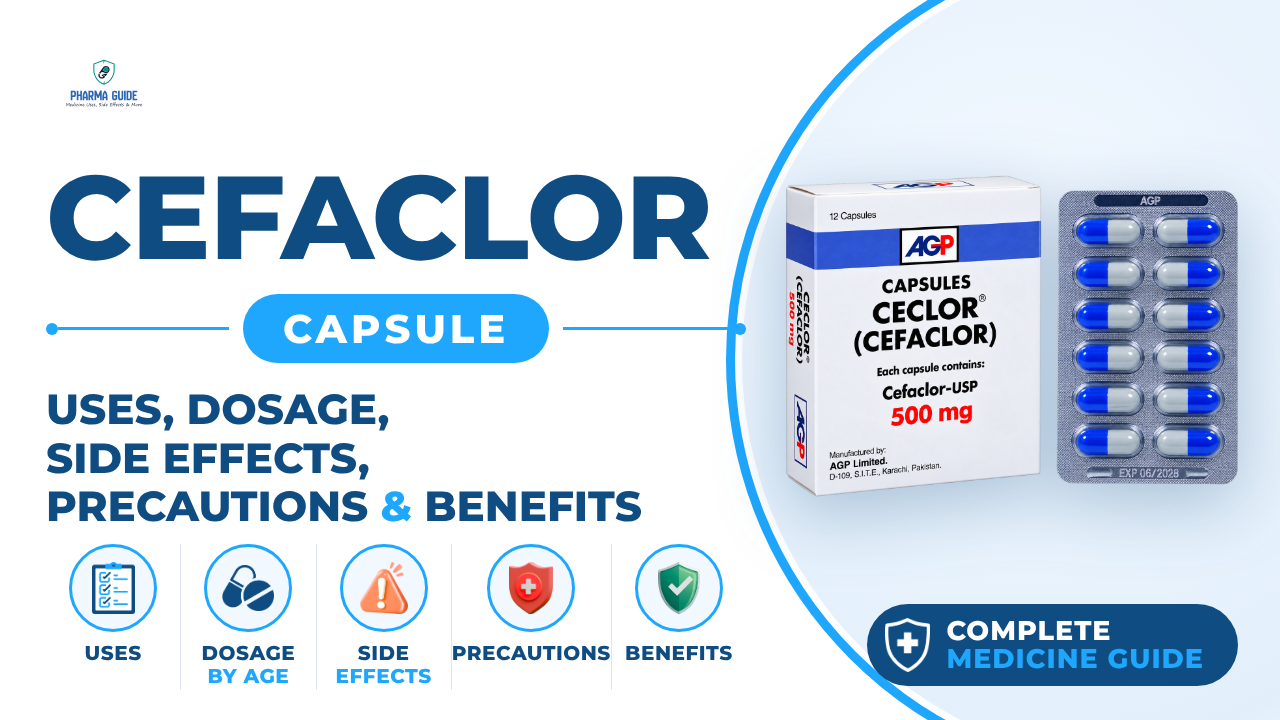
Cefaclor Capsule: Uses, Dosage, Side Effects, Precautions and Alternates
| Generic name | Cefaclor |
|---|---|
| Drug class | Cephalosporin antibiotics (2nd generation) |
| Forms | Capsule, Extended-release tablet, Suspension (liquid) |
Quick overview
Cefaclor Capsule is a second-generation cephalosporin antibiotic used to treat certain bacterial infections, including respiratory, ear, skin, urinary, and throat infections. It works by stopping the growth of bacteria. Most people begin to feel better within the first few days of treatment, and it is important to take it exactly as prescribed and finish the full course.
What is Cefaclor Capsule
Cefaclor is an antibiotic used to treat certain infections caused by bacteria. It belongs to a class of medications called cephalosporin antibiotics and works by stopping the growth of bacteria.
Cefaclor Capsule uses
- Treats certain infections caused by bacteria
- Lower respiratory tract infections, including pneumonia
- Middle ear infections (otitis media)
- Skin and skin structure infections
- Urinary tract infections
- Pharyngitis and tonsillitis
Benefits of Cefaclor Capsule
- Helps clear bacterial infections
- You should begin to feel better during the first few days of treatment
- Treats certain bacterial infections
- Helps treat respiratory tract infections
- Used for ear infections
- Helps treat throat and tonsil infections
- Used for certain skin and soft-tissue infections
- Treats some urinary tract infections (UTIs)
- Helps stop the growth of susceptible bacteria
How Cefaclor Capsule works
Cefaclor works by stopping the growth of bacteria. It binds to proteins in the bacteria that build the cell wall, which stops the wall from forming and kills the bacteria.
Cefaclor Capsule dosage
Take the capsule with or without food. Take with food if it causes an upset stomach. Take cefaclor at around the same times every day. Take it exactly as directed, and do not take more or less of it or take it more often than prescribed by your doctor. Take cefaclor until you finish the prescription, even if you feel better. Antibiotics such as cefaclor will not work for colds, flu, or other viral infections. If you take antacids that contain magnesium or aluminum, do not take them within 1 hour before or 1 hour after this drug. If your symptoms do not improve or get worse, call your doctor.
| Age group | Dose |
|---|---|
| Under 1 month | Not established; specialist guidance required |
| 1 month–11 years | 20–40 mg/kg/day, divided into 3 doses |
| 12–17 years | 250–500 mg every 8 hours |
| 18–64 years | 250–500 mg every 8 hours |
| 65+ years | Adult dose; adjust if significant kidney impairment |
Available forms and strengths
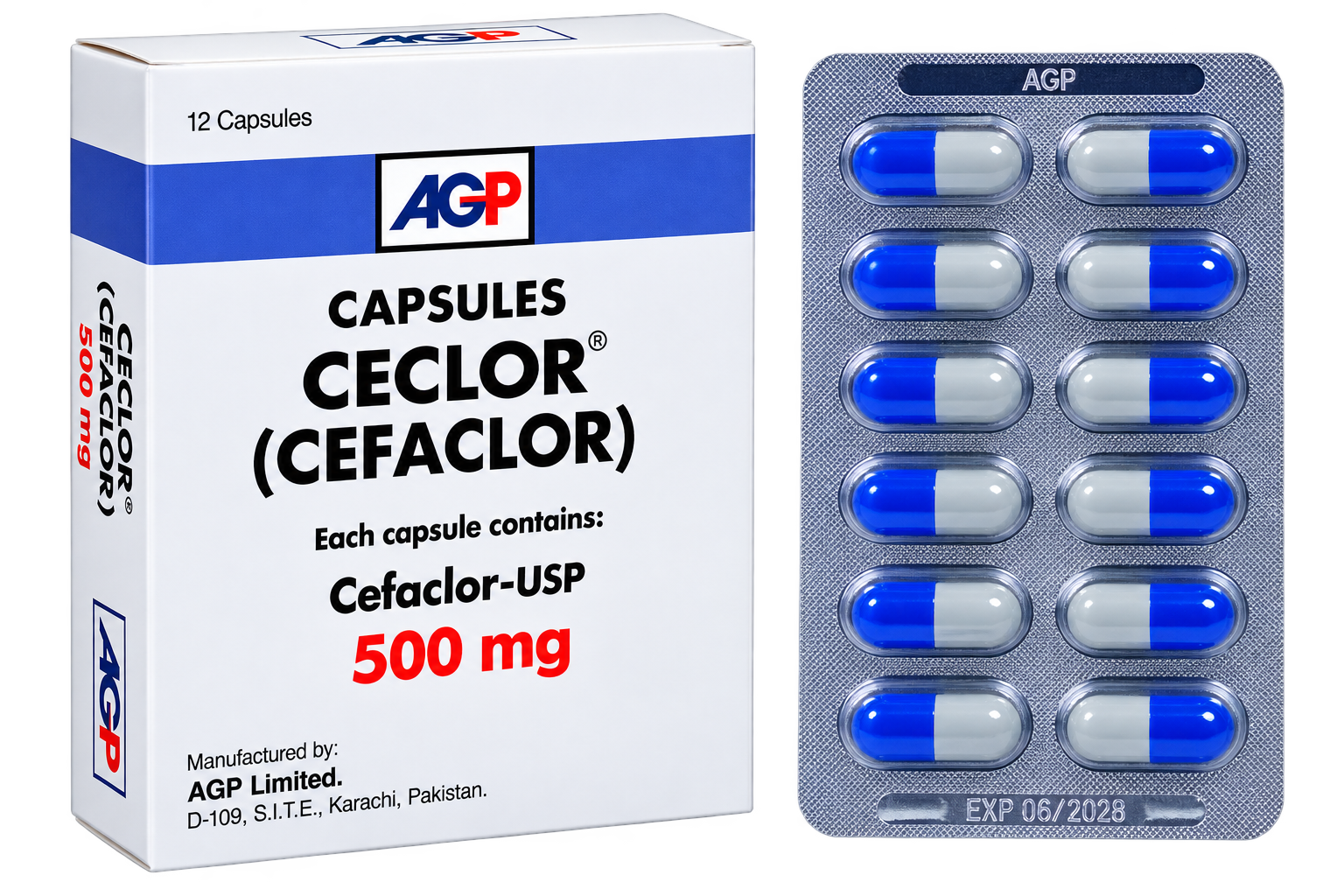
- Capsule
- Extended-release tablet
- Suspension (liquid)
Side effects of Cefaclor Capsule
Common
- Diarrhea
- Nausea
- Vomiting
- Stomach pain
- Headache
- Genital itching
- Vaginitis
Serious
- Rash, hives, difficulty breathing or swallowing, wheezing, swelling of the face, throat, tongue, lips, eyes, arms or legs
- Itching, prickling, burning, or stinging feeling on the skin
- Lack of energy, or feeling faint
- Joint pain
- Watery or bloody stools, stomach cramps, or fever during treatment or for up to two or more months after stopping treatment
- A return of fever, sore throat, chills, or other signs of infection
- Severe skin reaction (Stevens-Johnson syndrome/toxic epidermal necrolysis)
- Seizures
- Severe dizziness or passing out
- Not able to pass urine or change in how much urine is passed
Warnings and precautions
- Cefaclor may make hormonal birth control (pills, patches, rings, and injections) less effective. Use another method of contraception while taking it.
- Take cefaclor until you finish the prescription. Stopping too soon or skipping doses may mean your infection is not fully treated and the bacteria may become resistant to antibiotics.
- A severe diarrhea called C. difficile–associated diarrhea (CDAD) may happen during or up to two months or more after taking antibiotics, and it can lead to a serious bowel problem. Do not treat diarrhea without checking with your doctor first.
- If you are 65 or older, use this drug with care. You could have more side effects.
- Tell your doctor if you are pregnant or plan to become pregnant. Cefaclor should be used during pregnancy only if necessary, and you should discuss the benefits and risks with your doctor.
- Tell your doctor if you are breastfeeding. The effect on nursing infants is unknown, so caution should be used.
- Tell your doctor if you have or have ever had kidney disease. The dose may need to be reduced if your kidney function is low.
Storage
- Keep this medication in the container it came in, tightly closed, and out of reach of children.
- Store the capsules at room temperature in a dry place, away from excess heat and moisture.
- Do not store in a bathroom.
- Keep all drugs out of the reach of children and pets.
- Throw away unused or expired drugs. Do not flush this medication down the toilet or pour down a drain unless told to do so.
- Use a medicine take-back program to dispose of unneeded medication.
When to see a doctor
- Get emergency medical treatment right away if you have signs of an allergic reaction, such as rash, hives, difficulty breathing or swallowing, wheezing, or swelling of the face, throat, tongue, lips, eyes, arms, or legs.
- Call your doctor right away if you have stomach pain, cramps, or very loose, watery, or bloody stools, as this may be a serious bowel problem.
- If you think there has been an overdose, call your local poison control center or get medical care right away. If the person has collapsed, had a seizure, has trouble breathing, or cannot be awakened, immediately call emergency services.
- Get medical help right away for signs of a very bad skin reaction, seizures, severe dizziness or passing out, or if you are not able to pass urine.
Alternatives
- Cefpodoxime
- Cefdinir
- Cefadroxil
- Amoxicillin
- Amoxicillin-Clavulanate
- Azithromycin
- Clarithromycin
FAQs
What is Cefaclor Capsule used for?
It is used to treat certain bacterial infections, including lower respiratory tract infections like pneumonia, middle ear infections, skin infections, urinary tract infections, and pharyngitis or tonsillitis.
How does Cefaclor Capsule work?
Cefaclor works by binding to proteins in bacteria that build the cell wall, which stops the wall from forming and kills the bacteria, stopping their growth.
What is the dosage of Cefaclor Capsule for adults?
Adults aged 18-64 typically take 250-500 mg every 8 hours, taken with or without food, exactly as directed by a doctor until the full prescription is finished.
What are the common side effects of Cefaclor Capsule?
Common side effects include diarrhea, nausea, vomiting, stomach pain, headache, genital itching, and vaginitis.
Can Cefaclor Capsule affect birth control?
Yes, Cefaclor may make hormonal birth control such as pills, patches, rings, and injections less effective, so another method of contraception should be used while taking it.
Sources
Video