Cefixime Syrup: Uses, Dosage, Side Effects, Precautions and Alternates
| Generic name | cefixime |
|---|---|
| Drug class | Cephalosporins (third generation cephalosporin antibiotic) |
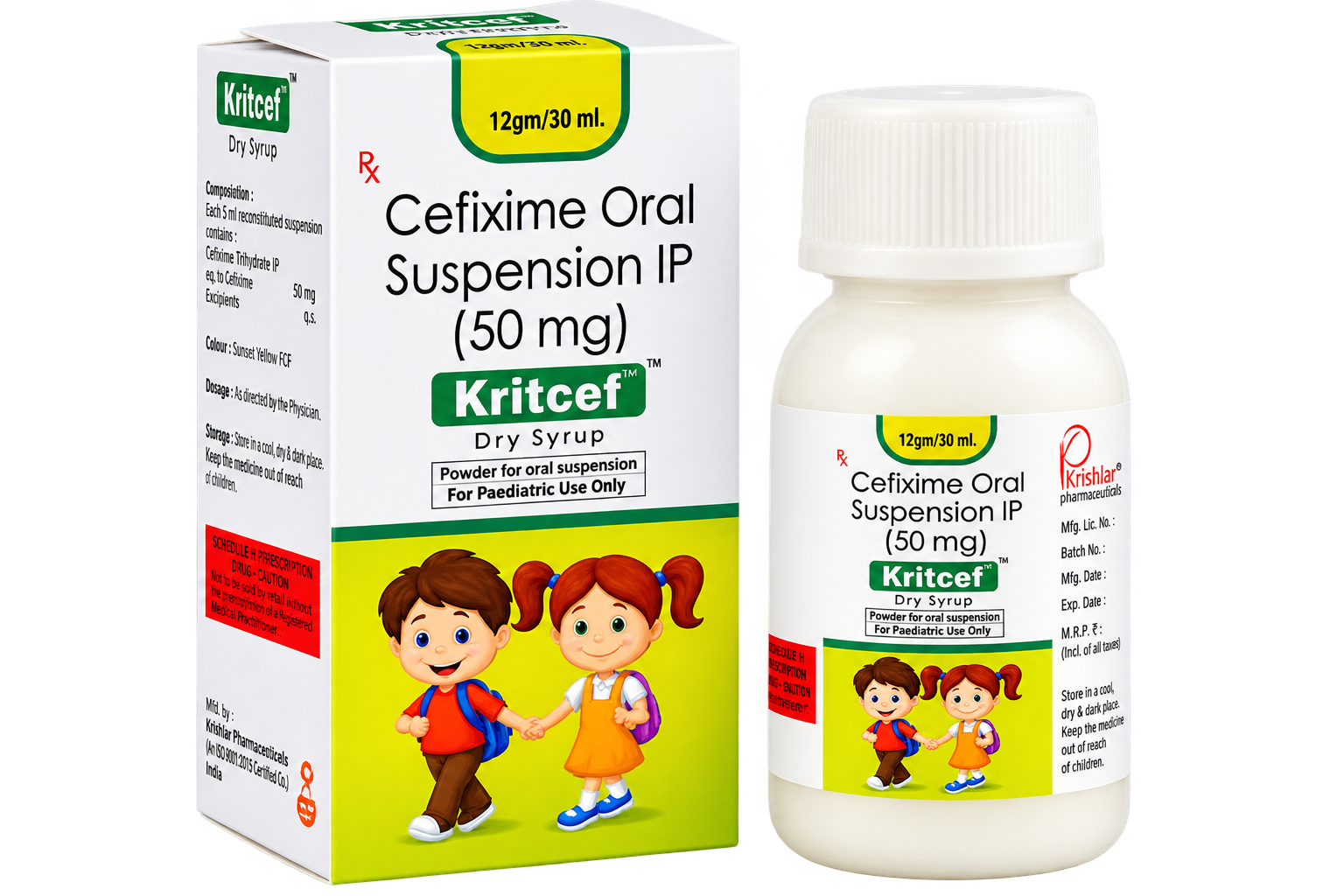
| Forms | Granules for oral suspension, Powder for oral suspension, Oral capsule, Oral tablet, Oral chewable tablet |
Quick overview
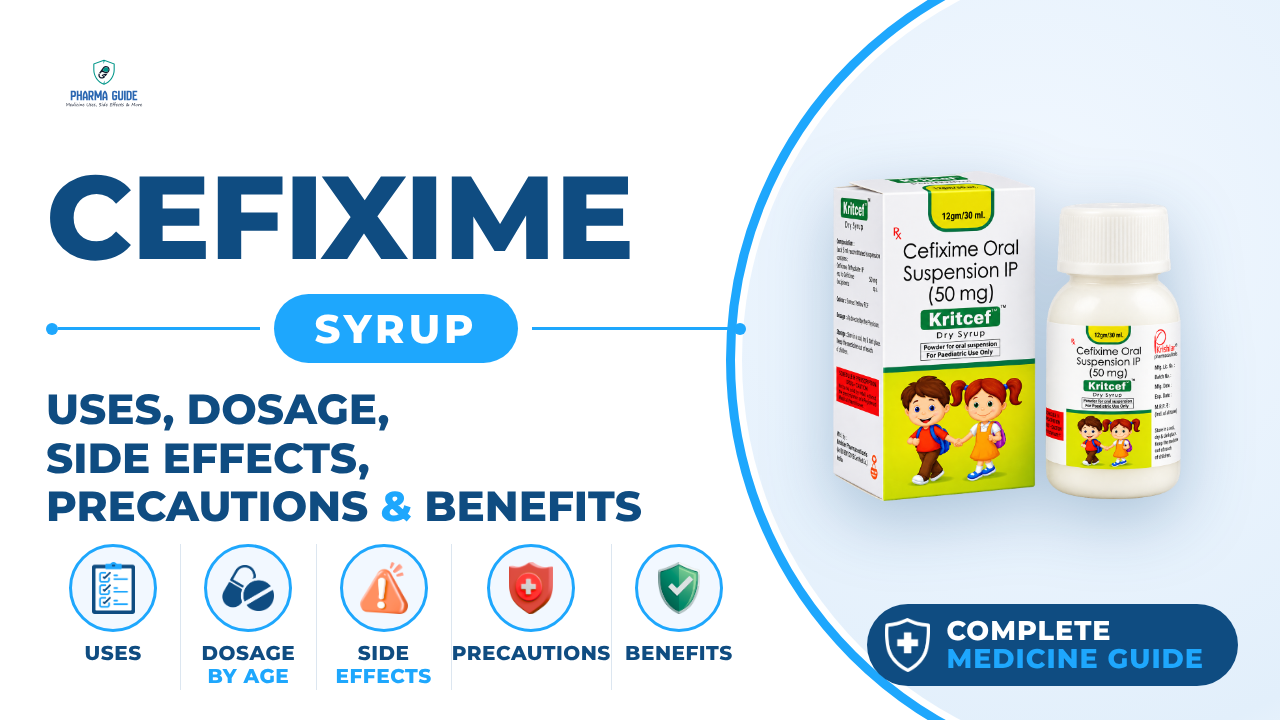
Cefixime Syrup is an antibiotic belonging to the cephalosporin group, used to treat infections caused by bacteria. It comes as granules or powder that is made into a liquid (oral suspension) for oral use. It can be given to children above 6 months, adolescents, and adults, and works by stopping bacteria from forming a cell wall that they need to survive.
What is Cefixime Syrup
Cefixime is an antibiotic that belongs to a group of medicines called cephalosporins. It is used to treat infections caused by bacteria. It comes as granules or powder that is made into a liquid (oral suspension) to be taken by mouth.
Cefixime Syrup uses
- Sinus infection
- Infection of the middle ear
- Throat infection
- Sudden worsening of long-standing bronchitis
- Lung infections (pneumonia) caught outside of hospital
- Infections in the urinary tract, including some kidney infections
- Uncomplicated acute infection of the bladder (cystitis)
- Uncomplicated acute gonorrhoea
Benefits of Cefixime Syrup
- Helps your body fight and clear bacterial infections
- Can be given to children above 6 months, adolescents and adults
How Cefixime Syrup works
Cefixime stops bacteria from forming a cell wall, which bacteria need to survive. This lowers the number of bacteria in your body and helps your body fight the infection.
Cefixime Syrup dosage
The reconstituted suspension can be given with or without food. Do not dilute the suspension with any other drink. Shake the medicine bottle well before each use. Measure the liquid using the dosing syringe, pipette or measuring device provided. The chewable tablet form must be chewed before you swallow it. Take this medicine at the same time each day. Take the full prescribed course, even if you feel better, so the infection does not come back. Cefixime will not treat a viral infection such as the common cold or flu.
| Age group | Dose |
|---|---|
| Under 6 months | Not routinely recommended; doctor supervision required |
| 6 months–11 years | 8 mg/kg/day, once daily or 4 mg/kg every 12 hours |
| 12–17 years | 400 mg once daily if ≥45 kg; otherwise pediatric weight-based dose |
| 18+ years | 400 mg once daily |
Available forms and strengths
- Granules for oral suspension
- Powder for oral suspension
- Oral capsule
- Oral tablet
- Oral chewable tablet
Side effects of Cefixime Syrup
Common
- Diarrhoea
- Indigestion
- Stomach (abdominal) pain
- Nausea
- Vomiting
- Vaginal itching or discharge
Serious
- Watery and severe diarrhoea that may also be bloody
- Sudden severe allergic reaction (anaphylaxis) with skin rash, hives, itching, swelling of the face, lips, tongue or throat, chest tightness, wheezing or collapse
- Severe skin illness with blistering of the skin, mouth, eyes and genitals (Stevens-Johnson syndrome, toxic epidermal necrolysis)
- Severe skin eruption with fever, enlarged lymph nodes and changes in white blood cells (DRESS syndrome)
- Jaundice (yellowing of the skin or whites of the eyes)
- Pale or yellowed skin, dark coloured urine, confusion or weakness
- Seizure (convulsions)
- Low blood cell counts with fever, chills, mouth sores, easy bruising or unusual bleeding
- Kidney problems such as little or no urination, painful urination, swelling in feet or ankles
- Erythema multiforme (skin rash or lesions with a pink/red ring and pale centre)
- Decreased consciousness, movement disorders and convulsions (encephalopathy)
Warnings and precautions
- Do not take cefixime if you are allergic to cefixime, to other cephalosporin antibiotics, or if you have had a severe allergic reaction to penicillin or other beta-lactam antibiotics.
- Tell your doctor before use if you have ever had colitis, kidney or nervous system problems, or if your child is under 6 months of age.
- If you have severe or lasting diarrhoea with stomach pain or cramps during or shortly after treatment, stop the medicine and contact your doctor immediately.
- Do not take medicines that slow or stop bowel movements.
- The chewable tablet form may contain phenylalanine.
- Talk to your doctor before using it if you have phenylketonuria (PKU).
- The suspension contains sucrose and sodium benzoate.
- Tell your doctor if you have diabetes or a sugar intolerance.
- Sodium benzoate may increase jaundice in newborn babies up to 4 weeks old.
- Complete the full prescribed course even if you feel better.
- Stopping too soon may let the infection return or become resistant to antibiotics.
- It is not known whether cefixime will harm an unborn baby.
- If you are pregnant, might be pregnant or are planning a baby, ask your doctor or pharmacist for advice before taking this medicine.
- It is not known whether cefixime passes into breast milk or if it could harm a nursing baby.
- Tell your doctor if you are breast-feeding, as you may need to stop nursing while taking it.
- Tell your doctor if you have kidney problems or are on dialysis.
- You may still take cefixime but may need a lower dose, and your doctor may check how well your kidneys are working.
- Children with kidney problems should not be given this medicine.
- Cefixime can cause changes in blood tests that check how your liver is working, and rarely liver problems including jaundice or inflammation of the liver.
- One product states cefixime has no known effect on driving or using machines.
- Another states cefixime can cause dizziness, and if affected you should not drive or operate machinery.
Storage
- Keep this medicine out of the sight and reach of children.
- Store the unmade (unreconstituted) product below 25°C.
- After it is made into a liquid, store the suspension below 25°C for 14 days.
- Do not freeze. Some products say do not refrigerate or freeze; another says you may store the oral liquid in the refrigerator.
- Keep bottles tightly closed and shake well before use.
- Throw away any unused liquid after 14 days.
- Do not use after the expiry date printed on the carton or label.
- Do not throw away any medicines via wastewater or household waste. Ask your pharmacist how to throw away medicines you no longer use.
When to see a doctor
Stop taking the medicine and see a doctor immediately if you have watery or bloody diarrhoea, a sudden severe allergic reaction, or a severe blistering skin illness affecting the skin, mouth, eyes and genitals. Get emergency medical help if you have signs of an allergic reaction such as hives, difficult breathing, or swelling of your face, lips, tongue or throat. If you or your child take more of this medicine than you should, talk to your doctor or go to your nearest hospital emergency department immediately, as too much can cause decreased consciousness, abnormal movements and convulsions.
Alternatives
- Cefpodoxime syrup
- Cefdinir suspension
- Cefuroxime suspension
- Cefaclor suspension
- Cefprozil suspension
- Amoxicillin
FAQs
What is Cefixime Syrup used for
It is used to treat bacterial infections such as sinus infections, middle ear infections, throat infections, sudden worsening of bronchitis, pneumonia caught outside hospital, urinary tract and kidney infections, uncomplicated cystitis, and uncomplicated acute gonorrhoea.
How does Cefixime Syrup work
Cefixime stops bacteria from forming a cell wall, which they need to survive. This lowers the number of bacteria in the body and helps the body fight the infection.
What is the dosage of Cefixime Syrup for children
For children aged 6 months to 11 years, the dose is 8 mg/kg/day given once daily or 4 mg/kg every 12 hours. Children under 6 months are not routinely recommended this medicine without doctor supervision.
What are the common side effects of Cefixime Syrup
Common side effects include diarrhoea, indigestion, stomach pain, nausea, vomiting, and vaginal itching or discharge.
How should Cefixime Syrup be stored
Store the unmade product below 25°C, and after reconstituting into a liquid, store below 25°C for 14 days, discarding any unused liquid after that time. Do not freeze, keep bottles tightly closed, and shake well before use.
Sources
- Cefixime FrostPharma 20 mg/ml granules for oral suspension – Package leaflet (FrostPharma AB), last revised 2026-06-26
- Drugs.com – Cefixime, medically reviewed by Carmen Pope, last updated June 26, 2025
- Cefixime Nectar Lifesciences 100mg/5ml Powder for Oral Suspension – Package leaflet (HPRA), last revised 05/2023
Video