Ceftriaxone Injection: Uses, Dosage, Side Effects, Precautions and Alternates

| Generic name | Ceftriaxone |
|---|---|
| Drug class | Cephalosporin antibiotic (third-generation) |
| Forms | Powder for solution (for injection), Powder for infusion, Premixed product for injection |
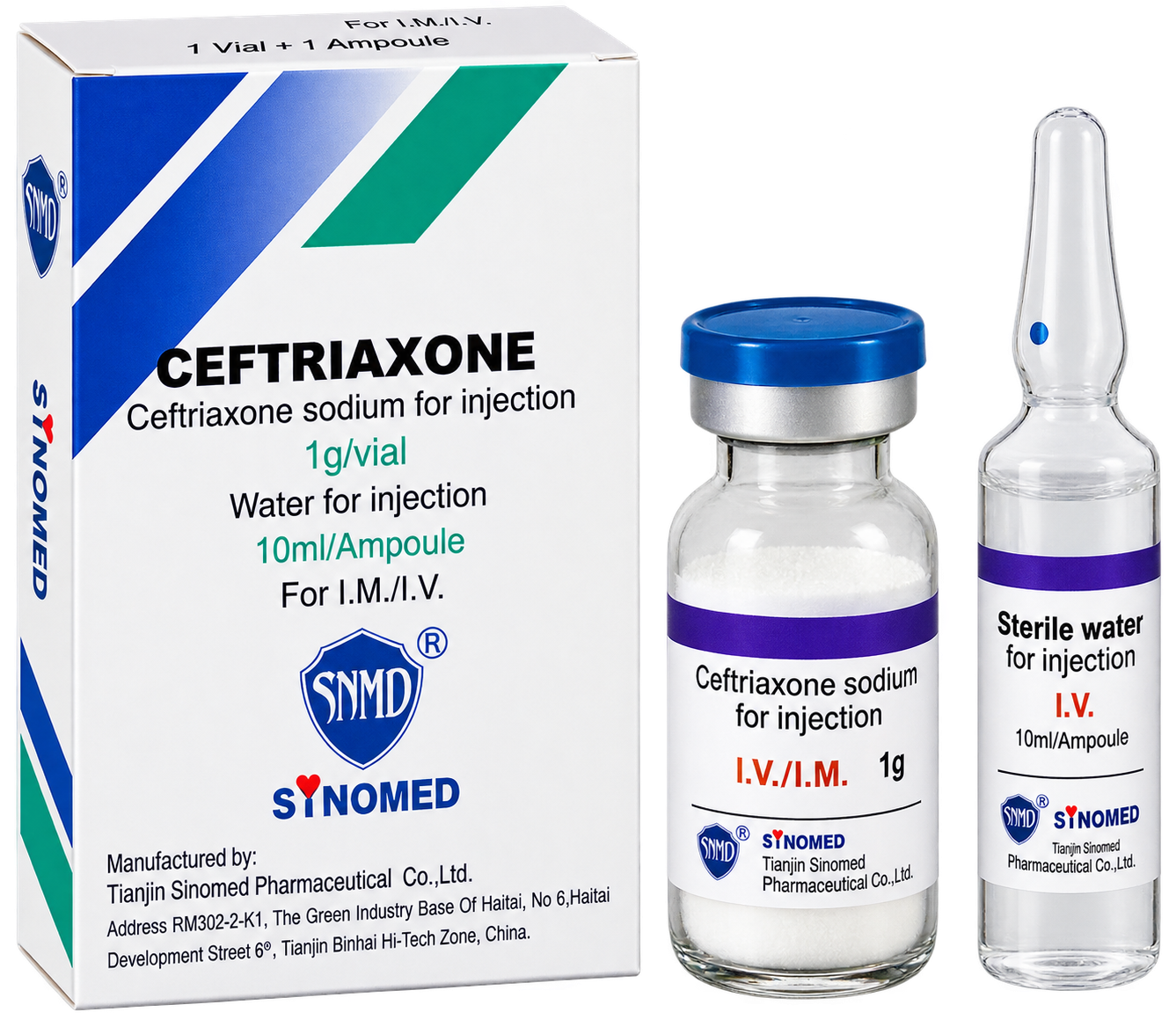
Quick overview
Ceftriaxone Injection is a third-generation cephalosporin antibiotic used to treat bacterial infections in many different parts of the body, and it is also given before certain surgeries to prevent infections. It works by killing bacteria and does not work for colds, flu, or other viral infections. It is given as an injection into a muscle or vein, as a single dose or over a short course depending on the infection, and you should begin to feel better within the first few days of treatment.
What is Ceftriaxone Injection
Ceftriaxone is an antibiotic used to treat bacterial infections in many different parts of the body. It is also given before certain types of surgery to prevent infections. It will not work for colds, flu, or other viral infections.
Ceftriaxone Injection uses
- Treating bacterial infections in many parts of the body
- Blood infections (sepsis)
- Meningitis
- Abdominal infections
- Bone, joint, soft tissue, skin and wound infections
- Kidney and urinary tract infections
- Respiratory tract infections such as pneumonia, and ear, nose and throat infections
- Genital infections, including gonorrhea
- Preventing infections before or after certain surgeries
Benefits of Ceftriaxone Injection
- Kills the bacteria causing your infection
- Can be given as a single dose or over a short course, depending on the infection
- Helps you begin to feel better during the first few days of treatment
How Ceftriaxone Injection works
Ceftriaxone kills bacteria by stopping them from building their cell walls, which causes the bacteria to break apart.
Ceftriaxone Injection dosage
A nurse or other trained health professional will usually give you this medicine as a shot into a muscle or through a needle placed in a vein. When given into a vein, it is injected over a period of about 30 or 60 minutes. It is sometimes given as a single dose and sometimes given once or twice a day for several days, depending on the type of infection.
You may receive it in a hospital or doctor's office, or you may give it at home after your healthcare provider shows you how. You should begin to feel better during the first few days of treatment. If your symptoms do not improve or get worse, call your doctor. If you will be using more than one dose, keep using the medication until you finish the prescription, even if you feel better. Unless your doctor tells you otherwise, continue your normal diet.
| Age group | Dose |
|---|---|
| Newborns 0–28 days | 20–50 mg/kg once daily; specialist supervision required |
| 1 month–11 years | 20–80 mg/kg once daily, depending on infection |
| 12–17 years | Usually 1–2 g once daily, depending on infection |
| 18–64 years | Usually 1–2 g once daily; severe infections may require higher doses |
| 65+ years | Usually the adult dose; adjust when clinically indicated, particularly with significant renal/hepatic impairment |
Available forms and strengths
- Powder for solution (for injection)
- Powder for infusion
- Premixed product for injection
Side effects of Ceftriaxone Injection
Common
- Pain, tenderness, hardness, or warmth where the injection was given
- Diarrhea
- Pale skin, weakness, or shortness of breath when exercising
- Headache
- Dizziness
- Nausea or vomiting
- Rash
- Loose stools
- Genital fungal infection
Serious
- Rash; difficulty swallowing or breathing; swelling of the throat or tongue; peeling, blistering, or shedding skin
- Bloody or watery stools, stomach cramps, or fever during treatment or for up to two or more months after stopping treatment
- Nausea and vomiting; stomach tenderness, pain or bloating; heartburn; chest pain
- Urinating more or less often than usual; pink, brown, red, cloudy, or bad smelling urine; painful urination; severe pain in the side and back below the ribs
- Swelling in legs and feet
- A return of fever, sore throat, chills, or other signs of infection
- Seizures
- Unusual bleeding or bruising
- Yellowing of the eyes or skin
- Black, tarry stools
Warnings and precautions
- This medicine may cause serious, life-threatening allergic reactions, including anaphylaxis.
- Get medical help right away if you have itching, hives, hoarseness, trouble breathing or swallowing, or swelling of your hands, face, or mouth after receiving it.
- Ceftriaxone can cause diarrhea, which may be severe.
- Do not take any diarrhea medicine without first checking with your doctor, as it may make things worse.
- Do not use calcium-containing solutions or other medicines with ceftriaxone unless discussed with your doctor.
- Ceftriaxone should not be given to certain newborn and premature babies because of the risk of serious harm.
- Serious skin reactions such as Stevens-Johnson syndrome or toxic epidermal necrolysis, which can be life-threatening, have been reported.
- If a severe skin reaction is suspected, treatment should be stopped.
- Tell your doctor if you are pregnant or plan to become pregnant.
- Ceftriaxone crosses the placenta and should only be used during pregnancy, especially in the first trimester, if the benefit outweighs the risk.
- Low concentrations of ceftriaxone pass into breast milk. Studies suggest minimal risk to the infant, but caution should be used.
- There is a possible risk of diarrhea and fungal infection in the baby. Talk to your doctor about whether to breastfeed.
- Tell your doctor if you have kidney disease.
- Use with caution because the effects may be increased when the medicine is removed from the body more slowly, and a lower maximum dose may be needed.
- Tell your doctor if you have liver disease.
- Use with caution because the effects may be increased when the medicine is removed from the body more slowly. Report right away any symptoms of liver injury.
- Ceftriaxone does not cause the disulfiram-like reaction with alcohol seen with some other cephalosporins.
- During treatment, side effects such as dizziness may occur, which could affect your ability to drive or use machines.
- Be cautious when driving or operating machinery.
Storage
- Your healthcare provider will tell you how to store your medication. Store it only as directed.
- Store the dry powder below 25°C. Keep the vial in the outer carton to protect it from light.
- Keep all medication out of sight and reach of children, and always lock safety caps.
- Dispose of unneeded medications so that pets, children, and other people cannot take them.
- Do not flush this medication down the toilet. Use a medicine take-back program.
- Any unused material should be disposed of according to local disposal regulations.
When to see a doctor
- Call your doctor right away if you have any signs of a serious allergic reaction, such as itching, hives, hoarseness, trouble breathing or swallowing, or swelling of your hands, face, or mouth.
- Tell your doctor right away if you have sudden and severe stomach pain, chills, constipation, nausea, vomiting, fever, or lightheadedness, which may be signs of pancreatitis.
- If your symptoms do not improve within a few days, or if they become worse, check with your doctor.
- In case of overdose, call your local poison control center. If the person has collapsed, had a seizure, has trouble breathing, or cannot be woken, call your local emergency services right away.
Alternatives
- Cefotaxime
- Cefepime
- Ceftazidime
- Cefuroxime
- Cefazolin
- Ampicillin
- Piperacillin + Tazobactam
FAQs
What is Ceftriaxone Injection used for?
It is used to treat bacterial infections in many parts of the body, including blood infections, meningitis, abdominal infections, bone and skin infections, kidney and urinary tract infections, respiratory infections like pneumonia, and genital infections including gonorrhea. It is also given before certain surgeries to prevent infections.
How is Ceftriaxone Injection given?
A nurse or trained health professional usually gives it as a shot into a muscle or through a needle into a vein, with IV doses injected over about 30 to 60 minutes. It may be given as a single dose or once or twice daily for several days depending on the infection.
How quickly does Ceftriaxone Injection work?
You should begin to feel better during the first few days of treatment. If your symptoms do not improve or get worse, you should call your doctor.
What are the common side effects of Ceftriaxone Injection?
Common side effects include pain or tenderness at the injection site, diarrhea, headache, dizziness, nausea or vomiting, rash, loose stools, and genital fungal infection.
Can Ceftriaxone Injection be used during pregnancy or breastfeeding?
Ceftriaxone crosses the placenta and should only be used during pregnancy if the benefit outweighs the risk. Low concentrations pass into breast milk, with studies suggesting minimal risk, but there is a possible risk of diarrhea and fungal infection in the baby, so you should talk to your doctor.
Sources
- Mayo Clinic - Ceftriaxone (injection route) (https://www.mayoclinic.org/drugs-supplements/ceftriaxone-injection-route/description/drg-20073123)
- MedlinePlus - Ceftriaxone Injection (https://medlineplus.gov/druginfo/meds/a685032.html)
- Medsafe New Zealand Data Sheet - Ceftriaxone Powder for Injection/Infusion (https://www.medsafe.govt.nz/profs/datasheet/c/ceftriaxoneinjDEVA.pdf)
Video