
Safety
General information, not medical advice
Your prescriber and the leaflet in your pack know your situation. This page does not.
- Follow your prescriber and the leaflet
- Don't start, stop, or change a dose on your own
- Doses and warnings differ by country and product
Ceftum Tablet: Uses, Dosage, Side Effects, Precautions and Alternates
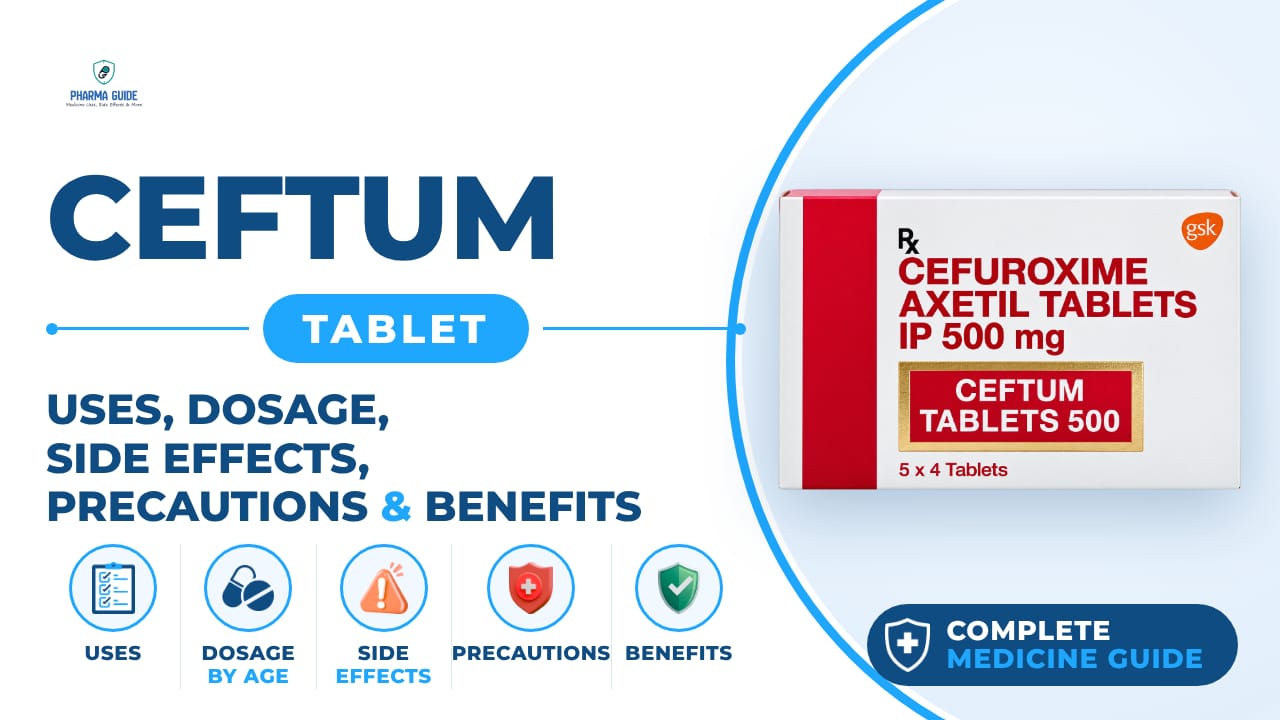
| Generic name | Cefuroxime Axetil |
|---|---|
| Drug class | Second-generation cephalosporin antibiotic |
| Forms | Tablet, Oral suspension |
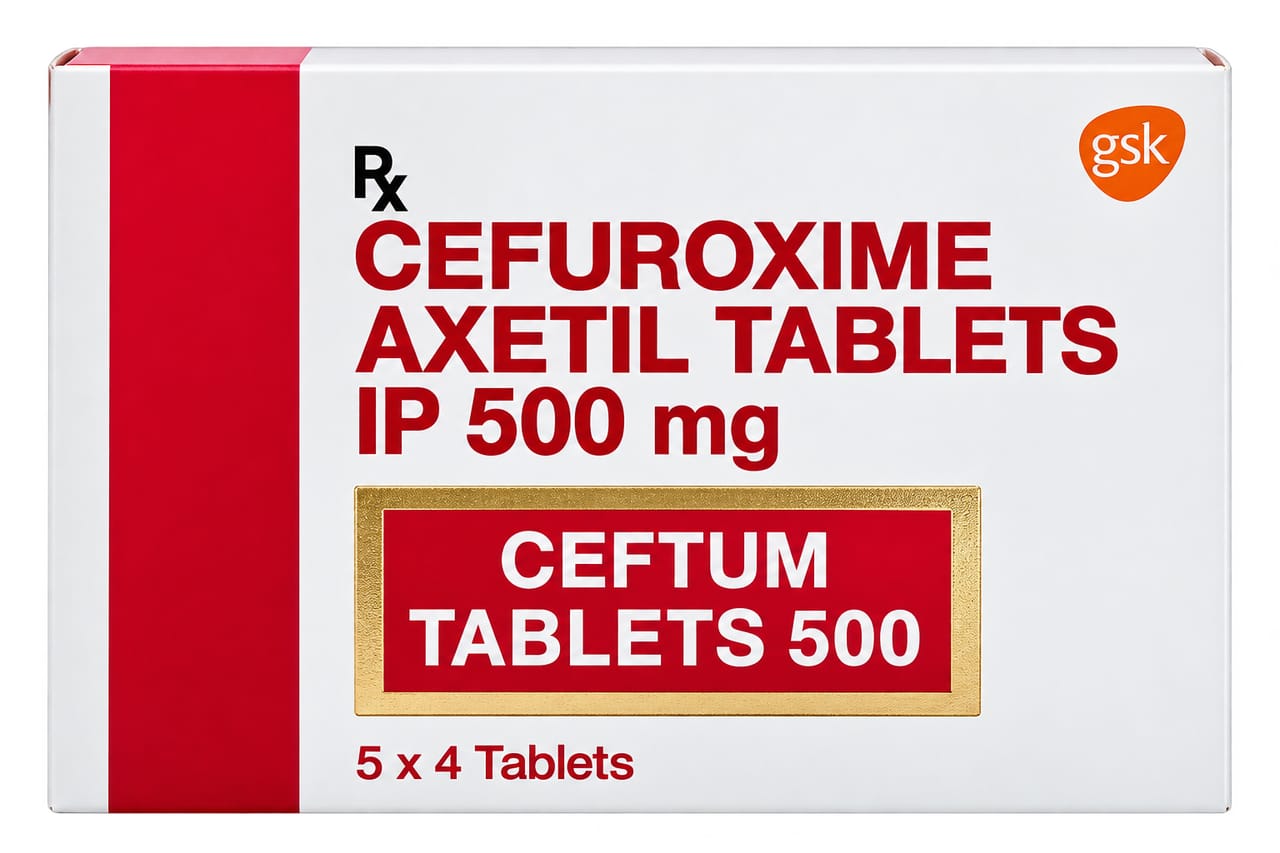
Quick overview
Ceftum Tablet contains cefuroxime axetil, a second-generation cephalosporin antibiotic used to treat various bacterial infections. It is not effective against infections caused by viruses. It is available as a tablet and oral suspension, and is not recommended for children under 12 years.
What is Ceftum Tablet
Ceftum Tablet contains cefuroxime axetil, an antibiotic that treats bacterial infections. It is not effective against infections caused by viruses.
Ceftum Tablet uses
- Respiratory tract infections such as pneumonia and bronchitis
- Ear, nose and throat infections such as otitis media, sinusitis, tonsillitis and pharyngitis
- Urinary tract and genito-urinary infections such as cystitis, urethritis and pyelonephritis
- Skin and soft tissue infections such as furunculosis, pyoderma and impetigo
- Gonorrhoea, a sexually transmitted infection
- Lyme disease
Benefits of Ceftum Tablet
- Bacterial Infection Treatment: Treats infections caused by susceptible bacteria.
- Respiratory Infection Support: Used for certain throat, sinus, and chest infections.
- Urinary Infection Treatment: May be prescribed for susceptible urinary tract infections.
- Skin Infection Support: Can treat certain bacterial skin and soft-tissue infections.
- Ear Infection Treatment: Used for selected bacterial ear infections.
- Broad Antibacterial Activity: Belongs to the cephalosporin antibiotic group and works by interfering with bacterial cell-wall formation.
How Ceftum Tablet works
Ceftum contains cefuroxime axetil, which the body converts into cefuroxime. Cefuroxime kills bacteria by stopping them from building their protective cell wall, causing the bacteria to weaken and break apart.
Ceftum Tablet dosage
Take the tablet as your doctor recommends. Swallow the tablet whole with water after a meal to avoid stomach discomfort. Do not cut, break or chew the tablet. Take the tablet at a fixed time each day for best results. Complete the full course of treatment even if you feel better after a few days, to prevent the infection returning. Take at least 1 hour before or 2 hours after antacids or proton pump inhibitor medicines. Not recommended for children under 12 years.
| Age group | Dose |
|---|---|
| Under 3 Months | Use only if prescribed by a specialist |
| 3 Months–12 Years | Dose based on body weight and type of infection |
| 12 Years and Above | Usually 250–500 mg twice daily, depending on the infection |
| Adults | Usually 250–500 mg twice daily, as prescribed |
Available forms and strengths
- Tablet
- Oral suspension
Side effects of Ceftum Tablet
Common
- Headache
- Dizziness
- Temporary altered taste in the mouth
- Nausea and vomiting
- Abdominal pain
- Diarrhoea
- Fungal skin infections
- Minor changes in blood counts
- Muscle pain and weakness
- Painful or difficult urination
Serious
- Severe allergic reactions including anaphylaxis, drug fever and serum sickness
- Skin reactions such as Stevens-Johnson syndrome, toxic epidermal necrolysis and erythema multiforme
- Pseudomembranous colitis (severe, persistent diarrhoea with abdominal cramps)
- Jaundice and hepatitis
- Haemolytic anaemia
- Kounis syndrome (allergic reaction affecting the heart)
- Neurological effects such as encephalopathy, convulsions and coma with overdose
Warnings and precautions
- There is no evidence that cefuroxime harms an unborn baby, but it should be used with caution, especially in early pregnancy, and only after consulting a doctor.
- Small amounts of cefuroxime pass into breast milk. It is generally considered safe, but the baby should be watched for diarrhoea or fungal infection, and a doctor should weigh the benefits and risks before it is used.
- People with reduced kidney function need a lower dose because the drug is removed more slowly from the body, increasing the risk of side effects.
- Ceftum should be used carefully in people with liver problems, since reduced liver function can raise drug levels in the blood and increase the risk of side effects, particularly those affecting the nervous system.
- Avoid alcohol while taking Ceftum, as it may increase the risk of side effects such as dizziness, drowsiness and liver damage.
- This medicine may cause dizziness or confusion, so avoid driving or operating machinery after taking it.
- Do not use this medicine if you are allergic to cephalosporin antibiotics.
- People who have had an allergic reaction to penicillin or similar antibiotics need special care because they may also react to this medicine, and serious, occasionally fatal, allergic reactions have been reported.
- This medicine can allow overgrowth of yeast (Candida) or other organisms, and prolonged or severe diarrhoea during or after treatment could be a sign of a serious bowel condition needing prompt medical attention.
- This medicine is not recommended for children under 12 years old.
- Overdose can cause serious nervous system effects including brain problems, seizures, and coma, especially if kidney-related dose adjustments are not made.
Storage
- Store Ceftum 500 mg tablets at room temperature (15-25ºC)
- Protect it from light and moisture
- Keep tablets away from children
- Do not use this tablet after the expiry date has passed
When to see a doctor
- Get immediate medical attention if you or someone else takes too much of this medicine by accident.
- Stop the medicine and seek medical care right away if you have a severe allergic reaction.
- If you have prolonged or significant diarrhoea or abdominal cramps, stop the medicine and see your doctor for further investigation.
- If side effects do not improve or become serious, speak to your doctor right away.
Alternatives
- Cefasyn 500 Tablet
- Cefakind 500 MG Tablet
- Cetil Od 500 MG Tablet
- Evercef 500 MG Tablet
- Xorimax 500 MG Tablet
- Zefu 500 MG Tablet
Watch the video
FAQs
What is Ceftum Tablet used for?
It is used to treat bacterial infections such as respiratory tract infections (pneumonia, bronchitis), ear, nose and throat infections (otitis media, sinusitis, tonsillitis, pharyngitis), urinary and genito-urinary infections, skin and soft tissue infections, gonorrhoea and Lyme disease.
How should I take Ceftum Tablet?
Swallow the tablet whole with water after a meal, without cutting, breaking or chewing it. Take it at a fixed time each day, complete the full course even if you feel better, and take it at least 1 hour before or 2 hours after antacids or proton pump inhibitor medicines.
Can children take Ceftum Tablet?
Ceftum Tablet is not recommended for children under 12 years. For children aged 3 months to 12 years, dosing is based on body weight and type of infection, and for infants under 3 months it should only be used if prescribed by a specialist.
What are the common side effects of Ceftum Tablet?
Common side effects include headache, dizziness, temporary altered taste, nausea and vomiting, abdominal pain, diarrhoea, fungal skin infections, minor changes in blood counts, muscle pain and weakness, and painful or difficult urination.
Can I drink alcohol while taking Ceftum Tablet?
Alcohol should be avoided while taking Ceftum Tablet, as it may increase the risk of side effects such as dizziness, drowsiness and liver damage.
General information, not medical advice
Your prescriber and the leaflet in your pack know your situation. This page does not.
- Follow your prescriber and the leaflet
- Don't start, stop, or change a dose on your own
- Doses and warnings differ by country and product
Sources
Video
Related medicines
Ceftin Tablet: Uses, Dosage, Side Effects, Precautions and Alternates
Second generation cephalosporin antibiotic
Ceftin Tablet (cefuroxime) treats bacterial throat, ear, sinus, skin, urinary infections, gonorrhea, and early Lyme disease. Learn dosage, side effects, and
Zocef Tablet: Uses, Dosage, Side Effects, Precautions and Alternates
Second-generation cephalosporin antibiotic
Zocef Tablet contains Cefuroxime, an antibiotic for bacterial infections like UTIs, bronchitis, sinusitis, and skin infections. Learn uses, dosage, and side