
Safety
General information, not medical advice
Your prescriber and the leaflet in your pack know your situation. This page does not.
- Follow your prescriber and the leaflet
- Don't start, stop, or change a dose on your own
- Doses and warnings differ by country and product
Chlorzoxazone Tablet: Uses, Dosage, Side Effects, Precautions and Alternates
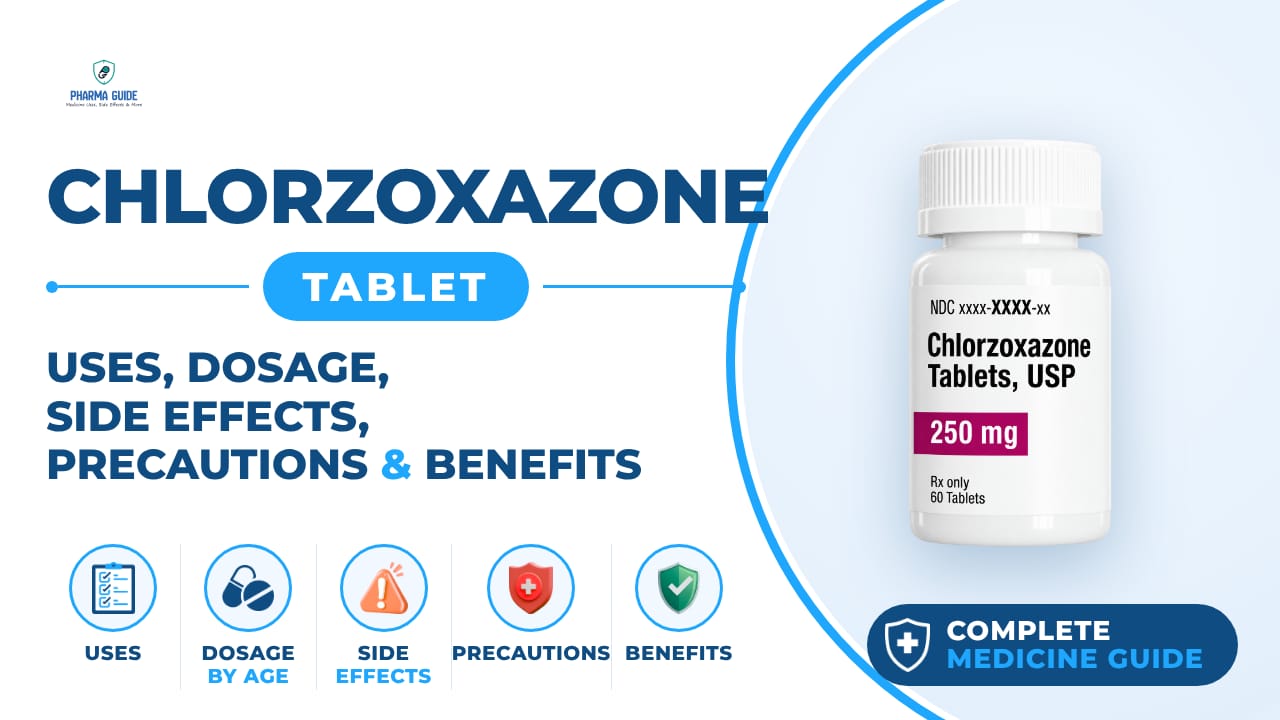
| Generic name | chlorzoxazone |
|---|---|
| Drug class | skeletal muscle relaxant |
| Forms | Tablet |
Quick overview
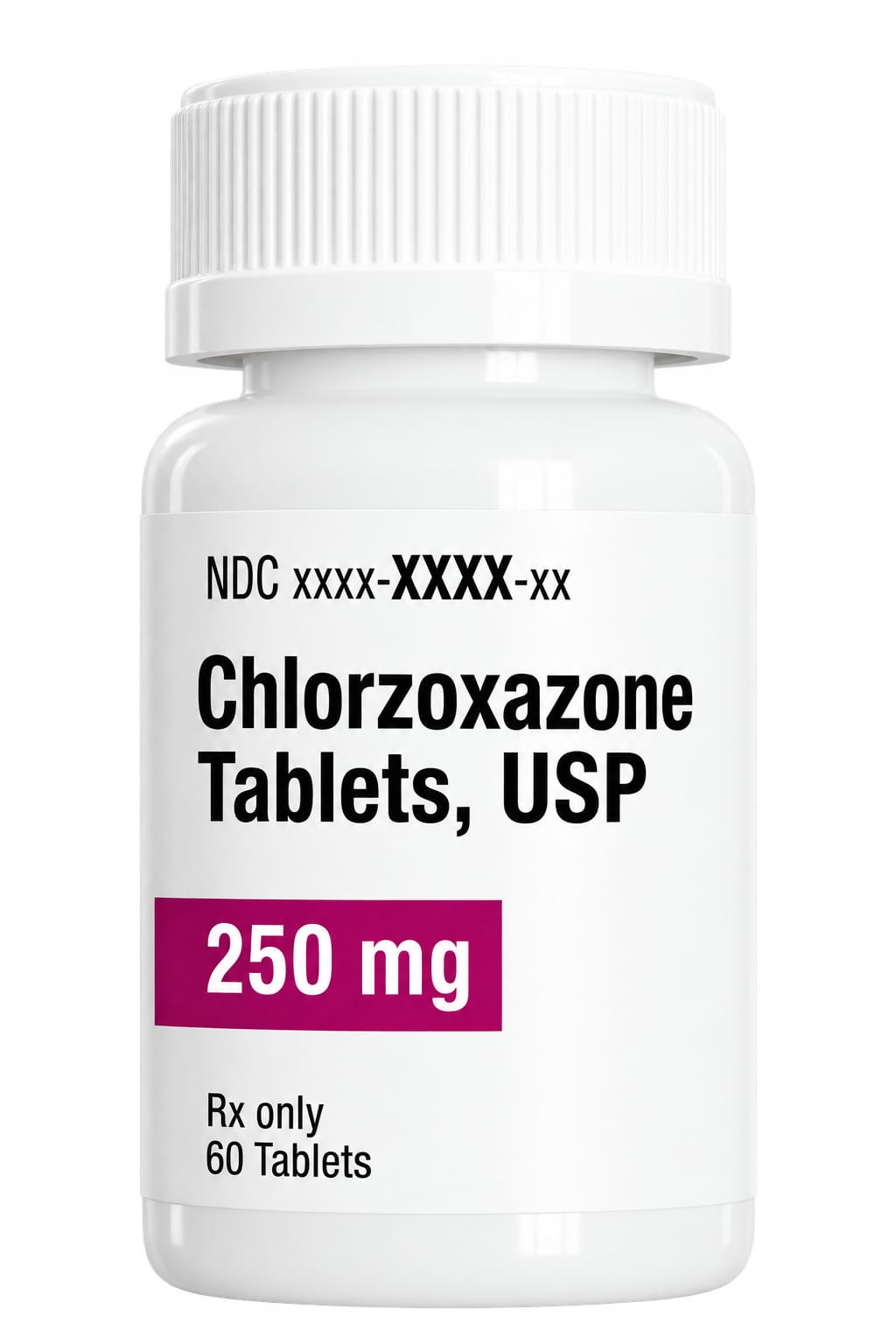
Chlorzoxazone Tablet is a prescription skeletal muscle relaxant used to relieve discomfort from short-term, painful muscle or bone conditions and to treat muscle spasms. It works on the spinal cord and brain to calm nerve signals that cause muscles to spasm. It is typically used together with rest, physical therapy, and other treatments recommended by a doctor, and should be taken exactly as prescribed.
What is Chlorzoxazone Tablet
Chlorzoxazone is a prescription medicine used to relax certain muscles in your body and relieve the discomfort caused by short-term, painful muscle or bone conditions. It does not replace rest, exercise, physical therapy, or other treatments your doctor may recommend.
Chlorzoxazone Tablet uses
- Relief of discomfort from acute, painful musculoskeletal conditions (muscle, bone, and joint pain)
- Treatment of muscle spasms and muscle pain
Benefits of Chlorzoxazone Tablet
- Helps relieve painful muscle spasms associated with acute musculoskeletal conditions
- Helps reduce muscle stiffness, tightness, and discomfort
- Can be useful for muscle strains, sprains, and other minor injuries
- Helps improve movement and mobility when muscle spasm limits activity
- Is usually used together with rest, physiotherapy, and other pain-relief measures
How Chlorzoxazone Tablet works
Chlorzoxazone works on the spinal cord and brain to calm down nerve signals that cause muscles to spasm, which helps relax the muscles and ease pain. It does not act directly on the muscles themselves.
Chlorzoxazone Tablet dosage
Take this medication by mouth with a glass of water, as directed on the prescription label. You can take it with or without food; if it upsets your stomach, take it with food. Keep taking it unless your care team tells you to stop. Talk to your care team about the use of this medication in children, as special care may be needed. Do not increase your dose or use this drug more often or for longer than prescribed. If you miss a dose, take it as soon as you remember; if it is almost time for your next dose, skip the missed dose and go back to your regular schedule. Do not double doses.
| Age group | Dose |
|---|---|
| Under 18 years | Safety and effectiveness not well established; use only when prescribed |
| 18–64 years – Usual dose | 250–500 mg 3–4 times daily |
| Severe muscle spasm | May be increased cautiously according to response and the specific product |
| 65+ years | Use the lowest effective dose because dizziness and sedation may be greater |
| Liver impairment | Generally avoid or use only with medical supervision due to risk of liver injury |
Available forms and strengths
- Tablet
Side effects of Chlorzoxazone Tablet
Common
- Dizziness
- Drowsiness
- Feeling faint or lightheaded
- General discomfort and fatigue
- Stomach discomfort
- Constipation
- Diarrhea
- Headache
- Heartburn
- Nausea and vomiting
- Bruising or unusual spots on the skin
- Urine or stool discoloration
Serious
- Allergic reactions: skin rash, itching, hives, swelling of the face, lips, tongue, or throat
- Liver injury: right upper belly pain, loss of appetite, nausea, light-colored stool, dark yellow or brown urine, yellowing of skin or eyes, unusual weakness or fatigue
- Signs of stomach or intestinal bleeding: vomiting blood or material that looks like coffee grounds, black or tarry stools, severe stomach pain
- Breathing problems, wheezing, racing heart, fever, swollen lymph nodes, throat tightness, or trouble swallowing (signs of serious allergic reaction)
Warnings and precautions
- It is not known if or how chlorzoxazone could affect pregnancy or harm an unborn baby.
- The safe use of chlorzoxazone in pregnancy has not been established, so it should only be used if the potential benefits outweigh the possible risks. Tell your doctor if you are or plan to become pregnant.
- It is not known if chlorzoxazone passes into breast milk. Talk to your doctor about the risks and benefits before using this medicine while breastfeeding.
- This medicine should be used with caution in people with liver disease, as it may increase the risk of serious side effects such as liver damage. Stop the medicine and contact your doctor right away if you notice signs of liver problems.
- This medicine can add to the effects of alcohol and other drugs that cause drowsiness, increasing the risk of dizziness and sleepiness. Avoid or limit alcohol while taking this medicine.
- This medicine may affect your coordination, reaction time, or judgment. Do not drive or operate machinery until you know how this medicine affects you.
- Rare but serious liver damage, including fatal cases, has been reported with this medicine. Watch for signs like fever, rash, loss of appetite, nausea, vomiting, tiredness, pain in the upper right belly, dark urine, or yellowing of the skin or eyes, and stop the medicine and see a doctor right away if these occur.
- Using alcohol or other drugs that slow down the brain and nervous system along with this medicine can increase drowsiness and other effects.
- People 65 years and older may be at greater risk for some side effects of this medicine.
- This medicine may cause the urine or stool to change color, which is harmless and goes away after stopping the medicine.
Storage
- Store at 20–25°C (68–77°F) at controlled room temperature.
- Keep in a cool, dry place away from excessive heat and humidity.
- Protect tablets from light and moisture.
- Keep in the original, tightly closed container until use.
- Avoid storing in bathrooms or other hot and humid areas.
- Keep out of reach and sight of children and pets.
When to see a doctor
- Stop using this medicine and check with your doctor right away if you have signs of liver problems, such as stomach pain or tenderness, clay-colored stools, dark urine, loss of appetite, fever, headache, itching, nausea and vomiting, skin rash, swelling of the feet or lower legs, unusual tiredness, or yellow eyes or skin.
- Get emergency help right away if you notice signs of an overdose, such as difficulty breathing, severe drowsiness, irregular or shallow breathing, lightheadedness, pale or blue lips or skin, or severe weakness.
- Get medical help right away if you think you have taken too much of this medicine.
- Seek medical help immediately if you experience symptoms of a serious allergic reaction, such as breathing problems, wheezing, racing heart, swelling of the face, lips, mouth, tongue, or throat, or trouble swallowing.
- Call your healthcare provider right away if you notice signs of stomach or intestinal bleeding, such as vomiting blood or material that looks like coffee grounds, black or tarry stools, or severe stomach pain.
Alternatives
- Naproxen
- Carisoprodol
- Tizanidine
- Cyclobenzaprine
- Methocarbamol
Watch the video
FAQs
What is Chlorzoxazone Tablet used for?
It is used to relieve discomfort from short-term, painful muscle or bone conditions and to treat muscle spasms, typically alongside rest and physical therapy.
How does Chlorzoxazone Tablet work?
It works on the spinal cord and brain to calm nerve signals that cause muscles to spasm, helping relax the muscles and ease pain. It does not act directly on the muscles themselves.
What is the usual dose of Chlorzoxazone Tablet for adults?
For adults aged 18–64 years, the usual dose is 250–500 mg taken 3–4 times daily, which may be increased cautiously for severe muscle spasm according to response.
What are the common side effects of Chlorzoxazone Tablet?
Common side effects include dizziness, drowsiness, feeling faint, stomach discomfort, constipation, diarrhea, headache, heartburn, nausea and vomiting, bruising, and urine or stool discoloration.
Can Chlorzoxazone Tablet cause liver problems?
Yes, rare but serious liver damage, including fatal cases, has been reported. Watch for fever, rash, loss of appetite, nausea, vomiting, tiredness, upper right belly pain, dark urine, or yellowing of the skin or eyes, and seek medical help immediately if these occur.
General information, not medical advice
Your prescriber and the leaflet in your pack know your situation. This page does not.
- Follow your prescriber and the leaflet
- Don't start, stop, or change a dose on your own
- Doses and warnings differ by country and product
Sources
Video
Related medicines
Soma Tablet: Uses, Dosage, Side Effects, Precautions and Alternates
Skeletal muscle relaxant
Soma Tablet (carisoprodol) is a muscle relaxant for short-term muscle pain relief. Learn about its uses, dosage, side effects, and safety warnings.
Skelaxin Tablet: Uses, Dosage, Side Effects, Precautions and Alternates
Skeletal muscle relaxant
Skelaxin Tablet (metaxalone) is a prescription muscle relaxant for short-term relief of painful muscle spasms. Learn uses, dosage, and side effects.