Cinnarizine Tablet: Uses, Dosage, Side Effects, Precautions and Alternates
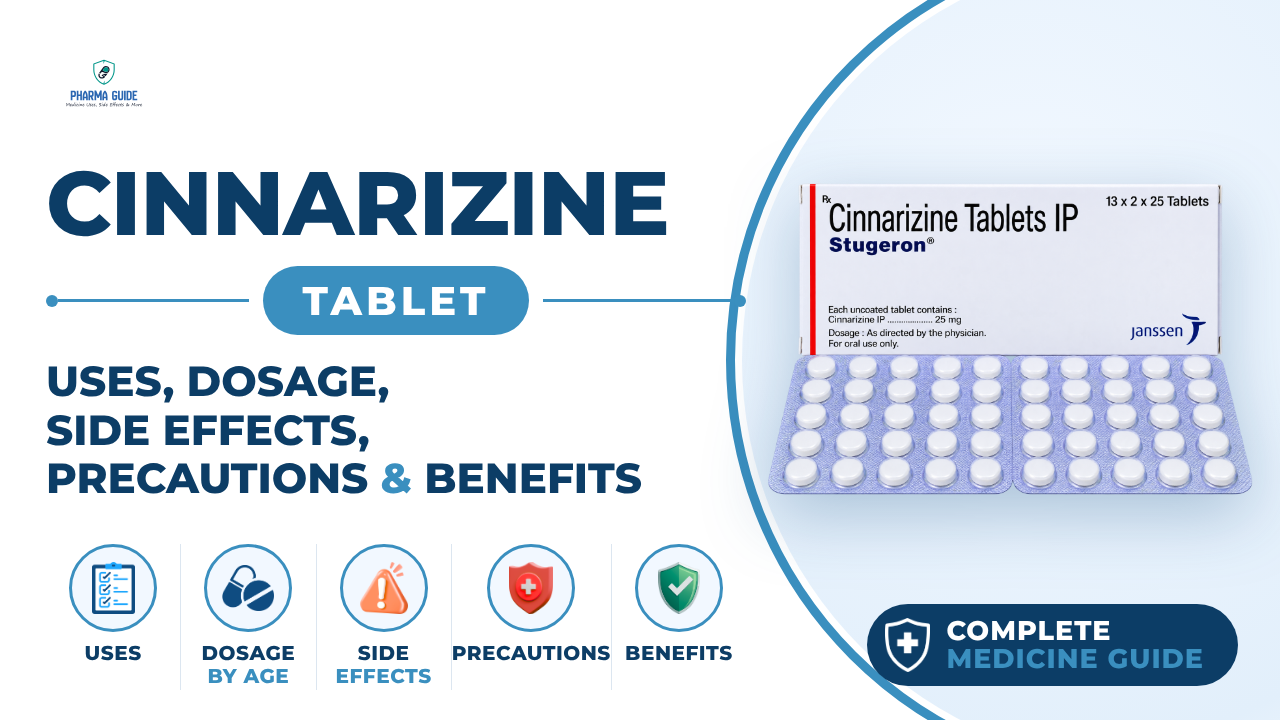
| Generic name | Cinnarizine |
|---|---|
| Drug class | Antihistamine and calcium channel blocker (diphenylmethylpiperazine group) |
| Forms | Tablets |

Quick overview
Cinnarizine Tablet contains the generic medicine Cinnarizine, which belongs to the antihistamine and calcium channel blocker drug class. It is used to treat dizziness, vertigo, and sickness caused by motion sickness or inner ear problems. It works by improving blood flow in the inner ear and reducing nerve signals that cause vertigo.
What is Cinnarizine Tablet
Cinnarizine is an antihistamine medicine that also blocks calcium channels. It is used to treat dizziness, vertigo, and sickness caused by motion sickness or inner ear problems.
Cinnarizine Tablet uses
- Motion sickness and related nausea
- Vertigo and Ménière's disease
- Tinnitus and balance problems
- Peripheral arterial disease (blood vessel disorder)
- Travel sickness and seasickness
- Nausea and vomiting
Benefits of Cinnarizine Tablet
- Reduces extreme vertigo experiences in most people who suffer from it
- Helps improve blood circulation, especially in the brain
- Can give back freedom to travel, move, and live without constant dizziness or nausea
How Cinnarizine Tablet works
Cinnarizine works as both an antihistamine and a calcium channel blocker. It stops blood vessels in the inner ear from tightening, which improves blood flow, and it blocks calcium channels in the inner ear's balance cells to reduce signals that cause vertigo. It can take up to 4 hours to reach its full effect, which is why it's best taken before a journey rather than after symptoms start.
Cinnarizine Tablet dosage
- Swallow the tablets whole with water; some types can also be sucked or chewed.
- Take after eating to help prevent stomach upset.
- For travel sickness, take the first dose before starting your journey, then further doses during the journey if needed, keeping at least 8 hours between doses.
- For ongoing balance or inner ear problems, it is usually taken two to three times a day. Children aged 5 to 11 years are usually given a smaller dose than adults.
- Always check the packet or leaflet, or follow your doctor's instructions, since the amount and length of treatment depend on what it's being used for.
| Age group | Dose |
|---|---|
| Under 5 Years | Not recommended unless prescribed by a healthcare professional |
| 5–12 Years | 12.5 mg for motion-sickness prevention, as advised |
| 13–17 Years | 25 mg for motion-sickness prevention, as directed |
| Adults (18–64 Years) | 25 mg three times daily for vertigo/balance disorders |
Available forms and strengths
Cinnarizine is available as tablets.
Side effects of Cinnarizine Tablet
Common
- Drowsiness or feeling very sleepy
- Nausea or vomiting
- Weight gain
- Dry mouth
- Heartburn, bloating, and indigestion
- Stomach discomfort and pain
- Excessive sweating
- Unusual tiredness and weakness
- Headache
- Excessive salivation
Serious
- Drug-induced Parkinsonism with long-term use (rare)
- Allergic reaction (anaphylaxis) - swollen throat or tongue, raised itchy rash, difficulty breathing
- Liver problems - itchy skin, dark colored urine, yellowing of skin and eyes (jaundice)
- Slow, twitchy, or jerky body movements, muscle stiffness, trembling or shaking, more common in older people after long-term use
- A red, raised, sometimes ring-shaped rash, especially on skin exposed to sun
- Swelling of face, lips, eyelids, tongue, hands and feet
- Depressed mood
Warnings and precautions
- Do not take cinnarizine if you have Parkinson's disease, porphyria (a rare blood disorder), severe liver disease, or primary angle closure glaucoma.
- Cinnarizine may not be suitable if you have had an allergic reaction to it before, have liver or kidney problems, have prostate problems or difficulty peeing, have glaucoma or risk of glaucoma, or have epilepsy.
- The main risk with cinnarizine is that it can cause Parkinsonism, especially in elderly patients, as well as drowsiness, weight gain, and indigestion.
- Doctors do not recommend long-term daily use because it can increase the risk of movement disorders and tremors, and older patients need medical supervision to avoid irreversible Parkinson's-like side effects.
- Cinnarizine is not usually recommended during pregnancy. Talk to your doctor or pharmacist before taking it if you're pregnant.
- Cinnarizine is not usually used while breastfeeding. Check with a pharmacist or doctor before using it, as they may suggest a different medicine, or advise pausing breastfeeding while taking it.
- Cinnarizine may not be suitable if you have kidney problems. Speak to a pharmacist or doctor if you're not sure whether it's safe for you.
- Cinnarizine should be avoided in severe liver disease and may not be suitable if you have other liver problems. It can also cause liver problems as a side effect, with symptoms like itchy skin, dark urine, and yellowing of the skin or eyes.
- It's best not to drink alcohol while taking cinnarizine, as it can make you feel very sleepy.
- If you feel drowsy after taking cinnarizine, do not drive, ride a bike, or use machinery until the drowsiness goes away.
Storage
- Temperature: Keep in a cool place, ideally below 25°C. Avoid storing in hot areas like bathrooms, near kitchen stoves, or inside vehicles.
- Light and Moisture: Protect the tablets from direct sunlight and high humidity. Keep them in their original blister packs or a tightly sealed container until you use them.
- Children and Pets: Store the medicine in a safe place completely out of reach of children.
- Expiration: Do not use Cinnarizine tablets past the expiry date printed on the outer packaging or foil strip.
When to see a doctor
- Call for emergency help right away if you think you might be having a severe allergic reaction (anaphylaxis), with symptoms like a swollen throat or tongue, a raised itchy rash, or difficulty breathing.
- Get medical help right away if you suspect an overdose, which can cause drowsiness, confusion, nausea and vomiting, weakness or shakiness, irregular heartbeat, or seizures (especially in children).
- Speak to a pharmacist or doctor if you have any side effects that bother you or do not go away.
Alternatives
- Prochlorperazine
- Dimenhydrinate
- Meclizine
- Betahistine
FAQs
What is Cinnarizine Tablet used for?
It is used to treat dizziness, vertigo, and sickness caused by motion sickness or inner ear problems, including Ménière's disease, tinnitus, balance problems, and peripheral arterial disease.
How does Cinnarizine Tablet work?
It works as both an antihistamine and calcium channel blocker, stopping blood vessels in the inner ear from tightening to improve blood flow, and blocking calcium channels in balance cells to reduce signals that cause vertigo. It can take up to 4 hours to reach full effect, so it's best taken before a journey.
What is the dosage of Cinnarizine Tablet for travel sickness?
Take the first dose before starting your journey, then further doses during the journey if needed, keeping at least 8 hours between doses. Children aged 5 to 11 years are usually given a smaller dose than adults.
What are the common side effects of Cinnarizine Tablet?
Common side effects include drowsiness, nausea or vomiting, weight gain, dry mouth, heartburn, bloating, indigestion, stomach discomfort, excessive sweating, tiredness, headache, and excessive salivation.
Who should not take Cinnarizine Tablet?
It should not be taken by people with Parkinson's disease, porphyria, severe liver disease, or primary angle closure glaucoma, and may not be suitable for those with liver or kidney problems, prostate problems, glaucoma risk, or epilepsy.
Sources
Video