Ciprofloxacin Eye Drops: Uses, Dosage, Side Effects, Precautions and Alternates
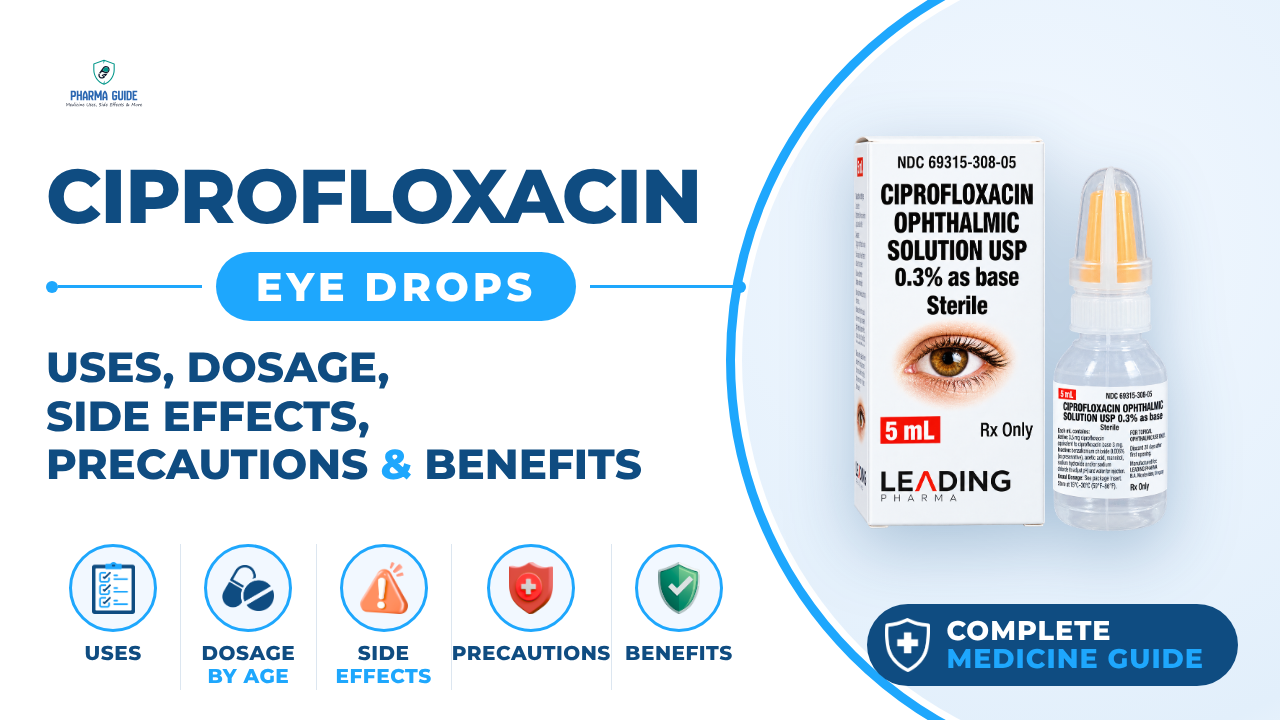
| Generic name | Ciprofloxacin |
|---|---|
| Drug class | Fluoroquinolone antibiotic |
| Forms | Eye drops (0.3% solution), Eye ointment |
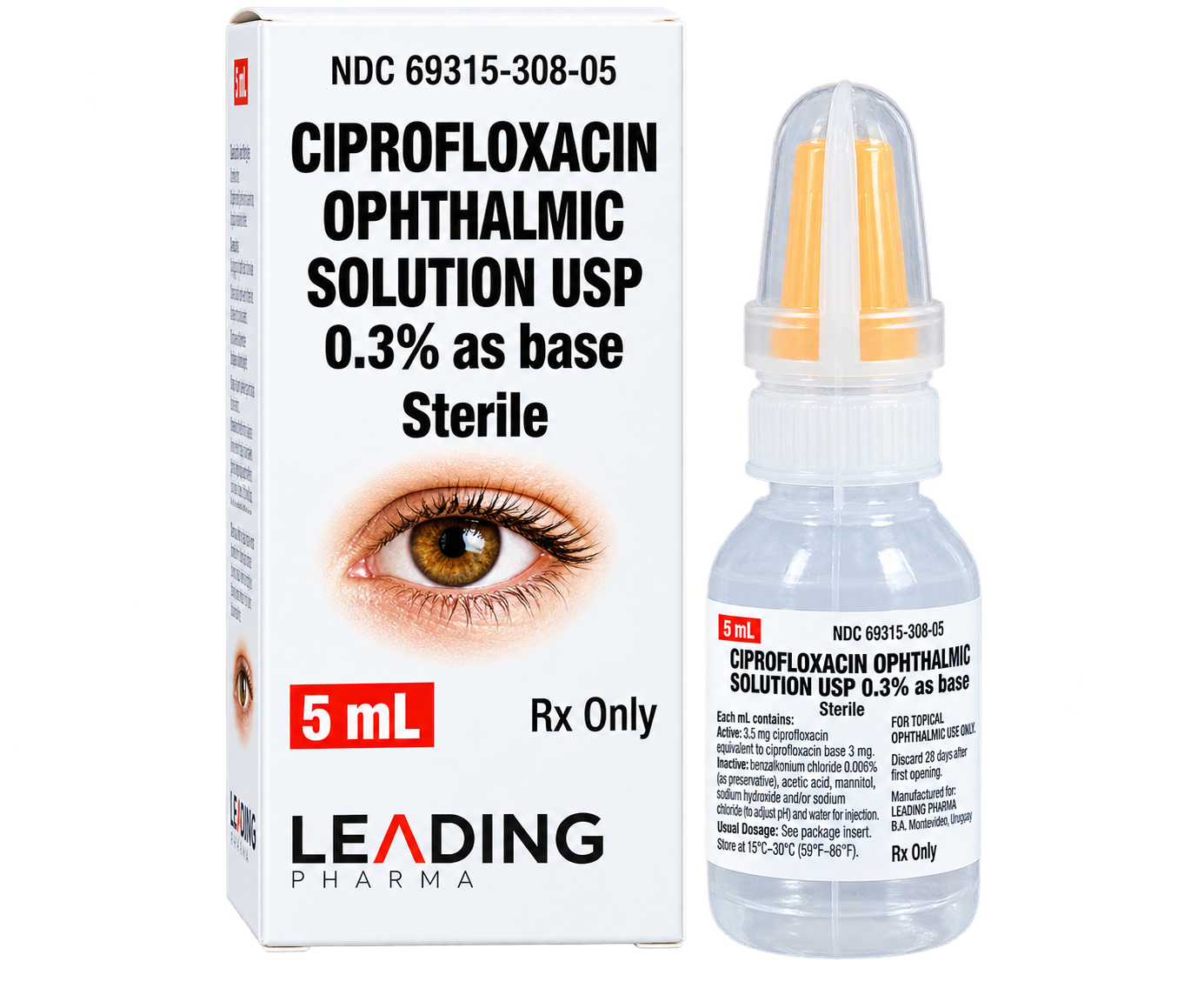
Quick overview
Ciprofloxacin Eye Drops are a fluoroquinolone antibiotic solution (0.3%) applied directly to the eye to treat certain bacterial eye infections. They work by stopping bacteria from multiplying and often start to clear the infection within a day or two. They only work against bacteria, not viral, fungal, or allergy-related eye problems, and must be used exactly as prescribed.
What is Ciprofloxacin Eye Drops
Ciprofloxacin eye drops are a fluoroquinolone antibiotic made to be used directly in the eye. They come as a 0.3% solution and are used to treat certain bacterial eye infections. They only work against bacteria, not viral, fungal, or allergy-related eye problems.
Ciprofloxacin Eye Drops uses
- Bacterial conjunctivitis (pink eye)
- Corneal ulcer / bacterial keratitis
- Bacterial eyelid infection (blepharitis)
- Preventing infection before and after some eye surgeries
- Eye infections
Benefits of Ciprofloxacin Eye Drops
- Helps the infection clear up by stopping the bacteria from multiplying
- Often starts to clear the infection within a day or two of treatment
How Ciprofloxacin Eye Drops works
Ciprofloxacin kills bacteria by blocking two enzymes they need to copy their DNA (DNA gyrase and topoisomerase IV). Without being able to copy their DNA, the bacteria cannot multiply and the infection starts to settle.
Ciprofloxacin Eye Drops dosage
Wash your hands with soap and water before and after use. Tilt your head back slightly and look up at the ceiling. Gently pull your lower eyelid down to make a small pocket. Hold the bottle close but do not let the tip touch your eye, eyelid, fingers, or any surface, as this can contaminate the drops. Put the drop into the pocket, then close your eye gently for 1 to 2 minutes and do not blink hard or rub.
Press lightly with a clean fingertip on the inner corner of your eye next to your nose for 1 to 2 minutes. This keeps more medicine in the eye and reduces the metallic taste some people notice. If using two different eye drops, wait at least 10 minutes between them so the second drop does not wash out the first.
Take out contact lenses before using this drug and do not put them back in if your eyes are irritated or infected. Use for the eye only. Use as told even if your symptoms get better; complete the full prescribed course.
For an eye ointment form, gently pull down the lower lid and squeeze in the amount your doctor told you, then close your eyes for 1 to 2 minutes.
For a child, have the child lie down, stand behind their head, ask them to look up, rest the side of your hand gently on their forehead, apply the drop quickly, and gently hold the eyelid closed for a minute.
If you miss a dose, use it as soon as you remember; if it is almost time for the next dose, skip the missed one. Never use extra drops to make up for a missed dose. If you accidentally put in too many drops, rinse your eye gently with clean water and use only the prescribed number next time.
| Age group | Dose |
|---|---|
| Under 1 year | Use only when specifically prescribed by an ophthalmologist |
| 1–11 years | Usually 1–2 drops in the affected eye(s) every 2–4 hours, depending on infection severity |
| 12–17 years | Usually 1–2 drops every 2–4 hours initially; frequency decreases as infection improves |
| 18–64 years | Usually 1–2 drops every 2 hours initially, then 1–2 drops every 4 hours as symptoms improve |
| 65+ years | Same adult regimen; medical assessment recommended |
Available forms and strengths
- Eye drops (0.3% solution)
- Eye ointment
Side effects of Ciprofloxacin Eye Drops
Common
- Burning or stinging after putting drops in (usually lasts about 30-60 seconds)
- Temporary blurred vision
- Redness, irritation, or bloodshot eyes
- Tearing
- Feeling that something is in the eye
- Eyelid crusting
- Unpleasant or bad taste in the mouth
- White crystalline deposits on the eye surface (mainly during corneal ulcer treatment)
Serious
- Signs of a serious allergic reaction such as rash, hives, itching, swelling, blistering or peeling skin, wheezing, tightness in the chest or throat, or trouble breathing, swallowing, or talking
- Swelling of the mouth, face, lips, tongue, or throat
- Change in eyesight, eye pain, or severe eye irritation
- Eye or eyelid swelling
- Joint pain or swelling
Warnings and precautions
- Do not use ciprofloxacin longer than you have been told, because prolonged use can allow overgrowth of organisms that are not killed by it, including fungi, and a second infection may happen.
- Do not wear contact lenses during an active eye infection or during treatment. Many drops contain benzalkonium chloride, a preservative that can be absorbed by soft lenses.
- Do not let the container tip touch your eye, eyelid, or skin, as this can contaminate the drug and lead to severe eye problems or loss of eyesight.
- Very bad and sometimes deadly allergic reactions have rarely happened with drugs like this one. Talk with your doctor.
- Do not use ciprofloxacin eye drops for babies under 1 year without a doctor's explicit prescription, as safety has not been established under age 1.
- Do not use ciprofloxacin eye drops for dry eyes; it is an antibiotic, not a lubricant, and could irritate the eye further.
- Tell your doctor if you are pregnant or plan to get pregnant.
- Ciprofloxacin should be used during pregnancy only if your doctor decides the benefit outweighs the risk. Avoid self-prescribing during pregnancy.
- Tell your doctor if you are breastfeeding.
- You will need to discuss the benefits and risks to you and the baby.
- Use care when driving or doing other tasks that need clear eyesight, as the drops can temporarily blur your vision.
- Do not drive immediately after applying the drops. Bright lights may bother you, so wear sunglasses.
Storage
- Store at room temperature (between 2°C and 25°C), out of direct sunlight. Do not freeze.
- Keep the cap tightly closed between uses.
- Protect eye drops from light.
- Discard the bottle 4 weeks (28 days) after first opening, even if drops remain.
- Do not use if the drops look cloudy, have particles, or have changed colour.
- Keep all drugs out of the reach of children and pets.
- Never share eye drops with another person.
- Throw away unused or expired drugs. Do not flush down a toilet or pour down a drain unless told to do so; ask your pharmacist about the best way, as there may be drug take-back programs in your area.
When to see a doctor
- Stop the drops and get medical help right away if you have signs of a serious allergic reaction, such as rash, hives, swelling, blistered or peeling skin, wheezing, tightness in the chest or throat, or trouble breathing, swallowing, or talking. Go to emergency care if breathing is affected.
- Call your doctor right away if you have a change in eyesight, eye pain, severe eye irritation, or eye or eyelid swelling.
- Contact your doctor if white crystals form in the eye. This does not harm eyesight or stop the drug working, but tell your doctor.
- If your symptoms do not improve or get worse, seek medical advice, because you may need an eye specialist evaluation.
- If you think there has been an overdose, call your local poison control center or get medical care right away.
Alternatives
- Ofloxacin Eye Drops
- Moxifloxacin Eye Drops
- Gatifloxacin Eye Drops
- Levofloxacin Eye Drops
- Tobramycin Eye Drops
- Gentamicin Eye Drops
- Chloramphenicol Eye Drops
FAQs
What is Ciprofloxacin Eye Drops used for?
It treats bacterial eye infections such as bacterial conjunctivitis (pink eye), corneal ulcer/bacterial keratitis, bacterial blepharitis, and is also used to prevent infection before and after some eye surgeries. It only works against bacteria, not viral, fungal, or allergy-related eye problems.
How long does it take for Ciprofloxacin Eye Drops to work?
It often starts to clear the infection within a day or two of treatment by stopping the bacteria from multiplying.
How should I use Ciprofloxacin Eye Drops?
Wash your hands, tilt your head back, pull down your lower eyelid to make a pocket, and place the drop inside without letting the tip touch your eye. Close your eye gently for 1-2 minutes and press lightly on the inner corner of the eye. Complete the full prescribed course even if symptoms improve.
Can I wear contact lenses while using Ciprofloxacin Eye Drops?
No, you should take out contact lenses before using the drops and not put them back in if your eyes are irritated or infected, since many drops contain a preservative that can be absorbed by soft lenses.
What are the common side effects of Ciprofloxacin Eye Drops?
Common side effects include burning or stinging after application, temporary blurred vision, redness or irritation, tearing, a feeling of something in the eye, eyelid crusting, an unpleasant taste in the mouth, and white crystalline deposits on the eye surface during corneal ulcer treatment.
Sources
- Centre For Sight – Ciprofloxacin Eye Drops: Benefits, Treatment & Safety Tips (centreforsight.net)
- EyeQ India – Ciprofloxacin Eye Drops: Uses, Dosage, Side Effects & Precautions – 2026 Guide (eyeqindia.com)
- Memorial Sloan Kettering Cancer Center / UpToDate Lexidrug – Ciprofloxacin (Ophthalmic) (mskcc.org)
Video