Clindamycin Capsule: Uses, Dosage, Side Effects, Precautions and Alternates
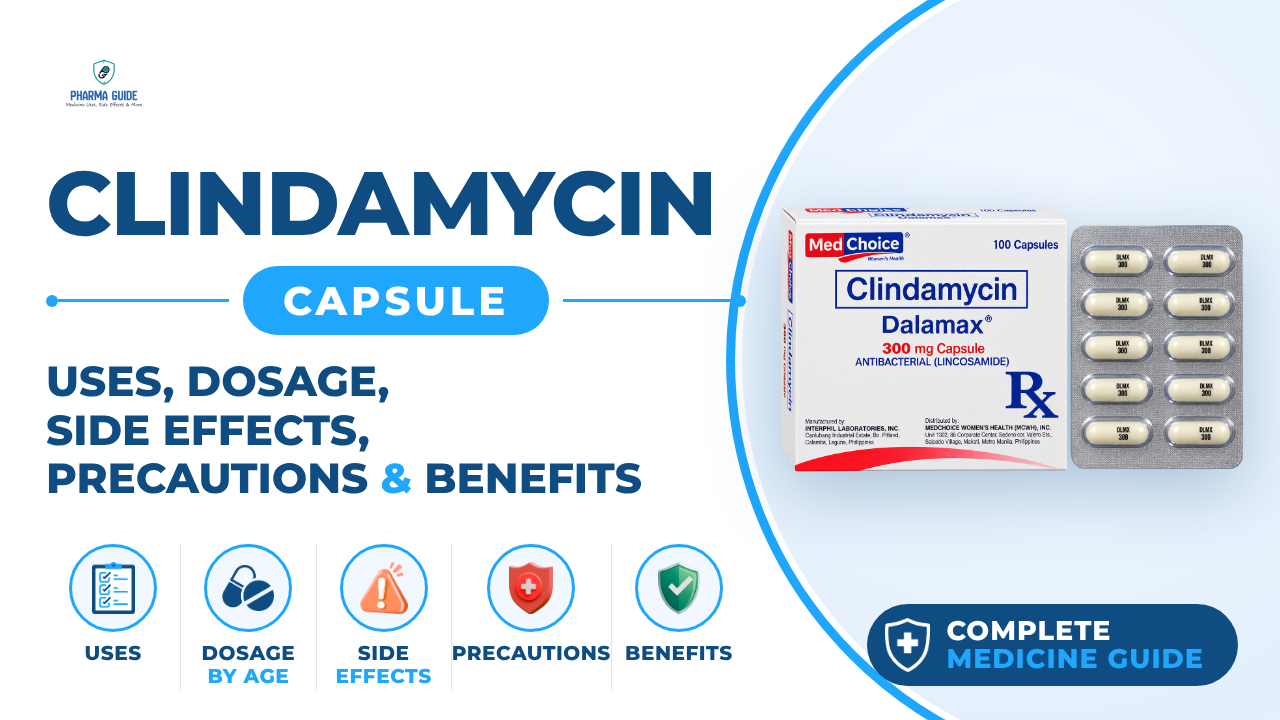
| Generic name | Clindamycin hydrochloride |
|---|---|
| Drug class | Lincosamide antibiotic (lincomycin derivative) |
| Forms | Capsule (150 mg, 300 mg), Injection, Oral solution, Topical gel, Topical foam |

Quick overview
Clindamycin Capsule contains clindamycin hydrochloride, a lincosamide antibiotic used to treat various bacterial infections in the body. It works by stopping bacteria from producing the proteins they need to grow, which kills the bacteria or stops them multiplying. It does not work against viral infections such as colds or flu, and it does not work against fungi or yeast. It is taken as prescribed, usually as part of a full course, and offers an option for people allergic to penicillin.
What is Clindamycin Capsule
Clindamycin is an antibiotic used to treat infections in different parts of the body caused by bacteria. It works by killing or stopping the growth of the bacteria causing the infection. It does not work against viral infections such as colds or flu, and it does not work against fungi or yeast.
Clindamycin Capsule uses
- Treating serious bacterial infections caused by susceptible bacteria
- Upper respiratory tract infections such as chronic sinusitis and recurrent pharyngotonsillitis
- Lower respiratory tract infections including pneumonia and infectious exacerbation of chronic bronchitis
- Serious skin and soft tissue infections
- Bone and joint infections including osteomyelitis and septic arthritis
- Serious gynaecological infections of the pelvis including pelvic inflammatory disease
- Intra-abdominal infections including peritonitis and abdominal abscess
- Dental infections including periodontal abscess and periodontitis
- An option for patients who are allergic to penicillin or for whom penicillin is not suitable
Benefits of Clindamycin Capsule
- Fights and clears infections caused by bacteria that are sensitive to it
- Can be used in people who are allergic to penicillin
- Treats certain bacterial infections
- Helps treat skin and soft-tissue infections
- Used for some dental and oral infections
- Can treat certain bone and joint infections
- Used for some serious respiratory infections
- May be used for certain pelvic and abdominal infections
- Helps stop the growth of susceptible bacteria
How Clindamycin Capsule works
Clindamycin stops bacteria from making the proteins they need to grow. It attaches to part of the bacterial cell (the 50S ribosome) and blocks protein production, which kills the bacteria or stops them from multiplying.
Clindamycin Capsule dosage
Swallow the capsules whole with a full glass of water. Do not take this medicine immediately before lying down. Wait at least half an hour to avoid irritating your food pipe. It does not matter if you take it before, with or after food. Space the doses evenly through the day and take them at about the same time each day. Continue taking it until you finish the course or until your doctor tells you to stop; do not stop just because you feel better. Capsules are not recommended in children who cannot swallow them. Remind any doctor, dentist or pharmacist you visit that you are using this medicine.
| Age group | Dose |
|---|---|
| 1 month–11 years | Pediatric dose prescribed by doctor |
| 12–17 years | 150–300 mg every 6 hours for serious infections |
| 18 years and older | 150–300 mg every 6 hours for serious infections |
| Adults — more severe infection | 300–450 mg every 6 hours |
Available forms and strengths
- Capsule (150 mg, 300 mg)
- Injection
- Oral solution
- Topical gel
- Topical foam
Side effects of Clindamycin Capsule
Common
- Nausea or vomiting
- Stomach (abdominal) pain
- Mild skin rash
- Change or loss of taste (metallic taste)
- Vaginal itching or discharge
- Pain, stiffness or swelling in the joints
- Purple or red-brown spots visible through the skin
- V-shaped red rash on buttocks and/or upper inner thighs
- Diarrhoea
Serious
- Severe diarrhoea which may have blood and mucus, stomach pain and fever
- Chest pain, shortness of breath, nausea and vomiting, sweating and fast or irregular heartbeats
- Signs of allergy such as rash, itching or hives, swelling of the face, lips, tongue or other parts of the body, shortness of breath, wheezing or trouble breathing
- Severe skin reaction with painful red skin, blistering or peeling, or bleeding in the lips, eyes, mouth, nose and genitals
- High fever quickly followed by a skin rash
- Frequent infections such as fever, severe chills, sore throat or mouth ulcers
- Bleeding or bruising more easily than normal
- Weight loss and fevers, night sweats, fatigue, cough, pain, weakness, confusion
- A burning sensation in the chest rising up to the throat (heartburn)
- Little or no urine with drowsiness, nausea, vomiting, breathlessness
- Yellowing of the skin or eyes
Warnings and precautions
- Do not use this medicine if you are allergic to clindamycin, to lincomycin, to lactose, or to any of the ingredients.
- This medicine can cause diarrhoea from an overgrowth of Clostridioides difficile bacteria, which can range from mild to a life-threatening bowel inflammation (colitis). This can happen up to two months after stopping the medicine.
- Do not take any medicine for diarrhoea without first checking with your doctor, as this can make a serious bowel condition worse.
- Severe skin and allergic reactions, including serious conditions such as Stevens-Johnson syndrome and toxic epidermal necrolysis, have happened. Stop the medicine and get medical care if these occur.
- Do not take clindamycin at the same time as erythromycin, as they work against each other.
- Take the full course as prescribed and do not stop early, even if you feel better, or the infection may not clear and bacteria may become resistant.
- Do not give this medicine to anyone else, and do not use it to treat other complaints unless your doctor tells you to.
- Clindamycin crosses the placenta and should only be used in pregnancy if clearly needed. As a precaution, it is best to avoid it in the first trimester.
- Check with your doctor if you are pregnant or plan to become pregnant.
- Clindamycin passes into breast milk and may cause effects such as diarrhoea, blood in the stool or rash in the baby.
- Capsules are not recommended during breastfeeding.
- Talk to your doctor if you are breastfeeding or plan to.
- A dose change is not needed for reduced kidney function.
- If treatment is prolonged, kidney function may be checked, and monitoring is advised in people with existing kidney problems or taking other medicines that affect the kidneys.
- In people with moderately to seriously reduced liver function, clindamycin stays in the body longer.
- A dose reduction is not usually needed if it is taken every 8 hours, but liver function may be checked during long treatment.
- Tell your doctor if you drink alcohol.
- Clindamycin has little or no effect on driving or using machines, but be careful until you know how it affects you.
- Speak to your doctor or pharmacist if you are unsure.
Storage
- Keep your medicine in its original packaging until it is time to take it.
- Keep your medicine in a cool dry place where the temperature will stay below 25°C (another source advises storing below 30°C).
- Do not store it in the bathroom or near a sink, and do not leave it on a windowsill or in the car, as heat and dampness can destroy some medicines.
- Keep it where young children cannot reach it; a locked cupboard at least one-and-a-half metres above the ground is a good place.
- If it has expired or is damaged, or you no longer need it, take it to any pharmacy for safe disposal.
When to see a doctor
- If you get severe or watery or bloody diarrhoea, tell your doctor, pharmacist or nurse immediately, even if it happens weeks after stopping the medicine, as you may need urgent care.
- Call your doctor straight away or go to the nearest Emergency Department if you notice serious side effects such as chest pain, trouble breathing, signs of allergy, severe skin reactions, unusual bleeding or bruising, or little or no urine.
- If you think you have taken too much, get urgent medical attention right away, even if you feel well. Contact your doctor, go to the nearest hospital emergency department, or call your local poison control centre.
- Get emergency medical help if you have signs of an allergic reaction such as hives, difficulty breathing, or swelling of your face or throat.
Alternatives
- Erythromycin
- Dalacin C
- Cleocin
FAQs
What is Clindamycin Capsule used for?
It treats bacterial infections such as respiratory tract infections, skin and soft tissue infections, bone and joint infections, pelvic and intra-abdominal infections, and dental infections. It is also an option for people allergic to penicillin.
How does Clindamycin Capsule work?
It attaches to part of the bacterial cell (the 50S ribosome) and blocks protein production, which kills bacteria or stops them from multiplying. It does not work against viral or fungal infections.
How should I take Clindamycin Capsule?
Swallow the capsules whole with a full glass of water, avoid lying down immediately after taking it, and wait at least half an hour. It can be taken before, with or after food, and the full prescribed course should be completed even if you feel better.
What are the serious side effects of Clindamycin Capsule?
Serious side effects include severe diarrhoea with blood and mucus, signs of allergy, severe skin reactions, easy bleeding or bruising, frequent infections, yellowing of the skin or eyes, and little or no urine. Seek urgent medical care if these occur.
Can Clindamycin Capsule be taken during pregnancy or breastfeeding?
Clindamycin crosses the placenta and should only be used in pregnancy if clearly needed, avoiding it in the first trimester as a precaution. It also passes into breast milk, and capsules are not recommended during breastfeeding.
Sources
- Clindamycin LU Consumer Medicine Information (CMI), Arrotex Pharmaceuticals Pty Ltd, March 2026
- Dalacin C Capsules and Injection LPD, Pfizer, November 2024
- Drugs.com - Clindamycin, medically reviewed, last updated Aug 14, 2024
Video