Clindamycin Gel: Uses, Dosage, Side Effects, Precautions and Alternates
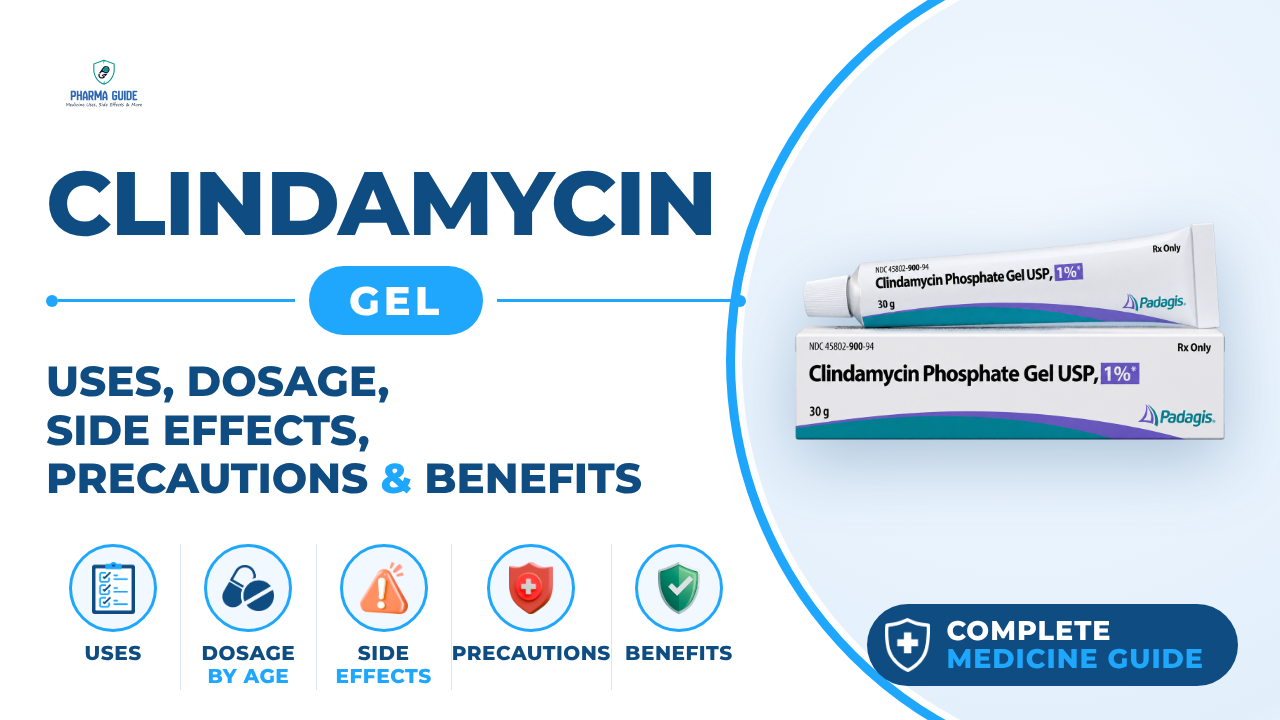
| Generic name | Clindamycin phosphate (available alone or combined with benzoyl peroxide) |
|---|---|
| Drug class | Lincosamide antibiotic (clindamycin); some products combine it with benzoyl peroxide, a disinfectant/keratolytic |
| Forms | Topical solution, Gel |
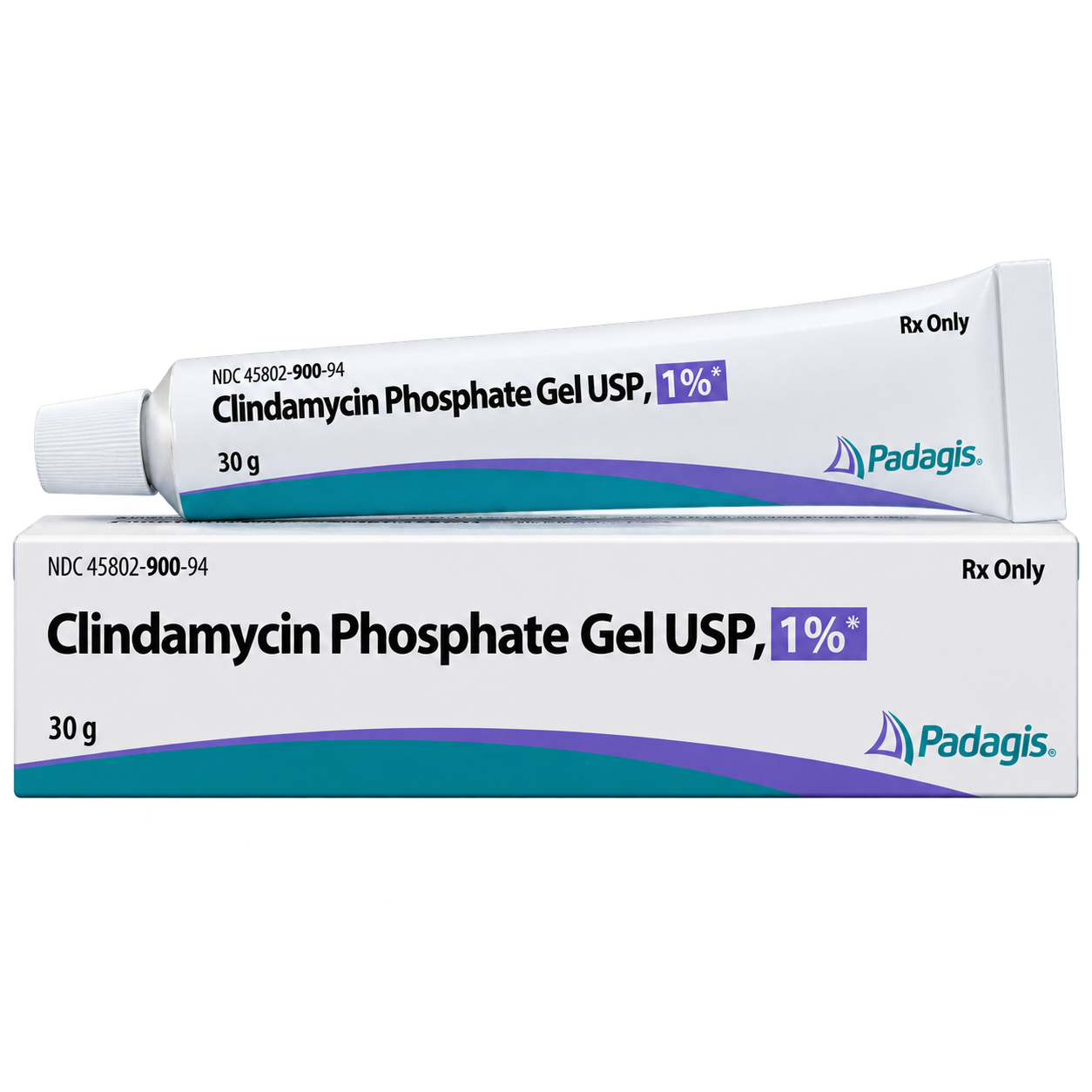
Quick overview
Clindamycin Gel is a topical antibiotic medicine applied to the skin to treat acne (acne vulgaris) in people 12 years of age and older. It contains clindamycin phosphate, and some products also contain benzoyl peroxide. It works by stopping the growth of bacteria linked to acne, helping to reduce red and inflamed pimples.
What is Clindamycin Gel
Clindamycin gel is a medicine you put on your skin (topical) to treat acne. It contains clindamycin, an antibiotic. Some products also contain benzoyl peroxide. It is used for acne vulgaris in people 12 years of age and older.
Clindamycin Gel uses
- Treatment of acne (acne vulgaris)
- Treatment of mild to moderate acne, especially acne with inflamed sores
Benefits of Clindamycin Gel
- Helps prevent the growth of bacteria linked to acne
- Reduces the number of red and inflamed pimples caused by acne
How Clindamycin Gel works
Clindamycin is an antibiotic that stops bacteria linked to acne from growing. In combination products, benzoyl peroxide also fights bacteria and helps clear the skin. Together they reduce red and inflamed pimples.
Clindamycin Gel dosage
For external use on the skin only. Do not use it in your mouth, eyes, or vagina, and keep it away from the lips and inside of the nose.
Before applying, wash the treatment area gently with a mild soap, rinse with warm water, and pat the skin dry. Apply a thin layer of the gel over the whole area affected by acne, not just the pimples, using your fingertips. Wash your hands after applying the medicine.
For a clindamycin-only solution, do not wash the treated area for at least two hours after applying. After shaving, wait about 30 minutes before applying, because the alcohol in some products may irritate freshly shaved skin.
Some products are used twice daily and others once daily in the evening; follow the directions for your specific product. It may take a few weeks before you notice the effect of the medicine.
If your skin becomes very dry or peels, you may use an oil-free, fragrance-free moisturizing cream, and you may apply the gel less often or pause treatment briefly to let the skin adjust. Do not use for longer than 12 weeks without talking to your doctor. This medicine is for children and adolescents above the age of 12 years; do not use it in children under 12.
| Age group | Dose |
|---|---|
| Under 12 years | Not recommended |
| 12–17 years | Apply a thin layer twice daily |
| 18 years and older | Apply a thin layer twice daily |
Available forms and strengths
- Topical solution
- Gel
Side effects of Clindamycin Gel
Common
- Dry or scaly skin
- Peeling of skin
- Skin redness
- Stinging or burning feeling
- Itching
- Headaches
- Sensitivity to sunlight in the treated area
- Eye pain (with the solution)
- Hives, redness
- Indigestion and gas
Serious
- Severe, watery, or bloody diarrhea with or without abdominal pain or cramps (possible colitis / bowel inflammation)
- Clostridium difficile colitis (bowel inflammation) with severe or persistent diarrhea, abdominal pain, nausea and vomiting
- Allergic reaction such as severe itching, hives, swelling of the face, eyes, lips, tongue or throat, trouble breathing, or collapse
- Severe skin peeling, burning or itching
Warnings and precautions
- Safety in pregnancy has not been fully established.
- Tell your doctor if you are pregnant or planning to become pregnant.
- Your doctor will decide if the medicine is suitable for you by weighing the benefits against the risks.
- Tell your doctor if you are breastfeeding or plan to breastfeed.
- Clindamycin can appear in breast milk when taken by mouth or by injection.
- Your doctor will decide if you should use this medicine while breastfeeding.
- If you breastfeed, do not apply the gel on your breasts, and watch your baby for diarrhea, thrush, diaper rash, or blood in the stool.
- Using other skin products that contain alcohol, such as cleansers, medicated soaps, or cosmetics, may dry out or irritate your skin when used with this medicine.
- For external use only. Do not use it in the mouth, eyes, or vagina, and avoid contact with the lips, other mucous membranes, and areas of broken skin.
- The clindamycin solution is flammable. Do not smoke or go near an open flame during and right after applying it.
- Do not use this medicine if you are allergic to clindamycin, lincomycin, benzoyl peroxide, or any other ingredient in it, or if you have a history of Crohn's disease, ulcerative colitis, or colitis linked to past antibiotic use.
- Clindamycin can cause severe colitis (bowel inflammation), which may result in death. Stop using the medicine if significant diarrhea occurs.
- Limit your time in sunlight and avoid tanning beds or sun lamps, as this medicine can make your skin more sensitive to the sun.
- Wear protective clothing and use sunscreen.
- Do not use with products containing erythromycin, as they may make this medicine less effective.
- The combination gel may bleach hair or colored fabric, so avoid getting it in your hair or on colored fabrics.
- Tell your doctor before surgery, as this medicine may affect certain medicines used during surgery.
Storage
- Keep all medicines out of the reach and sight of children.
- For the clindamycin topical solution: store at room temperature (15°C to 30°C), away from heat and direct light, do not freeze, and store the bottle upright.
- This product is flammable; keep away from flames and do not smoke during or right after applying it.
- For the combination gel: store at room temperature at or below 25°C, do not freeze, keep the container tightly closed, and store the pump upright.
- For the refrigerated combination gel: store in a refrigerator (2°C to 8°C); after first opening it can be used for 60 days if kept refrigerated.
- Do not use the medicine after the expiry date printed on the package.
- Throw away any gel that has passed its expiration date.
When to see a doctor
- Stop using the medicine and contact your doctor right away if you develop severe stomach cramps, watery diarrhea, or bloody diarrhea during treatment or within several weeks after treatment.
- Stop using the medicine and get help right away if you have signs of an allergic reaction such as severe itching, swelling of the face, eyes, lips, tongue or throat, or trouble breathing.
- If the medicine gets in your eyes, wash them right away with plenty of cool tap water; if your eyes still burn or hurt, get medical help immediately.
- If someone accidentally swallows the medicine, contact a doctor or go to a hospital emergency room and bring the package. For a suspected overdose, contact your local poison control center.
- Stop the treatment and contact your doctor if skin irritation is severe, with severe redness, dryness, itching, tingling or burning, or if the skin does not improve.
Alternatives
- Benzoyl Peroxide Gel
- Adapalene Gel
- Azelaic Acid Gel
- Erythromycin Gel
- Metronidazole Gel
- Dapsone Gel
FAQs
What is Clindamycin Gel used for?
It is used to treat acne (acne vulgaris), especially mild to moderate acne with inflamed sores, in people 12 years of age and older.
How do you apply Clindamycin Gel?
Wash the area with mild soap, rinse, and pat dry. Apply a thin layer over the whole affected area, not just the pimples, using your fingertips, then wash your hands. Some products are used twice daily and others once daily in the evening.
How long does it take for Clindamycin Gel to work?
It may take a few weeks before you notice the effect of the medicine. Do not use it for longer than 12 weeks without talking to your doctor.
What are the serious side effects of Clindamycin Gel?
Serious side effects include severe, watery, or bloody diarrhea with abdominal pain (possible colitis), Clostridium difficile colitis, allergic reactions like swelling or trouble breathing, and severe skin peeling, burning or itching.
Can I use Clindamycin Gel while breastfeeding?
Tell your doctor if you are breastfeeding, as clindamycin can appear in breast milk. Your doctor will decide if you should use it, and if so, avoid applying it on your breasts and watch your baby for diarrhea, thrush, diaper rash, or blood in the stool.
Sources
- CLINDA-T (Clindamycin Phosphate Topical Solution) Product Monograph, Bausch Health, Canada Inc., February 15, 2022 (https://pdf.hres.ca/dpd_pm/00065052.PDF)
- Clindamycin Phosphate and Benzoyl Peroxide Gel Prescribing Information, Sun Pharmaceutical Industries, Inc. / Taro Pharmaceuticals, Revised January 2023
- TaroClindin Gel Patient Leaflet, Taro International Ltd., Revised April 2021 (https://mohpublic.z6.web.core.windows.net/IsraelDrugs/Rishum_21_550564321.pdf)
Video