
Safety
General information, not medical advice
Your prescriber and the leaflet in your pack know your situation. This page does not.
- Follow your prescriber and the leaflet
- Don't start, stop, or change a dose on your own
- Doses and warnings differ by country and product
Clobazam Tablet: Uses, Dosage, Side Effects, Precautions and Alternates

| Generic name | Clobazam |
|---|---|
| Drug class | Benzodiazepine |
| Forms | Tablet, Oral suspension (liquid), Oral film (dissolves on the tongue) |

Quick overview
Clobazam Tablet (generic name: Clobazam) is a prescription medicine belonging to the benzodiazepine class. It is used to treat anxiety and certain types of epilepsy, working on brain chemicals to calm abnormal brain activity. It is available as a tablet, oral suspension, and oral film.
What is Clobazam Tablet
Clobazam is a prescription medicine that belongs to a group of medicines called benzodiazepines. It is used to treat anxiety and certain types of epilepsy, and works on brain chemicals to calm abnormal brain activity.
Clobazam Tablet uses
- Treats anxiety and sleep disturbances associated with anxiety in adults
- Used together with other medicines to treat partial refractory and Lennox-Gastaut epilepsy (seizures) in children 4 years of age or older
- Used with other medicines to control seizures in Lennox-Gastaut syndrome in adults and children 2 years of age and older
Benefits of Clobazam Tablet
- Can reduce the frequency of drop seizures and other seizure types in people with Lennox-Gastaut syndrome
- May allow some patients to discontinue protective helmets and move more freely due to better seizure control
- Can improve overall symptoms and quality of life as reported by patients, caregivers, and doctors
How Clobazam Tablet works
Clobazam is a benzodiazepine. It is thought to work by acting on brain chemicals, decreasing abnormal electrical activity in the brain that can cause seizures.
Clobazam Tablet dosage
Swallow the tablet with a full glass of water. Take it at about the same time each day, preferably in the evening. It can be taken before or after meals. If you have difficulty swallowing the tablet whole, it may be split in half along the centerline or crushed.
Do not stop taking it suddenly, even if you feel better, unless your doctor tells you to. Do not take it for longer than your doctor has prescribed. If you miss a dose, skip it and take the next dose at the usual time; do not double up. Benzodiazepines like this one are generally meant for short-term use only, usually up to one month, unless your doctor advises otherwise.
| Age group | Dose |
|---|---|
| Under 18 years | Not recommended |
| 18–64 years | 10 mg, once/day |
| 65+ years | 5 mg, once/day |
Available forms and strengths
- Tablet
- Oral suspension (liquid)
- Oral film (dissolves on the tongue)
Side effects of Clobazam Tablet
Common
- Drowsiness, tiredness
- Dizziness, unsteadiness, tremor
- Sweating, muscle aches, spasms or weakness
- Nausea, vomiting, diarrhoea, constipation
- Weight gain
- Loss of memory, confusion, lack of concentration
- Depression
- Headache, hangover feeling in the morning
- Dry mouth or slurred speech
- Blurred vision
- Skin rash
- Changes in sex drive
- Drooling
- Fever
- Upper respiratory tract infection
- Low energy
- Acting aggressive or being angry or violent
Serious
- Clobazam dependence (physical or mental dependence), especially with long-term use
- Severe blisters and bleeding on the lips, eyes, mouth, nose and genitals (possible Stevens-Johnson syndrome)
- Sudden anxiety or excitation
- Feeling suicidal, or suicidal thoughts or behaviour
- Hallucinations or delusions
- Severe sleep disturbances
- Irritability, aggressiveness
- Breathing difficulties
- Severe sleepiness and dizziness leading to trouble waking up
- Serious allergic reaction: swelling of face, lips, tongue, or throat, hives, difficulty breathing
- Drug Reaction with Eosinophilia and Systemic Symptoms (DRESS), including fever, rash, swollen lymph nodes, or organ injury
Warnings and precautions
- Do not take clobazam if you are pregnant or planning to become pregnant, unless your doctor decides the benefits outweigh the risks. It can affect the newborn baby, causing breathing or feeding problems or withdrawal symptoms if taken late in pregnancy. Tell your doctor immediately if you become pregnant while taking this medicine.
- Do not take this medicine if you are breastfeeding or planning to breastfeed, as it passes into breast milk and may cause drowsiness or feeding difficulties in the baby.
- Tell your doctor if you have kidney disease before taking this medicine.
- Do not take this medicine if you have severely reduced liver function. Tell your doctor about any liver disease.
- Avoid alcohol while taking this medicine. It will reduce your tolerance to alcohol and increase the effects of the medicine.
- Do not drive or operate machinery until you know how this medicine affects you, as it may cause drowsiness or dizziness that affects alertness, even the day after taking it at night.
- Taking this medicine together with opioid pain medicines increases the risk of severe drowsiness, breathing difficulties, coma, and death.
- This medicine can be habit-forming and may lead to physical or psychological dependence, especially with long-term use. Do not take a larger dose or use it for longer than prescribed.
- Do not stop taking this medicine suddenly, especially if you have epilepsy, as this can worsen seizures and cause withdrawal symptoms such as depression, nervousness, trouble sleeping, irritability, sweating, upset stomach, shaking, faster heartbeat, confusion, hallucinations or fits.
- This medicine can cause serious, potentially life-threatening skin reactions such as Stevens-Johnson syndrome. Watch for unusual skin reactions, especially during the first two months of treatment.
- This medicine may increase the risk of suicidal thoughts or behavior, which can appear within the first week of treatment and continue throughout treatment.
- Do not give this medicine to a child or teenager for the treatment of anxiety or sleep disorders.
- Hormonal birth control methods (pills, patches, rings, implants, injections, or IUDs) may not work as well while taking this medicine. Use a non-hormonal backup method.
Storage
- Keep your tablets in their blister pack until it is time to take them
- Keep the medicine in a cool dry place where the temperature stays below 25°C
- Store it in a cool dry place away from moisture, heat or sunlight; do not store it in the bathroom, near a sink, in the car, or on window sills
- Keep it where young children cannot reach it; a locked cupboard at least one-and-a-half metres above the ground is a good place to store medicines
- If your doctor tells you to stop taking it or the tablets have passed their expiry date, ask your pharmacist what to do with any that are left over
- Take unused or out-of-date medicine to any pharmacy for safe disposal
- Do not use this medicine after the expiry date
When to see a doctor
- Get urgent medical help if you think you or someone else has taken too much of this medicine, even without symptoms. Signs of overdose include drowsiness, confusion, tiredness, dizziness, breathing difficulty, weakness, or becoming unconscious.
- Call your doctor straight away or go to the Emergency Department if you notice serious side effects such as severe blisters and bleeding of the lips, eyes, mouth, nose or genitals, sudden anxiety or excitation, suicidal thoughts or behaviour, hallucinations or delusions, severe sleep disturbances, irritability, aggressiveness, or breathing difficulties.
- Seek medical help right away if you notice slower breathing or trouble waking up after taking this medicine with other medications such as opioids.
- Take all thoughts of suicide seriously. Tell your doctor or a mental health professional immediately if you have any suicidal thoughts or other mood changes.
- Stop using the medicine and get medical attention right away if you notice a sore throat, fever, fatigue, rash, painful blisters, skin reddening, skin peeling, swelling in the face, or trouble breathing.
Alternatives
- Valproate
- Lamotrigine
- Clonazepam
Watch the video
FAQs
What is Clobazam Tablet used for?
It treats anxiety and sleep disturbances linked to anxiety in adults, and is used with other medicines to control partial refractory epilepsy and seizures in Lennox-Gastaut syndrome in children 2 years and older and adults.
How should Clobazam Tablet be taken?
Swallow it with a full glass of water at about the same time each day, preferably in the evening, before or after meals. The tablet can be split along the centerline or crushed if swallowing whole is difficult. Do not stop suddenly without your doctor's advice.
What is the usual dose of Clobazam Tablet?
Adults aged 18-64 years typically take 10 mg once a day, while those 65 and older take 5 mg once a day. It is not recommended for anyone under 18 years.
What are the serious side effects of Clobazam Tablet?
Serious side effects include dependence, Stevens-Johnson syndrome, suicidal thoughts or behaviour, hallucinations, severe sleep disturbances, breathing difficulties, and DRESS (Drug Reaction with Eosinophilia and Systemic Symptoms).
Can I drink alcohol while taking Clobazam Tablet?
No, alcohol should be avoided while taking this medicine because it reduces your tolerance to alcohol and increases the medicine's effects.
General information, not medical advice
Your prescriber and the leaflet in your pack know your situation. This page does not.
- Follow your prescriber and the leaflet
- Don't start, stop, or change a dose on your own
- Doses and warnings differ by country and product
Sources
Video
Related medicines
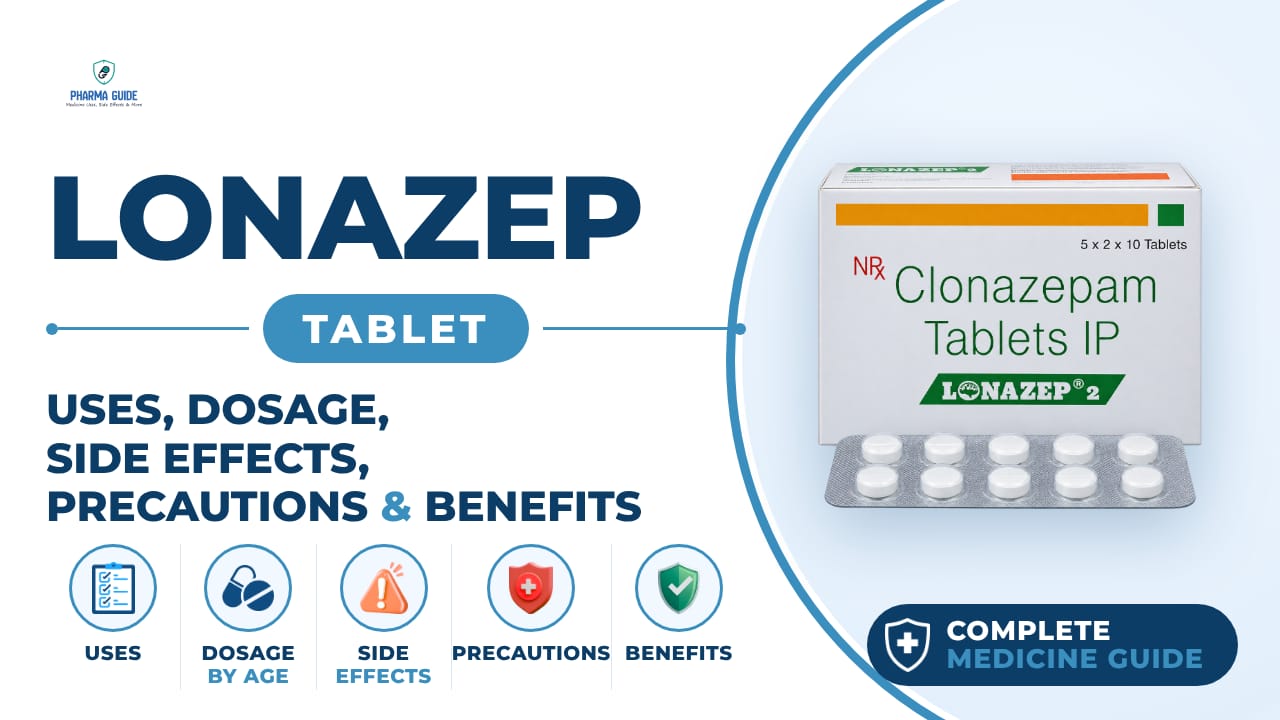
Lonazep Tablet: Uses, Dosage, Side Effects, Precautions and Alternates
Benzodiazepine
Lonazep Tablet contains clonazepam, used for anxiety, panic attacks, insomnia, and epilepsy. Learn about dosage, benefits, side effects, and precautions.
Benzodiazepines Capsule: Uses, Dosage, Side Effects, Precautions and Alternates
Benzodiazepine
Benzodiazepines Capsule (Diazepam) treats severe anxiety, muscle spasms, seizures, and alcohol withdrawal. Learn uses, dosage, side effects, and precautions.