
Safety
General information, not medical advice
Your prescriber and the leaflet in your pack know your situation. This page does not.
- Follow your prescriber and the leaflet
- Don't start, stop, or change a dose on your own
- Doses and warnings differ by country and product
Clobex Spray: Uses, Dosage, Side Effects, Precautions and Alternates
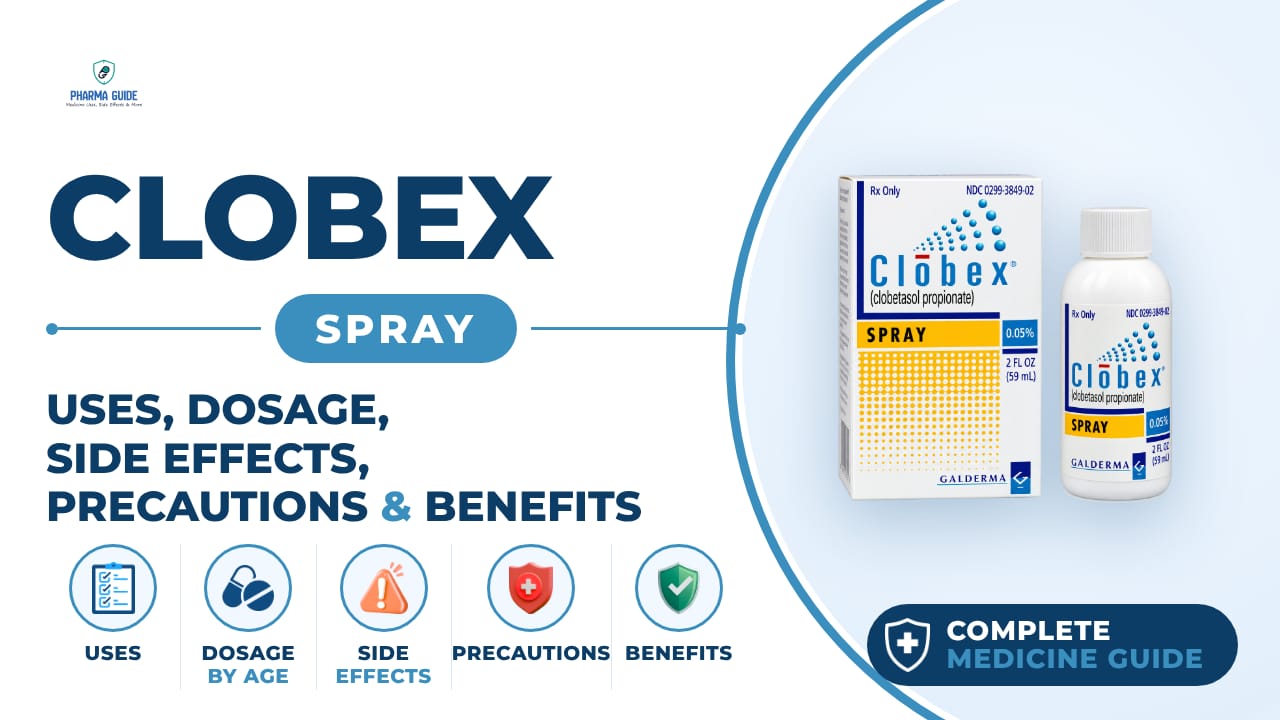
| Generic name | clobetasol propionate |
|---|---|
| Drug class | Topical Corticosteroid (super-high potency) |
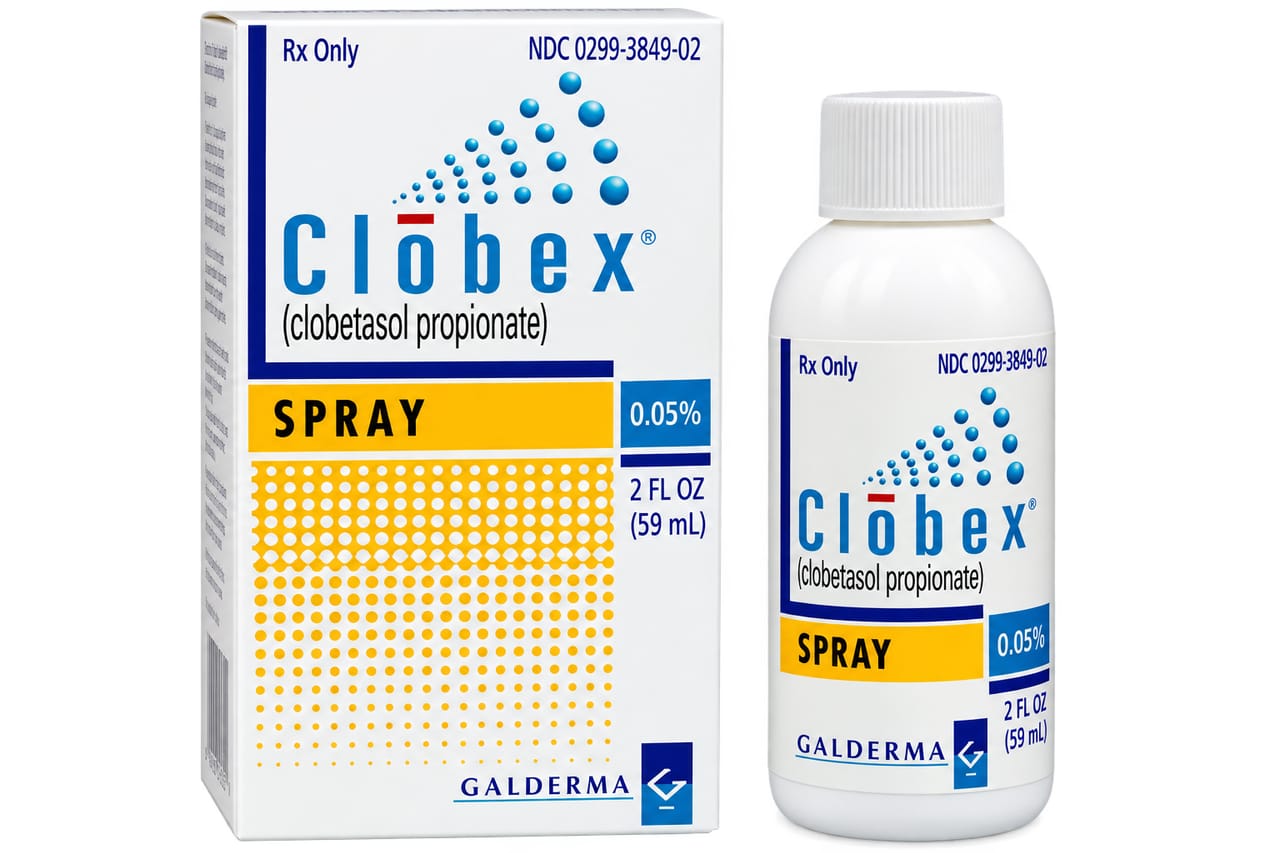
| Forms | Spray, 0.05% w/w |
Quick overview
Clobex Spray contains clobetasol propionate, a super-high-potency topical corticosteroid. It is sprayed onto the skin to treat moderate to severe plaque psoriasis affecting up to 20% of the body surface in adults 18 years and older. It works by reducing inflammation, which helps relieve redness, scaling, and itching. It is not recommended for children or anyone under 18 years of age.
What is Clobex Spray
Clobex Spray is a very strong (super-high-potency) topical corticosteroid solution that is sprayed onto the skin to treat moderate to severe plaque psoriasis in adults.
Clobex Spray uses
- Treatment of moderate to severe plaque psoriasis affecting up to 20% of the body surface in adults 18 years and older
- Treats plaque psoriasis
- Reduces skin inflammation
- Relieves itching
- Reduces redness and scaling
Benefits of Clobex Spray
- Reduces inflammation, redness, swelling, and scaly patches associated with plaque psoriasis
- Relieves severe itching and irritation at the application site
- Slows down the rapid overgrowth and buildup of skin cells common in psoriasis plaques
- Very potent anti-inflammatory effect
- Can reduce psoriasis plaques quickly
- Convenient spray formulation for larger or hard-to-reach areas
How Clobex Spray works
Clobex Spray contains a corticosteroid that lowers the body's immune response, which reduces inflammation. This helps relieve symptoms like redness, scaling, and itching.
Clobex Spray dosage
Spray directly onto the affected skin areas twice daily (once in the morning and once at night) and rub in gently and completely. Use only enough to cover the affected areas. Wash your hands after applying, unless you are treating your hands. Do not apply to the face, underarms (armpits), or groin. Avoid contact with eyes, eyelids, and lips; if contact occurs, rinse thoroughly with water.
Do not cover the treated area with a bandage or other covering unless your healthcare professional tells you to. Before applying, wash the area to be treated with a mild cleanser, pat dry, and wait several minutes. Do not use for more than 4 weeks in a row; if your skin has not improved after 2 weeks, talk to your healthcare professional. Stop using once your plaques have healed, as advised by your healthcare professional.
Keep away from heat or open flame because the spray is flammable. If you miss a dose, apply it as soon as you remember, then go back to your regular schedule; if it is almost time for the next dose, just apply that one dose and continue your regular schedule - do not double up to make up for a missed dose. Not recommended for use in children or anyone under 18 years of age.
| Age group | Dose |
|---|---|
| Under 12 years | Not recommended; safety and effectiveness are not established |
| 18–39 years | Apply to affected skin twice daily; there is no fixed mg-per-dose because the amount depends on the treated skin area |
| 40–64 years | Apply twice daily; use the smallest amount needed |
Available forms and strengths
- Spray, 0.05% w/w
Side effects of Clobex Spray
Common
- Burning, pain
- Dry skin, skin irritation
- Itching, rash, redness
- Thinning of the skin
- Swelling of the skin
- Darkening of the skin around the plaque being treated
- Inflammation and infection of the hair follicles (folliculitis)
- Spider veins
- Stretch marks
- Acne
- Excessive hair growth
Serious
- Adrenal suppression: dizziness, nausea, vomiting, fever, chest pain, can lead to death
- Osteoporosis or osteonecrosis (thin, fragile bones): bone/joint pain, broken bones, back pain that gets worse when standing or walking
- Vision problems (glaucoma or cataracts): failing eyesight, blurred vision, eye pain, increased pressure in your eye
- Infections: raised temperature and feeling unwell
- Worsening of psoriasis or pustular psoriasis: red, scaly, thick patches of skin, clearly defined raised bumps filled with a white, thick fluid
- Wounds that are slow to heal
- Immunosuppression: get sick or have infections often, purplish spots on skin or in the mouth and/or throat, swollen lymph nodes
- Cushing's syndrome: weight gain in the upper body, puffy face, skin problems, hirsutism, acne, irregular periods, infections
- Hyperglycemia (high blood sugar): increased thirst/hunger, frequent urination, dizziness, sweating
- Allergic reaction: rash, hives, swelling of the face, lips, tongue or throat, difficulty swallowing or breathing
- Allergic contact dermatitis: red rash, itching, dry, scaly skin, oozing and crusting, swelling, tenderness
Warnings and precautions
- Do not use Clobex Spray for longer than 4 consecutive weeks.
- Using too much Clobex Spray, or using it for too long, over large areas, on broken skin, or on the face, underarms, or groin can shut down your adrenal glands. This can happen even with correct use.
- Covering the treated skin can increase how much medicine is absorbed, raising the risk of adrenal suppression. Do not cover treated skin with a bandage unless told to by your healthcare professional.
- This medicine can weaken your immune system, which may hide signs of infection, reactivate old infections, or cause new infections due to lowered resistance.
- Tell your healthcare professional you are using Clobex Spray before any surgery, including dental procedures.
- Clobex Spray can cause eye problems such as increased eye pressure, blurred vision, or other visual disturbances.
- You may develop an allergic skin reaction (contact dermatitis) while using this medicine. Tell your healthcare professional if your skin condition is not healing or is getting worse.
- This spray is flammable. Keep it away from heat sources or open flames.
- There isn't enough research on using Clobex Spray during pregnancy. It should only be used if the benefit clearly outweighs the possible risk to the baby, and only on the smallest area of skin for the shortest time needed.
- It isn't known if Clobex Spray passes into breast milk in meaningful amounts. If used while breastfeeding, it should be applied to the smallest area for the shortest time, and not directly on the nipple or areola.
- No routine kidney-specific dose adjustment is needed because it is applied topically.
- People with severe liver problems should be treated carefully and watched closely for side effects.
- There are no known interactions between Clobex and alcohol, though drinking alcohol might make psoriasis worse. Ask your doctor if it's safe to drink alcohol during treatment.
- Clobex Spray does not usually affect driving.
Storage
- Store at room temperature (15° - 30°C). Do not refrigerate.
- Keep tightly closed.
- Product is flammable, and should be kept away from heat or open flame.
- Keep in a safe place out of the reach of children.
- Do not puncture the bottle.
- Do not flush medications down the toilet or pour them into a drain unless instructed to do so. Properly discard this product when it is expired or no longer needed.
When to see a doctor
- Get medical help right away if you have signs of adrenal suppression such as dizziness, nausea, vomiting, fever, or chest pain, which can be life-threatening.
- Seek medical attention for signs of weak or broken bones, such as bone or joint pain, fractures, or back pain that worsens with standing or walking.
- Tell your healthcare professional right away about vision problems like failing eyesight, blurred vision, eye pain, or increased eye pressure.
- Tell your healthcare professional if you develop signs of infection, such as fever and feeling unwell.
- Get help if your psoriasis gets worse or you develop red, scaly, thick skin patches or raised bumps filled with white fluid.
- Tell your healthcare professional about wounds that are slow to heal.
- Seek help if you notice signs of a weakened immune system, such as frequent illness or infections, purplish spots on your skin or in your mouth/throat, or swollen lymph nodes.
- Tell your healthcare professional about symptoms of Cushing's syndrome, such as upper body weight gain, a puffy face, skin problems, hirsutism, acne, or irregular periods.
- Tell your healthcare professional about signs of high blood sugar, such as increased thirst or hunger, frequent urination, dizziness, or sweating.
- Get immediate medical help for signs of a serious allergic reaction, such as rash, hives, or swelling of the face, lips, tongue, or throat, or trouble swallowing or breathing.
- Tell your healthcare professional about signs of allergic contact dermatitis, such as a red, itchy, dry, scaly rash with oozing, crusting, swelling, or tenderness.
- If you accidentally swallow Clobex Spray, contact your regional poison control center immediately.
- If you think you or someone you are caring for has used too much Clobex Spray, contact a healthcare professional, hospital emergency department, or regional poison control centre immediately, even if there are no symptoms.
Alternatives
- Clobetasol cream
- Clobetasol foam
- Fluocinonide
- Mometasone
Watch the video
FAQs
What is Clobex Spray used for?
Clobex Spray is used to treat moderate to severe plaque psoriasis affecting up to 20% of the body surface in adults 18 years and older. It reduces inflammation, redness, scaling, and itching.
How do you use Clobex Spray?
Spray directly onto affected skin areas twice daily, once in the morning and once at night, rubbing in gently and completely. Avoid the face, underarms, and groin, and do not use for more than 4 weeks in a row.
Can children use Clobex Spray?
No, Clobex Spray is not recommended for children or anyone under 18 years of age, as safety and effectiveness have not been established in those under 12.
What are the serious side effects of Clobex Spray?
Serious side effects include adrenal suppression, osteoporosis or osteonecrosis, vision problems like glaucoma or cataracts, infections, worsening psoriasis, immunosuppression, Cushing's syndrome, high blood sugar, and allergic reactions.
Can I cover the skin after applying Clobex Spray?
No, you should not cover the treated area with a bandage or other covering unless your healthcare professional tells you to, since covering the skin can increase absorption and raise the risk of adrenal suppression.
General information, not medical advice
Your prescriber and the leaflet in your pack know your situation. This page does not.
- Follow your prescriber and the leaflet
- Don't start, stop, or change a dose on your own
- Doses and warnings differ by country and product
Sources
Video
Related medicines
Clobetasol Spray: Uses, Dosage, Side Effects, Precautions and Alternates
Topical corticosteroid (super-high potency)
Clobetasol Spray is a super-high potency steroid for moderate to severe plaque psoriasis in adults. Learn dosage, side effects, and warnings.
Temovate Cream: Uses, Dosage, Side Effects, Precautions and Alternates
Topical corticosteroid (super-high potency)
Temovate Cream (clobetasol propionate) treats psoriasis, eczema, and dermatitis by reducing inflammation and itching. Learn dosage, side effects, and