
Safety
General information, not medical advice
Your prescriber and the leaflet in your pack know your situation. This page does not.
- Follow your prescriber and the leaflet
- Don't start, stop, or change a dose on your own
- Doses and warnings differ by country and product
Cyclobenzaprine Capsule: Uses, Dosage, Side Effects, Precautions and Alternates
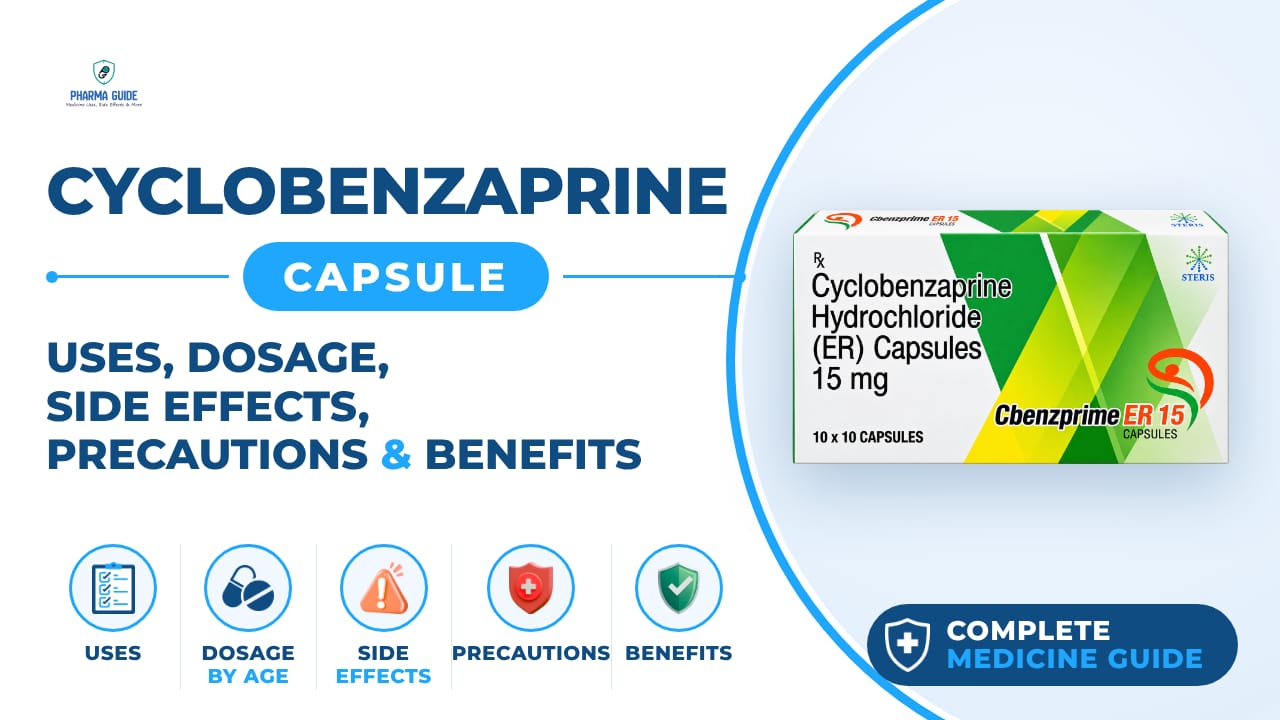
| Generic name | Cyclobenzaprine hydrochloride |
|---|---|
| Drug class | Skeletal muscle relaxant |
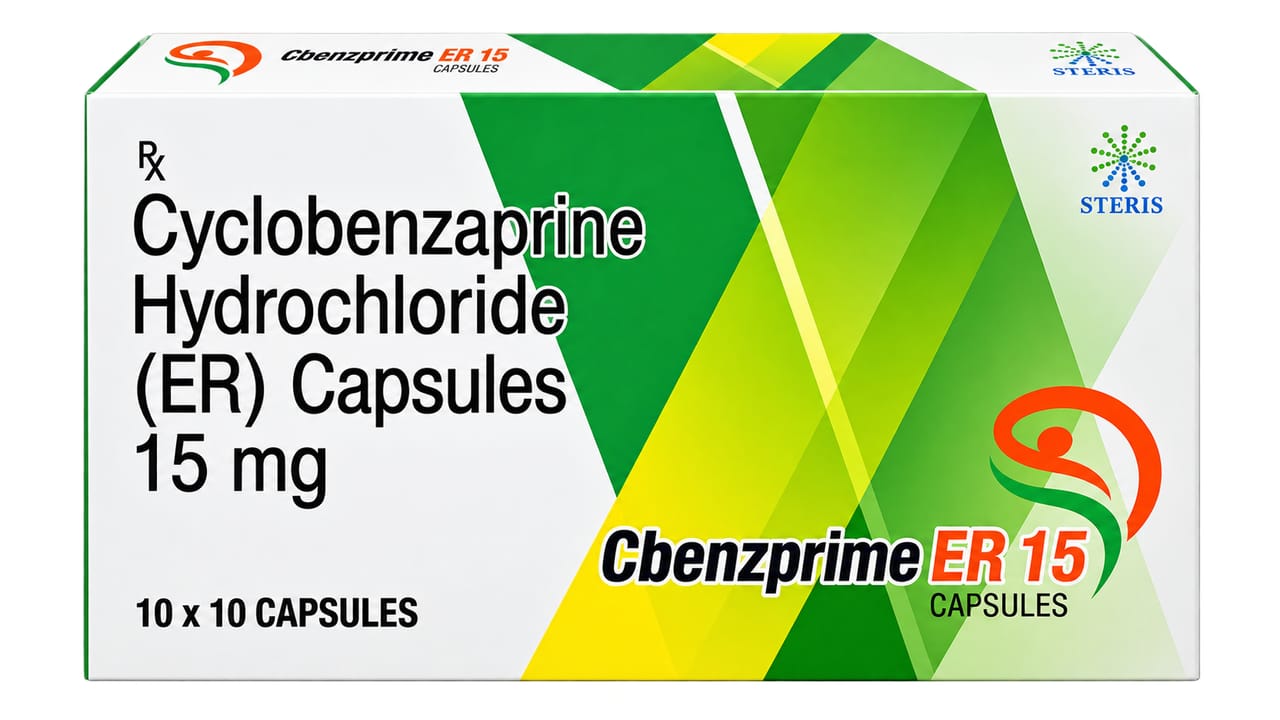
| Forms | Extended-release capsule (15 mg, 30 mg), Immediate-release tablet (5 mg, 7.5 mg, 10 mg), Sublingual tablet (2.8 mg) |
Quick overview
Cyclobenzaprine Capsule (cyclobenzaprine hydrochloride) is a prescription skeletal muscle relaxant used along with rest and physical therapy to relieve muscle spasm from acute, painful musculoskeletal conditions. It is chemically related to tricyclic antidepressants such as amitriptyline and imipramine. It is not effective for spasticity from cerebral or spinal cord disease, or in children with cerebral palsy.
What is Cyclobenzaprine Capsule
Cyclobenzaprine is a prescription skeletal muscle relaxant used along with rest and physical therapy to relieve muscle spasm from acute, painful musculoskeletal conditions. It is chemically related to tricyclic antidepressants like amitriptyline and imipramine.
Cyclobenzaprine Capsule uses
- Relief of muscle spasm associated with acute, painful musculoskeletal conditions, used along with rest and physical therapy
- Not effective for spasticity from cerebral or spinal cord disease, or in children with cerebral palsy
Benefits of Cyclobenzaprine Capsule
- Helps relieve muscle spasm and its associated pain, tenderness, and limited movement
- Works without interfering with normal muscle function
How Cyclobenzaprine Capsule works
Cyclobenzaprine acts in the brain and central nervous system, mainly at the brain stem, to reduce muscle spasm signals rather than acting directly on the muscles or nerve-muscle connections. It is not effective for muscle spasm caused by central nervous system disease.
Cyclobenzaprine Capsule dosage
Take this medicine at approximately the same time each day. Swallow the extended-release capsule whole; do not chew the capsule or its contents. If you have trouble swallowing, the capsule contents may be sprinkled onto a tablespoon of applesauce and swallowed right away without chewing; do not substitute other foods for applesauce; rinse the mouth afterward to make sure all contents are swallowed; discard any unused mixture.
Do not use for longer than two to three weeks unless your doctor tells you to. If you miss a dose, talk to your doctor. Do not take extra or double doses to make up for a missed one.
| Age group | Dose |
|---|---|
| Under 15 years | Not recommended |
| 15–17 years | Specialist/doctor-directed use only |
| 18–64 years | 15 mg once daily initially; may be increased to 30 mg once daily if needed |
| 65 years & older | Not generally recommended; use only with medical supervision |
Available forms and strengths
- Extended-release capsule (15 mg, 30 mg)
- Immediate-release tablet (5 mg, 7.5 mg, 10 mg)
- Sublingual tablet (2.8 mg)
Side effects of Cyclobenzaprine Capsule
Common
- Dry mouth
- Dizziness
- Fatigue
- Constipation
- Nausea
- Upset stomach/dyspepsia
- Drowsiness/somnolence
Serious
- Allergic reaction (difficulty breathing, hives, swelling of face or tongue, itching)
- Irregular or fast heartbeats (arrhythmias, tachycardia)
- Serotonin syndrome (confusion, agitation, hallucinations, fever, sweating, fast heart rate, muscle stiffness or twitching, loss of coordination, nausea, vomiting, diarrhea)
- Seizures
- Chest pain
Warnings and precautions
- Do not use this medicine for longer than two to three weeks, since it has not been proven effective or fully evaluated for longer use. Do not take this medicine with, or within 14 days of stopping, a monoamine oxidase (MAO) inhibitor, as this combination can cause dangerous fever, seizures, and death.
- Do not use this medicine if you have an overactive thyroid, congestive heart failure, certain heart rhythm problems, or have recently had a heart attack.
- This medicine can cause a serious condition called serotonin syndrome, especially when combined with certain antidepressants or other medicines that affect serotonin.
- Use with caution if you have a history of urinary retention, angle-closure glaucoma, increased eye pressure, or if you take other medicines with anticholinergic effects.
- Safety in pregnant women has not been established. Available case report data have not identified a clear risk of major birth defects or miscarriage, but this medicine should only be used during pregnancy if clearly needed.
- It is not known whether this medicine passes into breast milk or affects a nursing baby. Talk to your doctor about the best way to feed your baby if you take this medicine.
- This medicine is not recommended for people with mild, moderate, or severe liver impairment because blood levels of the drug can build up much higher than normal.
- Avoid alcohol while taking this medicine, since it can add to drowsiness and slow your thinking and reactions.
- This medicine may impair your ability to safely drive or operate machinery, so avoid these activities until you know how it affects you.
Storage
- Store at room temperature between 68°F to 77°F (20°C to 25°C)
- Dispense and keep in a tight, light-resistant container
- Keep out of the reach of children
When to see a doctor
Get medical help right away if you have signs of an allergic reaction such as difficulty breathing, hives, or swelling of your face or tongue. Call your doctor right away or go to the emergency room if you notice an irregular or fast heartbeat, since this can be a sign of a serious heart problem. Seek emergency care if you experience symptoms of serotonin syndrome, such as agitation, hallucinations, confusion, fast heartbeat, high or low blood pressure, sweating, fever, muscle stiffness, or nausea and vomiting. If you think you have taken too much of this medicine, contact your doctor or go to the nearest hospital emergency room right away.
Alternatives
- Amrix
- Flexeril
- Fexmid
- Tonmya
Watch the video
FAQs
What is Cyclobenzaprine Capsule used for?
It is used along with rest and physical therapy to relieve muscle spasm associated with acute, painful musculoskeletal conditions. It is not effective for spasticity from cerebral or spinal cord disease, or in children with cerebral palsy.
How should I take the Cyclobenzaprine extended-release capsule?
Take it at approximately the same time each day and swallow it whole without chewing. If you have trouble swallowing, you can sprinkle the contents onto a tablespoon of applesauce and swallow immediately without chewing, then rinse your mouth; do not use other foods, and discard any unused mixture.
How long can I take Cyclobenzaprine Capsule?
It should not be used for longer than two to three weeks unless your doctor tells you to, since it has not been proven effective or fully evaluated for longer use.
What are the common side effects of Cyclobenzaprine Capsule?
Common side effects include dry mouth, dizziness, fatigue, constipation, nausea, upset stomach or dyspepsia, and drowsiness or somnolence.
Who should avoid taking Cyclobenzaprine Capsule?
It should not be used with or within 14 days of stopping an MAO inhibitor, or by people with an overactive thyroid, congestive heart failure, certain heart rhythm problems, a recent heart attack, or liver impairment.
General information, not medical advice
Your prescriber and the leaflet in your pack know your situation. This page does not.
- Follow your prescriber and the leaflet
- Don't start, stop, or change a dose on your own
- Doses and warnings differ by country and product
Sources
Video
Related medicines
Soma Tablet: Uses, Dosage, Side Effects, Precautions and Alternates
Skeletal muscle relaxant
Soma Tablet (carisoprodol) is a muscle relaxant for short-term muscle pain relief. Learn about its uses, dosage, side effects, and safety warnings.
Skelaxin Tablet: Uses, Dosage, Side Effects, Precautions and Alternates
Skeletal muscle relaxant
Skelaxin Tablet (metaxalone) is a prescription muscle relaxant for short-term relief of painful muscle spasms. Learn uses, dosage, and side effects.