
Safety
General information, not medical advice
Your prescriber and the leaflet in your pack know your situation. This page does not.
- Follow your prescriber and the leaflet
- Don't start, stop, or change a dose on your own
- Doses and warnings differ by country and product
Cyproheptadine Tablet: Uses, Dosage, Side Effects, Precautions and Alternates
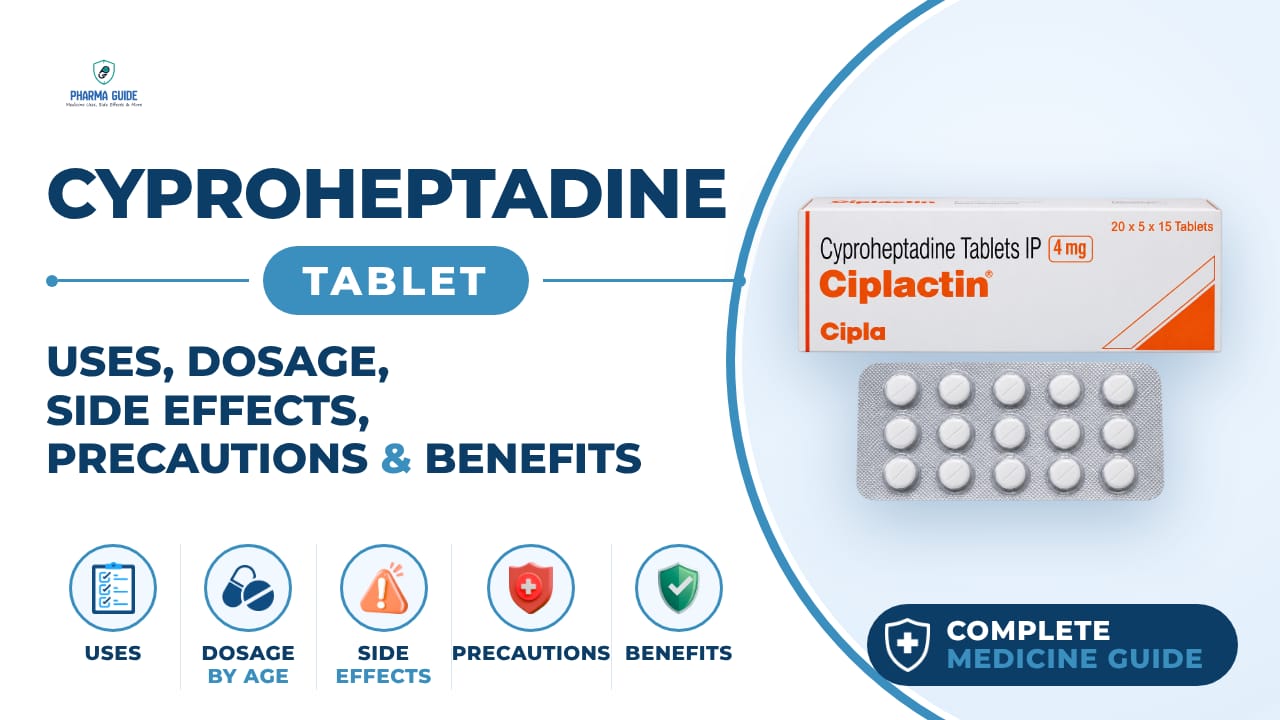
| Generic name | cyproheptadine, cyproheptadine HCl, cyproheptadine hydrochloride |
|---|---|
| Drug class | Antihistamine |
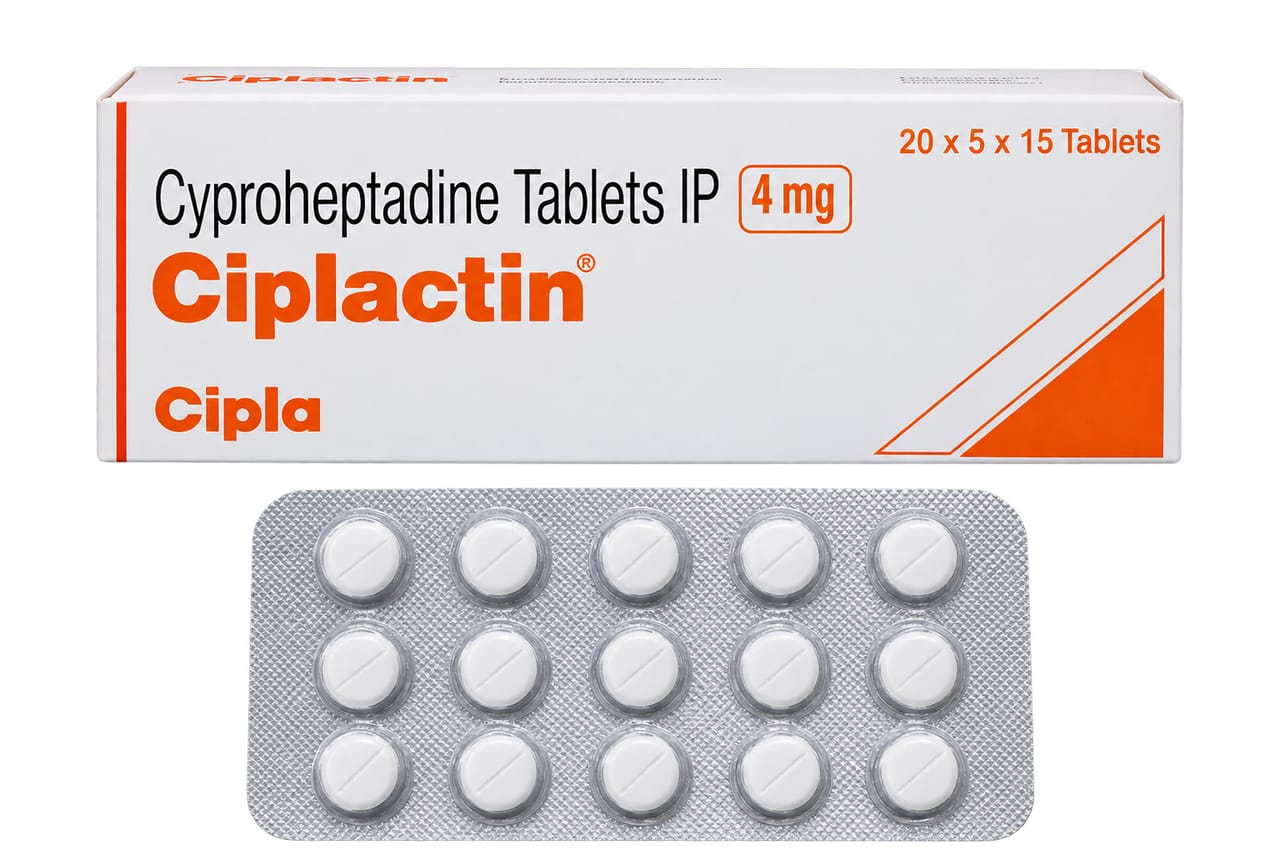
| Forms | Oral tablet (4 mg), Oral syrup/liquid (2 mg/5 mL) |
Quick overview
Cyproheptadine Tablet is an antihistamine and antiserotonin medicine used to relieve allergy symptoms, allergic skin conditions like hives, and certain headaches, including migraine. It works by blocking histamine and serotonin in the body. It is available as a tablet and as a liquid, and should be taken exactly as prescribed by a doctor.
What is Cyproheptadine Tablet
Cyproheptadine is an antihistamine and antiserotonin medicine. It blocks histamine, a natural substance the body makes during allergic reactions, which helps reduce symptoms like sneezing, itching, and watery eyes.
Cyproheptadine Tablet uses
- Allergy symptoms including nasal, eye, and skin reactions (sneezing, runny or stuffy nose, itching, red or watery eyes)
- Runny or stuffy nose not caused by allergies (nonallergic rhinitis)
- Allergic skin conditions such as hives (urticaria), including cold urticaria, and itching
- Severe or life-threatening allergic reactions, including reactions to blood or plasma transfusions, and as additional therapy for anaphylaxis after acute symptoms are controlled
- Certain types of headache, including migraine and other vascular headaches
- Cushing's Syndrome (as another use determined by a doctor)
Benefits of Cyproheptadine Tablet
- Reduces sneezing, itching, and runny or stuffy nose caused by allergies
- Helps relieve itchy, red, or watery eyes from allergies
- Helps relieve itching from hives and other allergic skin reactions
- Can be used alongside standard treatment for severe allergic reactions once the emergency has been controlled
- May ease symptoms of certain headaches, including migraine
How Cyproheptadine Tablet works
Cyproheptadine blocks the effects of histamine and serotonin, two natural substances in the body. Blocking histamine reduces allergy symptoms, and it also has anticholinergic and sedative effects.
Cyproheptadine Tablet dosage
Take cyproheptadine exactly as directed by your doctor; do not take more or less, or take it more often, than prescribed. It is usually taken two or three times a day, at around the same time each day.
If you are using the liquid form, use an accurate measuring device such as a dosing syringe, measuring cup, or spoon made for medicine — do not use a household spoon. Tell your doctor about any changes in your weight, since doses may be based on body weight, especially for children and teens.
Do not give this medicine to a newborn or premature baby, or to a child younger than 2 years old. Do not stop or change your dose without talking to your doctor first.
If you miss a dose, take it as soon as you remember; if it is almost time for your next dose, skip the missed dose and take your next dose as scheduled — do not take double or extra doses.
| Age group | Dose |
|---|---|
| Under 2 years | Not recommended |
| 2–6 years | 2 mg, 2–3 times/day |
| 7–14 years | 4 mg, 2–3 times/day |
| 15+ years | 4 mg, 3 times/day |
Available forms and strengths
- Oral tablet (4 mg)
- Oral syrup/liquid (2 mg/5 mL)
Side effects of Cyproheptadine Tablet
Common
- Drowsiness or tiredness
- Dizziness or feeling off-balance or faint
- Confusion
- Restlessness, nervousness, or irritability (especially in children)
- Dry mouth, nose, or throat
- Nausea, vomiting, diarrhea, or constipation
- Blurred vision
- Headache
- Increased appetite and weight gain
- Fatigue
Serious
- Signs of a severe allergic reaction: hives, swelling of the face, lips, mouth, tongue, or throat, trouble breathing or wheezing, trouble swallowing or throat tightness
- Racing or pounding heartbeat
- Fever or general ill feeling with swollen lymph nodes
- Signs of a possible seizure: muscle twitching, jerking, spasms, tremors, stiffening of arms and legs, feeling anxious or confused, dizziness, fainting, or losing consciousness
- Trouble urinating or being unable to empty the bladder
- Easy bruising or bleeding
- Ringing in the ears
- Pale or yellowed skin, dark-colored urine, fever, and weakness (possible blood disorder)
- Hallucinations
Warnings and precautions
- It is not known for certain if cyproheptadine is safe in pregnancy. Some studies in pregnant women have not shown an increased risk of problems with the baby, but you should tell your doctor if you are pregnant or planning to become pregnant so they can decide if it's right for you.
- Cyproheptadine should not be used while breastfeeding. It is not known if it passes into breast milk, but because of the risk of serious side effects in nursing babies, you should either stop breastfeeding or stop the medicine, as advised by your doctor.
- The body clears cyproheptadine more slowly if you have kidney problems. Tell your doctor if you have kidney problems before taking this medicine.
- Drinking alcohol while taking cyproheptadine can increase dizziness and drowsiness, so talk to your doctor about safe alcohol use with this medicine.
- This medicine can affect your alertness, coordination, and vision. Do not drive or operate machinery until you know how it affects you.
- Do not use in newborn or premature babies, as it can cause serious side effects including breathing problems.
- Should not be used in older adults who are very frail, weak, or have low energy, as it can cause serious side effects in this group.
- Should not be used by people with narrow-angle (angle-closure) glaucoma, as it can make the condition worse.
- Should not be used by people with a blockage of the gut, stomach narrowing, bladder blockage, or an enlarged prostate causing symptoms, because it can worsen these conditions.
- Should not be taken by anyone who has used a monoamine oxidase inhibitor (MAOI) medicine in the last two weeks, since this combination can intensify side effects.
- This medicine can make your skin more sensitive to sunlight, increasing the risk of severe sunburn; wear sunscreen and protective clothing if you'll be in the sun.
- Taking too much of this medicine, especially in infants and children, can cause hallucinations, severe drowsiness, seizures, and life-threatening breathing or heart problems.
Storage
- Store at room temperature, between 68°F and 77°F (20°C and 25°C)
- It can be exposed to temperatures between 59°F and 86°F (15°C and 30°C) for shorter periods, such as when traveling
- Store in a cool, dry place, away from excess heat and moisture (not in the bathroom)
- Keep the medication in its original, tightly closed container, out of the sight and reach of children
- Dispose of unneeded medication through a medicine take-back program rather than throwing it in household trash or flushing it down the toilet
When to see a doctor
- Get emergency help right away if you have signs of a severe allergic reaction, such as hives, trouble breathing, or swelling of the face, lips, tongue, or throat.
- Stop taking the medicine and call your doctor right away if you have trouble urinating or cannot empty your bladder.
- Stop taking the medicine and call your doctor if you notice signs that a seizure may be happening, such as muscle twitching, stiffening of the arms and legs, confusion, dizziness, or fainting.
- Seek emergency medical help if you think you or someone else has taken too much of this medicine.
- Call your doctor if you have vision problems or difficulty urinating, as these can be serious side effects.
Alternatives
- Fexofenadine
- Loratadine
- Cetirizine
Watch the video
FAQs
What is Cyproheptadine Tablet used for?
It is used to relieve allergy symptoms like sneezing, runny nose, and itchy or watery eyes, allergic skin conditions such as hives including cold urticaria, certain headaches including migraine, as additional therapy for anaphylaxis after acute symptoms are controlled, and for Cushing's Syndrome as determined by a doctor.
How does Cyproheptadine Tablet work?
It blocks the effects of histamine and serotonin, natural substances in the body. Blocking histamine reduces allergy symptoms, and it also has anticholinergic and sedative effects.
What is the dosage of Cyproheptadine Tablet for children?
For children aged 2–6 years, the dose is 2 mg 2–3 times a day, and for children aged 7–14 years, the dose is 4 mg 2–3 times a day. It should not be given to newborns, premature babies, or children younger than 2 years old.
What are the common side effects of Cyproheptadine Tablet?
Common side effects include drowsiness, dizziness, confusion, restlessness or irritability especially in children, dry mouth or throat, nausea, blurred vision, headache, increased appetite and weight gain, and fatigue.
Can I drink alcohol while taking Cyproheptadine Tablet?
Drinking alcohol while taking cyproheptadine can increase dizziness and drowsiness, so you should talk to your doctor about safe alcohol use with this medicine.
General information, not medical advice
Your prescriber and the leaflet in your pack know your situation. This page does not.
- Follow your prescriber and the leaflet
- Don't start, stop, or change a dose on your own
- Doses and warnings differ by country and product
Sources
Video
Related medicines
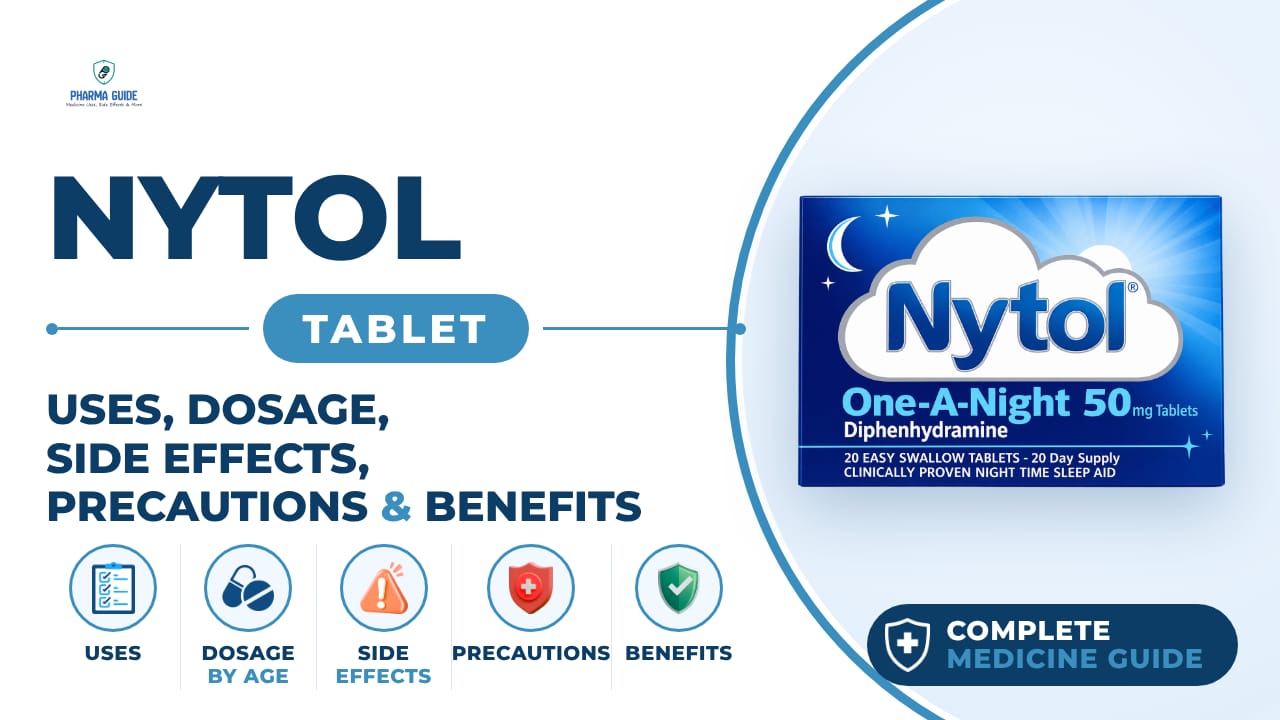
Nytol Tablet: Uses, Dosage, Side Effects, Precautions and Alternates
Antihistamine
Nytol Tablet contains diphenhydramine, used for short-term relief of occasional sleeplessness. Learn its dosage, benefits, side effects, and precautions.

Stugeron Tablet: Uses, Dosage, Side Effects, Precautions and Alternates
Antihistamine
Stugeron Tablet (Cinnarizine) treats motion sickness, vertigo, and dizziness from inner ear problems. Learn uses, dosage, side effects, and precautions.