
Safety
General information, not medical advice
Your prescriber and the leaflet in your pack know your situation. This page does not.
- Follow your prescriber and the leaflet
- Don't start, stop, or change a dose on your own
- Doses and warnings differ by country and product
Dantrolene Capsule: Uses, Dosage, Side Effects, Precautions and Alternates
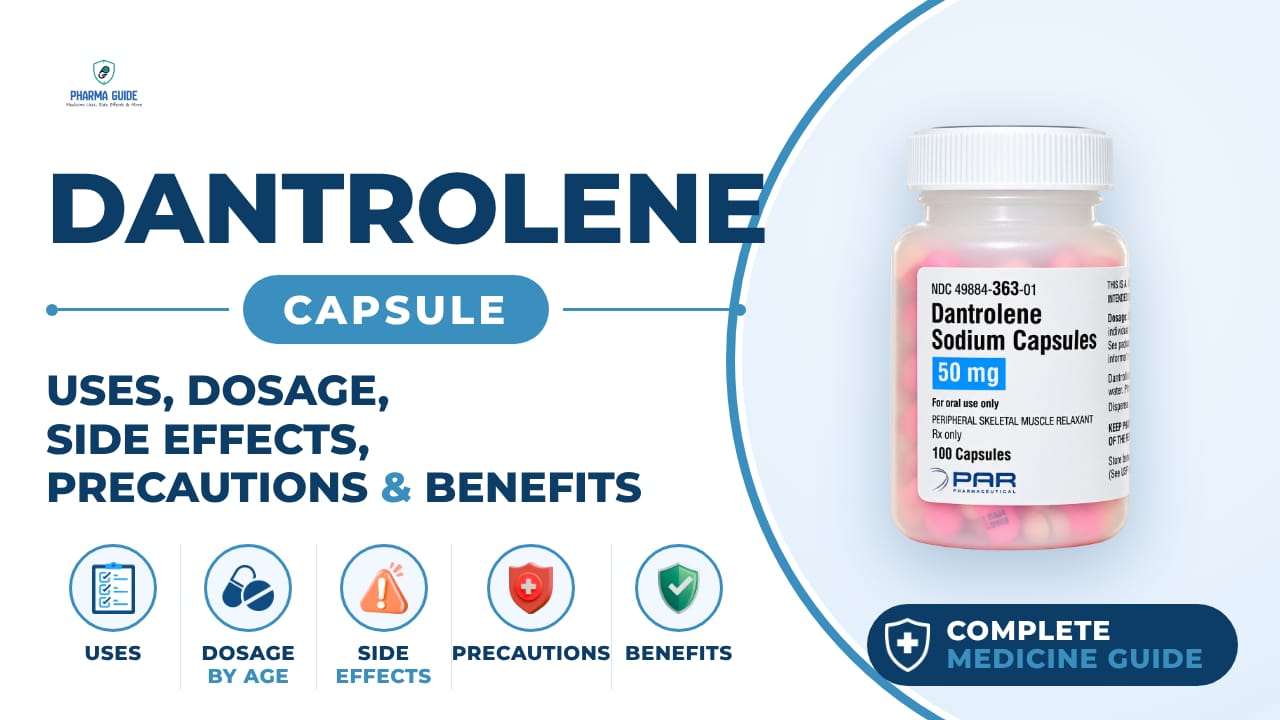
| Generic name | dantrolene sodium |
|---|---|
| Drug class | skeletal muscle relaxant |
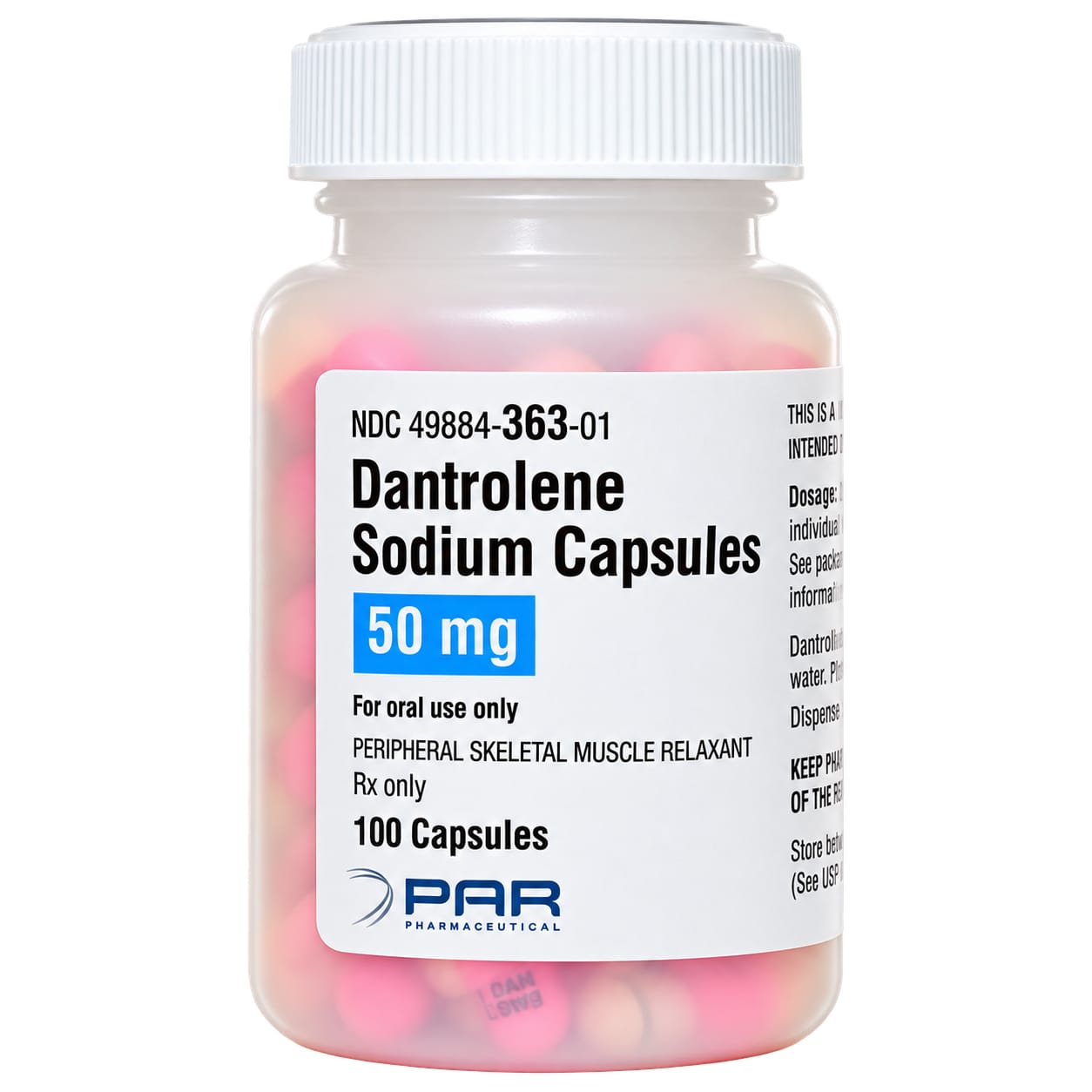
| Forms | Capsules (25 mg, 50 mg, 100 mg) |
Quick overview
Dantrolene Capsule (dantrolene sodium) is a prescription skeletal muscle relaxant used to control chronic muscle spasticity caused by certain nerve and brain conditions, and to prevent or manage a severe reaction to anesthesia called malignant hyperthermia. It works directly on skeletal muscle rather than on the brain or nerves. It is available as capsules and carries important precautions, including the risk of serious liver damage.
What is Dantrolene Capsule
Dantrolene Capsule is a prescription skeletal muscle relaxant. It is used to control chronic muscle spasticity caused by certain nerve and brain conditions, and to prevent or manage a severe reaction to anesthesia called malignant hyperthermia.
Dantrolene Capsule uses
- Controlling chronic muscle spasticity (stiffness and spasms) caused by spinal cord injury, cerebral palsy, multiple sclerosis, or stroke
- Preoperative management of patients susceptible to malignant hyperthermia before surgery
- Follow-up management after a malignant hyperthermia crisis has been treated with the intravenous form of the drug
Benefits of Dantrolene Capsule
- Reduces muscle spasticity
- Helps decrease muscle stiffness
- May improve mobility and movement
- Acts directly on skeletal muscle
- Used in selected neurological conditions associated with chronic spasticity
How Dantrolene Capsule works
Dantrolene works directly on the skeletal muscle itself, rather than on the brain or nerves, by interfering with the release of calcium inside muscle cells. This reduces how strongly the muscle contracts, which lessens spasticity.
Dantrolene Capsule dosage
Take the medicine by mouth with water, as directed by your healthcare professional. Take it at the same time every day and keep taking it unless your care team tells you to stop. Before starting treatment, you and your healthcare professional will agree on a specific goal, such as using a brace or completing an exercise program, to measure if the medicine is helping. Your dose may be increased gradually over time to find the lowest dose that works for you.
If you are giving this medicine to a child, follow the healthcare professional's instructions carefully. Do not share this medicine with anyone else, even if they have a similar condition. Treatment may be stopped if no benefit is seen within the first 45 days, to reduce the risk of liver damage.
If you miss a dose, take it as soon as you remember; if it is almost time for your next dose, skip the missed dose and go back to your regular schedule; do not take two doses at once.
| Age group | Dose |
|---|---|
| 5–17 years | Usually starts around 0.5 mg/kg once daily, then increased gradually by a specialist based on response |
| 18–64 years | Commonly starts at 25 mg once daily, then gradually increased; maintenance may be divided several times daily |
Available forms and strengths
- Capsules (25 mg, 50 mg, 100 mg)
Side effects of Dantrolene Capsule
Common
- Drowsiness
- Dizziness
- Weakness
- General feeling of being unwell, tired, or fatigued
- Diarrhea
- Constipation, abdominal cramps or pain
- Nausea, vomiting
- Difficulty swallowing
- Headache
- Fever, chills
- Fast heart rate
- Back pain, muscle aches and pain
- Difficulty falling or staying asleep
- Itchy skin, hives, acne- or eczema-like rashes
- Difficulty getting or keeping an erection
- Abnormal hair growth
- Sweating
- Vision problems
- Teary eyes
- Changes in speech such as slurring
- Changes in taste
- Confusion
Serious
- Liver problems: yellowing of skin or eyes (jaundice), dark urine, light-colored stool, loss of appetite, nausea, vomiting, abdominal pain or swelling, unusual tiredness, confusion, sleepiness, coma
- Pleural effusion (fluid around the lungs): chest pain, cough, shortness of breath, fever, abnormal heartbeat, swelling
- Seizures: loss of consciousness with uncontrollable shaking
- Severe allergic reaction: breathing problems, swelling of face/lips/mouth/tongue/throat, hives, racing heart, fainting
- Worsening heart failure: shortness of breath, weakness, rapid weight gain, swelling of legs/feet/hands/abdomen, cough
- Gastrointestinal bleeding: black, tarry stool, blood in stool
- Intestinal obstruction: sudden cramping abdominal pain, bloating, vomiting, constipation or diarrhea
- Respiratory depression: slow, shallow or weak breathing, blue lips or fingers, confusion
- Urinary problems: inability to urinate, painful urination, loss of bladder control, frequent urination
- Depression: persistent sadness, sleep or appetite changes, feelings of hopelessness, thoughts of self-harm
Warnings and precautions
- This medicine can cause serious, sometimes fatal, liver damage and inflammation. It should not be used for conditions other than those it's approved for. The risk is higher in women, people over 35, those taking high doses even briefly, and those taking other medicines that can harm the liver. Regular liver tests are needed before and during treatment.
- If no clear benefit is seen after 45 days of treatment, the medicine should be stopped, because long-term use raises the risk of liver damage.
- Animal studies suggest this medicine may increase cancer risk, so this possibility cannot be ruled out in humans. Your doctor will weigh the benefits against this potential risk.
- This medicine should not be used if your muscle stiffness is actually helping you stand, balance, or move, since reducing it could make your function worse rather than better.
- This medicine is not recommended for people with reduced lung function, especially obstructive lung diseases like COPD, emphysema, or asthma.
- This medicine can make your skin more sensitive to sunlight, which could cause a skin reaction. Limit sun exposure until you know how you respond.
- Some people feel very weak while taking this medicine, which could affect their ability to use mobility aids like wheelchairs, crutches, braces, walkers, or canes.
- The safety of this medicine during pregnancy has not been established. It crosses the placenta, and it's not known if it can harm an unborn baby. It should only be used in pregnancy if the benefits outweigh the possible risks. Tell your healthcare professional right away if you become pregnant.
- This medicine should not be used while breastfeeding, since dantrolene passes into breast milk and it is not known if it can harm the baby.
- This medicine should not be used in people with active liver disease such as hepatitis or cirrhosis, because it can cause serious liver damage and make existing liver problems worse. Liver function should be checked before and regularly during treatment.
- Alcohol can increase the dizziness, drowsiness, and weakness caused by this medicine.
- This medicine can cause dizziness, drowsiness, and weakness. You should not drive or do tasks requiring full attention and coordination during the first week of treatment.
Storage
- Store at room temperature (15°C to 30°C)
- Do not use the medication after the expiry date printed on the label
- Keep out of reach and sight of children
- Protect from moisture and humidity
- Get rid of any unused medication after the expiration date; take it to a medication take-back program, or if not available, follow label instructions or ask your care team about safe disposal
When to see a doctor
- Get medical help right away if you notice signs of liver problems such as yellowing skin or eyes, dark urine, pale stools, loss of appetite, nausea, vomiting, stomach pain or swelling, unusual tiredness, or confusion.
- Seek immediate help if you have chest pain that worsens with breathing, lying flat, coughing, or sneezing, along with shortness of breath, cough, or fever—these may be signs of fluid around the lungs.
- Get emergency help right away if you have a seizure (loss of consciousness with uncontrollable shaking).
- Get help immediately if you have symptoms of a severe allergic reaction, such as trouble breathing or wheezing, swelling of the face, lips, mouth, tongue, or throat, or a racing heart.
- If you think you or someone else has taken too much of this medicine, contact a healthcare professional, emergency department, or poison control center right away, even if there are no symptoms yet.
- Call emergency services if you have trouble breathing or unusual sleepiness while taking this medicine.
Alternatives
- Baclofen
- Tizanidine
- Diazepam
Watch the video
FAQs
What is Dantrolene Capsule used for?
It is used to control chronic muscle spasticity caused by spinal cord injury, cerebral palsy, multiple sclerosis, or stroke, and to prevent or manage malignant hyperthermia, a severe reaction to anesthesia.
How does Dantrolene Capsule work?
It works directly on skeletal muscle rather than the brain or nerves, interfering with calcium release inside muscle cells, which reduces how strongly the muscle contracts and lessens spasticity.
What is the typical dosage of Dantrolene Capsule?
Adults 18–64 commonly start at 25 mg once daily, gradually increased with maintenance possibly divided several times daily. Children 5–17 usually start around 0.5 mg/kg once daily, increased gradually by a specialist.
What are the serious side effects of Dantrolene Capsule?
Serious side effects include liver problems, pleural effusion, seizures, severe allergic reaction, worsening heart failure, gastrointestinal bleeding, intestinal obstruction, respiratory depression, urinary problems, and depression.
Why might treatment with Dantrolene Capsule be stopped after 45 days?
If no clear benefit is seen within the first 45 days, the medicine should be stopped because long-term use raises the risk of serious liver damage.
General information, not medical advice
Your prescriber and the leaflet in your pack know your situation. This page does not.
- Follow your prescriber and the leaflet
- Don't start, stop, or change a dose on your own
- Doses and warnings differ by country and product
Sources
Video
Related medicines
Soma Tablet: Uses, Dosage, Side Effects, Precautions and Alternates
Skeletal muscle relaxant
Soma Tablet (carisoprodol) is a muscle relaxant for short-term muscle pain relief. Learn about its uses, dosage, side effects, and safety warnings.
Skelaxin Tablet: Uses, Dosage, Side Effects, Precautions and Alternates
Skeletal muscle relaxant
Skelaxin Tablet (metaxalone) is a prescription muscle relaxant for short-term relief of painful muscle spasms. Learn uses, dosage, and side effects.