
Safety
General information, not medical advice
Your prescriber and the leaflet in your pack know your situation. This page does not.
- Follow your prescriber and the leaflet
- Don't start, stop, or change a dose on your own
- Doses and warnings differ by country and product
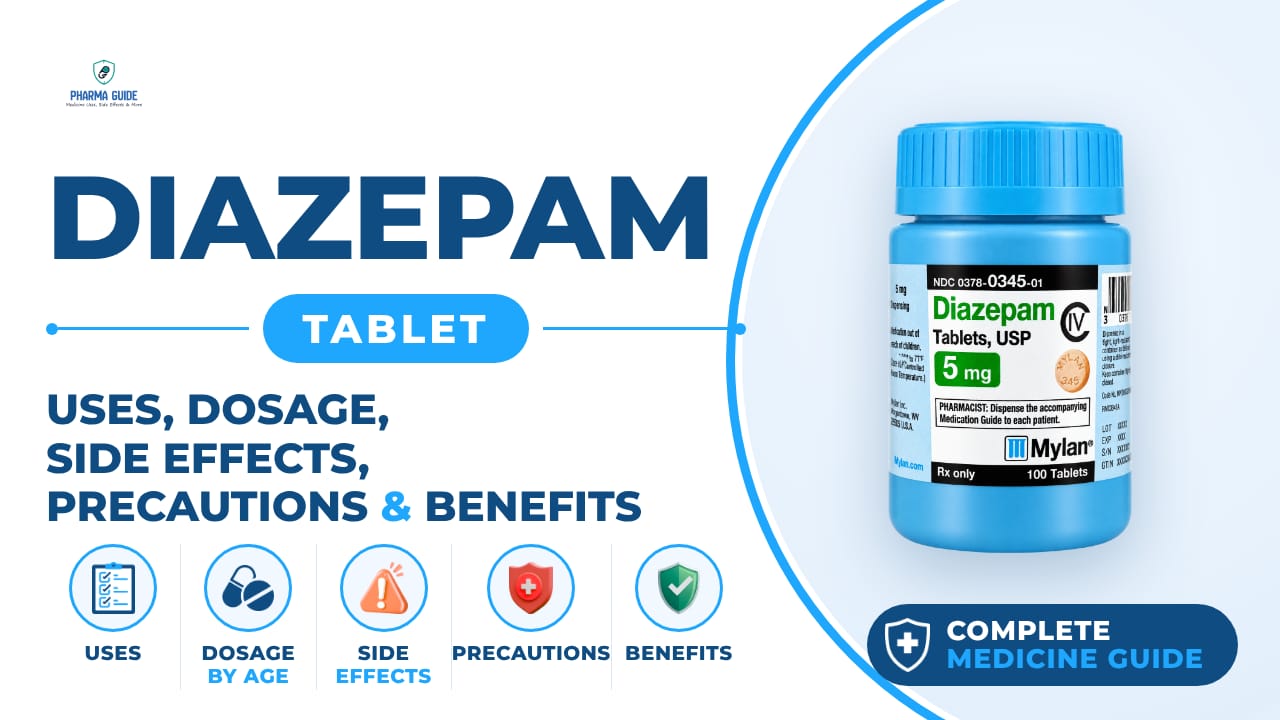
Diazepam Tablet: Uses, Dosage, Side Effects, Precautions and Alternates
| Generic name | Diazepam |
|---|---|
| Drug class | Benzodiazepine |
| Forms | Tablets, Oral liquid medicine, Rectal tubes (enemas), Injection |
Quick overview
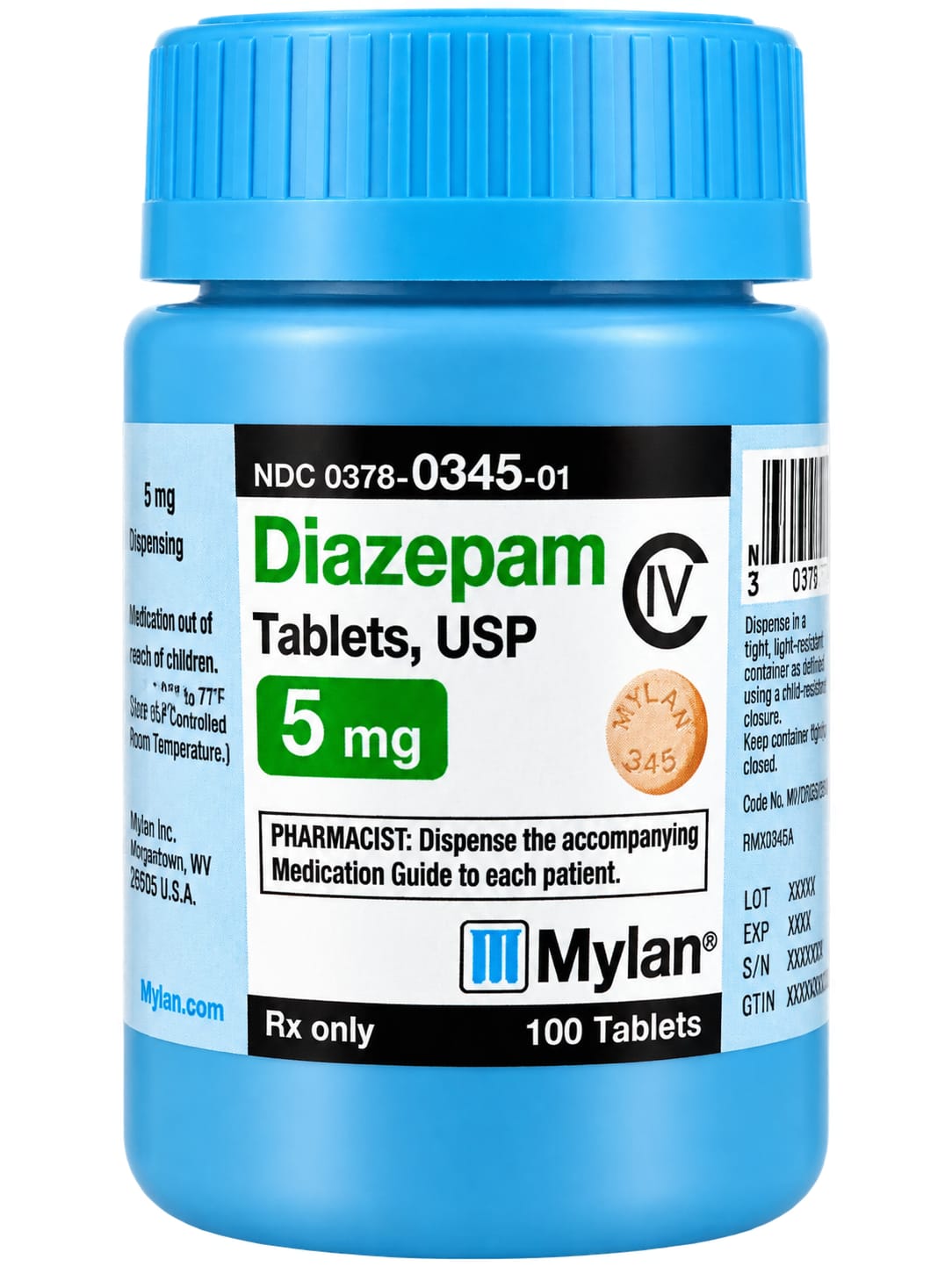
Diazepam Tablet contains diazepam, a benzodiazepine medicine used to treat anxiety, muscle spasms, and convulsions (fits). It is only available on prescription and works by calming overactive nerve activity in the brain. It is available in several forms, including tablets, oral liquid, rectal tubes, and injection.
What is Diazepam Tablet
Diazepam Tablets contain the active ingredient diazepam, which belongs to a group of medicines called benzodiazepines. It is used to treat anxiety, muscle spasms and convulsions (fits), and is only available on prescription.
Diazepam Tablet uses
- Short-term relief of severe anxiety, occurring alone or with insomnia or other mental health problems
- Helping muscles relax and treating muscle spasm and cerebral palsy
- Epilepsy (used with other medicines)
- Symptoms of alcohol withdrawal, such as sweating or difficulty sleeping
- Helping relax nervous dental patients
- Helping to treat tension and irritability caused by cerebral spasticity in children
- Helping to treat muscle spasm caused by tetanus in children (with other medicines)
- Used before an operation to help with relaxation and sleepiness (pre-med)
Benefits of Diazepam Tablet
- Calms the brain and has a relaxing, calming effect on anxiety, agitation, and difficulty sleeping
- Helps relax tense or spasming muscles
- Can help control certain seizures
- Eases distressing symptoms of alcohol withdrawal
- Helps patients feel calm and relaxed before medical or dental procedures
How Diazepam Tablet works
Diazepam works by boosting the effect of a natural brain chemical called GABA, which calms down overactive nerve activity in the brain. This produces its calming, muscle-relaxing, and anti-seizure effects.
Diazepam Tablet dosage
Take diazepam exactly as your doctor tells you. Tablets should be swallowed whole with a glass of water. You can take diazepam tablets with or without food. Do not take two doses at the same time, and do not take an extra dose to make up for a forgotten one. If you forget a dose, take it as soon as you remember, but if it's nearly time for the next dose, skip the missed one and continue as normal.
This medicine should be used for as short a time as possible and usually not for more than four weeks. If you have been taking it for a long time or at a high dose, your doctor may reduce your dose gradually rather than stopping suddenly. Elderly or frail patients are usually given lower doses because they are more sensitive to the effects. Patients with liver or kidney problems may also be given a lower dose.
| Age group | Dose |
|---|---|
| Under 6 Months | Not recommended unless prescribed by a doctor |
| 6 Months–17 Years | Dose is weight-based and condition-specific; only under medical supervision |
| 18–64 Years (Adults) | Usually 2–10 mg, 2–4 times daily depending on condition |
| Older Adults (65+ years) | Usually 2–2.5 mg initially, increased carefully if needed |
Available forms and strengths
- Tablets
- Oral liquid medicine
- Rectal tubes (enemas)
- Injection
Side effects of Diazepam Tablet
Common
- Feeling sleepy or drowsy
- Fatigue
- Confusion
- Problems with coordination (ataxia)
- Shaky hands (tremor)
Serious
- Yellowing of the skin or whites of the eyes (jaundice)
- Difficulty remembering things (memory loss)
- Seeing or hearing things that are not there (hallucinations)
- Thinking things that are not true (delusions)
- Repeated falls
- Talking more than usual, feeling overexcited, agitated, restless, irritable or aggressive
- Very slow or shallow breathing (respiratory depression)
- Stopping breathing (respiratory arrest)
- Loss of consciousness
- Signs of a serious allergic reaction such as itchy, red, swollen or blistered rash, wheezing, chest or throat tightness, trouble breathing or talking, or swelling of the mouth, face, lips, tongue or throat
Warnings and precautions
- Diazepam can cause dependence, tolerance and addiction, and stopping suddenly or reducing the dose quickly can cause withdrawal symptoms.
- Do not take diazepam if you have severe breathing problems, myasthenia gravis, sleep apnoea, severe liver disease, or certain mental illnesses without discussing it with your doctor first.
- Diazepam should be used for as short a time as possible and should not be used for more than four weeks, as longer use raises the risk of dependence and problems on stopping.
- Taking diazepam with opioids (strong painkillers) increases the risk of severe drowsiness, breathing difficulties, coma, and can be life-threatening.
- Avoid grapefruit juice, as it can increase the amount of diazepam in your blood and increase its effects.
- Amnesia (memory loss) can occur while taking diazepam, especially at higher doses. Make sure you can get 7-8 hours of uninterrupted sleep to reduce this risk.
- Diazepam should generally not be taken during pregnancy. Talk to your doctor before taking it if you are pregnant, think you might be pregnant, or are planning a pregnancy, as it may affect your baby, especially if taken late in pregnancy.
- Diazepam is not usually recommended while breastfeeding because it can pass into breast milk, but your doctor may allow a low dose for a short time if your baby is healthy.
- If you have kidney problems, your dose may need to be lower and you should tell your doctor before starting diazepam.
- Diazepam may not be suitable if you have severe liver problems, and your dose may need to be reduced if you have liver disease.
- Do not drink alcohol while taking diazepam, as it increases the sedative effect and can cause dangerously deep sleep and breathing problems.
- Diazepam can affect your reactions, coordination, and concentration, and it is an offence to drive if this medicine impairs your ability to drive safely. These effects can last into the following day.
Storage
- Keep this medicine out of the sight and reach of children
- Do not store above 25°C
- Keep the container tightly closed and store in the original container or package to protect from light
- Do not use this medicine after the expiry date stated on the carton, bottle or blister
- Do not throw away medicines via wastewater or household waste; ask your pharmacist how to dispose of medicines you no longer use
When to see a doctor
- Get emergency help right away if you have taken more than your prescribed dose of diazepam, even if you feel okay, especially if you have very slow or shallow breathing, poor coordination, confusion, slurred speech, sleepiness, an irregular heartbeat, uncontrolled eye movements, muscle weakness, or feel overexcited.
- Seek emergency care if you get an itchy, red, swollen or blistered rash, wheezing, tightness in your chest or throat, trouble breathing or talking, or swelling of your mouth, face, lips, tongue or throat, as this could be a serious allergic reaction.
- Contact your doctor straight away if you notice yellowing of your skin or eyes, difficulty remembering things, hallucinations, delusions, repeated falls, or unusual excitement, agitation, restlessness, irritability or aggression.
- Stop taking diazepam and contact your doctor immediately if you notice very slow or shallow breathing, stopping breathing, loss of consciousness, or yellowing of the skin or eyes.
Alternatives
- Lorazepam
- Clonazepam
- Hydroxyzine
Watch the video
FAQs
What is Diazepam Tablet used for?
It is used for short-term relief of severe anxiety, muscle spasms, cerebral palsy, epilepsy, alcohol withdrawal symptoms, relaxing nervous dental patients, and as a pre-med before operations.
How does Diazepam Tablet work?
Diazepam boosts the effect of a natural brain chemical called GABA, which calms overactive nerve activity, producing calming, muscle-relaxing, and anti-seizure effects.
How long can I take Diazepam Tablet?
It should be used for as short a time as possible and usually not for more than four weeks, as longer use raises the risk of dependence and problems on stopping.
What are the common side effects of Diazepam Tablet?
Common side effects include feeling sleepy or drowsy, fatigue, confusion, problems with coordination (ataxia), and shaky hands (tremor).
Can I drink alcohol while taking Diazepam Tablet?
No, you should not drink alcohol while taking diazepam, as it increases the sedative effect and can cause dangerously deep sleep and breathing problems.
General information, not medical advice
Your prescriber and the leaflet in your pack know your situation. This page does not.
- Follow your prescriber and the leaflet
- Don't start, stop, or change a dose on your own
- Doses and warnings differ by country and product
Sources
- https://www2.hse.ie/medicines/diaze
- https://patient.info/medicine/diazepam-a-benzodiazepine
- https://instacare.pk/blog/diazepam
- New Zealand Data Sheet - Arrow-Diazepam
- Package leaflet: Information for the user - Diazepam 2 mg, 5 mg and 10 mg Tablets, Sovereign Medical
Video
Related medicines
Lonazep Tablet: Uses, Dosage, Side Effects, Precautions and Alternates
Benzodiazepine
Lonazep Tablet contains clonazepam, used for anxiety, panic attacks, insomnia, and epilepsy. Learn about dosage, benefits, side effects, and precautions.
Benzodiazepines Capsule: Uses, Dosage, Side Effects, Precautions and Alternates
Benzodiazepine
Benzodiazepines Capsule (Diazepam) treats severe anxiety, muscle spasms, seizures, and alcohol withdrawal. Learn uses, dosage, side effects, and precautions.