Diclofenac Sodium Injection: Uses, Dosage, Side Effects, Precautions and Alternates
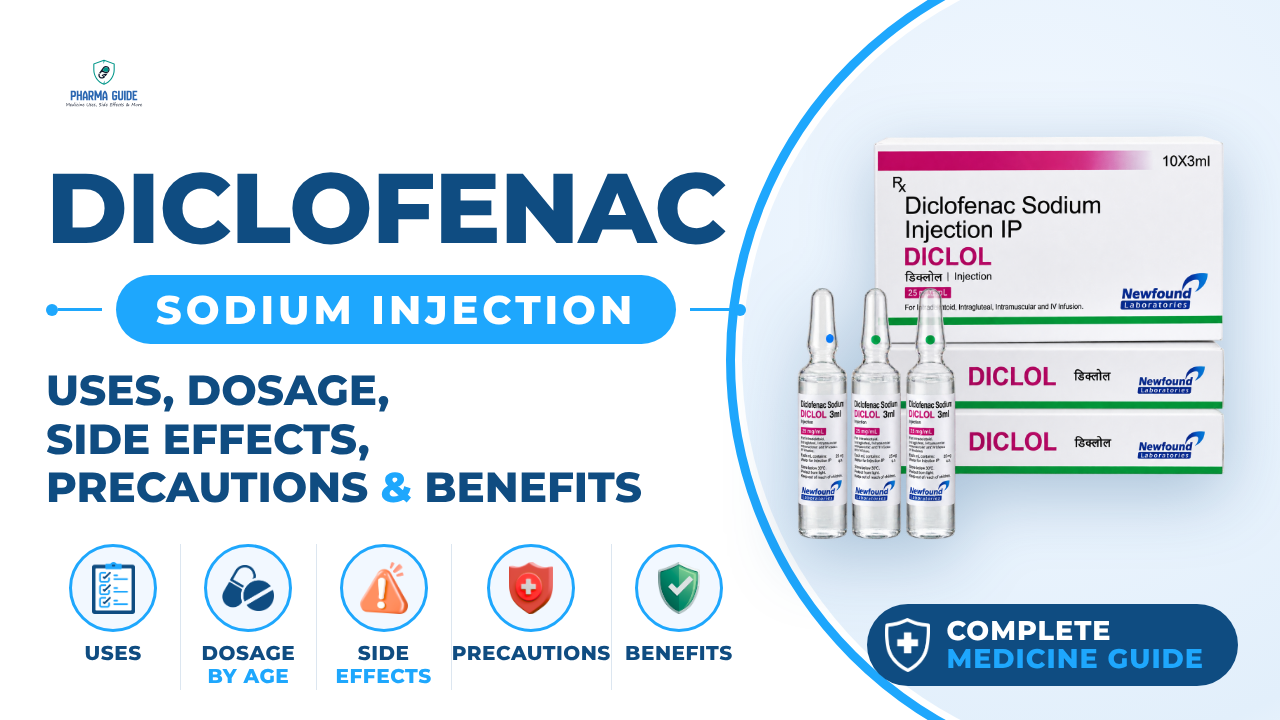
| Generic name | Diclofenac Sodium |
|---|---|
| Drug class | NSAID (non-steroidal anti-inflammatory drug) |
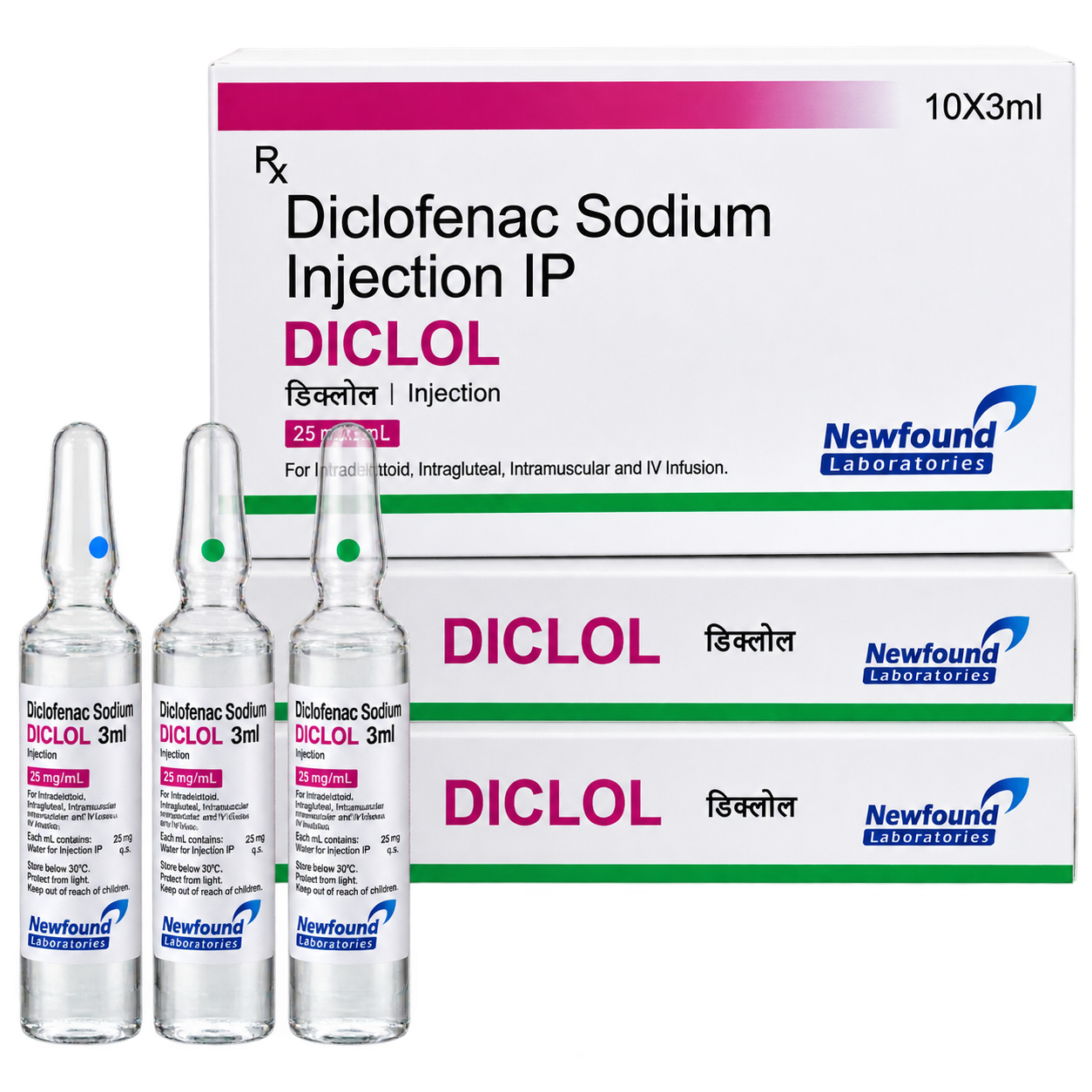
| Forms | Solution for injection (ampoule) |
Quick overview
Diclofenac Sodium Injection is a non-steroidal anti-inflammatory drug (NSAID) used to treat pain by decreasing inflammation. It is given by a healthcare professional as an injection, typically for short-term treatment of acute pain conditions. It works by blocking an enzyme involved in producing substances that cause pain and inflammation. This medicine is used in hospital or clinic settings under medical supervision.
What is Diclofenac Sodium Injection
Diclofenac injection is a non-steroidal anti-inflammatory drug (NSAID) used to treat pain. It works by decreasing inflammation. It is given by a healthcare professional as an injection.
Diclofenac Sodium Injection uses
- Treats pain
- Acute pain including renal colic
- Flare-ups of osteoarthritis and rheumatoid arthritis
- Acute back pain
- Acute gout
- Acute trauma and fractures
- Post-operative pain
Benefits of Diclofenac Sodium Injection
- Relieves acute and post-operative pain
- Reduces inflammation
- When used with opioids after surgery, it often reduces the need for opioids
How Diclofenac Sodium Injection works
Diclofenac is a non-steroidal medicine with strong pain-relieving and anti-inflammatory effects. It works by blocking an enzyme (cyclo-oxygenase) that the body uses to make prostaglandins, which cause pain and inflammation.
Diclofenac Sodium Injection dosage
- This medication is injected into a vein and is given by your care team in a hospital or clinic.
- It can be given into a muscle, under the skin, or into a vein, and must only be given by a healthcare professional.
- This is for short-term treatment only and should not be given for more than two days.
- If more than one injection a day is needed, the injection area should be changed for later injections.
- For injections into a muscle, a deep injection into the upper outer part of the buttock is given slowly to reduce tissue damage.
- This medicine must not be given by intravenous infusion as a bolus but only as described by your care team.
- Injections must be carried out following strict rules of cleanliness (asepsis and antisepsis).
- Do not mix this injection with other injection solutions.
- Only clear solutions should be used; if crystals or precipitates are seen, the solution should not be used.
| Age group | Dose |
|---|---|
| Under 18 years | Generally not recommended for routine use; pediatric use requires medical supervision |
| 18–64 years | Usually 75 mg by deep intramuscular injection once daily; in severe cases, a second 75 mg dose may be given after several hours. Maximum: 150 mg in 24 hours |
| 65+ years | Usually 75 mg once daily, using the lowest effective dose for the shortest possible duration |
Available forms and strengths
- Solution for injection (ampoule)
Side effects of Diclofenac Sodium Injection
Common
- Headache
- Loss of appetite
- Nausea
- Upset stomach (dyspepsia)
- Dizziness
- Vertigo
- Injection site reactions such as pain, redness and hardening
- Vomiting
- Diarrhoea
- Constipation
- Abdominal pain
- Limb discomfort
- Rash
Serious
- Allergic reactions - skin rash, itching, hives, swelling of the face, lips, tongue or throat
- Bleeding - bloody or black tar-like stools, vomiting blood or material that looks like coffee grounds, red or dark brown urine, unusual bruising or bleeding
- Heart attack - chest pain or tightness, pain in shoulders, arms or jaw, shortness of breath, cold or clammy skin, feeling faint
- Heart failure - shortness of breath, swelling of the ankles, feet or hands, sudden weight gain, unusual weakness
- Increase in blood pressure
- Kidney injury - decrease in urine, swelling of the ankles, hands or feet
- Liver injury - upper right belly pain, loss of appetite, nausea, light-colored stool, dark urine, yellowing skin or eyes
- Serious skin reactions such as blistering, peeling or loosening of skin, including inside the mouth (Stevens-Johnson syndrome, toxic epidermal necrolysis)
- Stroke - sudden numbness or weakness, trouble speaking, confusion, trouble walking, loss of balance, dizziness, severe headache, vision change
- Injection site necrosis
- Blood disorders such as low platelets, low white cells and anemia
- Convulsions
- Aseptic meningitis
Warnings and precautions
- NSAIDs may increase the risk of serious heart-related events such as heart attack and stroke, which can be fatal.
- This risk may increase the longer the medicine is used.
- This medicine should not be used for pain around coronary artery bypass graft (CABG) surgery.
- NSAIDs increase the risk of serious stomach and intestine problems such as bleeding, ulcers and perforation, which can be fatal and can happen at any time without warning.
- Elderly patients are at greater risk. Do not take aspirin or other NSAIDs such as ibuprofen or naproxen while using this medicine, as stomach side effects and ulcers become more likely.
- This medicine may cause serious skin reactions weeks to months after starting it.
- Diclofenac should be stopped at the first sign of a skin rash, mouth sores, or any other sign of allergy.
- This medicine may cause infertility, which is usually temporary.
- It is not recommended for women trying to become pregnant.
- This medicine is only for you. Do not share it with others.
- Tell your care team if you may be pregnant.
- This medicine should not be used unless clearly needed in the first and second trimesters.
- It is not allowed in the last trimester of pregnancy.
- Using it after 20 weeks may cause serious birth defects.
- Diclofenac passes into breast milk in small amounts.
- It should not be used while breastfeeding to avoid unwanted effects in the baby.
- Patients with severe kidney impairment should not be given this injection.
- In patients with kidney impairment, the lowest effective dose should be used and kidney function should be monitored.
- This injection is contraindicated in people with severe liver failure. Caution is needed in mild to moderate liver impairment, and liver function should be monitored during treatment.
- Tell your care team if you frequently drink alcohol.
- Alcohol may interact with this medication.
- If you have visual disturbances, dizziness, vertigo, drowsiness or other nervous system effects while taking this medicine, do not drive or use machines.
Storage
- This medication is given in a hospital or clinic and will not be stored at home.
- Store below 30°C.
- Protect from sunlight and heat.
- Keep all medicines out of sight and reach of children.
- Do not freeze.
- Do not use if the container is leaking, the solution is cloudy, or it contains undissolved particles.
When to see a doctor
- Talk to your care team right away if you have stomach pain, bloody or black tar-like stools, or vomit blood that is red or looks like coffee grounds.
- Talk to your care team right away if you have fevers or flu-like symptoms with a rash, a red or purple rash that turns into blisters or peeling skin, or a rash with swelling of the face, lips or lymph nodes.
- If you think you have received too much of this medicine, contact a poison control center or emergency room at once.
- Report signs of a heart attack, heart failure, kidney injury, liver injury or stroke to your care team as soon as possible.
Alternatives
- Paracetamol (Acetaminophen) IV
- Tramadol Injection
- Morphine Injection
- Fentanyl Injection
- Nalbuphine Injection
- Metamizole (Dipyrone) Injection
FAQs
What is Diclofenac Sodium Injection used for?
It is used to treat pain, including acute pain such as renal colic, flare-ups of osteoarthritis and rheumatoid arthritis, acute back pain, acute gout, acute trauma and fractures, and post-operative pain.
How is Diclofenac Sodium Injection given?
It is given by a healthcare professional into a muscle, under the skin, or into a vein. It is for short-term treatment only and should not be given for more than two days.
What is the usual dose of Diclofenac Sodium Injection for adults?
For adults aged 18–64, the usual dose is 75 mg by deep intramuscular injection once daily, with a second 75 mg dose possible in severe cases after several hours. The maximum is 150 mg in 24 hours.
What are the common side effects of Diclofenac Sodium Injection?
Common side effects include headache, loss of appetite, nausea, upset stomach, dizziness, vertigo, injection site reactions, vomiting, diarrhoea, constipation, abdominal pain, limb discomfort, and rash.
Can Diclofenac Sodium Injection be used during pregnancy?
It should not be used unless clearly needed in the first and second trimesters, and it is not allowed in the last trimester, as using it after 20 weeks may cause serious birth defects.
Sources
Video