Doxycycline Capsule: Uses, Dosage, Side Effects, Precautions and Alternates
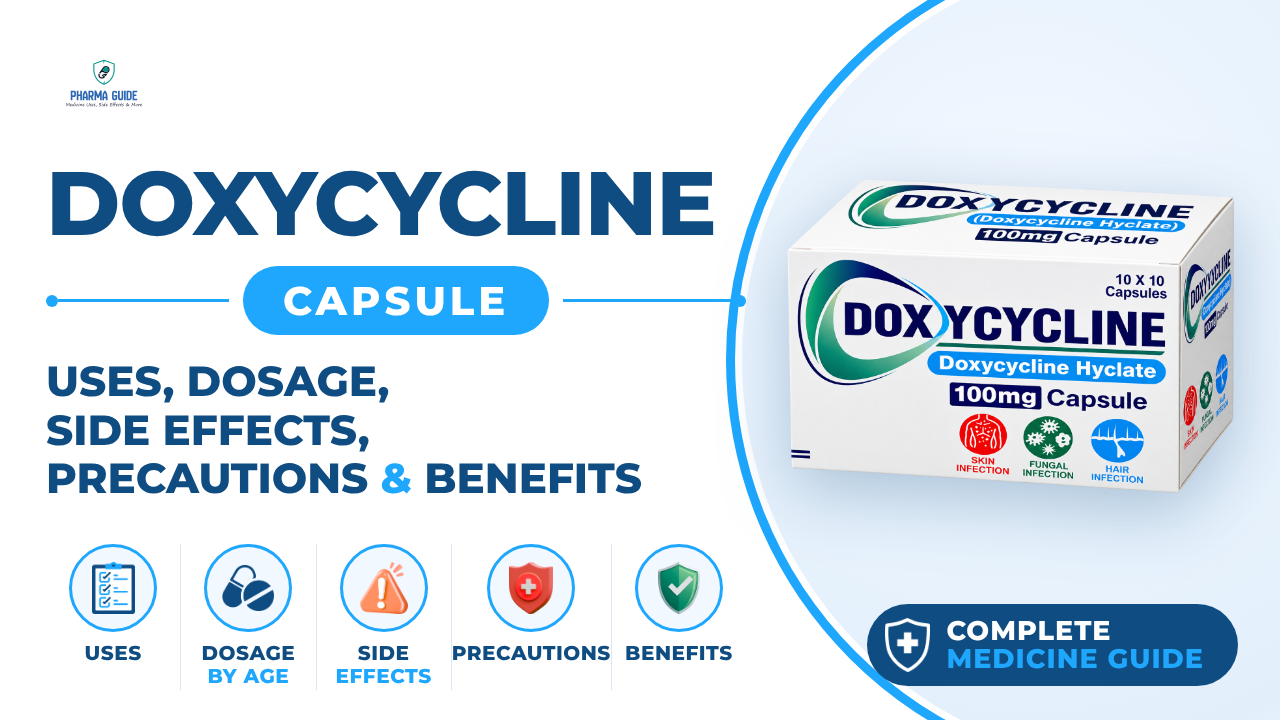
| Generic name | Doxycycline (as doxycycline hyclate) |
|---|---|
| Drug class | Tetracycline antibiotic |
| Forms | Capsule, Tablet (immediate-release and delayed-release), Liquid suspension, Solution for injection (given only by a healthcare professional) |
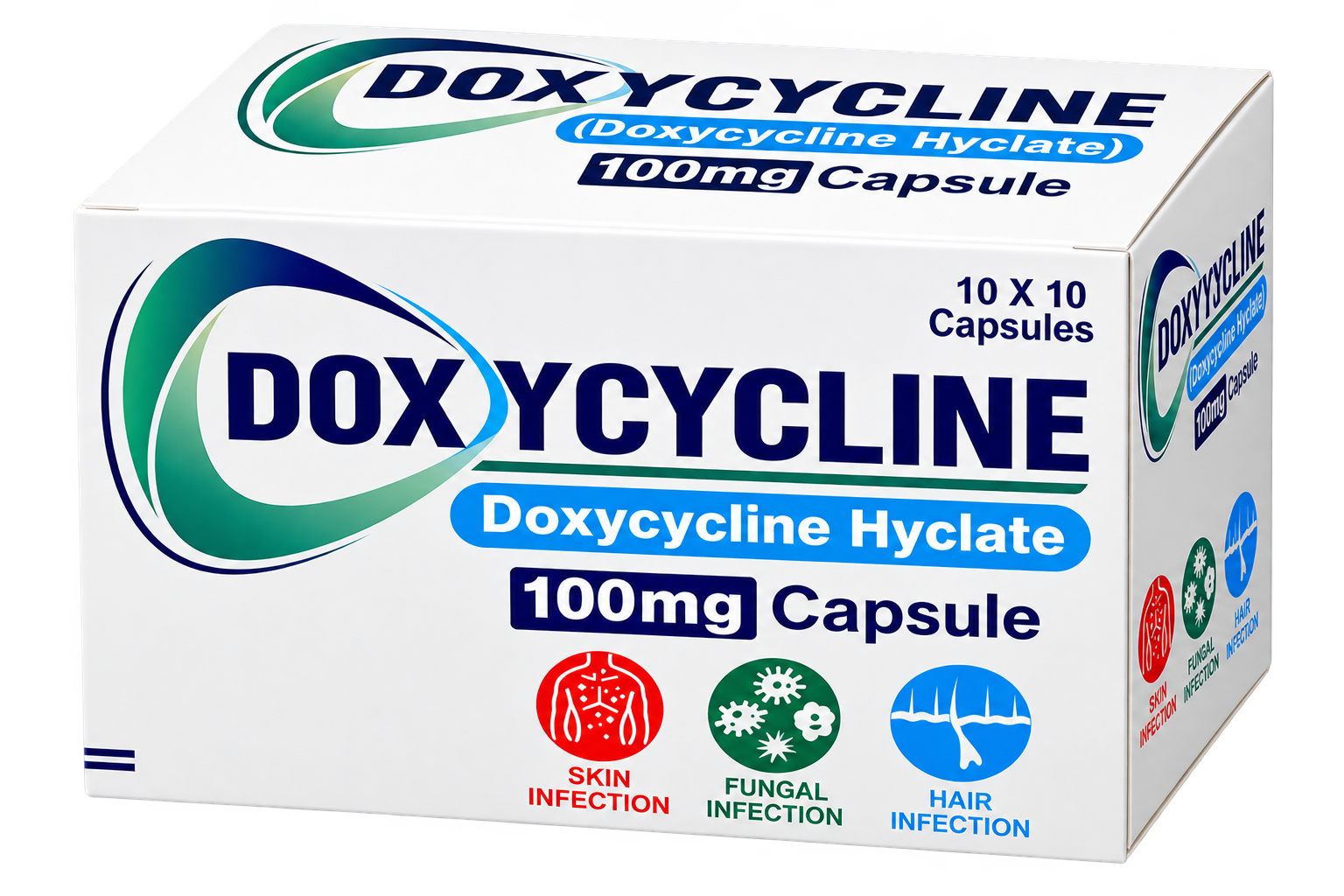
Quick overview
Doxycycline Capsule is a tetracycline antibiotic used to treat a wide range of bacterial infections, including respiratory, urinary, skin, and sexually transmitted infections. It also serves as an add-on treatment for severe acne and helps prevent malaria in travelers. It works by stopping bacteria from producing a protein they need to grow. It does not treat colds, the flu, or other viral infections.
What is Doxycycline Capsule
Doxycycline is an antibiotic used to treat infections caused by bacteria. It is a type of tetracycline antibiotic. It does not treat colds, the flu, or infections caused by viruses.
Doxycycline Capsule uses
- Treating bacterial infections such as pneumonia and other respiratory tract infections (pharyngitis, tonsillitis, sinusitis, otitis media, bronchitis)
- Treating genitourinary tract infections such as pyelonephritis, cystitis, urethritis, and gonococcal urethritis
- Treating urethral, cervical, and vaginal infections linked to Chlamydia trachomatis and Ureaplasma urealyticum
- Treating skin and soft tissue infections such as impetigo, cellulitis, abscess, and wound infection
- Treating gastrointestinal infections caused by susceptible bacteria
- Treating some sexually transmitted infections and eye infections
- Add-on treatment for severe acne
- Helping prevent malaria for people traveling to areas with certain strains of malaria
Benefits of Doxycycline Capsule
- Helps clear infections caused by bacteria that are sensitive to this medicine
- Can help reduce severe acne
- Helps prevent malaria when traveling to at-risk areas
How Doxycycline Capsule works
Doxycycline is an antibiotic. It works by stopping bacteria from making a protein they need to grow new cells. This helps get rid of the infection.
Doxycycline Capsule dosage
Take this medicine by mouth exactly as your doctor tells you, at the same time each day. Take your medicine with or after a meal to help reduce the chance of stomach upset. Take your medicine with a full glass of water while standing or sitting upright. After taking your medicine, wait at least 1 to 2 hours before lying down. Do not take it just before going to bed.
Swallow the tablets whole. Ask your pharmacist before cutting tablets in half. Drink plenty of fluids while taking this medicine to help reduce throat irritation.
Take antacids and products containing aluminum, calcium, magnesium, iron, bismuth, or zinc at a different time of day than this medicine.
Keep taking the medicine until you have taken all of it, even if you feel better. Do not skip doses. If you miss a dose, take it as soon as you remember unless it is almost time for the next dose. Do not take a double or extra dose.
Talk to your care team about the use of this medicine in children, as it should not be used in children under 8 years unless other drugs are unlikely to work or are contraindicated.
| Age group | Dose |
|---|---|
| Under 8 years | Generally not recommended unless specifically indicated by a specialist |
| 8–11 years | Weight-based dosing only when specifically indicated |
| 12–17 years | Usually 100 mg once or twice daily, depending on infection |
| 18–64 years | Usually 100 mg once or twice daily, depending on infection |
| 65+ years | Generally adult dosing; assess kidney/liver function and other medicines |
Available forms and strengths
- Capsule
- Tablet (immediate-release and delayed-release)
- Liquid suspension
- Solution for injection (given only by a healthcare professional)
Side effects of Doxycycline Capsule
Common
- Change in tooth color
- Diarrhea
- Loss of appetite
- Nausea
- Vomiting
- Stomach pain
- Heartburn
- Headache
- Sensitivity to the sun
- Rash
- Hives
Serious
- Allergic reactions such as skin rash, itching, hives, or swelling of the face, lips, tongue, or throat, or trouble breathing
- Increased pressure around the brain (benign intracranial hypertension) with severe headache, change in vision, blurry vision, double vision, vision loss, nausea, or vomiting
- Pain or trouble swallowing (esophagus irritation or ulcers), with burning or pain in the chest
- Severe or watery diarrhea, bloody diarrhea, stomach cramps, and fever (Clostridium difficile-associated diarrhea/colitis)
- Redness, blistering, peeling, or loosening of the skin, including inside the mouth (serious skin reactions such as Stevens-Johnson syndrome and toxic epidermal necrolysis)
- Unusual vaginal discharge, itching, or odor (yeast infection)
- Joint pain, muscle pain, or swelling of hands and feet (autoimmune reactions)
- Anemia with fast heart rate, dizziness, pale skin, or shortness of breath
- Pancreatitis with upper abdominal pain, and fever
Warnings and precautions
- This medicine may cause permanent tooth discoloration (yellow, gray, or brown) if used during tooth development, from the last half of pregnancy through 8 years of age. It should not be used in these age groups unless other drugs are unlikely to work or are contraindicated.
- To reduce the risk of injury to your food pipe, take this medicine with plenty of fluid while standing or sitting upright, and do not take it at bedtime.
- This medicine can cause severe diarrhea and bowel inflammation (Clostridium difficile-associated disease), which can range from mild to life-threatening. Do not treat diarrhea with over-the-counter products.
- This medicine can make your skin much more sensitive to sunlight. Stay out of direct sunlight, use sunscreen and protective clothing, and avoid tanning beds. Stop taking it at the first sign of skin redness.
- Do not take this medicine together with isotretinoin, because both can cause high pressure around the brain.
- Birth control pills may not work while taking this medicine. Use another form of birth control while taking it and for 7 days after stopping.
- Do not take this medicine if you are allergic to it or to other tetracyclines, or if you have myasthenia gravis.
- This medicine should not be used during pregnancy unless your doctor decides the benefit to the mother outweighs the risk to the baby. Using it during tooth development can affect the baby's teeth and bone growth.
- Stop taking it right away and tell your doctor if you become pregnant.
- This medicine passes into breast milk and may cause side effects in a breastfed baby, so it is not recommended for women who are breastfeeding. Talk to your doctor.
- No change to the recommended dose is needed for people with impaired kidney function. Tell your care team if you have kidney disease.
- This medicine should be used with caution with drugs known to harm the liver. Liver function tests should be done regularly on people taking high doses for long periods. Tell your care team if you have liver disease.
- Do not take this medicine with alcohol. Alcohol can reduce the medicine's level in the blood and make it work less well.
Storage
- Store bottles between 15°C and 30°C and protect from light.
- Keep the container tightly closed.
- Keep out of reach and sight of children and pets.
- Do not store this medication in moist or damp areas, such as bathrooms.
- Throw away any unused medication after the expiration date. Taking this medication after the expiration date can make you seriously ill.
When to see a doctor
- Stop taking this medicine and get medical help right away if you have an allergic reaction, such as trouble breathing, fast heartbeat, dizziness, itching, rash, or skin blistering.
- Contact your doctor immediately if you have signs of high pressure around the brain, such as headache, nausea, vomiting, or vision loss.
- Stop taking this medicine and contact your healthcare professional right away if you have bloody or watery diarrhea with or without fever, stomach cramps, or stomach pain.
- If you think you have taken too much of this medicine, call your doctor, pharmacist, hospital, or your local poison control center right away, even if there are no symptoms.
Alternatives
- Amoxicillin-Clavulanate
- Cefuroxime
- Cefixime
- Cefpodoxime
- Clindamycin
- Metronidazole
- Levofloxacin
FAQs
What is Doxycycline Capsule used for?
It treats bacterial infections such as respiratory, urinary, skin, gastrointestinal, and sexually transmitted infections, serves as an add-on treatment for severe acne, and helps prevent malaria in travelers.
How should I take Doxycycline Capsule?
Take it by mouth exactly as prescribed, with or after a meal, with a full glass of water while sitting or standing upright, and wait 1 to 2 hours before lying down. Do not take it at bedtime.
Can children take Doxycycline Capsule?
It should not be used in children under 8 years unless other drugs are unlikely to work or are contraindicated, because it may cause permanent tooth discoloration if used during tooth development.
What are the common side effects of Doxycycline Capsule?
Common side effects include tooth color change, diarrhea, loss of appetite, nausea, vomiting, stomach pain, heartburn, headache, sun sensitivity, rash, and hives.
Can I drink alcohol while taking Doxycycline Capsule?
No, alcohol should be avoided because it can reduce the medicine's level in the blood and make it work less well.
Sources
Video