
Safety
General information, not medical advice
Your prescriber and the leaflet in your pack know your situation. This page does not.
- Follow your prescriber and the leaflet
- Don't start, stop, or change a dose on your own
- Doses and warnings differ by country and product
Dupilumab Injection: Uses, Dosage, Side Effects, Precautions and Alternates

| Generic name | dupilumab |
|---|---|
| Drug class | monoclonal antibody |
| Forms | Solution for injection (prefilled pen), Solution for injection (prefilled syringe) |
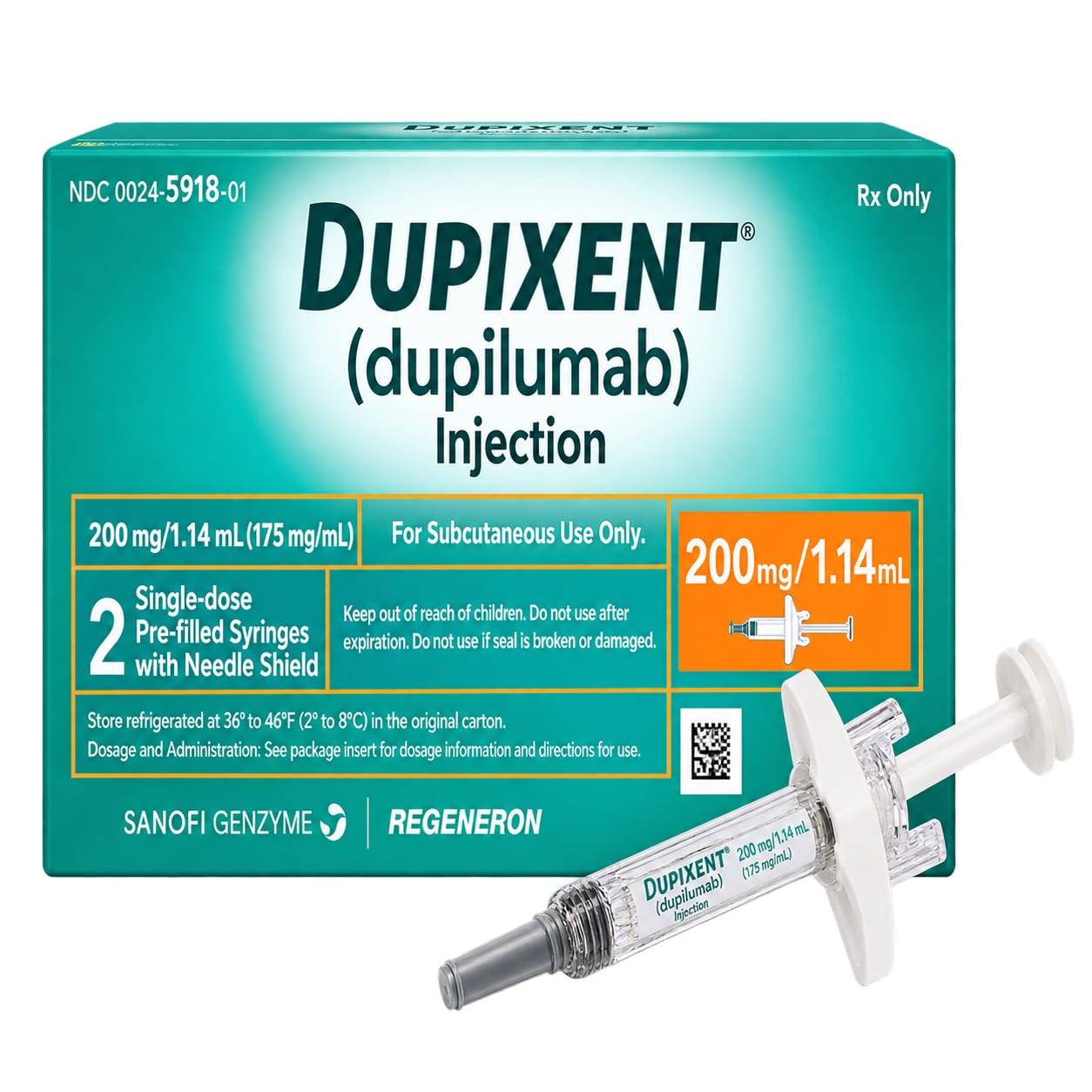
Quick overview
Dupilumab Injection (dupilumab) is a monoclonal antibody given as a shot under the skin to treat conditions that cause inflammation of the airway or skin, such as asthma, COPD, and eczema. It works by reducing inflammation in the body, which helps lower the symptoms caused by these conditions. It is also used for several other inflammatory conditions, including chronic rhinosinusitis with nasal polyps and prurigo nodularis.
What is Dupilumab Injection
Dupilumab is an injectable medicine that treats conditions that cause inflammation of the airway or skin, such as asthma, COPD, and eczema. It is given as a shot under the skin and works by reducing inflammation in the body.
Dupilumab Injection uses
- Moderate to severe atopic dermatitis (eczema) not controlled by topical treatments
- Moderate to severe asthma that is hard to control or steroid-dependent
- Chronic rhinosinusitis with nasal polyps
- Eosinophilic esophagitis (EoE)
- Prurigo nodularis (PN)
- Chronic obstructive pulmonary disease (COPD) with high blood eosinophils, as additional treatment to reduce flare-ups
- Chronic spontaneous urticaria (hives not controlled by antihistamines)
- Bullous pemphigoid
- Allergic fungal rhinosinusitis in patients who have had sinus surgery
Benefits of Dupilumab Injection
- Helps prevent severe asthma attacks and can improve breathing
- Reduces the number of COPD flare-ups and helps improve breathing
- Reduces inflammation and symptoms of eczema and other conditions
How Dupilumab Injection works
Dupilumab works by reducing inflammation in the body, which lowers the symptoms caused by conditions like asthma, COPD, and eczema.
Dupilumab Injection dosage
This medicine is given as a shot under the skin, usually in the thigh, stomach area, or upper arm. You or a caregiver may be trained to prepare and give the injection at home. If using a pen, remove the outer needle cover before giving the dose. Let the medicine warm to room temperature before using it. Check that the liquid is clear and colorless to pale yellow before using; do not use it if cloudy, discolored, or has particles.
Use a different body area each time you give a shot and keep track of injection sites to rotate them. Do not inject into skin that is tender, damaged, bruised, or scarred. Follow the Instructions for Use that come with the medicine and ask your pharmacist or care team if you have questions.
Keep taking this medicine unless your care team tells you to stop. It is important not to miss doses; talk to your care team about what to do if you miss one. This medicine is only for you; do not share it with others. Talk with your care team about using this medicine in children, since it may be prescribed for some young children for certain conditions.
Use exactly as prescribed by your doctor or pharmacist.
Available forms and strengths
- Solution for injection (prefilled pen)
- Solution for injection (prefilled syringe)
Side effects of Dupilumab Injection
Common
- Cold sores
- Dry eyes
- Joint pain
- Pain, redness, or irritation at injection site
- Sore throat
- Trouble sleeping
- Headache
- Cough
- Sore throat, stuffy or runny nose, sneezing
- Body aches or pain
- Unusual tiredness or weakness
Serious
- Allergic reactions—skin rash, itching, hives, swelling of the face, lips, tongue, or throat
- Eye pain, redness, irritation, or discharge with blurry or decreased vision
- Unusual weakness or fatigue, fever, headache, skin rash, muscle or joint pain, loss of appetite, pain, tingling, or numbness in the hands or feet
- Trouble breathing or wheezing, swelling of the face, lips, mouth, tongue, or throat, fainting, dizziness, fast pulse, hives, general ill feeling, swollen lymph nodes, nausea or vomiting, joint pain, or stomach cramps
- New or worsening eye problems, including eye pain or blurred vision
- Joint aches and pain severe enough to cause trouble walking or moving
Warnings and precautions
- Do not use this medicine to treat a sudden asthma attack or COPD flare-up; it will not relieve breathing problems that have already started.
- This medicine can cause serious allergic reactions, including severe reactions that can be life-threatening and need immediate medical care.
- Do not receive live vaccines while being treated with this medicine; check with your doctor before having any vaccinations.
- If you use a steroid medicine for asthma, do not suddenly stop taking it without checking with your doctor first; your dose may need to be lowered slowly.
- A rare but serious condition involving increased white blood cells (eosinophilia) may occur, sometimes along with pneumonia or blood vessel inflammation.
- Tell your care team if you are pregnant or trying to get pregnant. It is not known whether this medicine could harm an unborn baby.
- There isn't enough research on whether this medicine passes into breast milk, so talk with your doctor about the benefits and risks before using it while breastfeeding.
- No routine dose adjustment is generally required for liver or kidney impairment, but tell your doctor about significant liver disease.
- Talk with your healthcare professional about using this medicine along with alcohol. Discuss vaccinations with your healthcare professional before receiving treatment.
Storage
- Keep out of the reach of children and pets
- Store in the refrigerator or at room temperature up to 25 degrees C (77 degrees F)
- Do not freeze
- Keep this medication in the original packaging until you are ready to take it
- Protect from light
- Refrigeration (preferred): get rid of any unused medication after the expiration date
- Room temperature: may be stored for up to 14 days; get rid of any unused medication after 14 days or after it expires, whichever is first
- Take the medication to a medication take-back program, or ask your pharmacist or care team how to get rid of it safely
- Throw away used needles in a hard, closed sharps container that needles cannot poke through; keep this container away from children and pets; do not put needles in the regular trash
When to see a doctor
- Get medical help right away for signs of a serious allergic reaction, such as skin rash, itching, hives, or swelling of the face, lips, tongue, or throat.
- Contact your care team promptly if you have eye pain, redness, irritation, or discharge along with blurry or decreased vision.
- Seek care for unusual weakness or fatigue, fever, headache, skin rash, muscle or joint pain, loss of appetite, or pain, tingling, or numbness in the hands or feet.
- Stop using this medicine and get emergency help right away for breathing problems or wheezing, swelling of the face, lips, mouth, tongue, or throat, fainting, dizziness, fast pulse, fever, hives, skin rash, or a bullseye-shaped rash.
- If you think you've taken too much of this medicine, contact a poison control center or go to an emergency room right away.
Alternatives
- Omalizumab
- Adalimumab
- Tralokinumab
Watch the video
FAQs
What is Dupilumab Injection used for?
It is used for conditions causing airway or skin inflammation, including moderate to severe atopic dermatitis, asthma, COPD with high eosinophils, chronic rhinosinusitis with nasal polyps, eosinophilic esophagitis, prurigo nodularis, chronic spontaneous urticaria, bullous pemphigoid, and allergic fungal rhinosinusitis.
How is Dupilumab Injection given?
It is given as a shot under the skin, usually in the thigh, stomach area, or upper arm. You or a caregiver may be trained to give it at home, using a different injection site each time and following the Instructions for Use.
Can Dupilumab Injection be used for a sudden asthma attack?
No, it should not be used to treat a sudden asthma attack or COPD flare-up since it will not relieve breathing problems that have already started.
What are common side effects of Dupilumab Injection?
Common side effects include cold sores, dry eyes, joint pain, injection site reactions, sore throat, trouble sleeping, headache, cough, body aches, and unusual tiredness.
How should Dupilumab Injection be stored?
It should be stored in the refrigerator or at room temperature up to 25 degrees C (77 degrees F), protected from light, not frozen, and kept in its original packaging. At room temperature, it should be used within 14 days.
General information, not medical advice
Your prescriber and the leaflet in your pack know your situation. This page does not.
- Follow your prescriber and the leaflet
- Don't start, stop, or change a dose on your own
- Doses and warnings differ by country and product
Sources
Video
Related medicines
Darzalex Injection: Uses, Dosage, Side Effects, Precautions and Alternates
monoclonal antibody
Darzalex Injection (daratumumab) treats multiple myeloma and AL amyloidosis by targeting CD38 on abnormal cells. Learn uses, dosage, side effects, and warnings.

Trastuzumab Injection: Uses, Dosage, Side Effects, Precautions and Alternates
Monoclonal antibody
Trastuzumab Injection targets HER2-positive breast and stomach cancers. Learn how it works, dosage, side effects, warnings, and when to see a doctor.