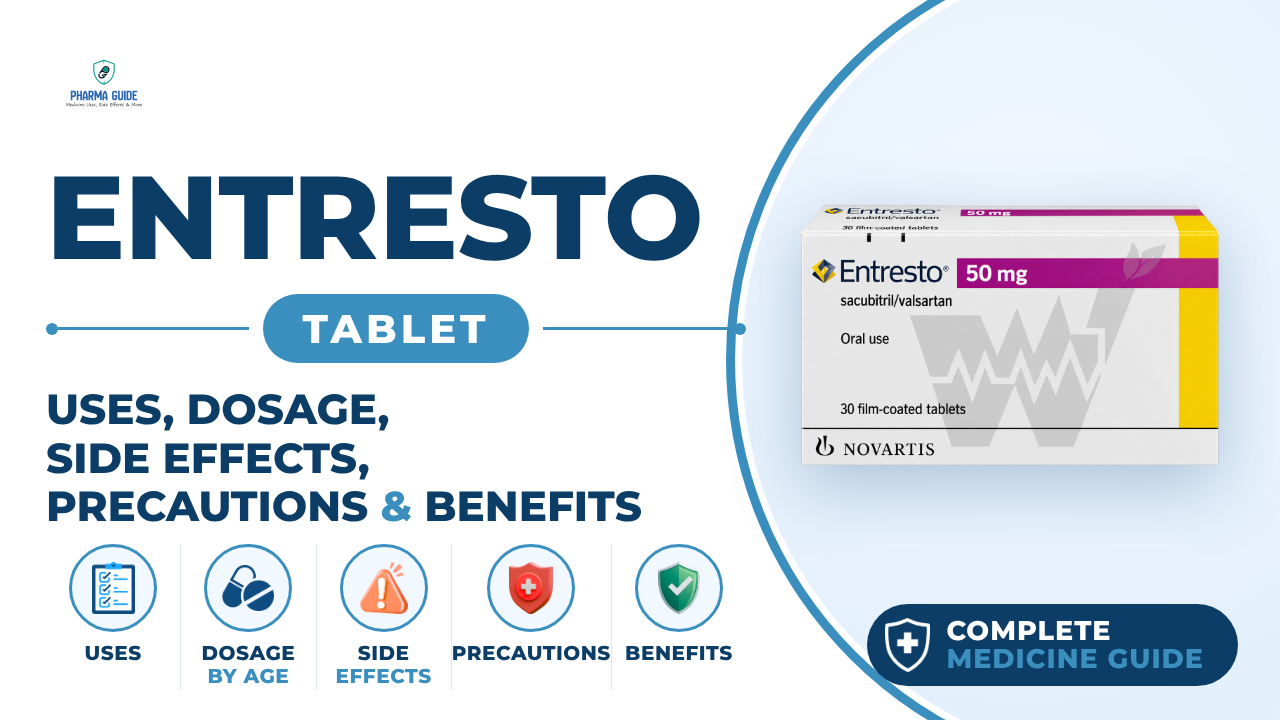
Entresto Tablet: Uses, Dosage, Side Effects, Precautions and Alternates
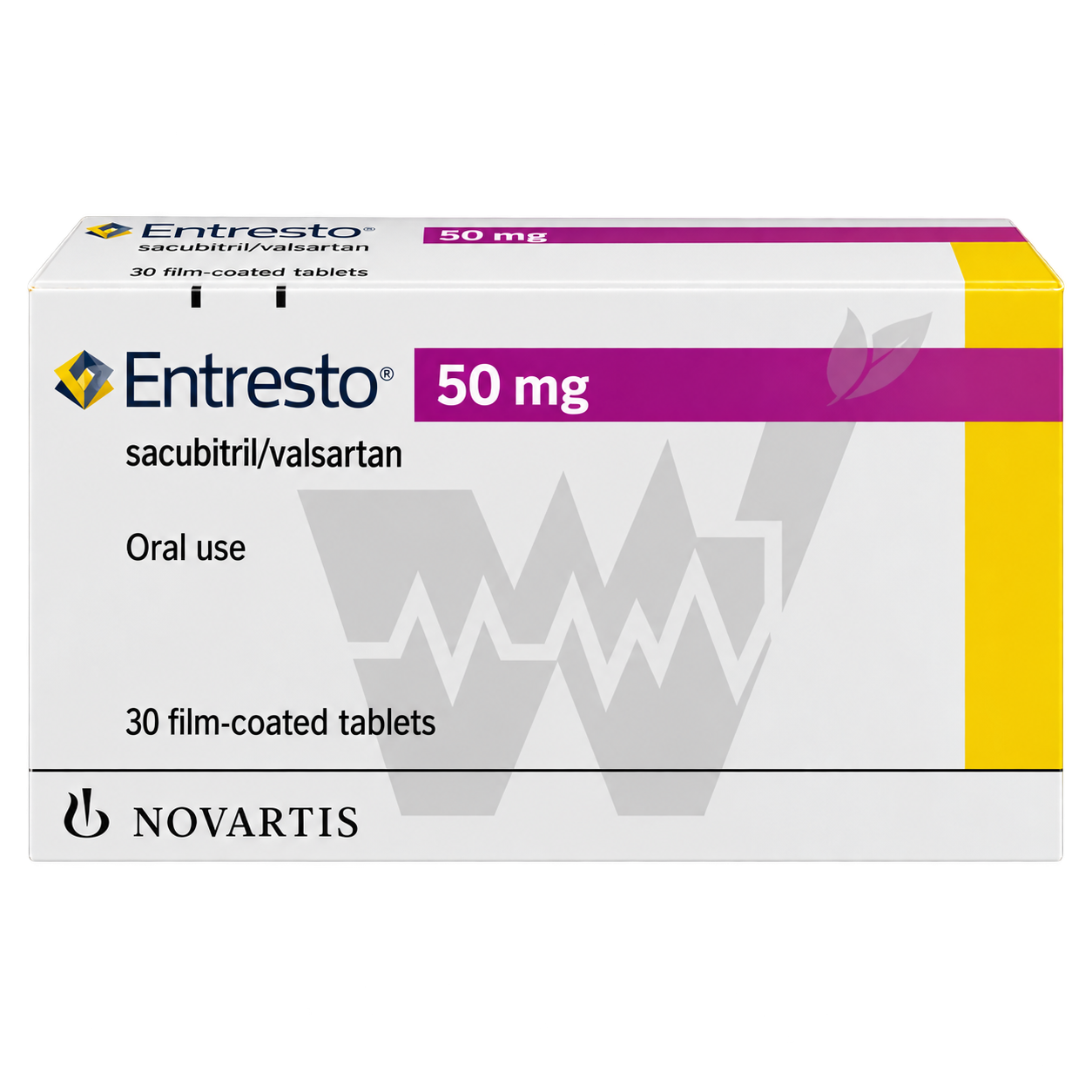
| Generic name | sacubitril and valsartan |
|---|---|
| Drug class | Angiotensin receptor blockers and neprilysin inhibitors (angiotensin receptor-neprilysin inhibitor, ARNi) |
| Forms | Film-coated tablet, Granules in capsules for opening (Sprinkle), Oral suspension (liquid, pharmacist-prepared from tablets) |
Quick overview
Entresto Tablet contains sacubitril and valsartan, a combination medicine belonging to the angiotensin receptor-neprilysin inhibitor (ARNi) class. It is used to treat long-term chronic heart failure in adults and in certain children aged 1 year and older. Entresto is taken alongside other heart failure medicines to help lower the risk of cardiovascular death and reduce hospital stays.
What is Entresto Tablet
Entresto is a prescription heart medicine that combines two active ingredients, sacubitril and valsartan, in one tablet. It is used to treat long-term heart failure in adults and in certain children aged 1 year and older.
Entresto Tablet uses
- Treatment of symptomatic chronic heart failure with reduced ejection fraction in adults, used together with other heart failure medicines, to lower the risk of death from heart and blood vessel problems and to reduce the need for hospital stays for heart failure
- Treatment of symptomatic chronic heart failure with reduced left ventricular function in children and adolescents aged 1 year and older
Benefits of Entresto Tablet
- Heart Failure Support: Helps reduce the risk of hospitalization and cardiovascular death in eligible patients with heart failure.
- Blood Pressure Control: Helps lower blood pressure.
- Heart Protection: Reduces strain on the heart and supports improved cardiac function.
- Fluid Balance Support: Helps reduce mechanisms that contribute to fluid retention.
- Long-Term Management: Used as part of comprehensive heart-failure treatment.
How Entresto Tablet works
Entresto contains two ingredients that work together. Sacubitril blocks an enzyme called neprilysin, which raises levels of natural substances that relax blood vessels and help the body get rid of excess salt and water. Valsartan blocks a receptor for a hormone called angiotensin II, stopping it from narrowing blood vessels and raising blood pressure. Together these actions make it easier for the heart to pump blood and help lower blood pressure and fluid buildup.
Entresto Tablet dosage
Take exactly as prescribed, about every 12 hours at the same time each day. Entresto can be taken with or without food. Swallow the tablet whole; do not break, split, or crush it. If switching from an ACE inhibitor, you must wait at least 36 hours after the last ACE inhibitor dose before starting Entresto. If a dose is missed, take it as soon as you remember and then take the next dose at the usual time; do not double the dose to make up for a missed one.
For children who cannot swallow tablets, the tablets can be made into a liquid suspension by a pharmacist, or the Sprinkle capsules can be opened and the granules mixed into soft food and taken right away; the granules should not be chewed, crushed, or given through a feeding tube. Older patients (75 years or older), and those with low blood pressure or previously on low doses of other heart failure medicines, may be started on a lower dose by their doctor.
| Age group | Dose |
|---|---|
| Under 18 Years | Dose is weight-based and should be prescribed by a specialist |
| 12–17 Years | Dose depends on body weight and formulation; specialist supervision required |
| Adults (18–64 Years) | 49 mg Sacubitril + 51 mg Valsartan twice daily; may be increased to 97/103 mg twice daily |
Available forms and strengths
- Film-coated tablet
- Granules in capsules for opening (Sprinkle)
- Oral suspension (liquid, pharmacist-prepared from tablets)
Side effects of Entresto Tablet
Common
- Low blood pressure
- High potassium level in the blood
- Kidney problems (renal impairment)
- Cough
- Dizziness
- Tiredness (fatigue)
- Diarrhea
- Nausea
- Weakness (asthenia)
- Headache
- Fainting (syncope)
- Low blood pressure when standing up from sitting or lying down
- Rash
- Itchiness (pruritus)
- Spinning sensation (vertigo)
- Low red blood cell count (anemia)
Serious
- Angioedema (swelling of face, tongue, lips, or throat, with or without difficulty breathing)
- Anaphylactic or severe allergic reaction (difficulty breathing or swallowing, rash, itching, hives, dizziness)
- Severe loss of consciousness
- Kidney failure
- Severe high potassium levels
- Intestinal angioedema (abdominal pain, nausea, vomiting, diarrhea)
- Hallucinations, paranoia, or sleep disturbances
Warnings and precautions
Entresto must not be used during pregnancy. It can seriously harm or cause the death of an unborn baby. If you become pregnant while taking Entresto, stop the medicine and contact your doctor right away.
Entresto is not recommended while breastfeeding because the medicine passes into breast milk and could harm a nursing baby.
Entresto can affect kidney function and should be used with caution in people with kidney disease. It is not recommended for people with severe kidney impairment or kidney failure requiring dialysis.
People with moderate liver problems may need a lower starting dose. Entresto should not be used by people with severe liver disease, biliary cirrhosis, or cholestasis.
Drinking alcohol while taking Entresto can further lower blood pressure and may increase certain side effects.
Entresto can occasionally cause dizziness or tiredness, so take care before driving or using machines until you know how the medicine affects you.
- Do not use Entresto together with an ACE inhibitor, because combining them increases the risk of a serious swelling reaction called angioedema. Wait at least 36 hours after stopping an ACE inhibitor before starting Entresto, and wait 36 hours after the last Entresto dose before starting an ACE inhibitor.
- Do not use Entresto if you have ever had angioedema related to an ACE inhibitor or ARB, or if you have a hereditary or unexplained tendency to develop angioedema.
- Black patients may be more likely to develop angioedema while taking Entresto.
- Entresto should not be started in people with recent symptomatic low blood pressure, and should not be used together with another medicine containing an ARB.
- Taking Entresto with aliskiren-containing medicines is not allowed if you have diabetes or significant kidney impairment, due to higher risk of low blood pressure, high potassium, and worsening kidney function.
- Your doctor will monitor your blood potassium level regularly, since Entresto can cause potassium levels to rise too high.
Storage
- Store your tablets in the original package. Protect from moisture.
- Do not take this medicine after the expiry date, which is stated on the label.
- Do not store above 30°C.
- Keep out of reach and sight of children.
When to see a doctor
- Get emergency help immediately if you notice swelling of the face, lips, tongue, or throat, or have trouble breathing or swallowing — these can be signs of a dangerous allergic reaction (angioedema) and can be life-threatening.
- Tell your doctor right away if you feel faint, very dizzy, or like you might pass out, as this could mean your blood pressure has dropped too low.
- Contact your doctor if you notice signs of high potassium, such as a slow heart rate, weak pulse, muscle weakness, or a tingling feeling.
- Seek medical advice if you have signs of kidney problems, such as little or no urination, painful or difficult urination, swelling in the feet or ankles, or feeling very tired or short of breath.
- If you think you or someone else may have taken too much Entresto, contact a healthcare professional or your local poison control center right away, even if there are no symptoms.
Alternatives
- Valsartan
- Losartan
- Enalapril
- Ramipril
FAQs
What is Entresto Tablet used for?
Entresto is used to treat long-term symptomatic chronic heart failure with reduced ejection fraction in adults, alongside other heart failure medicines, to lower the risk of cardiovascular death and reduce hospital stays. It is also used in children aged 1 year and older with reduced left ventricular function.
How should Entresto Tablet be taken?
Entresto should be taken exactly as prescribed, about every 12 hours at the same time each day, with or without food. The tablet should be swallowed whole and not broken, split, or crushed. If a dose is missed, take it as soon as remembered, then continue with the next dose at the usual time without doubling up.
Can Entresto be taken with an ACE inhibitor?
No, Entresto must not be used together with an ACE inhibitor because combining them increases the risk of a serious swelling reaction called angioedema. You must wait at least 36 hours after stopping an ACE inhibitor before starting Entresto, and 36 hours after the last Entresto dose before starting an ACE inhibitor.
What are the serious side effects of Entresto Tablet?
Serious side effects include angioedema (swelling of the face, tongue, lips, or throat), anaphylactic or severe allergic reactions, severe loss of consciousness, kidney failure, severe high potassium levels, intestinal angioedema, and hallucinations, paranoia, or sleep disturbances.
Is Entresto safe during pregnancy?
No, Entresto must not be used during pregnancy as it can seriously harm or cause the death of an unborn baby. If you become pregnant while taking Entresto, stop the medicine and contact your doctor right away.
Sources
Video