Excedrin Tablet: Uses, Dosage, Side Effects, Precautions and Alternates
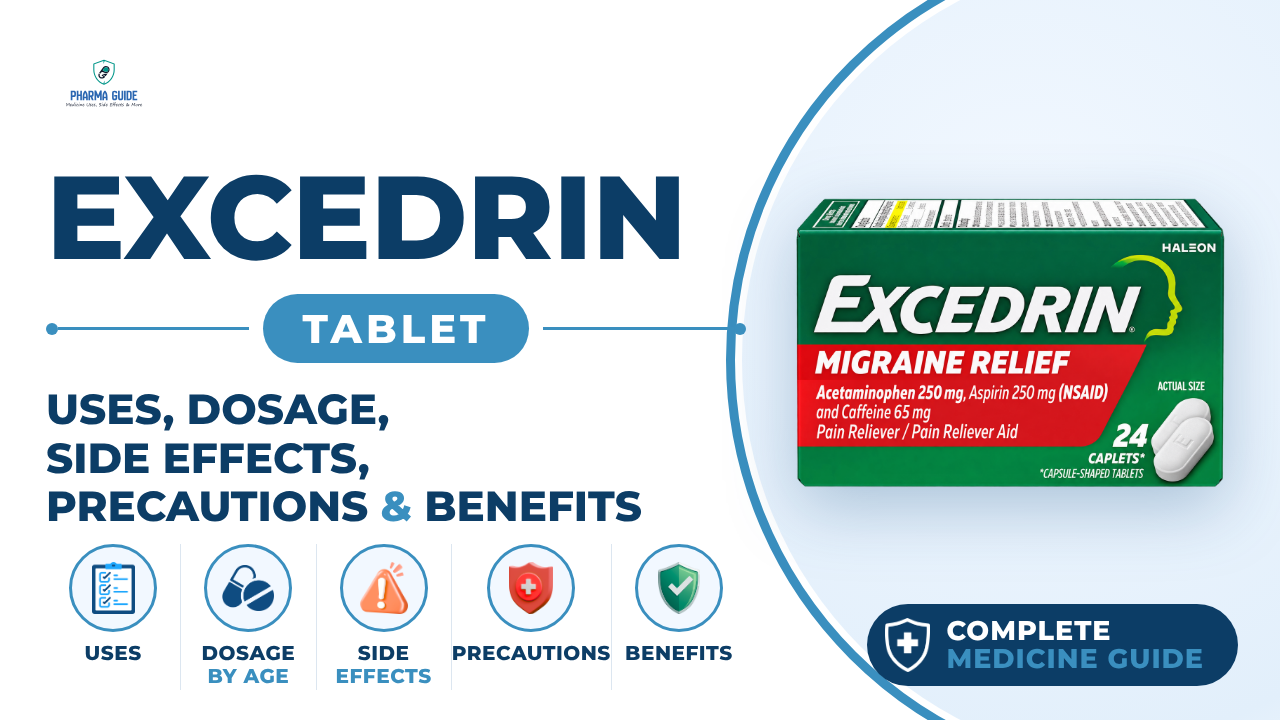
| Generic name | acetaminophen, aspirin, and caffeine |
|---|---|
| Drug class | Analgesic combinations |
| Forms | film-coated tablets |
Quick overview
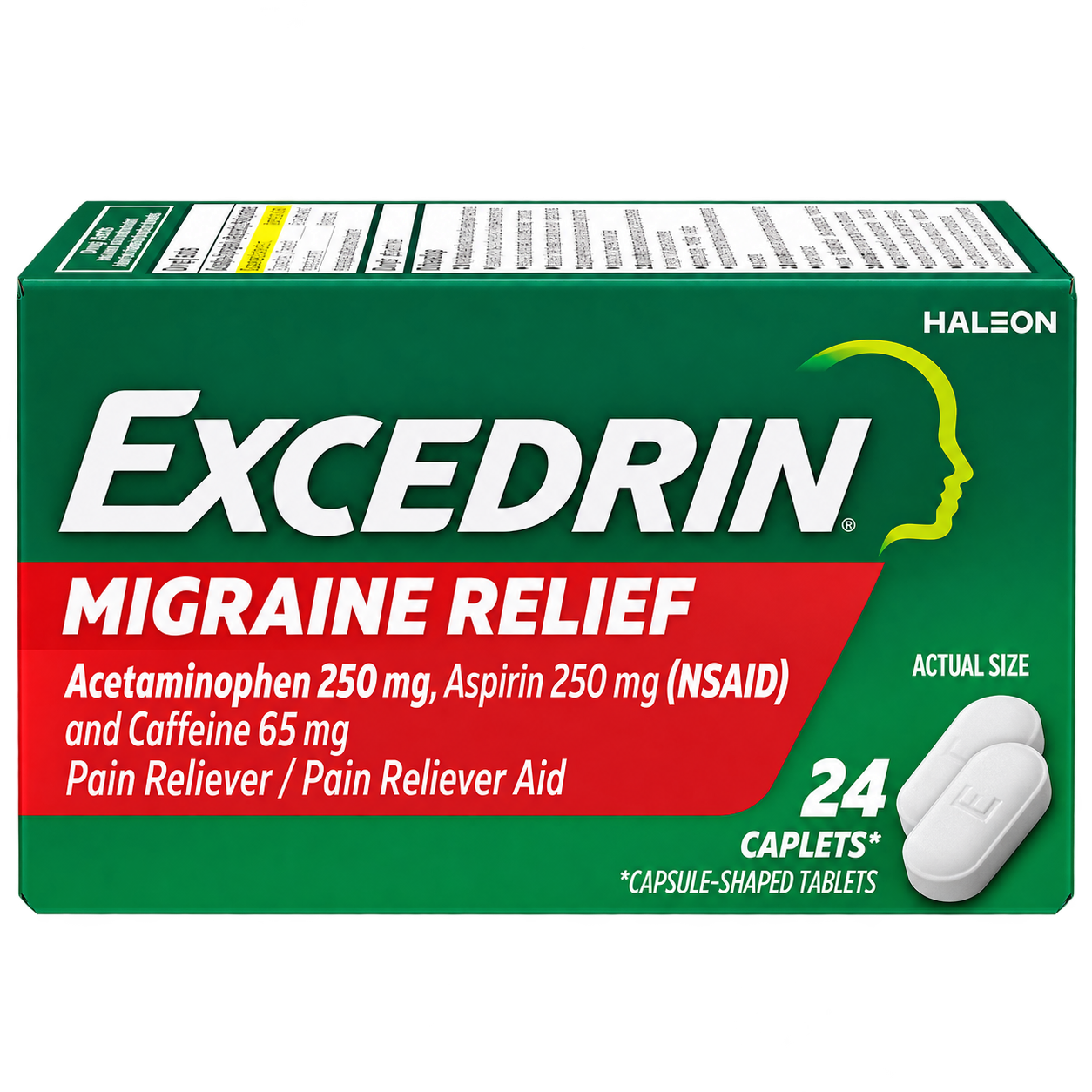
Excedrin Tablet is a combination medicine containing acetaminophen, aspirin, and caffeine, part of the analgesic combinations drug class. It is used to relieve pain and reduce fever, with caffeine helping to boost the pain-relieving effect of the other two ingredients. It is commonly used for headaches, migraine attacks, and other types of pain. It comes as film-coated tablets and should be used exactly as directed, with attention to dosing limits and precautions.
What is Excedrin Tablet
Excedrin is a combination medicine with three active ingredients: aspirin, paracetamol (acetaminophen), and caffeine. It is used to relieve pain and reduce fever, and the caffeine helps boost the pain-relieving effect.
Excedrin Tablet uses
- Acute treatment of headache
- Acute treatment of migraine attacks, including symptoms like nausea, sensitivity to light and sound, and aura
- Tension headaches
- Muscle aches
- Menstrual cramps
- Arthritis pain
- Toothaches
- Pain from the common cold
- Nasal congestion
Benefits of Excedrin Tablet
- Headache Relief: Helps relieve certain mild-to-moderate headaches.
- Migraine Relief: The standard Excedrin Migraine formulation is used for temporary migraine relief.
- Pain Reduction: Acetaminophen and aspirin provide analgesic effects.
- Fever Reduction: Acetaminophen can help reduce fever.
- Caffeine Support: Caffeine can enhance the pain-relieving effect of the other ingredients.
How Excedrin Tablet works
Paracetamol reduces pain and fever. Aspirin reduces pain, fever, and inflammation. Caffeine is a mild stimulant that boosts the effects of the other two ingredients and may help narrow blood vessels that widen during a migraine.
Excedrin Tablet dosage
- Take with a full glass of water when headache pain or migraine symptoms (or aura) appear.
- Leave 4 to 6 hours between doses if you need to take more.
- Do not use for more than 4 days for headache or 3 days for migraine without talking to a doctor.
- Taking it with food or milk may help if it upsets your stomach.
- Avoid taking it too close to bedtime because the caffeine may keep you awake. This medicine is not meant for children or adolescents under 18.
No special dosing changes are needed for elderly adults, but those with low body weight should ask a doctor or pharmacist first. If you have kidney or liver problems, tell your doctor, as the timing between doses or length of treatment may need to be adjusted. Avoid taking other medicines that also contain paracetamol, aspirin, or caffeine while using this medicine, and limit coffee, tea, cola, energy drinks, or other caffeine sources while taking this medicine. If you miss a dose, take it when you remember, but do not double up to make up for it.
| Age group | Dose |
|---|---|
| Under 12 Years | Do not use unless specifically advised by a healthcare professional |
| 12–17 Years | Use only according to the specific product label or healthcare professional's advice |
| Adults (18–64 Years) | 2 tablets per dose for the standard Excedrin Migraine formulation; follow the package maximum |
Available forms and strengths
- Film-coated tablets
Side effects of Excedrin Tablet
Common
- Nervousness
- Dizziness
- Nausea
- Abdominal discomfort
- Upset stomach or heartburn
- Trouble sleeping (insomnia)
- Feeling anxious or restless
Serious
- Allergic reaction with swelling of the face, lips, mouth, tongue, or throat, difficulty breathing, wheezing, or chest tightness
- Severe skin reaction with rash, blistering, peeling, or mouth ulcers
- Bleeding in the stomach or intestine, shown by severe stomach pain, bloody or black stools, or vomiting blood
- Yellowing of the skin or eyes (signs of liver problems)
- Light-headedness or dizziness (signs of low blood pressure)
- Irregular heartbeat
- Unexplained bruising or bleeding
- Increased nosebleeds or bruising
- Swelling or water retention
- Ringing in the ears or temporary hearing loss
- Changes in behaviour, nausea, and vomiting, which could be signs of Reye's syndrome in young people
- Symptoms of a blood and fluid problem called metabolic acidosis, such as fast and deep breathing, drowsiness, nausea, vomiting, and loss of appetite
Warnings and precautions
- Do not take more than the recommended dose, since too much paracetamol can seriously damage the liver.
- This medicine can cause bleeding, so tell a doctor right away about any unusual bleeding.
- Do not give this medicine to children or teenagers, because of a link between aspirin and a rare but serious and sometimes fatal condition called Reye's syndrome.
- Taking this medicine too often for frequent headaches can actually make headaches worse over time.
- People with severe illness, severe kidney problems, malnutrition, chronic alcoholism, or who are taking the antibiotic flucloxacillin along with this medicine are at risk of a serious blood and fluid problem called metabolic acidosis.
- This medicine may hide signs of infection, like headache or high temperature, making infections harder to detect.
- This medicine is not recommended during pregnancy and should not be taken in the last 3 months of pregnancy, as it can harm the unborn baby and affect labour. It should also be avoided in the first six months unless a doctor says it is absolutely necessary.
- Do not take this medicine while breastfeeding, as it could harm the baby.
- People with kidney problems should tell their doctor, as the dose timing or length of treatment may need adjusting, and the medicine should not be used if kidney problems are severe.
- People with liver problems should tell their doctor, as the dose timing or length of treatment may need adjusting, and the medicine should not be used if liver problems are severe.
- If you drink 3 or more alcoholic drinks a day, ask a doctor before taking this medicine, since it can increase the risk of liver damage and stomach bleeding.
- This medicine is not known to affect driving or using machines, but stop if you feel dizzy or drowsy.
Storage
- Keep this medicine out of the sight and reach of children.
- Do not use EXCEDRIN after the expiry date which is stated on the blister and carton after EXP. The expiry date refers to the last day of that month.
- Do not store above 25°C.
- Medicines should not be disposed of via wastewater or household waste. Ask your pharmacist how to dispose of medicines no longer required.
When to see a doctor
- Get medical help right away if you have signs of an allergic reaction, such as swelling of the face, lips, mouth, tongue, or throat, difficulty breathing, wheezing, chest tightness, rash, or fainting.
- Stop taking this medicine and get medical help if you notice skin rash, blistering of the lips, eyes or mouth, skin peeling, or sores.
- Get medical help for signs of stomach or intestinal bleeding, such as severe stomach pain, bloody or black stools, or vomiting blood.
- Get medical help if you notice yellowing of the skin or eyes, which can be a sign of liver failure.
- Contact a doctor immediately if you notice a combination of symptoms like serious breathing difficulty with deep rapid breathing, drowsiness, nausea, vomiting, and loss of appetite.
- Seek medical attention if your headache is very severe, causes you to need bed rest, is different from your usual headaches, comes with vomiting, starts after a head injury or coughing, happens daily, or if you are over 50 and having your first headache.
- Contact your doctor, pharmacist, or go to the nearest hospital as soon as you think you may have taken too much, even before symptoms appear, because of the risk of serious liver damage.
- Talk to a doctor if you do not feel better, or if your symptoms get worse, after 3 days for migraine or 4 days for headache.
Alternatives
- Paracetamol (Acetaminophen)
- Ibuprofen
- Naproxen
FAQs
What is Excedrin Tablet used for?
Excedrin Tablet is used for acute treatment of headaches and migraine attacks, as well as tension headaches, muscle aches, menstrual cramps, arthritis pain, toothaches, and pain from the common cold.
What are the active ingredients in Excedrin Tablet?
Excedrin Tablet contains three active ingredients: acetaminophen (paracetamol), aspirin, and caffeine, which work together to relieve pain and reduce fever.
How should Excedrin Tablet be taken?
Take Excedrin Tablet with a full glass of water when headache pain or migraine symptoms appear, leaving 4 to 6 hours between doses. Do not use for more than 4 days for headache or 3 days for migraine without consulting a doctor.
Can children take Excedrin Tablet?
No, this medicine is not meant for children or adolescents under 18, due to a link between aspirin and a rare but serious condition called Reye's syndrome.
What are the serious side effects of Excedrin Tablet?
Serious side effects include allergic reactions, severe skin reactions, stomach or intestinal bleeding, liver problems, irregular heartbeat, and symptoms of metabolic acidosis such as fast breathing, drowsiness, and vomiting.
Sources
Video