
Safety
General information, not medical advice
Your prescriber and the leaflet in your pack know your situation. This page does not.
- Follow your prescriber and the leaflet
- Don't start, stop, or change a dose on your own
- Doses and warnings differ by country and product
Fexmid Tablet: Uses, Dosage, Side Effects, Precautions and Alternates
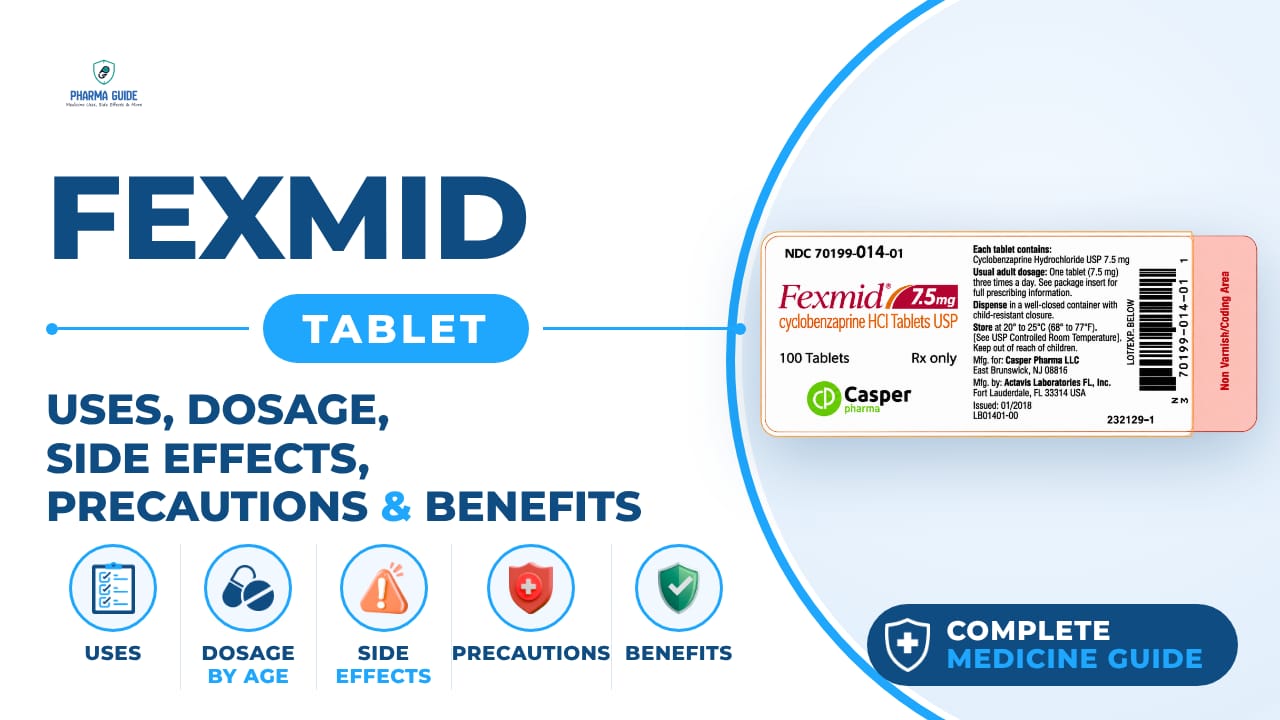
| Generic name | cyclobenzaprine hydrochloride |
|---|---|
| Drug class | Skeletal muscle relaxant |
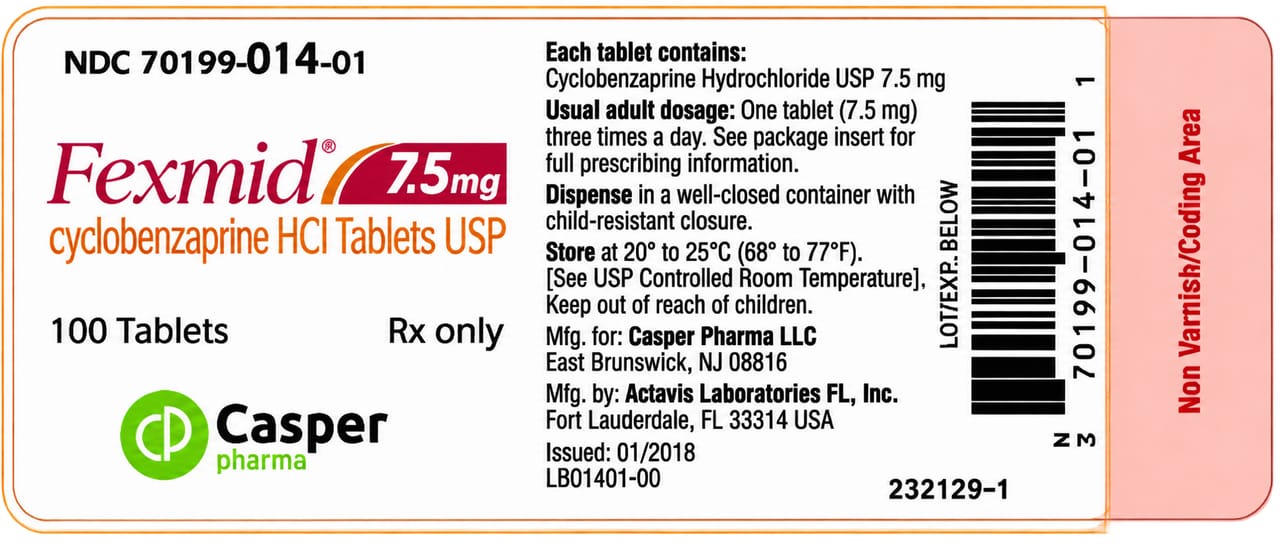
| Forms | Tablet (7.5 mg, film-coated) |
Quick overview
Fexmid Tablet contains cyclobenzaprine hydrochloride, a skeletal muscle relaxant. It is used along with rest and physical therapy to relieve muscle spasms caused by painful musculoskeletal conditions, such as an injury. The Fexmid brand name has been discontinued in the U.S., but generic cyclobenzaprine versions may still be available. It works within the central nervous system to reduce muscle spasm and related pain.
What is Fexmid Tablet
Fexmid is a muscle relaxant used along with rest and physical therapy to relieve muscle spasms caused by painful conditions such as an injury. The Fexmid brand name has been discontinued in the U.S., but generic versions of cyclobenzaprine may be available.
Fexmid Tablet uses
- Relieves muscle spasm associated with acute, painful musculoskeletal conditions, used together with rest and physical therapy
Benefits of Fexmid Tablet
- Helps relieve pain associated with sudden onset muscle spasms from fatigue or muscle overuse
- May be used to relieve pain caused by certain musculoskeletal disorders
How Fexmid Tablet works
Fexmid works by blocking nerve impulses (or pain sensations) that are sent to your brain, acting mainly within the central nervous system to reduce muscle spasm.
Fexmid Tablet dosage
Follow all directions on your prescription label and read all medication guides or instruction sheets. Your doctor may occasionally change your dose; use the medicine exactly as directed. It is usually taken once daily for only 2 or 3 weeks; follow your doctor's dosing instructions carefully. Swallow the tablet whole and do not crush, chew, break, or open it. Take the medicine at the same time each day.
Call your doctor if your symptoms do not improve after 3 weeks, or if they get worse. If you miss a dose, take it as soon as you can, but skip it if it is almost time for your next dose; do not take two doses at one time.
| Age group | Dose |
|---|---|
| Under 15 years | Not recommended |
| 15–17 years | Doctor-directed use only |
| 18–64 years | 5 mg three times daily; may be increased to 10 mg three times daily if needed |
| 65 years & older | Use cautiously; generally start with 5 mg three times daily under medical supervision |
| Maximum | 30 mg/day |
Available forms and strengths
- Tablet (7.5 mg, film-coated)
Side effects of Fexmid Tablet
Common
- Drowsiness
- Tiredness/fatigue
- Headache
- Dizziness
- Dry mouth
- Upset stomach, nausea
- Constipation
- Abdominal pain
- Acid reflux
- Diarrhea
- Irritability
- Decreased mental sharpness
- Nervousness
- Upper respiratory infection
- Sore throat
Serious
- Allergic reaction: hives; difficult breathing; swelling of face, lips, tongue, or throat
- Fast or irregular heartbeats
- Chest pain or pressure, pain spreading to jaw or shoulder
- Sudden numbness or weakness (especially on one side of the body), slurred speech, balance problems
- Serotonin syndrome: agitation, hallucinations, fever, sweating, shivering, fast heart rate, muscle stiffness, twitching, loss of coordination, nausea, vomiting, or diarrhea
- Serious eye symptoms such as sudden vision loss, blurred vision, tunnel vision, eye pain or swelling, or seeing halos around lights
- Seizures, confusion, fainting, jaundice
Warnings and precautions
- Do not use this medicine if you have a thyroid disorder, heart block, congestive heart failure, a heart rhythm disorder, or have recently had a heart attack.
- Do not use this medicine if you have taken an MAO inhibitor in the past 14 days, as a dangerous drug interaction could occur.
- This medicine is not approved for use by anyone younger than 15 years old.
- Combining this medicine with certain other drugs can cause a serious condition called serotonin syndrome; tell your doctor about all medicines you take, including those for depression, mental illness, Parkinson's disease, migraine, serious infections, or nausea and vomiting.
- An overdose of this medicine can be fatal.
- Using this medicine with other drugs that make you drowsy can worsen that effect; ask your doctor before using opioids, sleeping pills, other muscle relaxers, or medicine for anxiety or seizures.
- Older adults may be more sensitive to the effects of this medicine, and serious side effects may be more likely in older adults.
- It is not known whether Fexmid will harm an unborn baby. Tell your doctor if you are pregnant or plan to become pregnant.
- It may not be safe to breastfeed while using this medicine. Ask your doctor about any risk.
- People with liver disease should tell their doctor, since this medicine should be used with caution and at a lower starting dose in people with liver impairment.
- Avoid drinking alcohol while taking this medicine, as dangerous side effects could occur.
- Avoid driving or hazardous activity until you know how this medicine will affect you, since your reactions could be impaired.
Storage
Store at room temperature away from moisture, heat, and light.
When to see a doctor
- Get emergency medical help if you have signs of an allergic reaction: hives; difficult breathing; swelling of your face, lips, tongue, or throat.
- Stop using this medicine and call your doctor right away if you have fast or irregular heartbeats; chest pain or pressure with pain spreading to jaw or shoulder; or sudden numbness or weakness, slurred speech, or balance problems.
- Seek medical attention right away if you have symptoms of serotonin syndrome, such as agitation, hallucinations, fever, sweating, shivering, fast heart rate, muscle stiffness, twitching, loss of coordination, nausea, vomiting, or diarrhea.
- Seek emergency medical attention or contact a poison control center if an overdose is suspected, since an overdose can be fatal.
Alternatives
- Flexeril
- Amrix
- Tonmya
Watch the video
FAQs
What is Fexmid Tablet used for?
Fexmid is a muscle relaxant used along with rest and physical therapy to relieve muscle spasms caused by painful musculoskeletal conditions such as an injury.
How does Fexmid Tablet work?
It works by blocking nerve impulses or pain sensations sent to the brain, acting mainly within the central nervous system to reduce muscle spasm.
What is the dosage of Fexmid Tablet for adults?
For adults aged 18-64, the dose is usually 5 mg three times daily, which may be increased to 10 mg three times daily if needed, with a maximum of 30 mg per day. It is typically taken once daily for only 2 or 3 weeks as directed by a doctor.
What are the common side effects of Fexmid Tablet?
Common side effects include drowsiness, tiredness, headache, dizziness, dry mouth, upset stomach, constipation, abdominal pain, acid reflux, diarrhea, irritability, decreased mental sharpness, nervousness, and sore throat.
Is the Fexmid brand still available?
The Fexmid brand name has been discontinued in the U.S., but generic cyclobenzaprine versions may still be available.
General information, not medical advice
Your prescriber and the leaflet in your pack know your situation. This page does not.
- Follow your prescriber and the leaflet
- Don't start, stop, or change a dose on your own
- Doses and warnings differ by country and product
Sources
Video
Related medicines
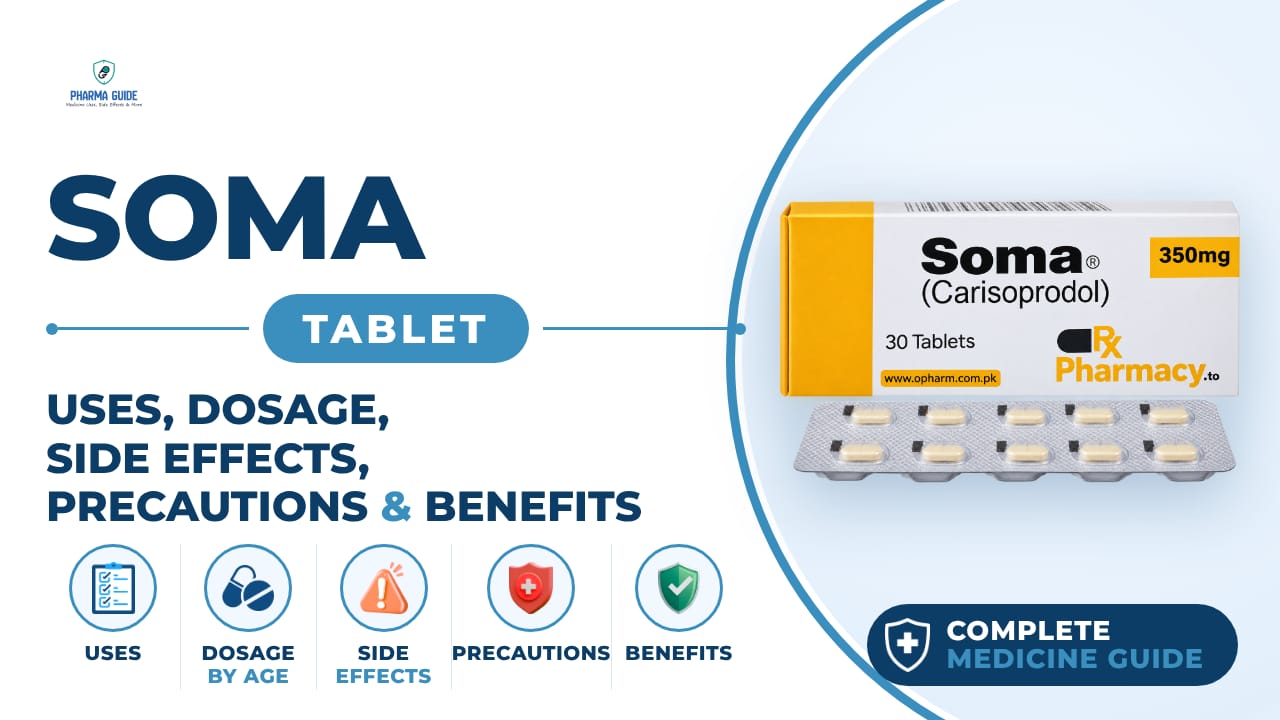
Soma Tablet: Uses, Dosage, Side Effects, Precautions and Alternates
Skeletal muscle relaxant
Soma Tablet (carisoprodol) is a muscle relaxant for short-term muscle pain relief. Learn about its uses, dosage, side effects, and safety warnings.
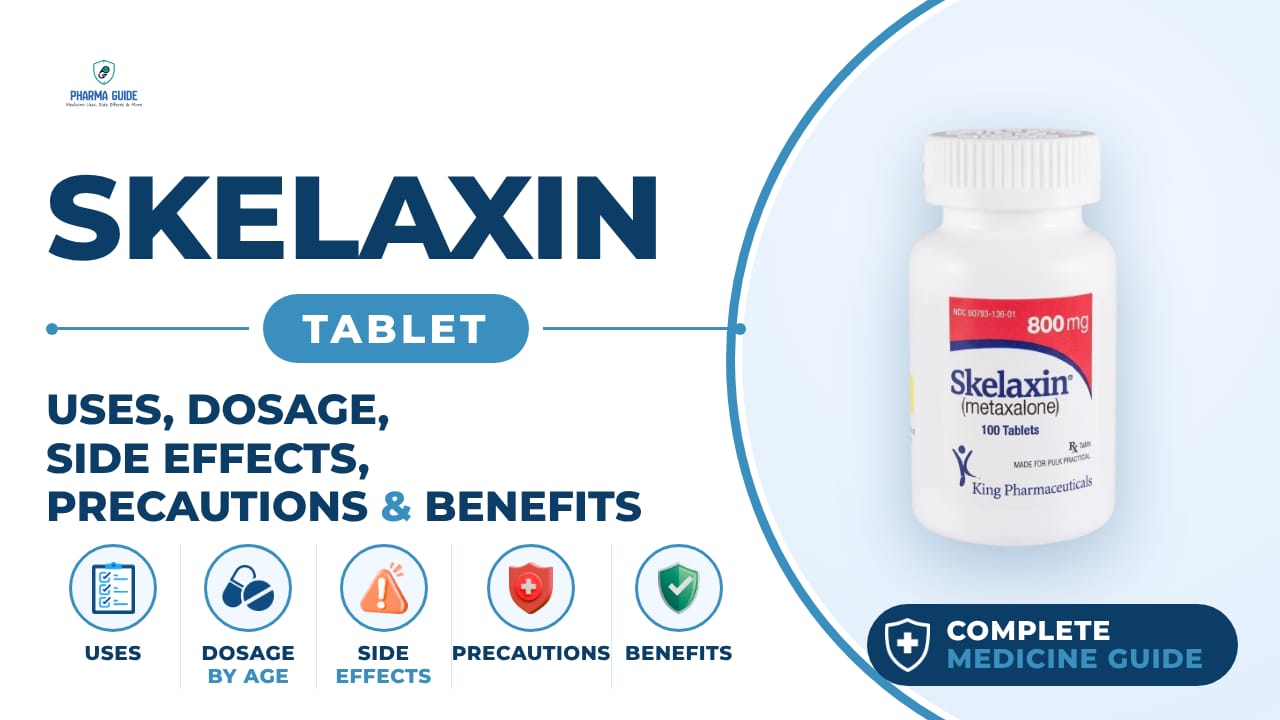
Skelaxin Tablet: Uses, Dosage, Side Effects, Precautions and Alternates
Skeletal muscle relaxant
Skelaxin Tablet (metaxalone) is a prescription muscle relaxant for short-term relief of painful muscle spasms. Learn uses, dosage, and side effects.