Flagyl Tablet: Uses, Dosage, Side Effects, Precautions and Alternates
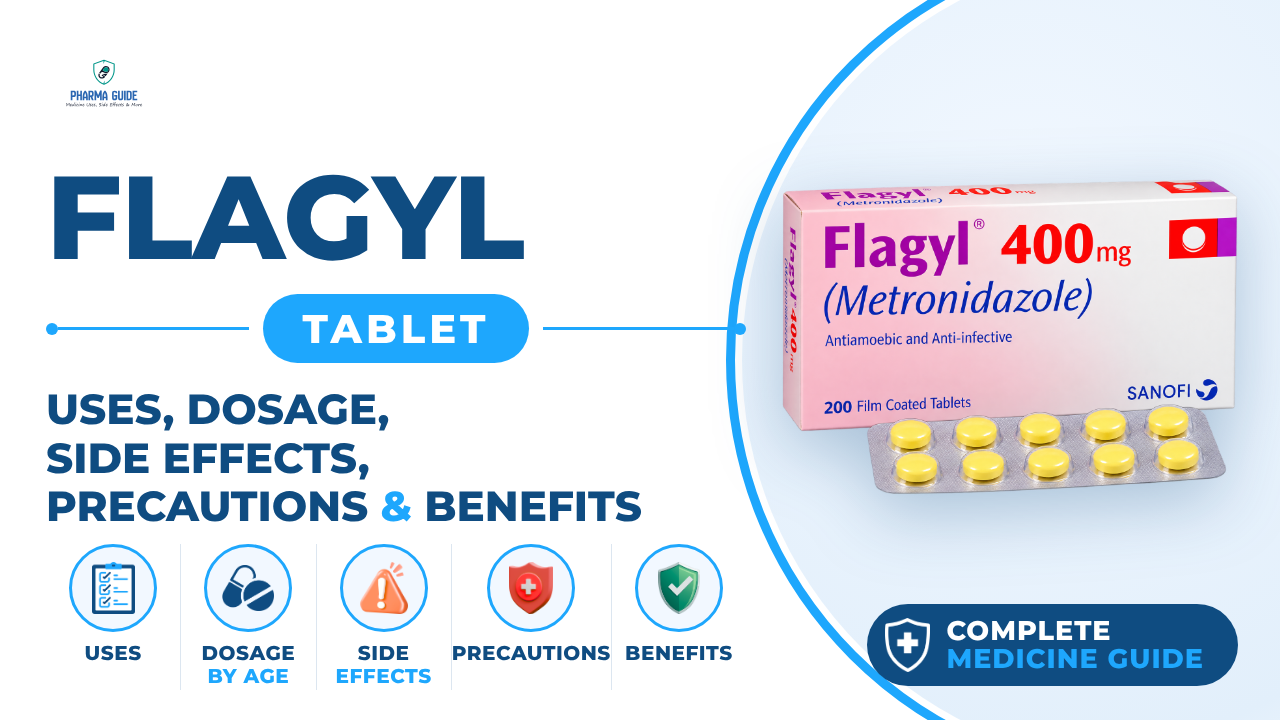
| Generic name | Metronidazole |
|---|---|
| Drug class | Nitroimidazole antibiotic (anti-microbial) |
| Forms | Tablet, Suppository, Suspension (Flagyl S), Injection (intravenous infusion), Extended-release tablet, Capsule |

Quick overview
Flagyl Tablet contains the active ingredient metronidazole, an antibiotic belonging to a group of medicines called nitroimidazoles (anti-microbials). It is used to treat and prevent certain infections caused by bacteria and other organisms in different parts of the body. Flagyl works by killing or stopping the growth of the organisms causing the infection. It is available as tablets and other forms, with dosing that varies by age.
What is Flagyl Tablet
Flagyl is an antibiotic that contains the active ingredient metronidazole. It belongs to a group of medicines called nitroimidazoles (anti-microbials). It is used to treat and prevent certain infections caused by bacteria and other organisms in different parts of the body.
Flagyl Tablet uses
- Treats certain infections caused by bacteria and other organisms in different parts of the body
- Prevents or treats certain infections that may occur during surgery
- Treats infections of the blood, brain, lung, bones, genital tract, pelvic area, stomach and intestines
- Treats gum ulcers and other dental infections
- Treats infected leg ulcers and pressure sores
- Treats trichomoniasis, a sexually transmitted disease caused by a parasite
Benefits of Flagyl Tablet
- Kills or stops the growth of bacteria and other organisms causing infections
- Helps prevent infections after surgery
How Flagyl Tablet works
Flagyl works by killing or stopping the growth of the bacteria and other organisms that cause infections.
Flagyl Tablet dosage
Swallow Flagyl tablets whole with a glass of water, preferably during or after a meal. Do not chew or crush the tablets, as this may help reduce the possibility of stomach upset.
Follow all directions given to you by your doctor and pharmacist, and use Flagyl until your doctor tells you to stop. Keep taking the medicine even if you feel better; do not stop taking it early, or all of the bacteria/organisms causing your infection may not be killed.
For treating infection, Flagyl tablets are usually taken for several days, but your doctor may reduce or extend your treatment.
If you have kidney dialysis, take this medicine after your dialysis treatment.
Do not share this medicine with anyone else, even if they have the same condition.
| Age group | Dose |
|---|---|
| 1 to 6 years | 50 mg to 100 mg three times daily |
| 7 to 9 years | 100 mg to 200 mg three times daily |
| 10 to 17 years | 200 mg to 400 mg three times daily |
| 18+ years | 400 mg to 500 mg twice or three times daily |
Available forms and strengths
- Tablet
- Suppository
- Suspension (Flagyl S)
- Injection (intravenous infusion)
- Extended-release tablet
- Capsule
Side effects of Flagyl Tablet
Common
- Joint pain
- Oral thrush - white, furry, sore or inflamed tongue and mouth
- Dry mouth
- Hearing problems or ringing in the ears
- Unusual urination patterns (difficulty passing urine, large amounts of urine, incontinence, or pus in urine)
- Stuffy nose or nasal congestion
- Nausea, sometimes with headache, loss of appetite and vomiting
- Diarrhoea, stomach discomfort, abdominal cramping or constipation
- Strange or unpleasant metallic taste in the mouth
- Confusion, irritability, depression, or sleeplessness
- Dizziness, weakness, uncoordinated movements
- Vertigo (spinning sensation)
- Skin rashes, flushing, itching
- Eye problems, including blurred or double vision
- Vaginal thrush - sore and itchy vagina and/or discharge
- Dryness of the vagina or vulva
- Darkening of the urine
Serious
- Allergic reaction: skin rash, itching, shortness of breath or swelling of the face, lips or tongue causing difficulty swallowing or breathing
- Unusual numbness of the feet or hands after prolonged therapy
- Posterior reversible encephalopathy syndrome (PRES) - a brain condition with headache, confusion, visual disturbance and seizures
- Drug Reaction with Eosinophilia and Systemic Symptoms (DRESS) - flu-like symptoms, rash with fever, enlarged lymph nodes, and abnormal blood test results
- Severe skin reactions such as Stevens-Johnson Syndrome, Toxic Epidermal Necrolysis or Acute Generalised Exanthematous Pustulosis
- Encephalopathy (brain disease) with fever, stiff neck, headache, hallucinations, and problems using arms and legs
- Meningitis symptoms such as abnormal sensitivity to light, abdominal pain and fever
- Jaundice (yellowing of the skin and eyes) due to a liver problem
- Blood problem: unexpected infections, mouth ulcers, bruising, bleeding gums, severe tiredness or weakness
- Severe stomach pain reaching through to the back (pancreatitis)
- Convulsions (fits)
- Mental health problems such as irrational thoughts, hallucinations, confusion or depression, including thoughts of self-harm or suicide
- Heart rhythm disturbances (QT prolongation seen on ECG)
Warnings and precautions
- Do not use Flagyl if you are allergic to metronidazole or any other nitroimidazoles, or any of the ingredients.
- Do not use Flagyl if you have Cockayne Syndrome, as it can cause life-threatening liver problems.
- Do not stop taking Flagyl if you feel better; if you do not complete the full course prescribed, all of the bacteria/organisms causing your infection may not be killed. You should not use Flagyl if you recently drank alcohol or have taken disulfiram (Antabuse) within the past 2 weeks. This medicine will not treat a viral infection such as the common cold or flu, and it will not treat a vaginal yeast infection.
- Do not give Flagyl to anyone else, even if they have the same condition as you.
- Tell your doctor if you are pregnant, might become pregnant, or think you may be pregnant.
- Flagyl should not be taken during pregnancy unless considered absolutely necessary. It may harm an unborn baby, and it should not be used to treat trichomoniasis during the first trimester of pregnancy.
- Talk to your doctor if you are breastfeeding or intend to breastfeed. It is better not to use Flagyl while breastfeeding, as small amounts may pass into the mother's milk. You should not breastfeed within 24 hours after using Flagyl.
- Tell your doctor if you have or have ever had kidney disease. If you are having kidney dialysis, you must take this medicine after your dialysis treatment.
- Tell your doctor if you have or have ever had liver disease. Your doctor may tell you to take a lower dose or to use the medicine less often. People with Cockayne syndrome can develop severe liver problems.
- Do not drink alcohol or consume any medicine containing alcohol while using Flagyl and for at least 24 hours after stopping treatment.
- Some sources advise avoiding alcohol for at least 48 hours or 3 days after finishing. Drinking alcohol may make you feel very sick, vomit, and have stomach cramps, headaches and flushing.
- Be careful before you drive or use any machines or tools until you know how Flagyl affects you.
- While using Flagyl you may feel dizzy, have vertigo, feel confused, have hallucinations, convulsions or temporary eyesight problems. If this happens, do not drive or use any machinery or tools.
Storage
- Keep Flagyl tablets in the blister pack until it is time to use them.
- Keep Flagyl tablets in a cool dry place where the temperature stays below 30°C, in the original packaging (protect from light).
- Store in a cool dry place away from moisture, heat or sunlight; for example, do not store it in the bathroom or near a sink, or in the car or on window sills.
- Keep it where young children cannot reach it.
- If you no longer need to use this medicine or it is out of date, take it to any pharmacy for safe disposal.
- Do not throw away any medicines via wastewater or household waste.
When to see a doctor
Stop taking this medicine and seek medical advice straight away if you have irrational thoughts, hallucinations, feel confused or depressed, including thoughts of self-harm or suicide. Call your doctor straight away if the symptoms of your infection do not improve or become worse, if you become pregnant, or if you are about to start any new medicines. Stop using this medicine immediately if you experience any neurological symptoms such as seizures, headaches, visual changes, weakness, numbness, or tingling. Get emergency medical help if you have signs of an allergic reaction such as hives, swelling of the face or throat, or difficult breathing, or a severe skin reaction with blistering and peeling. If you think you have used too much Flagyl, you may need urgent medical attention. Contact your local poison control center, contact your doctor, or go to the nearest hospital emergency department, even if there are no signs of discomfort. Tell your doctor immediately and stop taking metronidazole if you develop stomach pain, anorexia, nausea, vomiting, fever, malaise, vertigo, fatigue, jaundice, dark urine, pale stools or itching.
Alternatives
- FIRST Metronidazole
- Likmez
- Flagyl ER
- Tinidazole
- Secnidazole
- Ornidazole
- Clindamycin
- Fidaxomicin
FAQs
What is Flagyl Tablet used for?
Flagyl is used to treat certain infections caused by bacteria and other organisms in different parts of the body, including infections of the blood, brain, lung, bones, genital tract, pelvic area, stomach and intestines, dental infections, infected leg ulcers and pressure sores, trichomoniasis, and to prevent infections during surgery.
How should Flagyl Tablet be taken?
Flagyl tablets should be swallowed whole with a glass of water, preferably during or after a meal, without chewing or crushing. The medicine should be taken for as long as directed by the doctor, even if symptoms improve, to ensure all bacteria are killed.
Can I drink alcohol while taking Flagyl?
No, you should not drink alcohol or consume any medicine containing alcohol while using Flagyl and for at least 24 hours after stopping treatment, as some sources advise avoiding it for 48 hours to 3 days. Drinking alcohol may cause nausea, vomiting, stomach cramps, headaches and flushing.
What are the common side effects of Flagyl Tablet?
Common side effects include joint pain, oral thrush, dry mouth, hearing problems, unusual urination patterns, nausea, diarrhoea, a metallic taste in the mouth, confusion, dizziness, vertigo, skin rashes, eye problems, vaginal thrush, and darkening of the urine.
Is Flagyl Tablet safe during pregnancy and breastfeeding?
Flagyl should not be taken during pregnancy unless considered absolutely necessary, as it may harm an unborn baby, and it should not be used to treat trichomoniasis during the first trimester. It is better not to use Flagyl while breastfeeding, and you should not breastfeed within 24 hours after using it.
Sources
- Flagyl Consumer Medicine Information (CMI), Vitalion Pty Ltd, prepared March 2026
- Drugs.com - Flagyl (metronidazole), medically reviewed by Melisa Puckey, BPharm, last updated Feb 29, 2024
- Flagyl 200mg/400mg Tablets Package Leaflet, sanofi-aventis Ireland Ltd, HPRA, last revised March 2023
Video