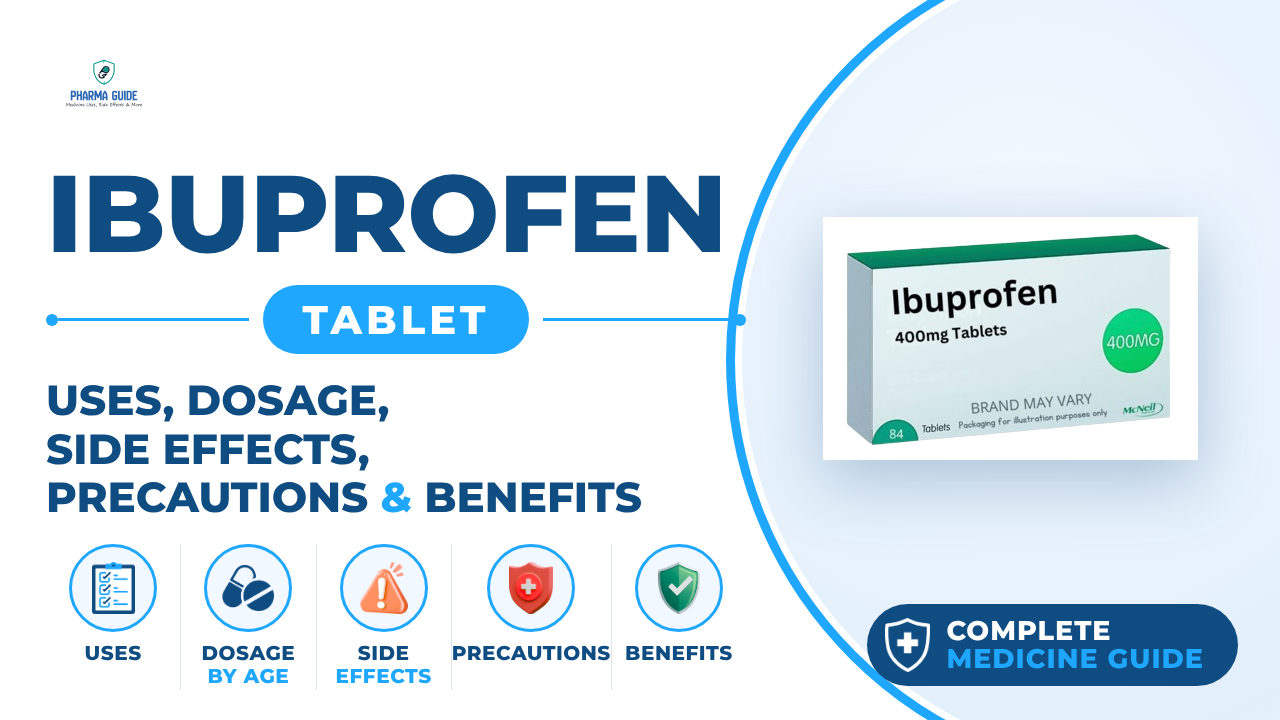
Ibuprofen Tablet: Uses, Dosage, Side Effects, Precautions and Alternates
| Generic name | Ibuprofen |
|---|---|
| Drug class | Nonsteroidal anti-inflammatory drug (NSAID); analgesic, antipyretic agent |
| Forms | Tablets, Capsules, Syrup/liquid, Granules you mix with water, Gel, Spray, Mousse, Intravenous form (given by a doctor after surgery) |
Quick overview
Ibuprofen Tablet is a nonsteroidal anti-inflammatory drug (NSAID) that relieves pain, reduces fever, and decreases swelling or inflammation. It is used for conditions such as headache, menstrual pain, toothache, arthritis, and muscle strains. Some forms are available without a prescription, while others require one. It works by blocking substances in the body called prostaglandins that cause pain, fever, and inflammation.
What is Ibuprofen Tablet
Ibuprofen is a nonsteroidal anti-inflammatory drug (NSAID). It is a painkiller that relieves pain, brings down fever, and reduces swelling (inflammation). Some types can be bought from shops and pharmacies, while others need a prescription.
Ibuprofen Tablet uses
- Headache, including mild to moderate migraine and tension headache
- Menstrual (period) pain and cramps
- Toothache (dental pain), including dental extraction
- Pain and inflammation from arthritis
- Muscle strain and sprains
- Minor aches and pains in muscles, bones and joints, including backache
- Aches and pain due to the common cold and flu
- Reducing a high temperature (fever)
Benefits of Ibuprofen Tablet
- Provides fast and effective relief of pain
- Reduces fever
- Reduces inflammation and swelling
- Long lasting relief for up to 8 hours for fever and up to 6 hours for pain
How Ibuprofen Tablet works
Ibuprofen reduces pain, fever, swelling and inflammation by blocking the production of substances called prostaglandins, which the body releases in response to illness and injury.
Ibuprofen Tablet dosage
Swallow tablets or capsules whole with water, ideally with or after food. It is best to take it with food or a drink of milk to reduce the risk of an upset stomach. Wait at least 4 hours between each dose.
Some tablets and capsules are taken differently, such as tablets that dissolve on your tongue or long-lasting capsules taken less often, so follow the packet instructions. To reduce the risk of side effects, take the smallest dose you need for the shortest time you need it. Do not take ibuprofen tablets and capsules for more than 10 days unless advised to by a doctor.
If you miss a dose, take it as soon as you remember. If it is almost time for your next dose, skip the missed dose. Do not take two doses at the same time. Do not take ibuprofen at the same time as other NSAIDs such as naproxen or aspirin. Adults can take ibuprofen at the same time as paracetamol if needed. The effects should be noticeable about 20 to 30 minutes after taking it by mouth.
| Age group | Dose |
|---|---|
| Under 12 years | Not recommended for 200 mg tablets |
| 12–17 years | 1–2 tablets (200–400 mg) every 4–6 hours; maximum 6 tablets (1,200 mg) in 24 hours |
| 18 years and older | 1–2 tablets (200–400 mg) every 4–6 hours; maximum 6 tablets (1,200 mg) in 24 hours |
Available forms and strengths
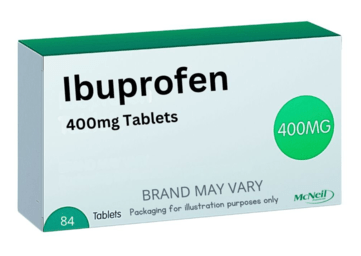
- Tablets (200 mg)
- Capsules
- Syrup/liquid
- Granules you mix with water
- Gel
- Spray
- Mousse
- Intravenous form (given by a doctor after surgery)
Side effects of Ibuprofen Tablet
Common
- Indigestion and stomach aches
- Feeling sick (nausea) and being sick (vomiting)
- Diarrhea or constipation
- Dyspepsia
- Bloating
- Headaches
- Dizziness
- Skin rash
- Nervousness
- Tinnitus (ringing in the ears)
- Edema or fluid retention
Serious
- Stomach ulcers or bleeding inside the stomach, with symptoms such as tummy pain, shortness of breath, pale skin, vomiting blood, or black, sticky, tar-like poo
- An allergic reaction (anaphylaxis), with symptoms such as a swollen throat or tongue, a raised, itchy rash, or difficulty breathing
- A problem with your kidneys, with symptoms such as shortness of breath, blood in your pee, or swelling in your ankles, feet or hands
- Heart attack or stroke
- Serious skin reactions such as Stevens-Johnson syndrome or toxic epidermal necrolysis
- Jaundice (yellowing of the eyes or skin due to liver problems)
- Changes in vision
Warnings and precautions
- NSAIDs like ibuprofen can increase the risk of serious and possibly life-threatening heart problems, such as heart attack and stroke.
- This risk may start early in treatment and increase the longer you use it, especially at higher doses or with long-term use.
- Do not use ibuprofen tablets around the time of heart bypass (CABG) surgery.
- NSAIDs can increase the risk of serious and possibly life-threatening stomach and intestinal problems, including bleeding, ulcers, and perforation.
- Older people have a higher risk, and these complications can happen without warning at any time.
- Do not take ibuprofen at the same time as other NSAIDs such as naproxen or aspirin, as this can increase the risk of serious side effects like stomach ulcers.
- Ibuprofen is not suitable for people who have had an allergic reaction to aspirin or other NSAIDs, or who have just had or are going to have heart surgery.
- If you take low-dose aspirin to protect your heart, talk to a doctor or pharmacist before using ibuprofen, as ibuprofen may interfere with the protective benefits of aspirin.
- Avoid using ibuprofen during pregnancy unless advised to by a doctor or pharmacist.
- It should not be used at 20 weeks of pregnancy or later, as it could lead to low levels of amniotic fluid, and it must not be used in the third trimester.
- Paracetamol is usually the best painkiller during pregnancy. Speak to a healthcare professional first.
- If you are breastfeeding, check with a pharmacist or doctor before using ibuprofen.
- Paracetamol is usually the best painkiller when breastfeeding, but ibuprofen can often be used if needed.
- Ibuprofen may not be suitable if you have a kidney condition, and it should not be used if you have kidney disease.
- It is contraindicated in severely impaired or deteriorating kidney function.
- People with impaired kidney function are at increased risk of kidney toxicity. Talk to your doctor before using it.
- Ibuprofen should not be used if you have significant liver problems or active liver disease.
- If it must be used with impaired liver function, this must be done under strict medical observation.
- Try to avoid drinking a lot of alcohol while taking ibuprofen because this can increase the risk of side effects.
- The chance of stomach bleeding is higher if you have three or more alcoholic drinks every day while using this product.
- Ibuprofen will not usually affect your ability to drive, ride a bike or use machinery, but if you feel dizzy or have blurred vision or hearing problems after taking it, wait until this stops before doing these activities.
Storage
- Store at 15 to 30°C (59 to 86°F)
- Keep this medication out of the reach of children
When to see a doctor
- Stop using ibuprofen and contact a doctor if you have faintness or blood in your vomit or stool, pain that gets worse or lasts longer than 10 days, a fever that worsens or lasts longer than 3 days, swelling or a change in skin color where the pain is, or any new symptoms.
- Seek immediate medical attention if you have chest pain, difficulty breathing, sudden weakness in one part or side of the body, or sudden slurred speech.
- A severe allergic reaction can cause difficulty breathing. This is life threatening and requires immediate medical attention.
- If you have symptoms such as facial swelling, wheezing, hives, shortness of breath or shock, stop using the product and get emergency medical help.
- If you take more ibuprofen than the packet says, or accidentally swallow the gel or spray and feel unwell, get medical advice, as taking too much can sometimes be dangerous.
- In case of overdose, even if there are no symptoms, call a health care practitioner, hospital emergency department, or your local poison control center at once.
Alternatives
- Brufen
- Genpril
- Ibu-Tab
- Cuprofen
- Nurofen
- Advil
- Motrin
- Calprofen
- Fenbid
- Ibugel
- Ibuleve
- Aspirin
- Naproxen
FAQs
How often can I take Ibuprofen Tablet?
Wait at least 4 hours between each dose. Adults and those 12-17 years can take 1-2 tablets (200-400 mg) every 4-6 hours, with a maximum of 6 tablets (1,200 mg) in 24 hours.
How long can I take Ibuprofen Tablet for?
Do not take ibuprofen tablets and capsules for more than 10 days unless advised to by a doctor. To reduce the risk of side effects, take the smallest dose you need for the shortest time you need it.
Can I take Ibuprofen Tablet with paracetamol?
Yes, adults can take ibuprofen at the same time as paracetamol if needed. However, you should not take ibuprofen at the same time as other NSAIDs such as naproxen or aspirin.
Can I take Ibuprofen Tablet during pregnancy?
Avoid using ibuprofen during pregnancy unless advised to by a doctor or pharmacist. It should not be used at 20 weeks of pregnancy or later and must not be used in the third trimester. Paracetamol is usually the best painkiller during pregnancy.
How quickly does Ibuprofen Tablet work?
The effects should be noticeable about 20 to 30 minutes after taking it by mouth, with relief lasting up to 8 hours for fever and up to 6 hours for pain.
Sources
Video