Klacid Tablet: Uses, Dosage, Side Effects, Precautions and Alternates
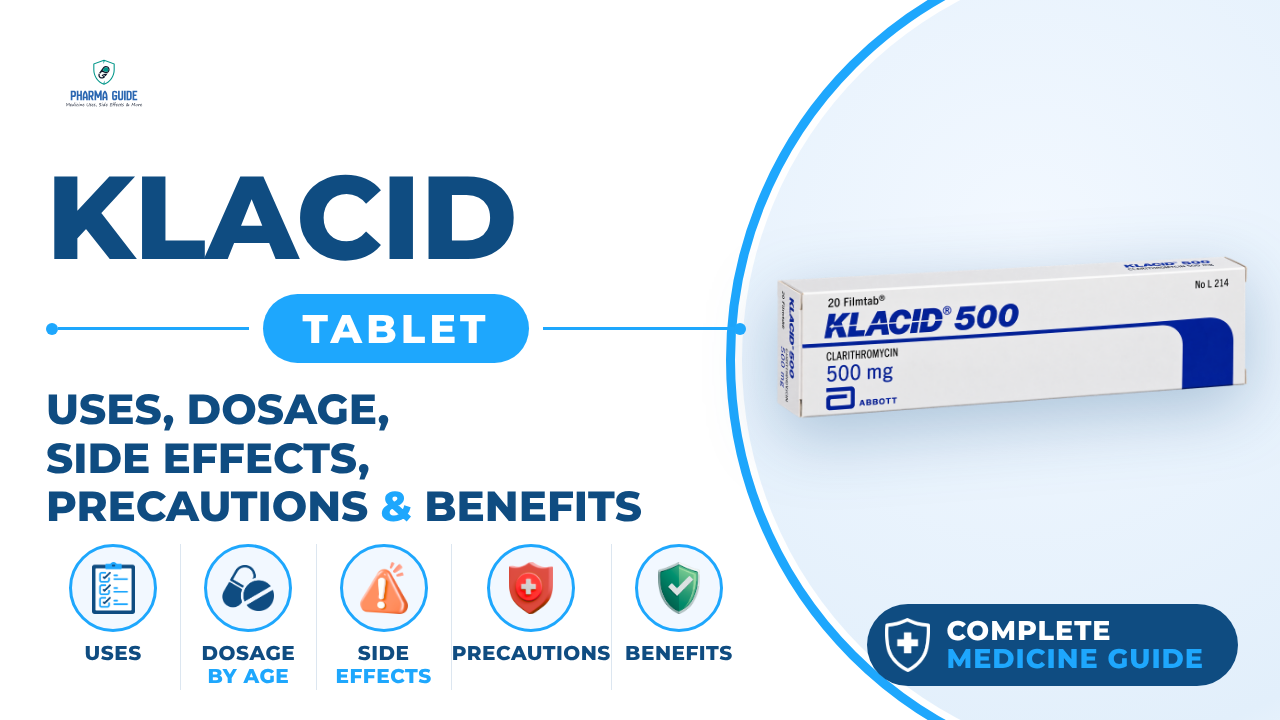
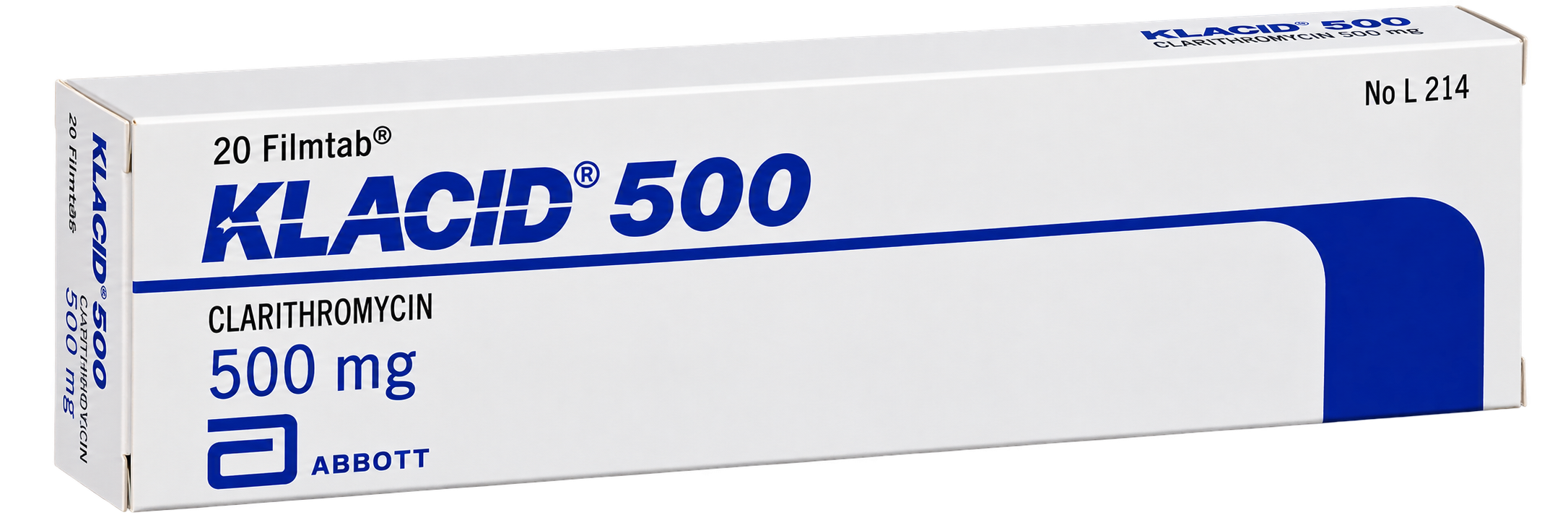
| Generic name | Clarithromycin |
|---|---|
| Drug class | Antibiotic (Macrolide) |
| Forms | Tablet, Modified-release tablet, Powder/granules for oral liquid (suspension) |
Quick overview
Klacid Tablet contains clarithromycin, an antibiotic belonging to the macrolide group. It is used to treat a range of bacterial infections affecting the respiratory tract, throat, sinuses, ears, skin and tissue, as well as peptic ulcers linked to Helicobacter pylori. It works by stopping the growth of bacteria and does not treat viral infections such as colds or flu. Klacid is available as a standard tablet, a modified-release tablet, and as granules or powder for an oral liquid.
What is Klacid Tablet
Klacid is an antibiotic that contains clarithromycin and belongs to a group of medicines called macrolides. It works by stopping the growth of bacteria that cause infections. It does not work against infections caused by viruses, such as colds or flu.
Klacid Tablet uses
- Respiratory tract infections such as bronchitis and pneumonia
- Throat infections such as tonsillitis and pharyngitis
- Sinus infections
- Ear infections
- Skin and tissue infections
- Peptic ulcer linked to Helicobacter pylori infection
- Preventing a specific bacterial infection linked to HIV infection
Benefits of Klacid Tablet
- Treats a range of bacterial infections
- Modified-release form need only be taken once per day
How Klacid Tablet works
Klacid contains clarithromycin, a macrolide antibiotic. It works by killing or stopping the growth of the bacteria that cause infections.
Klacid Tablet dosage
Swallow the tablet whole with a glass of water. Take it at about the same time each day so the medicine works best and to help you remember it. Klacid tablets can be taken with or without food. The modified-release form must be taken with food and swallowed whole without chewing. Complete the full course even if you feel better, unless your doctor tells you otherwise. Do not crush or chew the tablet.
If you forget a dose, take it as soon as you remember, but skip it if it is almost time for your next dose. Do not take a double dose. The modified-release form is not suitable for children under 12 years of age; a granules or powder for oral liquid form should be used instead.
| Age group | Dose |
|---|---|
| Under 12 years | Tablet generally not preferred; pediatric dose is weight-based |
| 12–17 years | 500 mg every 12 hours for severe infections |
| 18 years and older | 500 mg every 12 hours for severe infections |
Available forms and strengths
- Tablet
- Modified-release tablet
- Powder/granules for oral liquid (suspension)
Side effects of Klacid Tablet
Common
- Difficulty falling asleep (insomnia)
- Change in taste sensation
- Headache
- Diarrhoea
- Vomiting
- Nausea
- Indigestion
- Abdominal pain / stomach cramps
- Abnormal liver function tests
- Excessive sweating
- Skin rash
- Oral or vaginal thrush
- Belching, bloating and flatulence
- Fatigue
Serious
- Severe allergic reactions with swelling of the face, lips, mouth, throat or neck, difficulty breathing, or sudden collapse
- Severe skin reactions with redness, blistering, peeling or ulcers
- Skin rash with fever and effects on blood, lung, heart or liver
- Signs of liver failure such as jaundice, dark urine, pale stools, itching or abdominal pain
- Severe or persistent diarrhoea, possibly bloody, even weeks after the last dose
- Irregular heartbeat or heart rhythm disorders
- Hearing loss or hearing disturbances
- Confusion, hallucinations, convulsions or fainting
- Inflammation of the pancreas
Warnings and precautions
- Tell your doctor if you are pregnant, may be pregnant or plan to become pregnant.
- The safety of Klacid during pregnancy is not known, so it should only be used when needed and prescribed by a doctor.
- Tell your doctor if you are breastfeeding or plan to breastfeed.
- Your doctor will discuss the risks and benefits, as the safety of Klacid during breastfeeding is not known.
- Tell your doctor if you have kidney problems.
- Klacid should not be used if you have severe kidney problems, and other smaller doses may be available for these patients.
- Tell your doctor if you have liver problems.
- Klacid should not be used if you have severe liver problems together with kidney problems.
- Avoid alcohol while taking this medicine.
- Klacid may cause dizziness, vertigo, confusion and disorientation. Be careful driving or using machines until you know how it affects you.
- Do not take Klacid if you are allergic to clarithromycin or to other macrolide antibiotics such as erythromycin or azithromycin.
- Do not take Klacid if you have or have had a prolonged QT interval, heart rhythm disorder, or low blood potassium or magnesium levels.
- Do not take Klacid with certain medicines such as ergotamine, dihydroergotamine, astemizole, terfenadine, cisapride, domperidone, pimozide, ticagrelor, ranolazine, midazolam, colchicine, lovastatin or simvastatin, as this could cause serious side effects.
- Do not stop taking Klacid just because you feel better, as your infection may not clear completely or symptoms may return or worsen.
- Do not give this medicine to anyone else, even if their symptoms seem similar to yours.
Storage
- Keep tablets in a cool dry place below 25°C and protected from light.
- Keep the tablets in the pack until it is time to take them.
- Store away from moisture, heat and sunlight; do not store in the bathroom, near a sink, in the car or on window sills.
- Keep out of the sight and reach of children.
- Do not use after the expiry date.
- Take any unwanted or out-of-date medicine to a pharmacy for safe disposal. Do not throw away medicines via wastewater or household waste.
When to see a doctor
- Stop taking Klacid and get emergency help if you have a severe allergic reaction such as swelling of the face, eyes, lips, tongue or throat, difficulty breathing, or a sudden drop in blood pressure.
- Stop taking Klacid and see your doctor if you get severe skin rashes with redness, blistering, peeling or ulcers of the mouth, lips and skin.
- See your doctor if you notice signs of liver problems such as weight loss, yellowing of the eyes or skin, dark urine, pale stools, itching or abdominal pain.
- Call your doctor straight away if you get severe or persistent diarrhoea, or blood in the stool, even up to two months after your last dose. Do not take any medicine to stop the diarrhoea without checking with your doctor first.
- If you take too much Klacid, get urgent medical help by contacting your local poison control center, your doctor, or the nearest hospital emergency department, even if you feel well.
- Call your doctor straight away if you experience heart palpitations, changes in heartbeat, dizziness or fainting while taking Klacid.
Alternatives
- Azithromycin
- Erythromycin
- Roxithromycin
- Spiramycin
FAQs
What is Klacid Tablet used for?
Klacid is used to treat bacterial infections such as bronchitis, pneumonia, tonsillitis, pharyngitis, sinus infections, ear infections, skin and tissue infections, and peptic ulcers linked to Helicobacter pylori. It can also help prevent a specific bacterial infection linked to HIV.
How should I take Klacid Tablet?
Swallow the tablet whole with a glass of water at about the same time each day. It can be taken with or without food, though the modified-release form must be taken with food and swallowed whole without chewing. Complete the full course even if you feel better, unless your doctor advises otherwise.
What should I do if I miss a dose of Klacid?
If you forget a dose, take it as soon as you remember, but skip it if it is almost time for your next dose. Do not take a double dose to make up for the missed one.
What are the common side effects of Klacid Tablet?
Common side effects include insomnia, change in taste, headache, diarrhoea, vomiting, nausea, indigestion, abdominal pain, abnormal liver function tests, excessive sweating, skin rash, oral or vaginal thrush, bloating and fatigue.
Who should avoid taking Klacid Tablet?
Klacid should not be taken by those allergic to clarithromycin or other macrolide antibiotics, those with a prolonged QT interval or heart rhythm disorders, low blood potassium or magnesium levels, or severe kidney or liver problems. It also interacts seriously with certain medicines like ergotamine, cisapride, and simvastatin.
Sources
- https://www.marham.pk/medicines/klaricid-tablet
- Klacid XL Modified-Release Tablets 500mg Package Leaflet (revised May 2024)
- KLACID Consumer Medicine Information (CMI), prepared May 2026
Video