
Safety
General information, not medical advice
Your prescriber and the leaflet in your pack know your situation. This page does not.
- Follow your prescriber and the leaflet
- Don't start, stop, or change a dose on your own
- Doses and warnings differ by country and product
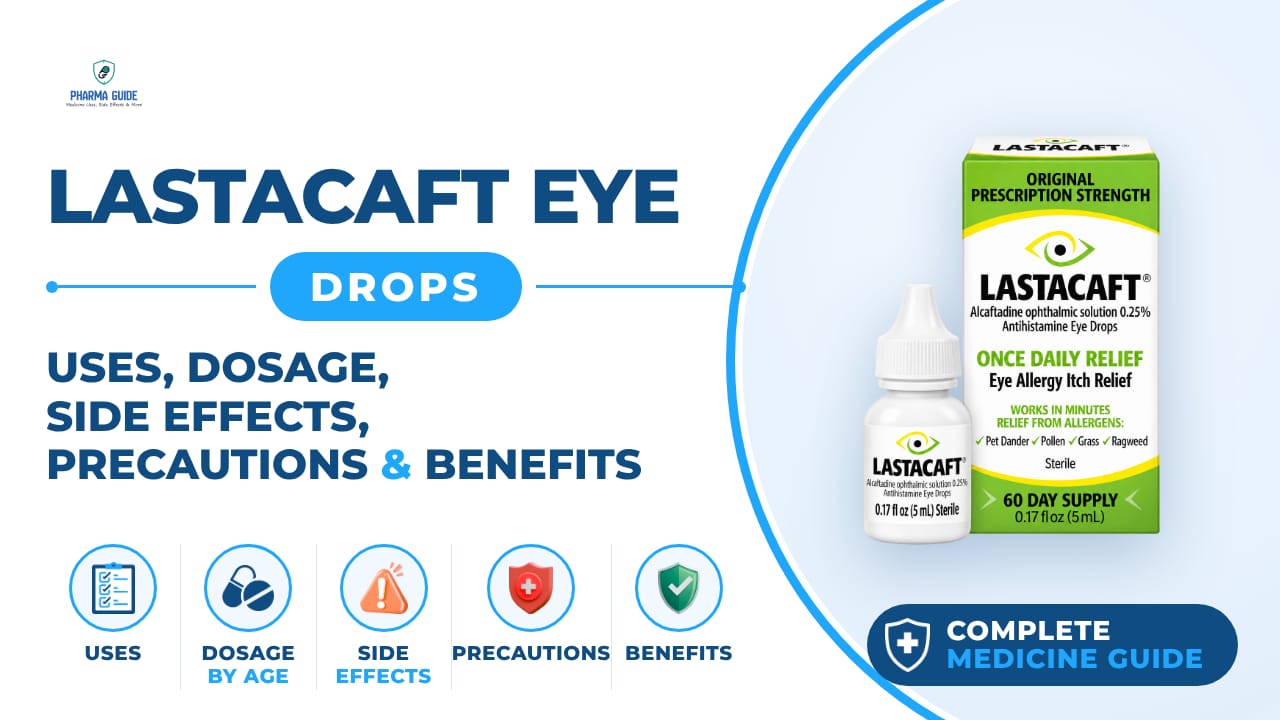
Lastacaft Eye Drops: Uses, Dosage, Side Effects, Precautions and Alternates
| Generic name | alcaftadine |
|---|---|
| Drug class | Ophthalmic antihistamines and decongestants |
| Forms | Ophthalmic solution (eye drops) |
Quick overview
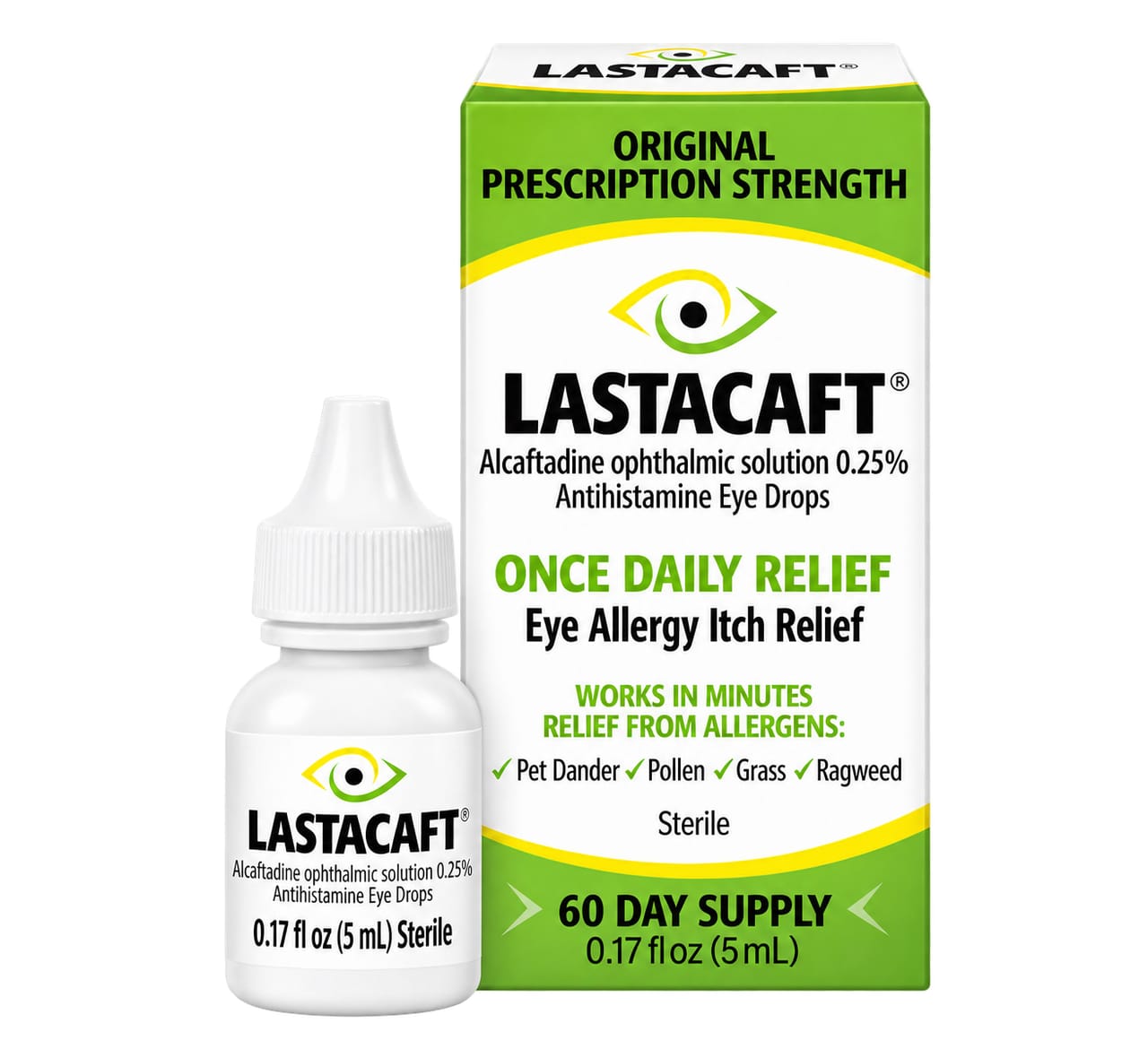
Lastacaft Eye Drops (alcaftadine) is an ophthalmic antihistamine used for temporary relief of itchy eyes caused by allergies to pollen, ragweed, grass, animal hair, and dander. It works by blocking histamine, a natural substance in the body that causes allergic symptoms. It is typically used once daily and is available as an ophthalmic solution.
What is Lastacaft Eye Drops
Lastacaft is an antihistamine eye drop that reduces the effects of a natural chemical called histamine in the body. Histamine can cause itchy or watery eyes.
Lastacaft Eye Drops uses
- Temporary relief of itchy eyes caused by allergies to pollen, ragweed, grass, animal hair and dander
- Prevents itching of the eyes due to allergies
Benefits of Lastacaft Eye Drops
- Helps relieve itchy eyes caused by allergies
- Reduces redness and irritation associated with allergic conjunctivitis
- Helps control watery eyes triggered by allergens such as pollen, dust, or pet dander
- Provides long-lasting allergy relief, typically with once-daily use
How Lastacaft Eye Drops works
Alcaftadine is an antihistamine that works by blocking histamine, a natural substance in the body that causes allergic symptoms like itchy eyes.
Lastacaft Eye Drops dosage
Follow the directions on the product package if you are using the over-the-counter product, or follow your doctor's prescription if this was prescribed. Wash your hands before each use. Do not let the dropper tip touch your eye, hands, or any other surface, to avoid contamination.
Tilt your head back, look upward, and pull down the lower eyelid to make a pouch, then place one drop into the pouch. Look down, gently close your eyes, and press one finger at the corner of your eye near the nose for one to two minutes to keep the medicine from draining out. Try not to blink or rub your eye after applying the drop.
Replace the dropper cap after each use and do not rinse the dropper. If you wear contact lenses, remove them before using this medicine and wait at least 10 minutes after each dose before putting them back in. Do not wear contact lenses if your eyes are red.
If you use other eye medicines, wait at least 5 minutes before applying them, and use eye drops before eye ointments. Wait several minutes for your vision to clear before driving or operating machinery.
Use the medicine regularly and at the same time each day to get the most benefit. Do not use the drops if they change color or become cloudy, or if you see particles in the liquid. This product is not meant for children younger than 2 years old; consult a doctor for children under 2.
| Age group | Dose |
|---|---|
| Under 2 years | Safety and effectiveness not established |
| 2–11 years | 1 drop in each affected eye once daily |
| 12–17 years | 1 drop in each affected eye once daily |
| 18–64 years | 1 drop in each affected eye once daily |
| 65+ years | 1 drop in each affected eye once daily |
Available forms and strengths
- Ophthalmic solution (eye drops)
Side effects of Lastacaft Eye Drops
Common
- Mild burning, stinging, or irritation of the eyes
- Eye redness or itching
- Runny or stuffy nose, sore throat, flu symptoms
- Headache
- Blurred vision
- Drowsiness
- Eye tearing
- Eyelid swelling or redness
- Facial swelling
- Eye discharge
- Swelling around the eyes
- Dry eye sensation
- Unusual taste in the mouth if drops drain into the throat
Serious
- Hives, difficulty breathing, or swelling of the face, lips, tongue, or throat (signs of a severe allergic reaction)
- Severe burning, stinging, or other irritation after using the eye drops
- Sudden vision loss, blurred vision, tunnel vision, eye pain or swelling, or seeing halos around lights
- Fast, irregular, or pounding heartbeats, fluttering in the chest, shortness of breath, or sudden dizziness or fainting
- Severe headache, confusion, slurred speech, arm or leg weakness, trouble walking, loss of coordination, unsteady feeling, very stiff muscles, high fever, heavy sweating, or tremors
- Increased eye redness, discharge, pain, or light sensitivity lasting more than a few days, which may suggest infection
Warnings and precautions
- Do not use this medicine to treat eye redness or irritation caused by contact lenses; contact your doctor if this happens
- Do not let the dropper tip touch your eyes, hands, or any surface, because a contaminated dropper can cause an eye infection that may lead to vision loss or serious eye damage
- This medicine should not be used in children younger than 2 years old
- Do not wear contact lenses while using this medicine; wait at least 10 minutes after each dose before putting your lenses back in, and don't wear lenses if your eyes are red
- Do not use the drops if the liquid has changed color or has particles floating in it — ask your doctor for a new supply
- This product is for use in the eye only
- Lastacaft is not expected to harm an unborn baby, but you should tell your doctor if you are pregnant or plan to become pregnant, since there isn't enough human data to be fully certain.
- It is not known whether this medicine passes into breast milk, so tell your doctor if you are breastfeeding before using it.
- Your vision may be temporarily blurred after using the drops, so wait until your vision clears before driving or operating machinery.
Storage
- Store at 15–25°C (59–77°F) at controlled room temperature
- Keep the bottle tightly closed when not in use
- Protect from excessive heat and direct sunlight
- Do not freeze, and avoid touching the dropper tip to prevent contamination
- Keep out of reach and sight of children and pets
When to see a doctor
- Stop using this medicine and call your doctor right away if you have severe burning, stinging, or other irritation after using the eye drops
- Get emergency medical help if you notice signs of an allergic reaction such as hives, difficulty breathing, or swelling of your face, lips, tongue, or throat
- Seek medical help right away if you have serious eye symptoms like sudden vision loss, blurred vision, tunnel vision, eye pain or swelling, or seeing halos around lights
- Seek medical help right away for serious heart symptoms such as fast, irregular, or pounding heartbeats, fluttering in your chest, shortness of breath, or sudden dizziness or fainting
- Seek medical help right away for severe headache, confusion, slurred speech, weakness in an arm or leg, trouble walking, loss of coordination, feeling unsteady, very stiff muscles, high fever, heavy sweating, or tremors
- Stop use and ask a doctor if you have eye pain, changes in vision, increased eye redness, or itching that gets worse or lasts more than 72 hours
- If the medicine is swallowed, get medical help or contact a poison control center right away
- Tell your doctor if your condition does not improve within a few days or if it gets worse
Alternatives
- Azelastine Eye Drops
- Bepotastine Eye Drops
- Ketotifen Eye Drops
- Patanol (Olopatadine) Eye Drops
Watch the video
FAQs
What is Lastacaft Eye Drops used for?
Lastacaft is an antihistamine eye drop used for temporary relief of itchy eyes caused by allergies to pollen, ragweed, grass, animal hair, and dander.
How often should Lastacaft Eye Drops be used?
Lastacaft is typically used once daily, with one drop placed in each affected eye at the same time each day for best results.
Can I wear contact lenses while using Lastacaft Eye Drops?
No, you should remove contact lenses before using Lastacaft and wait at least 10 minutes after each dose before putting them back in. Do not wear lenses if your eyes are red.
What are the common side effects of Lastacaft Eye Drops?
Common side effects include mild burning, stinging, or irritation of the eyes, eye redness or itching, headache, blurred vision, drowsiness, eye tearing, and eyelid swelling.
Is Lastacaft safe for children?
Lastacaft is not meant for children younger than 2 years old. For children 2 years and older, the dose is the same as for adults: one drop in each affected eye once daily.
General information, not medical advice
Your prescriber and the leaflet in your pack know your situation. This page does not.
- Follow your prescriber and the leaflet
- Don't start, stop, or change a dose on your own
- Doses and warnings differ by country and product
Sources
Video
Related medicines
Pataday Eye Drops: Uses, Dosage, Side Effects, Precautions and Alternates
Ophthalmic antihistamines and decongestants
Pataday Eye Drops relieve itchy, red allergy eyes by blocking histamine. Learn uses, dosage, side effects, warnings, and when to see a doctor.
Pazeo Eye Drops: Uses, Dosage, Side Effects, Precautions and Alternates
Ophthalmic antihistamines and decongestants
Pazeo Eye Drops relieve eye itching from allergies by lowering histamine. Learn dosage, uses, side effects, warnings, and contact lens precautions.