
Safety
General information, not medical advice
Your prescriber and the leaflet in your pack know your situation. This page does not.
- Follow your prescriber and the leaflet
- Don't start, stop, or change a dose on your own
- Doses and warnings differ by country and product
Letrozole Tablet: Uses, Dosage, Side Effects, Precautions and Alternates
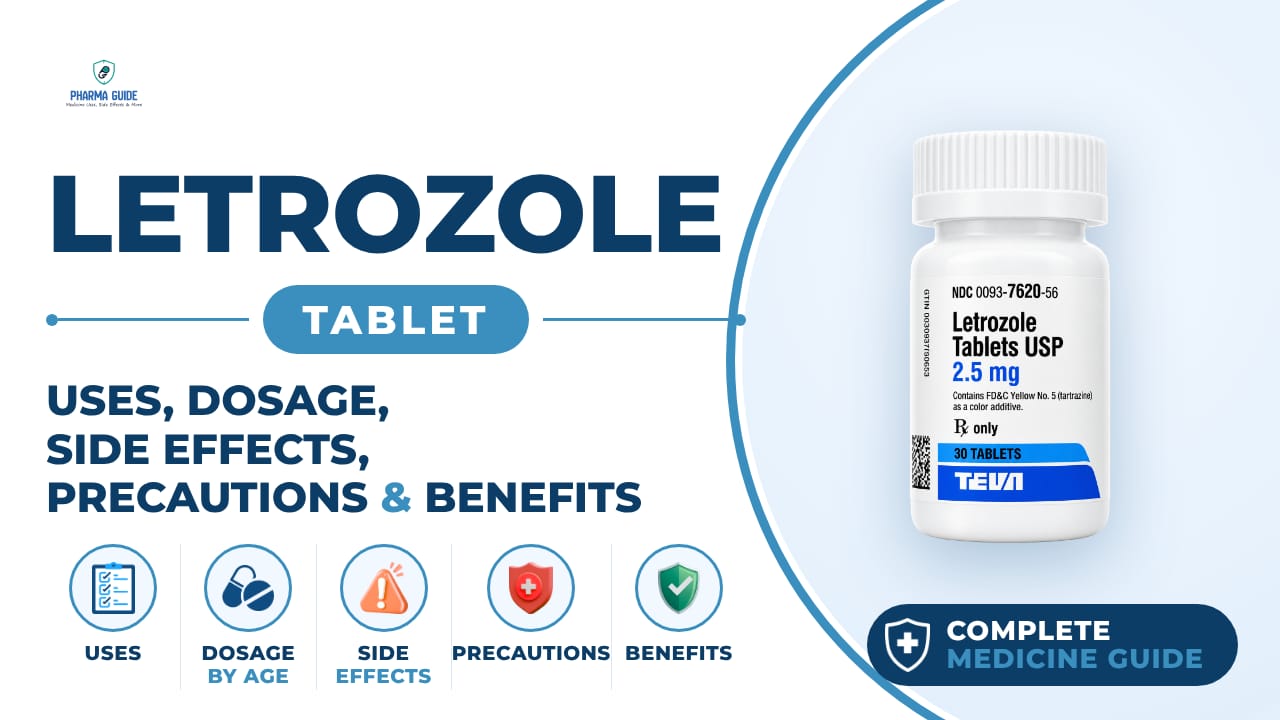
| Generic name | Letrozole |
|---|---|
| Drug class | Aromatase inhibitor |
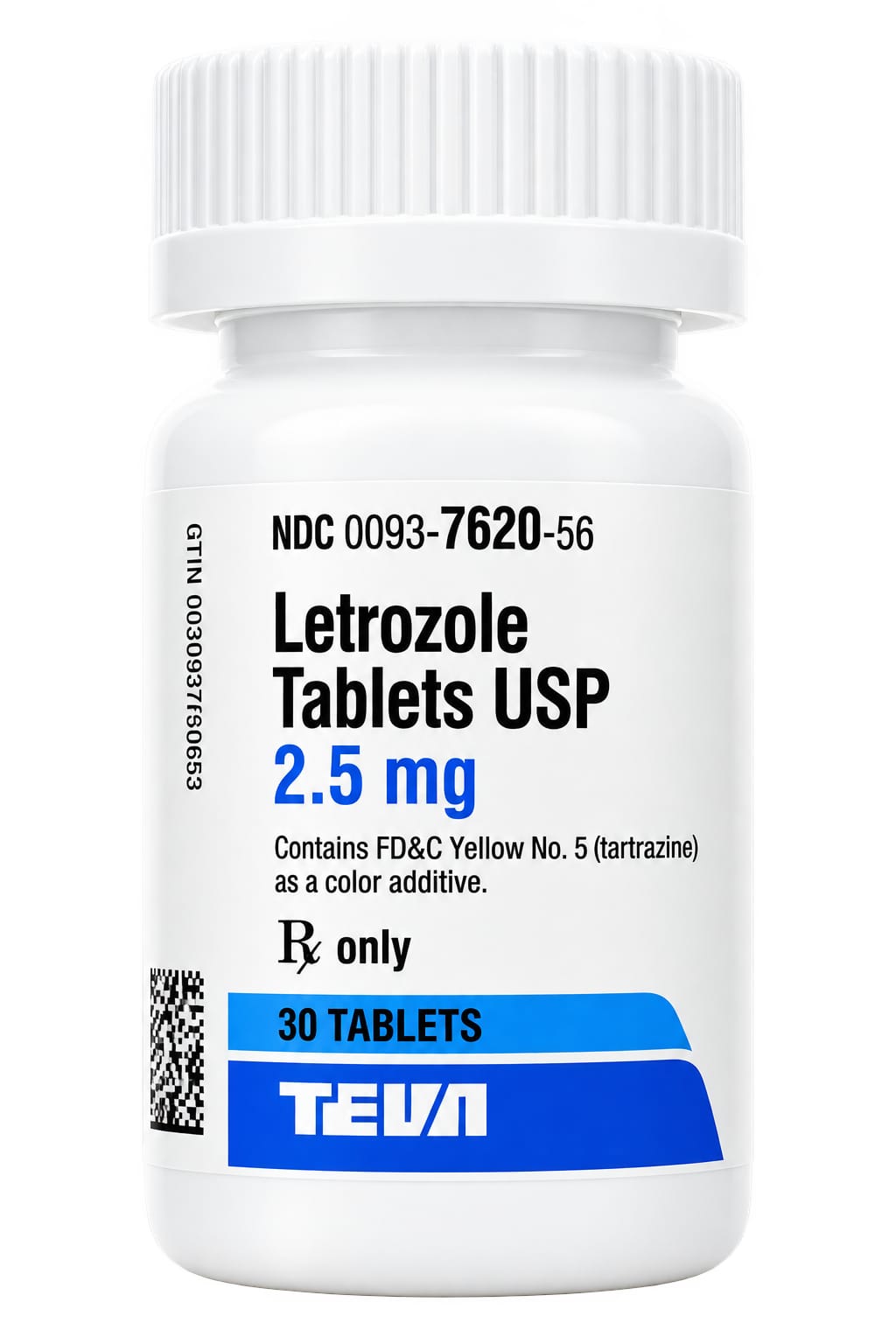
| Forms | Oral tablet (2.5 mg) |
Quick overview
Letrozole Tablet (generic name letrozole) is an aromatase inhibitor used as a hormone therapy in postmenopausal women with breast cancer that needs estrogen to grow. It works by lowering estrogen levels in the body, which can slow or stop the growth of hormone-dependent breast tumors. The usual dose is 2.5 mg once daily, and it is available as an oral tablet.
What is Letrozole Tablet
Letrozole is a hormone therapy medicine that lowers estrogen levels in women who have gone through menopause. It is used to treat breast cancer that needs estrogen to grow.
Letrozole Tablet uses
- Adjuvant treatment of hormone receptor-positive early breast cancer in postmenopausal women after surgery
- Extended adjuvant treatment of early breast cancer in postmenopausal women who have completed about 5 years of tamoxifen therapy
- First-line treatment of advanced or metastatic breast cancer in postmenopausal women
- Second-line treatment of advanced breast cancer in postmenopausal women whose disease has progressed after anti-estrogen therapy
Benefits of Letrozole Tablet
- May slow or stop the growth of certain breast tumors that need estrogen to grow
- Reduces the risk of breast cancer coming back in postmenopausal women with hormone receptor-positive early breast cancer
- Can delay the time until the cancer gets worse in advanced breast cancer
How Letrozole Tablet works
Letrozole blocks an enzyme called aromatase, which the body uses to make estrogen. By lowering estrogen levels, it slows the growth of breast cancers that depend on estrogen to grow.
Letrozole Tablet dosage
Take one tablet once a day, with or without food, at about the same time each day. Swallow the tablet whole with a small glass of water. Follow all directions on your prescription label and read all medication guides or instruction sheets. You will need regular blood tests and bone density checks while taking this medicine.
| Age group | Dose |
|---|---|
| Under 18 years | Not established; doctor-directed |
| 18–64 years | 2.5 mg once daily |
| 65+ years | 2.5 mg once daily |
Available forms and strengths
- Oral tablet (2.5 mg)
Side effects of Letrozole Tablet
Common
- Hot flashes, warmth or redness in the face or chest
- Headache, dizziness, weakness
- Bone pain, muscle or joint pain
- Swelling, weight gain
- Increased sweating
- Increased cholesterol in the blood
- Nausea, constipation
- Fatigue
- Hair thinning
Serious
- Signs of an allergic reaction such as hives, difficulty breathing, or swelling of the face, lips, tongue, or throat
- Bone fractures and osteoporosis
- Heart attack or chest pain (angina)
- Stroke or mini-stroke (transient ischemic attack)
- Blood clots in the legs or lungs (thromboembolic events)
- Liver problems including hepatitis, yellowing of skin or eyes
- Severe skin reactions such as blistering or peeling skin
- Tendon problems including tendon rupture
Warnings and precautions
- Letrozole may cause a decrease in bone mineral density, which can increase the risk of osteoporosis and bone fractures. Your doctor may want to monitor your bone health.
- Letrozole can increase cholesterol levels, so your doctor may want to check your cholesterol during treatment.
- This medicine should only be prescribed and managed by a doctor experienced in treating cancer.
- Letrozole can cause fetal harm and must not be used by pregnant women or women who could become pregnant without using contraception.
- Letrozole may increase the risk of heart and blood vessel problems, including heart attack and stroke.
- Letrozole should not be used during pregnancy because it can harm an unborn baby. Women who could become pregnant should use effective birth control during treatment and for a period after stopping.
- Women should not breastfeed while taking letrozole and for at least 3 weeks after the last dose.
- No dose adjustment is needed for most people with kidney problems, but there is not enough information for those with very severe kidney impairment.
- People with severe liver problems, especially cirrhosis, may need a lower dose because their body processes letrozole more slowly, leading to higher levels in the blood.
- Letrozole can cause tiredness, dizziness, or drowsiness. Do not drive or use machinery until you know how this medicine affects you.
Storage
- Store at room temperature away from moisture and heat
- Store at 15 to 30°C and protect from light and moisture
- Keep out of reach and sight of children and pets
- Take any unused medication back to your pharmacist after the expiry date
When to see a doctor
- Get emergency medical help right away if you have signs of a serious allergic reaction, such as hives, difficulty breathing, or swelling of your face, lips, tongue, or throat.
- Seek medical help if you think you have taken too much letrozole, even if you do not have symptoms.
- Contact your doctor right away if you become pregnant or think you might be pregnant while taking this medicine.
- Seek help if you have chest pain, tightness, or heaviness, pain spreading to your arms, shoulders, neck, teeth, jaw, abdomen or back, as this could be a sign of a heart attack or angina.
- Seek help if you notice signs of stroke, such as numbness or weakness in an arm or leg, vision changes, sudden headache, loss of coordination, or trouble speaking or breathing.
Alternatives
- Anastrozole
- Exemestane
- Megestrol acetate
Watch the video
FAQs
What is Letrozole Tablet used for?
It is used as adjuvant and extended adjuvant treatment of hormone receptor-positive early breast cancer in postmenopausal women, as well as first-line and second-line treatment of advanced or metastatic breast cancer in postmenopausal women.
How does Letrozole Tablet work?
Letrozole blocks an enzyme called aromatase, which the body uses to make estrogen. By lowering estrogen levels, it slows the growth of breast cancers that depend on estrogen to grow.
What is the usual dose of Letrozole Tablet?
The usual dose is 2.5 mg once daily, taken with or without food at about the same time each day.
What are the common side effects of Letrozole Tablet?
Common side effects include hot flashes, headache, dizziness, weakness, bone pain, muscle or joint pain, swelling, weight gain, increased sweating, increased cholesterol, nausea, constipation, fatigue, and hair thinning.
Can Letrozole Tablet be used during pregnancy?
No, letrozole can cause fetal harm and must not be used by pregnant women or women who could become pregnant without using effective contraception.
General information, not medical advice
Your prescriber and the leaflet in your pack know your situation. This page does not.
- Follow your prescriber and the leaflet
- Don't start, stop, or change a dose on your own
- Doses and warnings differ by country and product
Sources
Video
Related medicines

Aromasin Tablet: Uses, Dosage, Side Effects, Precautions and Alternates
Aromatase inhibitor
Aromasin Tablet (exemestane) treats estrogen-receptor positive breast cancer in postmenopausal women by lowering estrogen levels. Learn uses, dosage, and side
Anastrozole Fertility Tablet: Uses, Dosage, Side Effects, Precautions and Alternates
aromatase inhibitor
Anastrozole Fertility Tablet lowers oestrogen to treat hormone-dependent breast cancer and may support fertility treatment under specialist care. See dosage,