
Safety
General information, not medical advice
Your prescriber and the leaflet in your pack know your situation. This page does not.
- Follow your prescriber and the leaflet
- Don't start, stop, or change a dose on your own
- Doses and warnings differ by country and product
Librium Capsule: Uses, Dosage, Side Effects, Precautions and Alternates
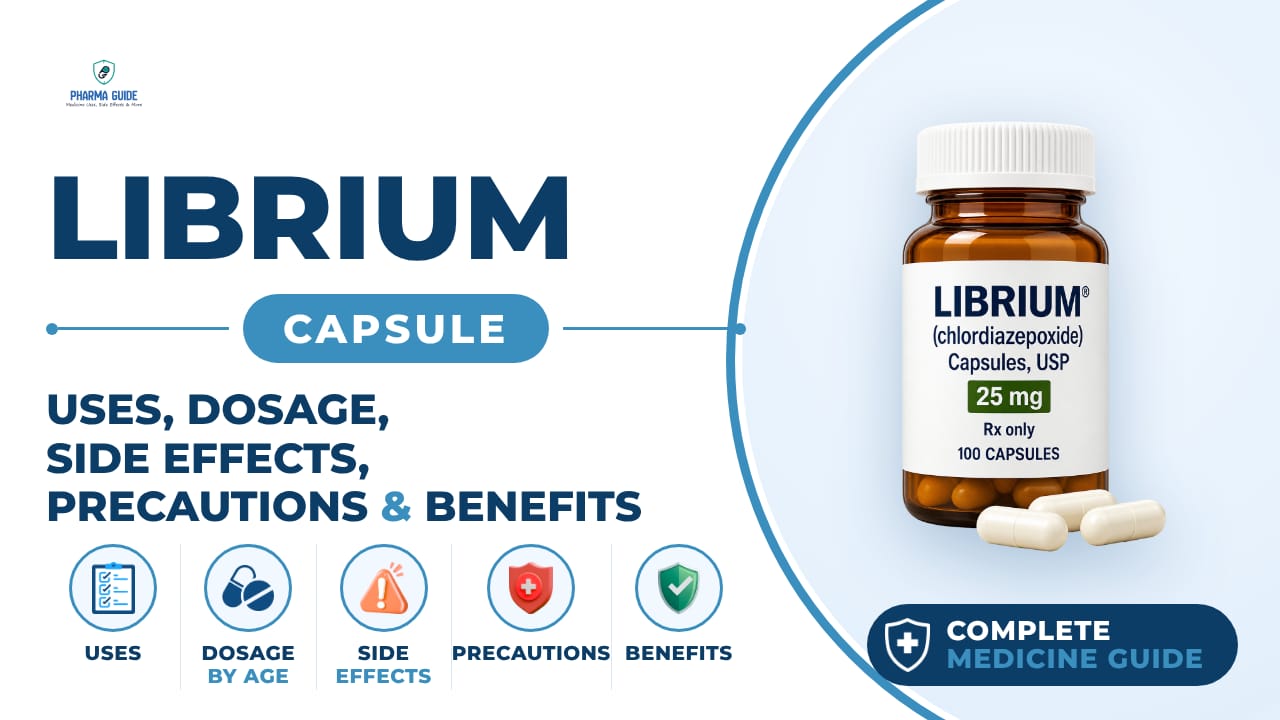
| Generic name | chlordiazepoxide |
|---|---|
| Drug class | Benzodiazepine |
| Forms | Capsule, Tablet |
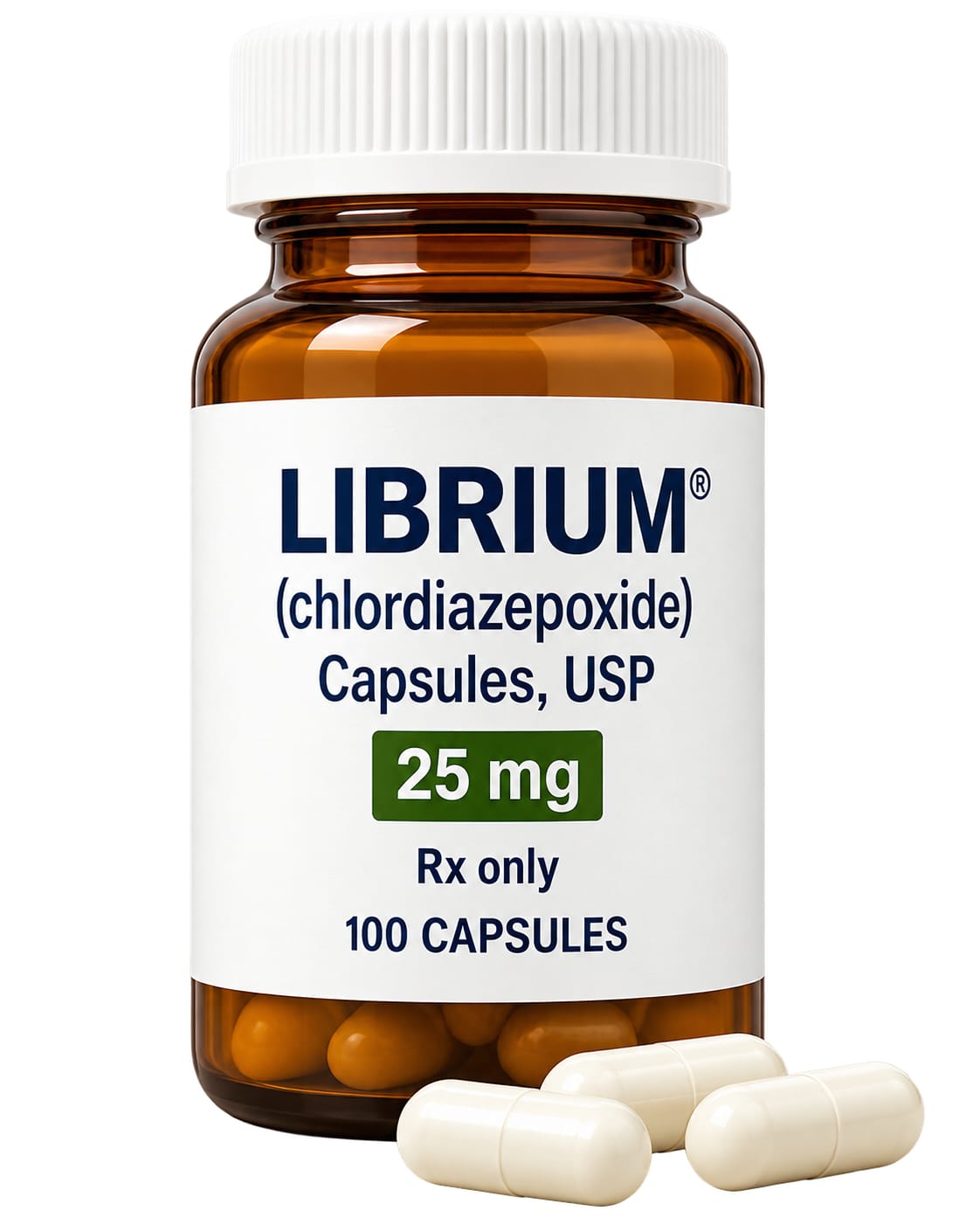
Quick overview
Librium Capsule (chlordiazepoxide) is a prescription benzodiazepine that slows down the central nervous system to produce a calming effect on the brain and nerves. It is used for short-term relief of anxiety, managing alcohol withdrawal symptoms, and reducing tension before surgery. It works by boosting the calming effect of a natural brain chemical called GABA.
What is Librium Capsule
Librium is a prescription benzodiazepine medicine that slows down the central nervous system to produce a calming effect on the brain and nerves. It is also called chlordiazepoxide.
Librium Capsule uses
- Short-term relief of severe or moderate anxiety, nervousness, and tension
- Managing and preventing alcohol withdrawal symptoms such as agitation, tremors, and risk of seizures
- Reducing fear and tension before surgery or medical procedures
Benefits of Librium Capsule
- Helps calm severe or moderate anxiety and tension in the short term
- Helps manage uncomfortable and sometimes dangerous alcohol withdrawal symptoms
- Helps reduce apprehension before surgery
- Reduces anxiety and tension
- Provides calming and sedative effects
How Librium Capsule works
Librium attaches to GABA receptors in the brain, boosting the calming effect of a natural brain chemical called GABA. This slows down overactive nerve signals, which calms anxiety, prevents seizures, and reduces alcohol withdrawal symptoms.
Librium Capsule dosage
Follow the directions on your prescription label and read all medication guides or instruction sheets. Never take more than prescribed or use it for longer than prescribed. Do not stop taking this medicine suddenly without asking your doctor first. It can be taken with or without food, as advised by your doctor. If you miss a dose, take it as soon as you remember, but skip it if it's almost time for your next dose - do not take two doses at once. Older adults may feel drowsiness or dizziness for longer, so use caution to avoid falls or injury. This medicine is not approved for use in children younger than 6 years old.
Use exactly as prescribed by your doctor or pharmacist.
Available forms and strengths
- Capsule
- Tablet
Side effects of Librium Capsule
Common
- Drowsiness or sedation
- Dizziness or lightheadedness
- Trouble with balance or coordination (clumsiness, stumbling)
- Confusion or memory problems
- Nausea or loss of appetite
- Changes in mood
- Shakiness in the legs, arms, hands, or feet
- Restlessness
- Decreased interest in sex
- Menstrual changes
- Skin rash
Serious
- Severe drowsiness or slurred speech
- Slow heart rate or slow/stopped breathing
- Problems with memory or concentration
- Unusual changes in mood or behavior, thoughts of suicide or self-harm
- Problems with balance or muscle movement
- Confusion, excitement, paranoia, anger, or aggression
- Stomach pain or loss of appetite
- Signs of a serious allergic reaction such as hives, difficulty breathing, or swelling of the face, lips, tongue, or throat
- Withdrawal symptoms after stopping, such as unusual muscle movements, hallucinations, seizures, or suicidal thoughts
Warnings and precautions
- Tell your doctor if you are pregnant or planning to become pregnant. Librium may harm an unborn baby, and it's best to avoid it during the first trimester. It is not recommended for pregnant women.
- Ask your doctor if it's safe to breastfeed while using this medicine. It is generally not recommended for breastfeeding women.
- Use with caution if you have kidney problems. Your doctor may need to start you on a lower dose and adjust it based on how you respond; the dose may need to be cut in half if kidney function is very reduced.
- Tell your doctor if you have liver disease before taking this medicine.
- Avoid drinking alcohol while taking this medicine. Combining them can cause extreme sedation, dangerously slowed breathing, coma, or death.
- Avoid driving or operating machinery until you know how this medicine affects you, since it can heavily slow down thinking and coordination.
- Misusing this medicine can lead to addiction, overdose, or death. Keep it somewhere others cannot get to it.
- Do not stop taking this medicine suddenly without talking to your doctor. Stopping abruptly after long-term use can cause life-threatening withdrawal symptoms like severe tremors, muscle cramps, and convulsions, and it must be tapered off slowly.
- This medicine can slow or stop your breathing, especially if combined with opioids or alcohol.
- Taking this medicine with opioids, alcohol, or other drugs that depress the central nervous system can cause extreme sedation, dangerously slow or stopped breathing, coma, or death.
- This medicine can cause dependence and addiction, especially with long-term or unprescribed use, as it is a controlled substance with potential for abuse.
- Using benzodiazepines like this one may increase the risk of suicide in people with depression, so it should be used carefully and in limited amounts for those at risk.
Storage
- Store at room temperature away from moisture and heat
- Keep your medicine in a place where no one can use it improperly
- Chlordiazepoxide should be stored at room temperature, between 68 F to 77 F (20 C to 25 C)
- It can be exposed to temperatures between 59 F to 86 F (15 C to 30 C) for shorter periods of time, such as when transporting it
- Store in a cool, dry place
When to see a doctor
- Get emergency help right away if you have signs of an allergic reaction, such as hives, difficulty breathing, or swelling of the face, lips, tongue, or throat.
- Seek emergency help if you have slow breathing with long pauses, blue-colored lips, or are hard to wake up.
- Call your doctor right away if you have severe drowsiness, slurred speech, slow heart rate or breathing, memory or concentration problems, unusual mood or behavior changes, thoughts of suicide, balance or muscle problems, confusion, paranoia, anger, aggression, stomach pain, or loss of appetite.
- Get medical help right away if, after stopping this medicine, you have unusual muscle movements, being unusually active or talkative, severe mood or behavior changes, confusion, hallucinations, seizures, or suicidal thoughts or actions.
- Seek emergency medical attention if you or someone else has taken too much of this medicine. An overdose can be fatal, especially when combined with alcohol, opioids, or other drugs that cause drowsiness or slow breathing.
Alternatives
- Escitalopram
- Sertraline
- Hydroxyzine
- Buspirone
Watch the video
FAQs
What is Librium Capsule used for?
It is used for short-term relief of severe or moderate anxiety, nervousness, and tension, for managing and preventing alcohol withdrawal symptoms like agitation, tremors, and seizure risk, and for reducing fear and tension before surgery or medical procedures.
How does Librium Capsule work?
Librium attaches to GABA receptors in the brain, boosting the calming effect of a natural brain chemical called GABA. This slows down overactive nerve signals, calming anxiety, preventing seizures, and reducing alcohol withdrawal symptoms.
Can I drink alcohol while taking Librium Capsule?
No, you should avoid drinking alcohol while taking this medicine, as combining them can cause extreme sedation, dangerously slowed breathing, coma, or death.
Is it safe to stop taking Librium Capsule suddenly?
No, you should not stop taking this medicine suddenly without talking to your doctor. Stopping abruptly after long-term use can cause life-threatening withdrawal symptoms like severe tremors, muscle cramps, and convulsions, so it must be tapered off slowly.
What are the common side effects of Librium Capsule?
Common side effects include drowsiness or sedation, dizziness or lightheadedness, trouble with balance or coordination, confusion or memory problems, nausea or loss of appetite, changes in mood, shakiness, restlessness, decreased interest in sex, menstrual changes, and skin rash.
General information, not medical advice
Your prescriber and the leaflet in your pack know your situation. This page does not.
- Follow your prescriber and the leaflet
- Don't start, stop, or change a dose on your own
- Doses and warnings differ by country and product
Sources
Video
Related medicines
Lonazep Tablet: Uses, Dosage, Side Effects, Precautions and Alternates
Benzodiazepine
Lonazep Tablet contains clonazepam, used for anxiety, panic attacks, insomnia, and epilepsy. Learn about dosage, benefits, side effects, and precautions.
Benzodiazepines Capsule: Uses, Dosage, Side Effects, Precautions and Alternates
Benzodiazepine
Benzodiazepines Capsule (Diazepam) treats severe anxiety, muscle spasms, seizures, and alcohol withdrawal. Learn uses, dosage, side effects, and precautions.