
Safety
General information, not medical advice
Your prescriber and the leaflet in your pack know your situation. This page does not.
- Follow your prescriber and the leaflet
- Don't start, stop, or change a dose on your own
- Doses and warnings differ by country and product
Linzess Capsule: Uses, Dosage, Side Effects, Precautions and Alternates
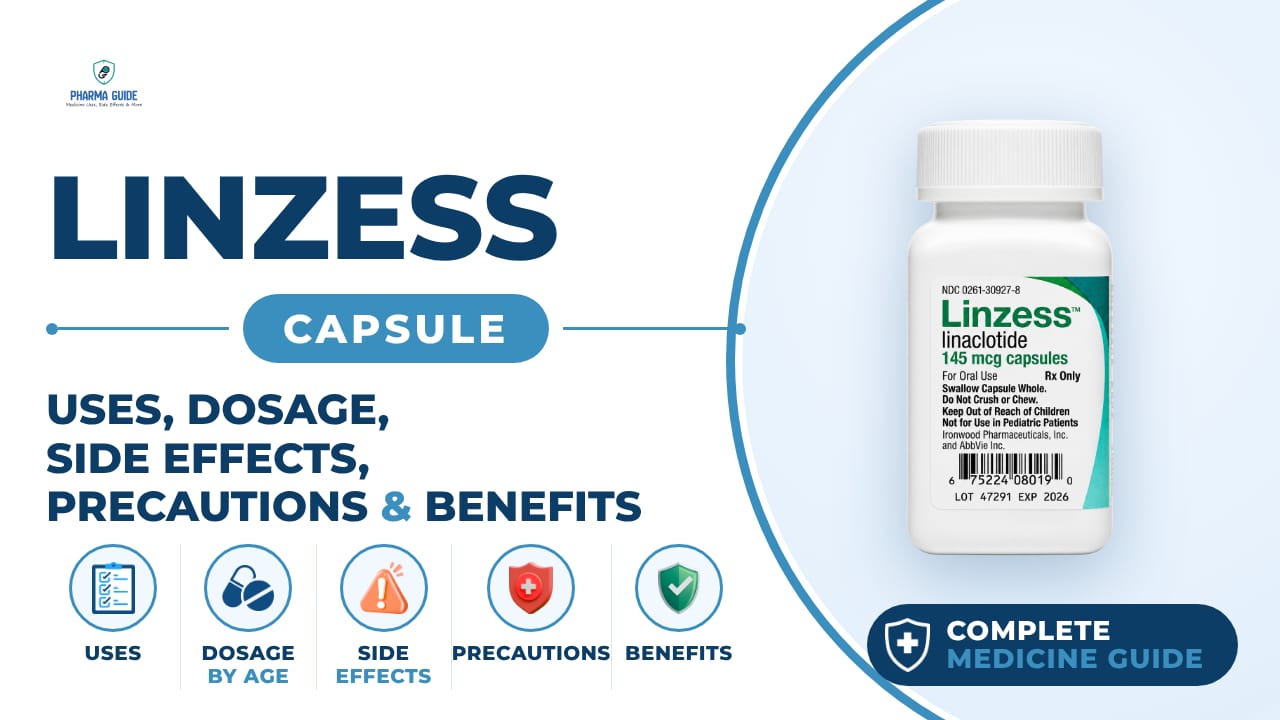
| Generic name | linaclotide |
|---|---|
| Drug class | Guanylate cyclase-C agonist |
| Forms | Capsules: 72 mcg, 145 mcg, and 290 mcg |
Quick overview
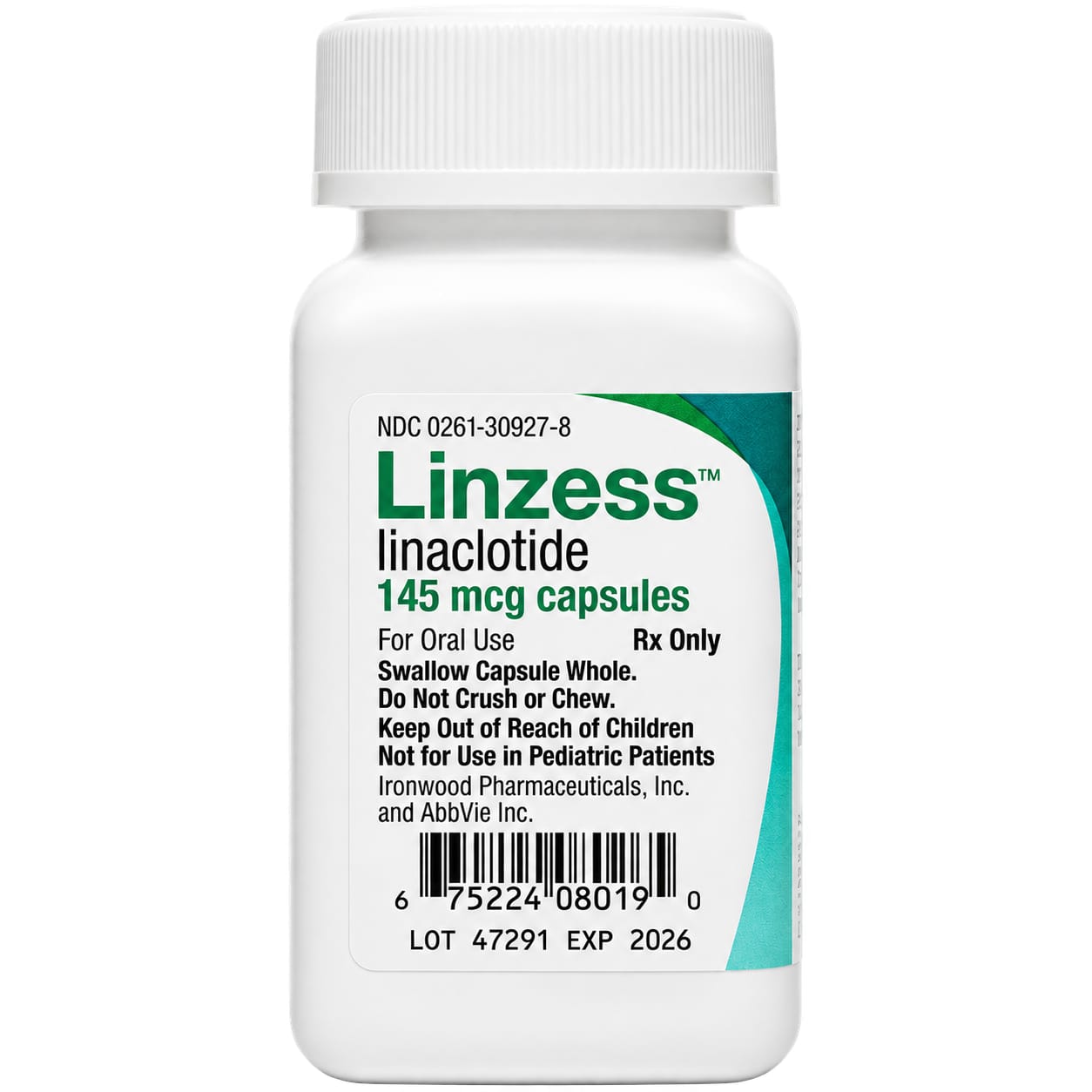
Linzess Capsule (linaclotide) is a prescription medicine from the guanylate cyclase-C agonist drug class, used to treat certain types of chronic constipation in adults and children. It works differently from regular laxatives by increasing fluid in the intestines to help soften stool and improve bowel movements. It is used for IBS-C and chronic idiopathic constipation in adults, as well as functional constipation in children aged 6 to 17.
What is Linzess Capsule
Linzess is a prescription medicine used to treat certain types of chronic constipation in adults and children. It works differently from regular laxatives by increasing fluid in the intestines.
Linzess Capsule uses
- Irritable bowel syndrome with constipation (IBS-C) in adults
- Chronic idiopathic constipation (CIC) in adults
- Functional constipation (FC) in pediatric patients 6 to 17 years of age
Benefits of Linzess Capsule
- Constipation Relief: Helps increase intestinal fluid and improve bowel movements.
- IBS-C Support: Used for irritable bowel syndrome with constipation.
- Chronic Constipation Support: Used for chronic idiopathic constipation in adults.
- Abdominal Symptom Relief: May help reduce abdominal discomfort associated with IBS-C.
- Bowel Function Support: Helps improve stool frequency and consistency.
How Linzess Capsule works
Linaclotide attaches to a receptor on the lining of the intestine called guanylate cyclase-C. This activates a chain of signals that causes the intestines to release more fluid and chloride, which softens the stool and helps it move through the gut more easily and quickly.
Linzess Capsule dosage
Take once daily on an empty stomach, at least 30 minutes before a meal, at approximately the same time each day. Swallow the capsule whole; do not crush or chew the capsule or its contents. If you cannot swallow the capsule whole, it can be opened and the contents sprinkled on applesauce or mixed with water, then swallowed right away without chewing. The capsule contents can also be given through a nasogastric or gastrostomy feeding tube if needed. If a dose is missed, skip it and take the next dose at the regular time; do not take two doses at once. It may take up to two weeks before symptoms improve.
| Age group | Dose |
|---|---|
| 7–17 Years | 72 mcg once daily |
| Adults (18–64 Years) | 72–290 mcg once daily, depending on condition |
| Older Adults (65+ Years) | 72–290 mcg once daily, according to condition and medical advice |
Available forms and strengths
Capsules: 72 mcg, 145 mcg, and 290 mcg
Side effects of Linzess Capsule
Common
- Diarrhea (often starting in the first 2 weeks of treatment)
- Stomach-area (abdominal) pain
- Gas (flatulence)
- Bloating or swelling in the abdomen
- Headache (in IBS-C patients)
Serious
- Severe diarrhea, which can lead to dangerous dehydration and electrolyte imbalances requiring hospitalization
- Allergic reactions including hives, difficulty breathing, and swelling of the face, lips, tongue, or throat
- Rectal bleeding or bloody/black tarry stools
- Dehydration, especially in young children
Warnings and precautions
- This medicine must never be given to children younger than 2 years old, because it can cause fatal dehydration in this age group.
- Do not use this medicine if you have a known or suspected blockage in your intestines.
- Severe diarrhea can occur. If it happens, stop the medicine and rehydrate.
- Accidentally swallowing this medicine, especially by a child under 2, can cause severe diarrhea and dehydration. Store it securely out of children's reach and properly dispose of unused medicine.
- It is not known if Linzess will harm an unborn baby. Studies show the drug is barely absorbed into the mother's blood, so the baby is not expected to be directly exposed, but talk to your doctor if you are pregnant or planning pregnancy.
- Linaclotide was not found in breast milk samples from mothers taking the medicine, so it is not expected to reach a breastfeeding infant through milk. Discuss with your doctor the benefits of breastfeeding against your need for this medicine.
- Kidney problems are not expected to change how this medicine is processed by the body, because it works mainly inside the gut rather than being absorbed into the bloodstream.
- Liver problems are not expected to change how this medicine is processed by the body, because it works mainly inside the gut rather than being absorbed into the bloodstream.
Storage
- Store at 25°C (77°F); excursions permitted between 15°C and 30°C (59°F and 86°F)
- Keep in the original container. Do not subdivide or repackage. Protect from moisture.
- Do not remove desiccant from the container. Keep bottles tightly closed in a dry place.
- Keep out of the reach of children
When to see a doctor
- Stop taking this medicine and call your doctor right away if you get unusual or severe stomach pain, or severe diarrhea, especially with bloody or black tarry stools.
- Get emergency help right away if you have signs of an allergic reaction, such as hives, trouble breathing, or swelling of your face, lips, tongue, or throat.
- Call your doctor or go to the nearest emergency room right away if you develop severe stomach-area pain, especially with bright red bloody stools or black, tarry stools.
Alternatives
- Lubiprostone
- Plecanatide
- Prucalopride
Watch the video
FAQs
What is Linzess Capsule used for?
Linzess is used to treat irritable bowel syndrome with constipation (IBS-C) and chronic idiopathic constipation (CIC) in adults, as well as functional constipation in children aged 6 to 17.
How does Linzess work?
Linaclotide attaches to a receptor called guanylate cyclase-C on the intestinal lining, triggering the release of more fluid and chloride into the intestines, which softens stool and helps it move through the gut more easily.
How should Linzess Capsule be taken?
Take it once daily on an empty stomach, at least 30 minutes before a meal, at approximately the same time each day. Swallow the capsule whole; if needed, it can be opened and sprinkled on applesauce or mixed with water and swallowed right away without chewing.
What are the common side effects of Linzess?
Common side effects include diarrhea (often starting in the first 2 weeks), abdominal pain, gas, bloating, and headache in IBS-C patients.
Can children take Linzess Capsule?
Linzess can be used for functional constipation in children aged 6 to 17, but it must never be given to children younger than 2 years old because it can cause fatal dehydration in this age group.
General information, not medical advice
Your prescriber and the leaflet in your pack know your situation. This page does not.
- Follow your prescriber and the leaflet
- Don't start, stop, or change a dose on your own
- Doses and warnings differ by country and product
Sources
Video
Related medicines
Linaclotide Capsule: Uses, Dosage, Side Effects, Precautions and Alternates
Guanylate Cyclase-C Agonist
Linaclotide Capsule treats IBS-C and chronic constipation in adults by increasing intestinal fluid. Learn dosage, side effects, and warnings.
Trulance Tablet: Uses, Dosage, Side Effects, Precautions and Alternates
guanylate cyclase-C agonist
Trulance Tablet (plecanatide) treats chronic constipation and IBS-C in adults by increasing intestinal fluid. Learn dosage, side effects, and precautions.