
Safety
General information, not medical advice
Your prescriber and the leaflet in your pack know your situation. This page does not.
- Follow your prescriber and the leaflet
- Don't start, stop, or change a dose on your own
- Doses and warnings differ by country and product
Menopur Injection: Uses, Dosage, Side Effects, Precautions and Alternates
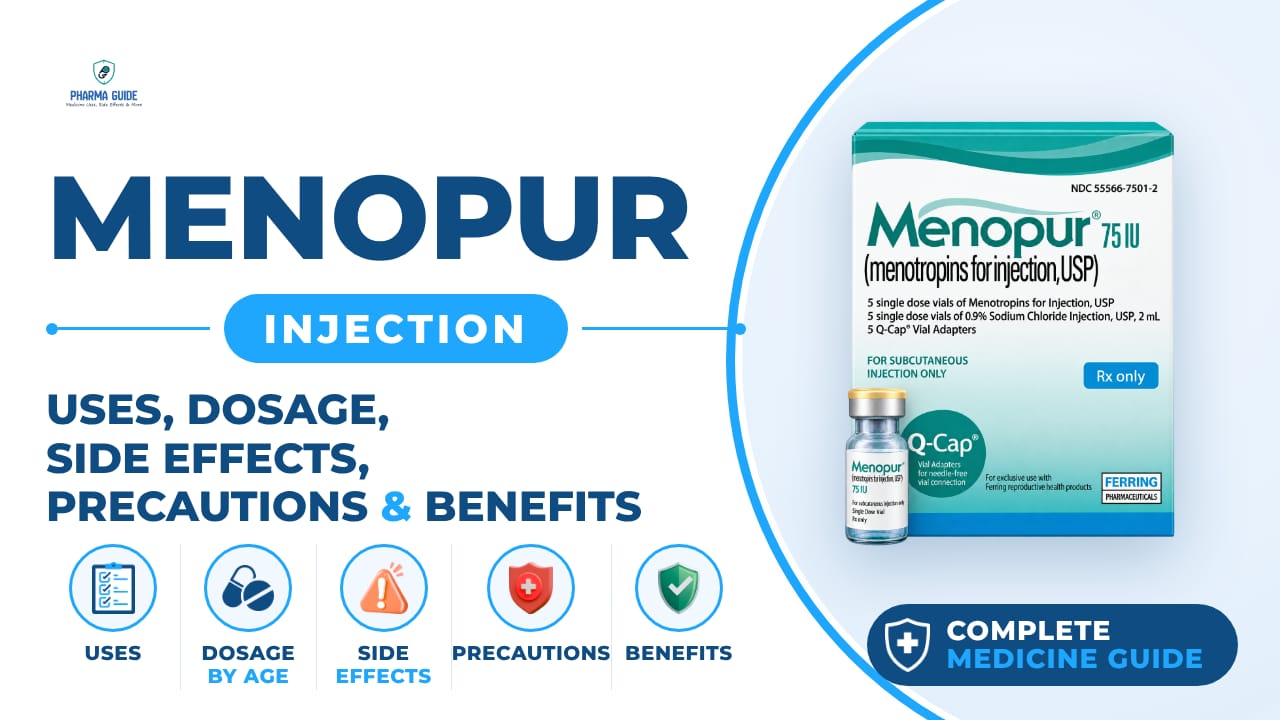
| Generic name | menotropins |
|---|---|
| Drug class | gonadotropin hormone |
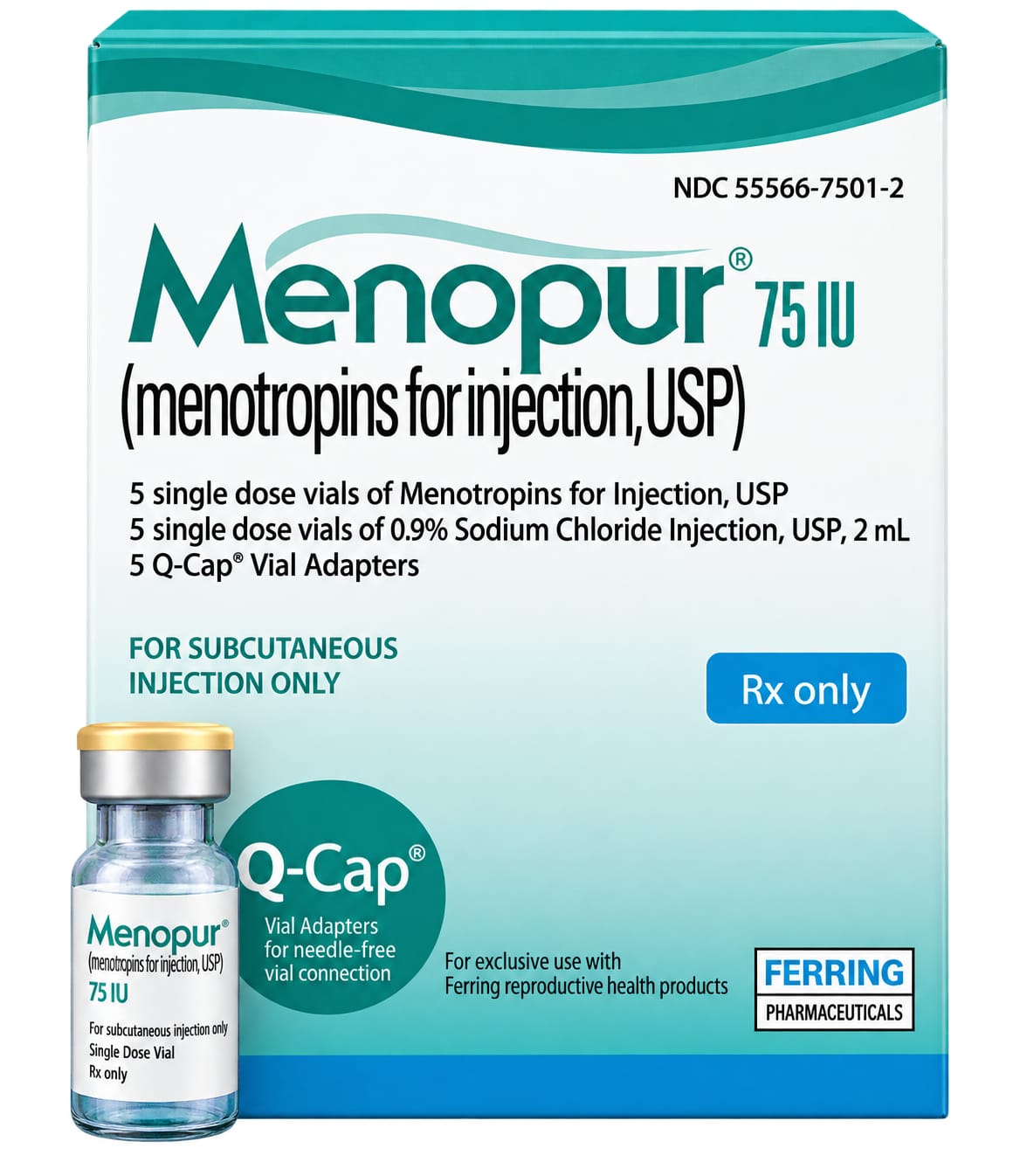
| Forms | Injection (liquid injected under the skin), Powder or pellet in a vial that is mixed with a sodium chloride solution before injection, 75 IU vial |
Quick overview
Menopur Injection (menotropins) is a prescription gonadotropin hormone medicine that provides follicle stimulating hormone (FSH) and luteinizing hormone (LH) activity. It is used as part of fertility treatments, such as IVF, to help stimulate the ovaries to produce eggs. It is given as an injection under the skin and is used according to an individualized dosing plan.
What is Menopur Injection
Menopur is a prescription injection medicine that contains hormones. It provides follicle stimulating hormone (FSH) and luteinizing hormone (LH) activity, which are hormones that stimulate healthy ovaries to make eggs. It is used as part of fertility treatments to help people get pregnant.
Menopur Injection uses
- Used as part of fertility treatments, such as in vitro fertilization (IVF), to help people get pregnant
- Used for ovarian stimulation in women using assisted reproductive technology (ART), including IVF or egg freezing
- Used to stimulate multiple eggs to grow and mature in the ovaries so they can be collected for freezing or use in IVF
- Sometimes used with other fertility medicines as part of a pregnancy plan
Benefits of Menopur Injection
- Helps stimulate the ovaries to develop and mature follicles (eggs)
- Commonly used during IVF and other assisted reproductive treatments to produce multiple mature eggs
- Can help women who do not ovulate normally by supporting ovulation induction when medically appropriate
- Provides both FSH and LH activity, which supports follicle growth and estrogen production
- Helps increase the number of eggs available for egg retrieval and fertilization procedures
- In some treatment settings, menotropins may also be used with other hormones to support sperm production in men with certain hormone deficiencies
How Menopur Injection works
Menopur acts like the natural hormones FSH and LH that your body normally makes. These hormones help your eggs grow and mature in your ovaries, getting them ready for ovulation or egg collection.
Menopur Injection dosage
Menopur is given as an injection just under the skin, usually in the lower abdomen. You or a caregiver will be taught how to properly prepare and give the injection before you use it at home. The injection site should be changed each time, switching between the left and right sides of the abdomen. Use it around the same time each day to help it work effectively. Once the powder is mixed into a solution, it should be used right away and not saved for later. Do not use a double dose or extra dose if you miss one — contact your health care provider for advice. This medicine is not approved for use in children.
| Age group | Dose |
|---|---|
| Children | Safety and effectiveness not established; not intended for routine pediatric use |
| Adult women – Ovulation induction | Commonly start 75–150 IU subcutaneously once daily; adjust according to ovarian response |
| Adult women – Assisted reproduction (IVF/ART) | Commonly 150–225 IU subcutaneously once daily, then individualized according to ultrasound and hormone response |
| Adult men – Fertility treatment | Menotropin regimens are specialist-directed, usually after adequate hCG treatment; dose varies by protocol |
| Older adults | Not routinely indicated; safety and effectiveness have not been established |
Available forms and strengths
- Injection (liquid injected under the skin)
- Powder or pellet in a vial that is mixed with a sodium chloride solution before injection
- 75 IU vial
Side effects of Menopur Injection
Common
- Cramps, fullness, and pain in the abdomen
- Abdominal enlargement or swelling
- Headache
- Pain, itching, swelling, warmth, redness, or bruising near the injection site
- Nausea
- Dizziness
- Breast pain or tenderness
Serious
- Severe allergic reaction (breathing problems, swelling of face/lips/tongue/throat, hives, dizziness, fainting)
- Ovarian hyperstimulation syndrome (OHSS) — swollen, painful ovaries that may leak fluid
- Ovary problems such as swelling, twisting (torsion), or cysts
- Blood clots that can cause stroke, heart attack, or venous thromboembolism (including pulmonary embolism or DVT)
- Lung problems
- Multiple pregnancy (twins or more)
- Ectopic pregnancy (pregnancy outside the womb)
- Miscarriage or increased risk of pregnancy loss
- Birth defects (congenital anomalies)
- Possible increased risk of ovarian tumors
Warnings and precautions
- Do not use Menopur if you have ovaries that can no longer make eggs (ovarian failure), uncontrolled thyroid, pituitary, or adrenal gland problems, certain brain tumors, unexplained abnormal vaginal bleeding, ovarian cysts not caused by PCOS, or hormone-sensitive tumors of the ovaries, breast, or uterus.
- Do not use Menopur if you are allergic to it, to menotropins, or to any of its ingredients.
- Using fertility medicines like Menopur more than once to try to get pregnant may raise the risk of developing tumors or cancer in the ovaries, so tell your provider about any past use.
- Menopur increases the chance of becoming pregnant with more than one baby, especially twins, which can raise the risk of complications during pregnancy or childbirth.
- Do not use Menopur unless a health care provider has prescribed it for you, and never share it with others even if they have a similar condition.
- Tell your provider about blood clotting disorders, severe obesity, past blood clots, a family history of blood clots, ovary problems, or asthma before starting Menopur, since these can raise your risk of serious problems.
- Do not use Menopur if you are pregnant or think you might be pregnant, since it may harm a developing baby. If you become pregnant while using it, contact your health care provider right away.
- Menopur should not be used while breastfeeding. Talk to your doctor if you are breastfeeding or planning to breastfeed, as they may suggest a different approach.
- Tell your health care provider if you have kidney problems before using Menopur.
- Tell your health care provider if you have liver problems before using Menopur.
- It isn't known whether drinking alcohol affects Menopur, so tell your doctor if you drink alcohol.
- Menopur usually should not affect your ability to drive or use machines, but be careful until you know how it affects you.
Storage
- Store at 20–25°C (68–77°F) or according to the specific product label.
- Keep vials in the original carton to protect them from light.
- Protect from excessive heat and moisture and do not freeze.
- Keep the powder and diluent sealed until ready for preparation.
- After mixing, use immediately and discard any unused solution; do not store for later use.
- Keep securely stored and out of reach of children.
When to see a doctor
- Stop using Menopur and get help right away if you have signs of a severe allergic reaction, such as breathing problems, wheezing, a racing heart, swelling of the face, lips, mouth, tongue, or throat, trouble swallowing, hives, or fainting.
- Stop using Menopur and tell your health care provider right away if you have signs of ovarian hyperstimulation syndrome, such as trouble breathing, stomach pain or swelling, nausea or vomiting, rapid weight gain, less urine than usual, vaginal bleeding, or sudden sharp pain in your lower back or pelvis.
- Stop using Menopur and tell your provider right away if you notice signs of a possible blood clot, such as chest pain, trouble breathing, sudden weakness on one side of the body, sudden severe headache, slurred speech, vision loss, or swelling and pain in an arm or leg.
- Get medical help right away if you think you or someone else has used too much Menopur.
Alternatives
- Follistim AQ (Follitropin Beta)
- Urofollitropin
- Ovaleap
- Bemfola
- Gonal-f (Follitropin Alfa)
Watch the video
FAQs
What is Menopur Injection used for?
Menopur is used as part of fertility treatments, such as IVF, to stimulate the ovaries to produce multiple mature eggs for retrieval or ovulation induction.
How is Menopur Injection given?
Menopur is given as an injection just under the skin, usually in the lower abdomen, with the injection site changed each time between the left and right sides, at around the same time each day.
What are the common side effects of Menopur Injection?
Common side effects include abdominal cramps, fullness, and pain, abdominal swelling, headache, injection site reactions, nausea, dizziness, and breast pain or tenderness.
What serious risks are linked to Menopur Injection?
Serious risks include severe allergic reaction, ovarian hyperstimulation syndrome, ovary problems like torsion or cysts, blood clots, multiple pregnancy, ectopic pregnancy, miscarriage, and birth defects.
Who should not use Menopur Injection?
Menopur should not be used by those with ovarian failure, uncontrolled thyroid, pituitary, or adrenal problems, certain brain tumors, unexplained vaginal bleeding, non-PCOS ovarian cysts, hormone-sensitive tumors, or an allergy to menotropins.
General information, not medical advice
Your prescriber and the leaflet in your pack know your situation. This page does not.
- Follow your prescriber and the leaflet
- Don't start, stop, or change a dose on your own
- Doses and warnings differ by country and product
Sources
Video
Related medicines

Follistim Injection: Uses, Dosage, Side Effects, Precautions and Alternates
Gonadotropin hormone
Follistim Injection (follitropin beta) is an FSH medicine used in fertility treatments to help ovulation, egg maturation, and sperm production.
Ovidrel Injection: Uses, Dosage, Side Effects, Precautions and Alternates
gonadotropin hormone
Ovidrel Injection triggers egg maturation and ovulation in fertility treatment. Learn about dosage, side effects, warnings, storage, and alternatives.