
Safety
General information, not medical advice
Your prescriber and the leaflet in your pack know your situation. This page does not.
- Follow your prescriber and the leaflet
- Don't start, stop, or change a dose on your own
- Doses and warnings differ by country and product
Menostar Patch: Uses, Dosage, Side Effects, Precautions and Alternates
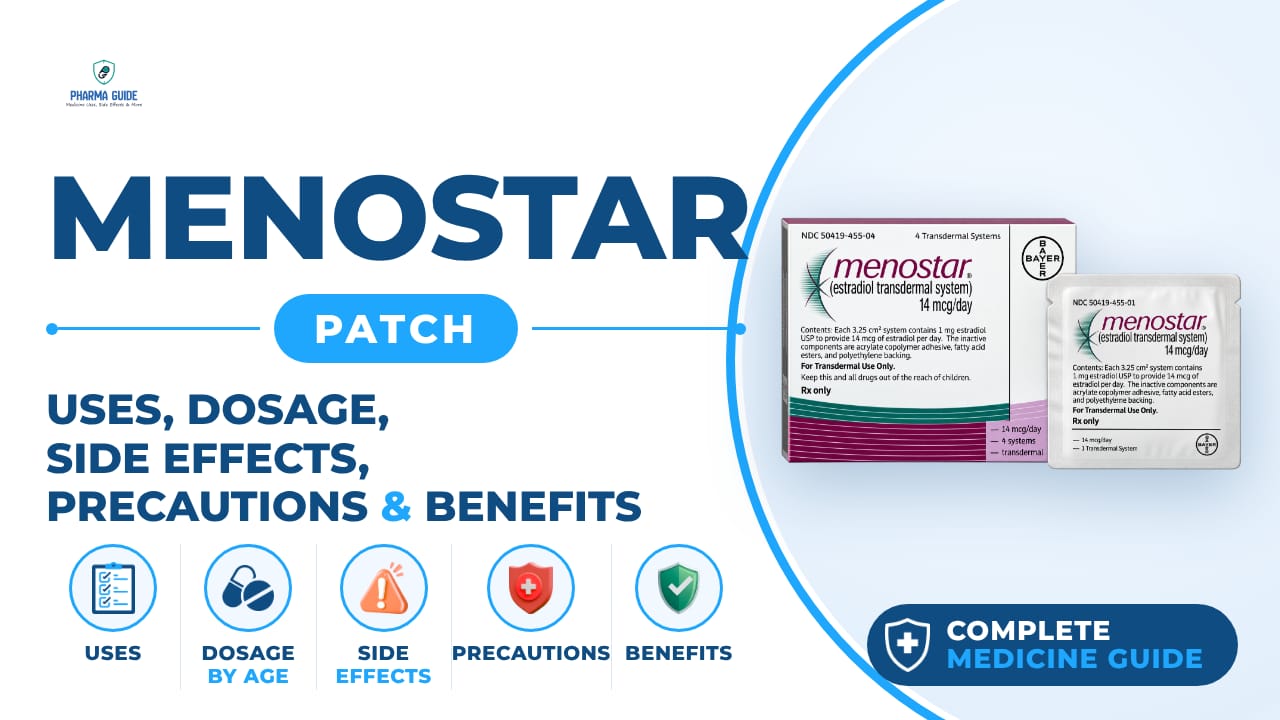
| Generic name | estradiol transdermal |
|---|---|
| Drug class | Estrogens |
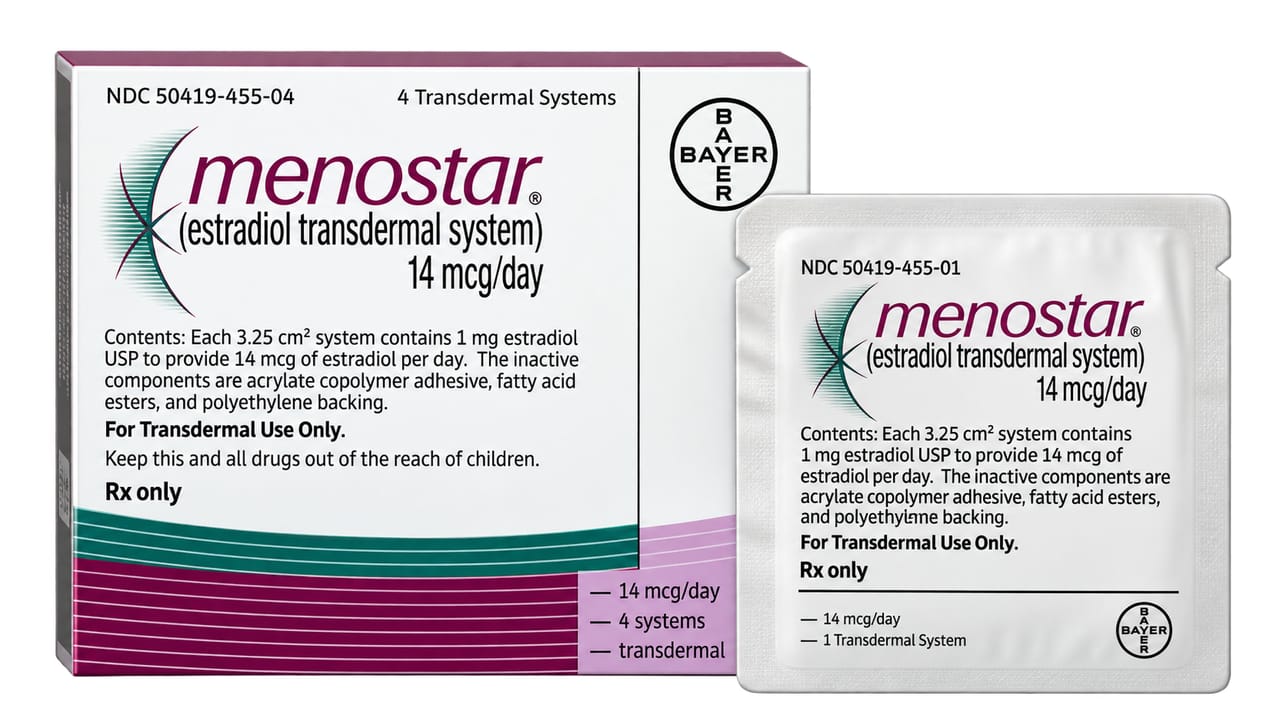
| Forms | Transdermal skin patch (estradiol transdermal system) |
Quick overview
Menostar Patch is a transdermal skin patch containing estradiol, a form of estrogen, used to help prevent postmenopausal osteoporosis. It is applied to the skin once a week and works by supplying estrogen that helps regulate processes affecting bone strength. The patch comes with important warnings regarding cancer, blood clot, stroke, and heart attack risks, and should be used exactly as prescribed.
What is Menostar Patch
Menostar is a skin patch that contains estradiol, a form of estrogen. Estradiol is a female sex hormone produced by the ovaries that regulates many processes in the body.
Menostar Patch uses
- Prevent postmenopausal osteoporosis (thinning and weakening of bones after menopause)
Benefits of Menostar Patch
- Helps reduce the chance of getting osteoporosis (thin, weak bones) after menopause
How Menostar Patch works
Estradiol is the main natural estrogen in the body. It attaches to estrogen receptors in tissues throughout the body and helps regulate hormone levels that affect bone strength, among other body processes.
Menostar Patch dosage
Use the patch exactly as your doctor prescribes and follow all directions on your prescription label; do not use more, less, or longer than recommended. Change the patch once a week (every 7 days). Apply the patch immediately after opening the pouch and removing the protective liner; do not store it unwrapped.
Place the sticky side on a clean, dry area of the lower abdomen or upper buttock; do not apply it to or near the breasts. Choose skin that is not oily, damaged, or irritated, and avoid the waistline where tight clothing might rub the patch off. Avoid areas where sitting would loosen the patch.
Press the patch firmly in place with your fingers for at least 10 seconds, especially around the edges, to ensure it sticks well. Rotate application sites and wait at least one week before reusing the same spot. Wear only one patch at a time during each 7-day period.
Swimming, bathing, or using a sauna while wearing the patch has not been studied and may reduce how well it sticks and how well it delivers medicine. If the patch falls off, reapply it to a different area; if it cannot be reapplied, put on a new patch for the rest of the 7-day period.
If you forget to change your patch, change it as soon as you remember, or wait until your next scheduled change; do not use two patches at once. Remove the old patch slowly and carefully to avoid skin irritation. If sticky residue remains after removing a patch, let the skin dry for 15 minutes, then gently rub the area with an oil-based cream or lotion to remove it. Fold each used patch in half so it sticks to itself before throwing it away.
Talk with your doctor regularly, about every 3 to 6 months, to decide whether you should keep using this medicine.
| Age group | Dose |
|---|---|
| Under 18 years | Not indicated; safety and effectiveness not established |
| 18+ years – Premenopausal women | Not indicated for routine use |
| Postmenopausal women – Osteoporosis prevention | 1 patch delivering 0.014 mg estradiol/day, applied once weekly |
| 65–74 years | Same 0.014 mg/day patch once weekly when appropriate |
| 75+ years | Clinical experience is limited; treatment should be individualized |
Available forms and strengths
- Transdermal skin patch (estradiol transdermal system), delivering 0.014 mg estradiol per day
Side effects of Menostar Patch
Common
- Headache
- Back pain
- Stuffy nose, sinus pain, sore throat
- Vaginal itching or discharge, changes in menstrual periods, breakthrough bleeding
- Bloating, stomach cramps, nausea, vomiting
- Breast pain or tenderness
- Redness or irritation where the patch was worn
- Thinning scalp hair
- Fluid retention (swelling, rapid weight gain)
- Joint pain
- Dizziness
- Vaginal pain, dryness, or discomfort
- Decreased sex drive
Serious
- Chest pain or pressure, pain spreading to the jaw or shoulder, nausea, sweating (possible heart attack)
- Severe headache, blurred vision, pounding in the neck or ears, anxiety, nosebleed (possible high blood pressure)
- Sudden numbness or weakness (especially on one side of the body), sudden severe headache, slurred speech, problems with vision or balance (possible stroke)
- Sudden vision loss, stabbing chest pain, feeling short of breath, coughing up blood, pain or warmth in one or both legs (possible blood clot)
- Swelling or tenderness in the stomach
- Jaundice (yellowing of the skin or eyes)
- Unusual vaginal bleeding or pelvic pain
- A breast lump
- Memory problems, confusion, unusual behavior
- Signs of high blood calcium: nausea, vomiting, constipation, increased thirst or urination, muscle weakness, bone pain, lack of energy
- Signs of an allergic reaction: hives, difficulty breathing, swelling of the face, lips, tongue, or throat
Warnings and precautions
- Do not use Menostar if you are pregnant. There is no clear evidence it causes birth defects, but it is not meant for use during pregnancy. Tell your doctor right away if you become pregnant while using it, and use effective birth control while on treatment.
- The hormone in this patch can pass into breast milk and may reduce how much milk you make. Do not use Menostar while breastfeeding.
- Tell your doctor if you have kidney disease before using this medicine, so they can decide if it is safe for you.
- Do not use Menostar if you have liver disease, since estrogen may not be processed properly by a damaged liver.
- Using this medicine alone can raise the risk of a condition that may lead to cancer of the uterus (womb). Your doctor may prescribe an additional hormone (a progestin) to help lower this risk, and you should report any unusual vaginal bleeding immediately.
- This medicine can raise the risk of blood clots, stroke, heart attack, or cancer of the breast, uterus, or ovaries. It should not be used to try to prevent heart disease, stroke, or memory decline (dementia).
- Do not use this medicine if you have liver disease, a bleeding disorder, unexplained vaginal bleeding, a history of hormone-related cancer (such as breast, uterine, ovarian, or thyroid cancer), or if you have ever had a heart attack, stroke, or blood clot, or if you are about to have major surgery.
- Using estrogen alone may increase the chance of getting dementia, based on a study in women 65 years of age and older. This has not been proven for all age groups.
- If you need surgery, medical tests, or will be on long-term bed rest, you may need to stop using this medicine for a while. Any doctor treating you should know you are using it.
- Your doctor should check your progress regularly, generally every 3 to 6 months, to see if you should keep using this treatment. You should also examine your breasts monthly for lumps and get regular mammograms.
Storage
- Store at 20–25°C (68–77°F) at controlled room temperature.
- Keep each patch in its original sealed protective pouch until ready to use.
- Protect from excessive heat, moisture, and direct sunlight.
- Do not refrigerate or freeze the patches.
- Keep out of reach and sight of children and pets, including used patches.
When to see a doctor
- Get emergency help right away if you have signs of an allergic reaction: hives, trouble breathing, or swelling of your face, lips, tongue, or throat.
- Remove the patch and call your doctor right away if you have signs of a heart attack such as chest pain or pressure, pain spreading to the jaw or shoulder, nausea, or sweating.
- Remove the patch and call your doctor right away for signs of a stroke, such as sudden numbness or weakness (especially on one side of the body), sudden severe headache, slurred speech, or problems with vision or balance.
- Remove the patch and call your doctor right away if you notice signs of a blood clot, such as sudden vision loss, stabbing chest pain, shortness of breath, coughing up blood, or pain or warmth in one or both legs.
- Call your doctor right away if you notice any new breast lumps, unusual vaginal bleeding, changes in vision or speech, sudden severe headaches, or severe chest or leg pain with shortness of breath, weakness, or fatigue.
- Report any unusual vaginal bleeding to your doctor right away, since it may be a warning sign of cancer of the uterus.
Alternatives
- Divigel (Estradiol Gel)
- Minivelle (Estradiol Patch)
- Alora (Estradiol Patch)
- Vivelle-Dot (Estradiol Patch)
- Climara (Estradiol Patch)
Watch the video
FAQs
What is Menostar Patch used for?
It is used to help prevent postmenopausal osteoporosis by supplying estradiol, a form of estrogen, to help regulate processes affecting bone strength.
How often do you change the Menostar Patch?
The patch is changed once a week (every 7 days), applied to a clean, dry area of the lower abdomen or upper buttock, avoiding the breasts and waistline.
What should I do if the Menostar Patch falls off?
If the patch falls off, reapply it to a different area; if it cannot be reapplied, put on a new patch for the rest of the 7-day period.
What are the serious risks of using Menostar Patch?
It can increase the risk of blood clots, stroke, heart attack, and cancer of the breast, uterus, or ovaries, and should not be used to try to prevent heart disease or dementia.
Can I use Menostar Patch while pregnant or breastfeeding?
No, it should not be used during pregnancy or while breastfeeding, as the hormone can pass into breast milk and may reduce milk production.
General information, not medical advice
Your prescriber and the leaflet in your pack know your situation. This page does not.
- Follow your prescriber and the leaflet
- Don't start, stop, or change a dose on your own
- Doses and warnings differ by country and product
Sources
Video
Related medicines
Estrofem Tablet: Uses, Dosage, Side Effects, Precautions and Alternates
Estrogens
Estrofem Tablet is an estradiol-based HRT for postmenopausal women that relieves menopause symptoms, prevents osteoporosis, and treats low estrogen after

Premarin Tablet: Uses, Dosage, Side Effects, Precautions and Alternates
Estrogens
Premarin Tablet treats menopause symptoms like hot flashes and vaginal dryness, and prevents bone loss. Learn dosage, side effects, and key safety warnings.