Meropenem Injection: Uses, Dosage, Side Effects, Precautions and Alternates
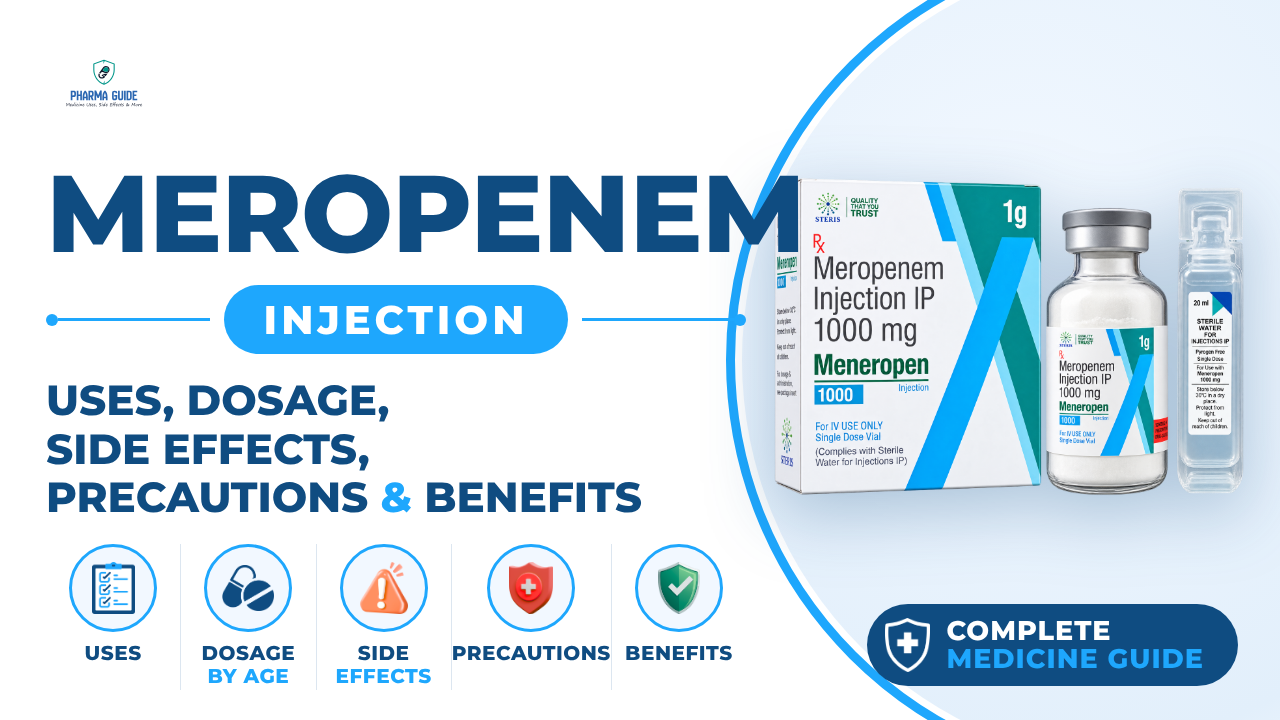
| Generic name | Meropenem |
|---|---|
| Drug class | Carbapenem antibiotic |
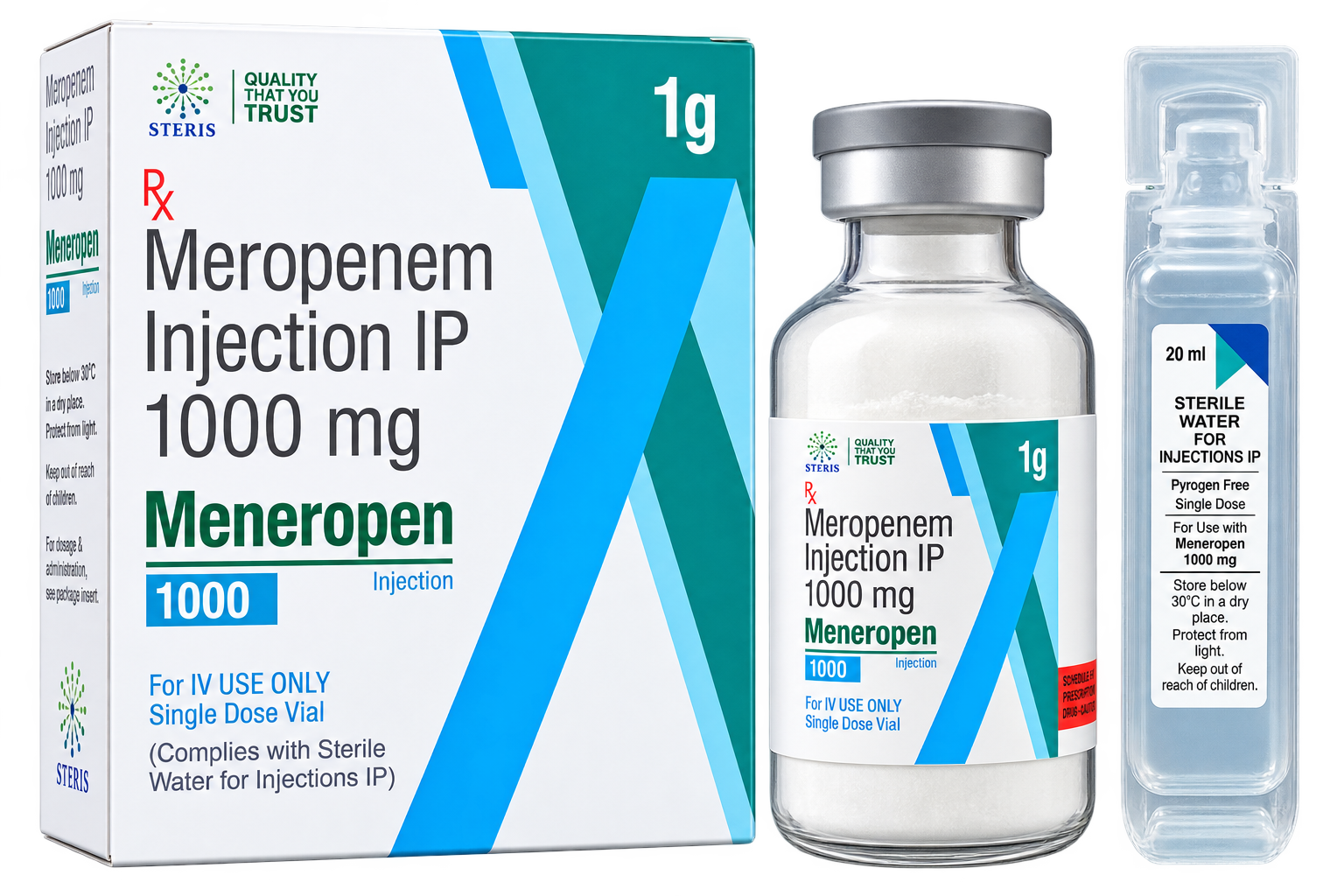
| Forms | Powder for solution for injection or infusion, 500 mg vial, 1 g vial |
Quick overview
Meropenem Injection is a carbapenem antibiotic used to treat certain serious bacterial infections. It comes as a powder that is mixed with liquid and given into a vein, usually every 8 to 24 hours. It works by killing bacteria and can help you feel better within the first few days of treatment.
What is Meropenem Injection
Meropenem injection is a carbapenem antibiotic used to treat certain infections caused by bacteria. It comes as a powder that is mixed with liquid and given into a vein.
Meropenem Injection uses
- Treatment of certain bacterial infections
- Severe pneumonia, including hospital and ventilator-associated pneumonia
- Broncho-pulmonary infections in cystic fibrosis
- Complicated urinary tract infections
- Complicated intra-abdominal infections
- Intra- and post-partum infections
- Complicated skin and soft tissue infections
- Acute bacterial meningitis
- Management of neutropenic patients with fever suspected to be due to a bacterial infection
- Bacterial septicemia (blood infections)
Benefits of Meropenem Injection
- Kills bacteria that cause infection
- Helps you feel better within the first few days of treatment
- reats serious bacterial infections
- Used for severe pneumonia
- Treats complicated urinary tract infections
- Used for intra-abdominal infections
- Helps treat severe skin and soft-tissue infections
- Used for meningitis in appropriate patients
- Effective against many Gram-positive and Gram-negative bacteria
- Can be used for certain severe or complicated infections when other antibiotics may not be suitable
How Meropenem Injection works
Meropenem kills bacteria by stopping them from building their cell walls, which leads to bacterial death and a reduction in the infection.
Meropenem Injection dosage
Meropenem injection comes as a powder to be mixed with liquid and injected into a vein. It is given every 8 to 24 hours, and your doctor will tell you how long to use it. You may receive it in a hospital, or you may give it to yourself at home after your healthcare provider shows you how. After your condition improves, your doctor may switch you to another antibiotic you can take by mouth to finish your treatment. Use meropenem until you finish the prescription, even if you feel better.
The solution should be shaken before use. Each vial is for single use only. It is usually given as an intravenous infusion over about 15 to 30 minutes, or as a bolus injection over about 5 minutes. If your symptoms do not improve or get worse, call your doctor.
| Age group | Dose |
|---|---|
| Under 3 months | 20–40 mg/kg every 8 hours, depending on infection and specialist guidance |
| 3 months–11 years | 10–20 mg/kg every 8 hours; up to 40 mg/kg every 8 hours for meningitis |
| 12–17 years | Usually 500 mg–1 g every 8 hours, depending on infection |
| 18–64 years | Usually 500 mg–1 g every 8 hours; up to 2 g every 8 hours for certain severe infections |
| 65+ years | Adult dosing, but renal function must be assessed and the dose adjusted if needed |
Available forms and strengths
- Powder for solution for injection or infusion
- 500 mg vial
- 1 g vial
Side effects of Meropenem Injection
Common
- Headache
- Nausea, vomiting, diarrhea, constipation
- Pain
- Redness, pain, or swelling at the injection site
- Tingling or pricking sensation
- Difficulty falling asleep or staying asleep
- Sores in the mouth or throat
- Rash
- Itching (pruritus)
- Abdominal pain
- Fever
- Sore veins where the medicine is injected
- Fungal infections of the mouth or vagina
Serious
- Seizures
- Severe diarrhea (watery or bloody stools) that may occur with or without fever and stomach cramps, which may occur up to 2 months or more after treatment
- Hives, itching, rash; swelling of the face, throat, tongue, lips, and eyes; difficulty swallowing or breathing; shortness of breath
- Flushing
- Unusual tiredness or weakness; pale skin; fast or irregular heartbeat
- A return of fever or other signs of infection
- Muscle pain or stiffness; dark urine
- Severe skin reactions such as Stevens-Johnson syndrome, toxic epidermal necrolysis, DRESS, erythema multiforme, and acute generalised exanthematous pustulosis
- Serious and occasionally fatal allergic (anaphylactic) reactions
- Damage to red blood cells (signs include unexpected breathlessness and/or red/brown urine)
- Delirium
Warnings and precautions
- Tell your doctor if you are pregnant or plan to become pregnant.
- As a precaution, it is preferable to avoid the use of meropenem during pregnancy.
- If you become pregnant while receiving it, call your doctor.
- Small amounts of meropenem pass into human milk. It should not be used in breast-feeding women unless the potential benefit for the mother justifies the potential risk to the baby.
- Tell your doctor if you have or have ever had kidney disease.
- The dose may need to be adjusted for people with reduced kidney function.
- Patients with pre-existing liver disorders should have liver function monitored during treatment. No dose adjustment is needed for liver problems.
- Meropenem may affect mental alertness and has been linked with headache, tingling and convulsions. Do not drive a car or operate machinery until you know how this medication affects you.
- Serious and occasionally fatal allergic reactions have happened with beta-lactam antibiotics, including meropenem.
- Tell your doctor about any previous allergic reactions to antibiotics before starting.
- If a severe allergic reaction occurs, the medicine should be stopped.
- Severe skin reactions such as Stevens-Johnson syndrome, toxic epidermal necrolysis, DRESS, erythema multiforme and acute generalised exanthematous pustulosis have been reported. If signs appear, meropenem should be stopped immediately.
- Antibiotics such as meropenem will not work for colds, flu, or other viral infections.
- Taking antibiotics when they are not needed increases your risk of getting an infection later that resists antibiotic treatment.
- Use meropenem until you finish the prescription, even if you feel better. Stopping too soon or skipping doses may leave your infection untreated and let bacteria become resistant.
- Using meropenem together with valproic acid or sodium valproate is not recommended, as it can lower valproic acid levels and increase the risk of seizures.
- Seizures have infrequently been reported during treatment with meropenem. Kidney problems and brain lesions may increase the risk.
Storage
- Your healthcare provider will tell you how to store your medication. Store your medication only as directed.
- Do not store above 30°C.
- Do not freeze the reconstituted solution.
- Dispose of unneeded medications so that pets, children, and other people cannot take them. Do not flush this medication down the toilet. Use a medicine take-back program.
- Keep all medication out of sight and reach of children.
When to see a doctor
- Stop using meropenem and call your doctor immediately or get emergency medical treatment if you have seizures, severe diarrhea, signs of a severe allergic reaction such as swelling of the face, throat or tongue, difficulty breathing, or other serious symptoms.
- If you develop a severe skin rash or blisters while being treated, tell your doctor immediately.
- If you have severe diarrhea (bloody or watery) with or without fever, abdominal pain or tenderness, you may have a bowel infection. Stop taking meropenem and contact your healthcare professional immediately.
- In case of overdose, call your local poison control center. If the person has collapsed, had a seizure, has trouble breathing, or cannot be awakened, immediately call emergency services.
Alternatives
- Imipenem + Cilastatin
- Ertapenem
- Doripenem
- Piperacillin + Tazobactam
- Cefepime
- Ceftazidime
- Ceftriaxone
FAQs
What is Meropenem Injection used for?
It is used to treat certain serious bacterial infections, including severe pneumonia, complicated urinary tract and intra-abdominal infections, skin and soft tissue infections, acute bacterial meningitis, fever in neutropenic patients, and bacterial septicemia.
How is Meropenem Injection given?
It comes as a powder mixed with liquid and given into a vein, usually every 8 to 24 hours. It is typically given as an intravenous infusion over about 15 to 30 minutes, or as a bolus injection over about 5 minutes, either in a hospital or at home after proper training.
What are the common side effects of Meropenem Injection?
Common side effects include headache, nausea, vomiting, diarrhea, constipation, pain or redness at the injection site, tingling sensations, trouble sleeping, mouth sores, rash, itching, abdominal pain, fever, and fungal infections of the mouth or vagina.
Can Meropenem Injection be used during pregnancy or breastfeeding?
It is preferable to avoid meropenem during pregnancy, and you should tell your doctor if you are or plan to become pregnant. Small amounts pass into breast milk, so it should only be used while breastfeeding if the benefit to the mother outweighs the potential risk to the baby.
What should I do if I experience severe diarrhea while taking Meropenem Injection?
If you have severe diarrhea (watery or bloody) with or without fever and stomach cramps, which can occur up to 2 months or more after treatment, you should stop taking meropenem and contact your healthcare professional immediately, as it may indicate a bowel infection.
Sources
Video