Metronidazole Tablet: Uses, Dosage, Side Effects, Precautions and Alternates
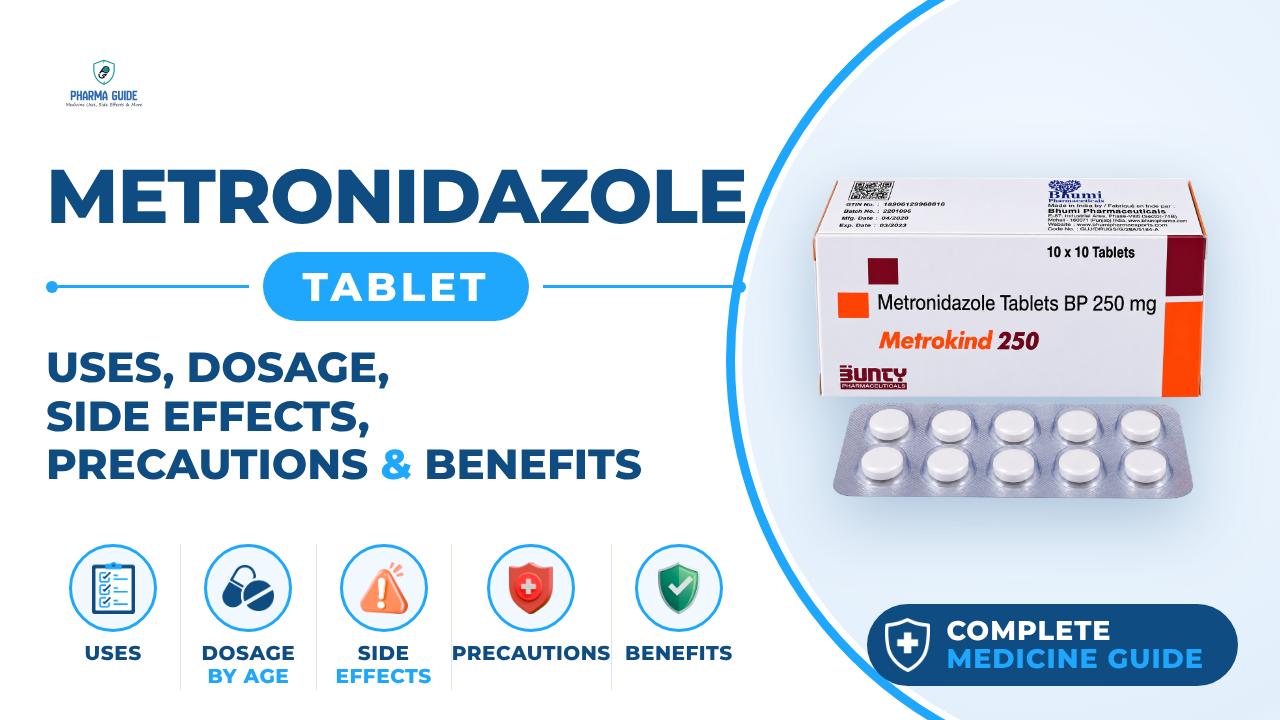
| Generic name | metronidazole |
|---|---|
| Drug class | Antibacterial - antiprotozoal (antibiotic) |
| Forms | Tablet, Extended-release tablet, Capsule, Oral suspension, Solution for infusion (intravenous) |
Quick overview
Metronidazole Tablet is an antibiotic used to treat certain infections caused by bacteria and parasites (protozoans), including infections of the vagina, stomach, liver, skin, joints, brain and spinal cord, lungs, heart, or bloodstream. It does not treat viral infections such as a cold or flu. It works by entering anaerobic bacteria and parasites and damaging their DNA, which stops them from surviving. It should be used exactly as prescribed, and the full course should be completed even if symptoms improve quickly.
What is Metronidazole Tablet
Metronidazole is an antibiotic belonging to the antibacterial-antiprotozoal drug class. It is used to treat certain infections caused by bacteria and parasites, such as those of the vagina, stomach, liver, skin, joints, brain and spinal cord, lungs, heart, or bloodstream. It does not treat viral infections such as a cold or flu.
Metronidazole Tablet uses
- Treatment of infections of the genital tract, such as trichomoniasis and bacterial vaginosis
- Treatment of infections of the brain or lung
- Treatment of amebiasis (a parasitic infection of the liver or intestine)
- Treatment of giardiasis (a parasitic infection in the intestines)
- Treatment of anaerobic bacterial infections (infections caused by bacteria that do not need oxygen to survive)
Benefits of Metronidazole Tablet
- Kills bacteria and parasites that cause infections in the body
- Can be used in both adults and children for certain parasitic infections such as amebiasis and giardiasis
How Metronidazole Tablet works
Metronidazole enters anaerobic bacteria and parasites, where it is activated and damages their DNA. This stops the germs from making the material they need to survive, which leads to their death.
Metronidazole Tablet dosage
Take metronidazole exactly as prescribed by your doctor and follow all directions on your prescription label. Oral tablets, capsules, and suspension may be taken with or without food. Swallow the extended-release tablet whole; do not crush, chew, or break it. Shake the oral suspension well before each use and use an accurate measuring device.
Keep using this medicine even if your symptoms quickly improve, and finish the full course, because the infection may still be present and could return. Do not share your medicine with another person, even if they have the same symptoms. You should not be left unattended for 2 hours after your first use. If treating a vaginal anaerobic bacterial infection, your sexual partner may also need treatment to avoid reinfection.
| Age group | Dose |
|---|---|
| Under 1 year | Doctor-prescribed only |
| 1–11 years | Pediatric dose — usually weight-based |
| 12–17 years | 250–500 mg, 2–3 times daily, depending on infection |
| 18+ years | 250–500 mg, 2–3 times daily, depending on infection |
Available forms and strengths
- Tablet
- Extended-release tablet
- Capsule
- Oral suspension
- Solution for infusion (intravenous)
Side effects of Metronidazole Tablet
Common
- Diarrhea
- Nausea
- Headache
- Pain in the upper abdomen and abdominal cramping
- Vomiting
- Weight loss
- Constipation
- Unpleasant or metallic taste in the mouth
- Dry mouth
- Furred tongue or tongue discoloration
- Loss of appetite
- Feeling sleepy or dizzy
- Dark urine
- Painful urination
- Flushing
- Trouble sleeping
- Itching, hives, rash
- Chest pain
- Ringing or buzzing in the ear
Serious
- Allergic reaction: swelling of the face, mouth, tongue or throat, difficulty breathing or swallowing, wheezing, drop in blood pressure, itching, rash, red spots and blisters
- Pseudomembranous colitis (bowel inflammation): severe or persistent diarrhea, abdominal pain, nausea, vomiting, fever
- Severe skin reactions such as Stevens-Johnson syndrome, toxic epidermal necrolysis, or DRESS: redness, blistering and peeling of the skin, fever
- Hearing loss
- Heart problems: very fast or uneven heartbeat, chest pain, dizziness, weakness, blurred vision, fainting (QT prolongation)
- Low white blood cell count (leukopenia/neutropenia): infections, fatigue, fever, flu-like symptoms
- Liver problems, including liver failure: intense fatigue, yellowing of skin and eyes, upper right stomach pain, nausea, dark urine
- Meningitis (aseptic): fever, headache, stiff neck, sensitivity to light, confusion, seizures
- Mental health problems: confusion, depression, hallucinations, thoughts of self-harm or suicide
- Nervous system problems: loss of coordination, problems speaking, convulsions, tingling
- Peripheral neuropathy: numbness, tingling, pain or weakness in the arms or legs
- Seizures (fits)
- Eyesight problems: eye pain, blurred or double vision, vision loss
- Pancreatitis: severe abdominal pain reaching to the back with nausea and vomiting
- Thrombophlebitis: swelling and redness along a vein that is tender or painful
- Thrombocytopenia (low blood platelets): unusual bruising or bleeding
- Vaginal yeast infection: vaginal dryness, burning, and discharge
Warnings and precautions
- Tell your doctor if you are pregnant, think you may be pregnant, or plan to become pregnant.
- Metronidazole crosses into the baby's circulation, and some product labels say it should not be used in the first trimester.
- Talk to your doctor about the risks and benefits before using this medicine.
- Metronidazole passes into breast milk. Breastfeeding should be avoided during treatment and for a period after your last dose.
- Talk to your doctor about the best way to feed your baby.
- Use with caution if you have severe kidney problems, as a dose adjustment may be needed.
- Tell your doctor if you have kidney disease or are on dialysis.
- People with severe liver disease break down metronidazole slowly, so it can build up. Lower doses may be needed and used with caution. Tell your doctor if you have liver problems.
- Do not drink alcohol or consume foods or medicines containing alcohol or propylene glycol while taking metronidazole and for at least 1 to 3 days after your last dose.
- Doing so may cause a reaction with symptoms such as flushing, headache, nausea, vomiting, and stomach cramps.
- Metronidazole may cause confusion, dizziness, vertigo, hallucinations, convulsions, or eyesight problems such as blurred vision. Do not drive or operate machinery if this happens.
- Do not use metronidazole if you have Cockayne syndrome, as severe and possibly fatal liver damage has occurred in people with this condition who took metronidazole.
- Metronidazole has been shown to cause cancer in mice and rats, so unnecessary use should be avoided.
- Do not use metronidazole to treat any condition that has not been checked by your doctor, and do not use it for viral infections such as a cold or flu, to help reduce the development of drug-resistant bacteria.
- Treatment should usually not continue longer than 10 days, and repeat courses will only be given when absolutely necessary.
- Do not use metronidazole if you have taken disulfiram (Antabuse) within the past 2 weeks, as combining them may cause confusion and serious mental disturbances.
- Metronidazole is contraindicated in people with active neurological disorders, a history of blood disorders, or with an underactive thyroid or adrenal glands.
Storage
- Store at room temperature (15°C to 30°C / 68°F to 77°F), away from moisture and heat. Do not freeze.
- Protect from light.
- Throw away any unused suspension 10 days after opening the container.
- Keep out of the reach and sight of children.
- Do not throw away medicines via wastewater or household waste. Ask your pharmacist how to throw away medicines you no longer use.
When to see a doctor
- Tell your doctor straight away and stop taking metronidazole if you develop stomach pain, loss of appetite, nausea, vomiting, fever, feeling unwell, tiredness, jaundice, dark urine, pale stools, or itching.
- Stop using this medicine immediately if you have any nervous system symptoms such as seizures, headaches, visual changes, weakness, numbness, or tingling.
- Get emergency medical help if you have signs of an allergic reaction such as hives, itching, fever, difficulty breathing, or swelling in your face or throat, or a severe skin reaction with blistering and peeling.
- Contact your doctor promptly if you get severe persistent diarrhea, as this may be a sign of a serious bowel condition that needs immediate treatment.
- If you take too much metronidazole, contact a healthcare professional, hospital emergency department, or your local poison control center immediately, even if there are no symptoms.
Alternatives
- Flagyl
- Flagyl ER
- Flagyl I.V.
- RTU
- Likmez
FAQs
What is Metronidazole Tablet used for?
It is used to treat infections caused by bacteria and parasites, including vaginal infections like trichomoniasis and bacterial vaginosis, infections of the brain or lung, amebiasis, giardiasis, and anaerobic bacterial infections. It does not treat viral infections such as a cold or flu.
Can I drink alcohol while taking Metronidazole Tablet?
No, you should not drink alcohol or consume foods or medicines containing alcohol or propylene glycol while taking metronidazole and for at least 1 to 3 days after your last dose, as this may cause flushing, headache, nausea, vomiting, and stomach cramps.
What are the common side effects of Metronidazole Tablet?
Common side effects include diarrhea, nausea, headache, upper abdominal pain and cramping, vomiting, constipation, an unpleasant or metallic taste in the mouth, dry mouth, loss of appetite, dizziness or sleepiness, and dark urine.
Is Metronidazole Tablet safe during pregnancy and breastfeeding?
You should tell your doctor if you are pregnant or planning pregnancy, as metronidazole crosses into the baby's circulation and some labels advise against use in the first trimester. Breastfeeding should be avoided during treatment and for a period after the last dose.
How long should I take Metronidazole Tablet?
You should take it exactly as prescribed and complete the full course even if symptoms improve quickly, as the infection may still be present. Treatment should usually not continue longer than 10 days.
Sources
Video