
Safety
General information, not medical advice
Your prescriber and the leaflet in your pack know your situation. This page does not.
- Follow your prescriber and the leaflet
- Don't start, stop, or change a dose on your own
- Doses and warnings differ by country and product
Naftifine Cream: Uses, Dosage, Side Effects, Precautions and Alternates
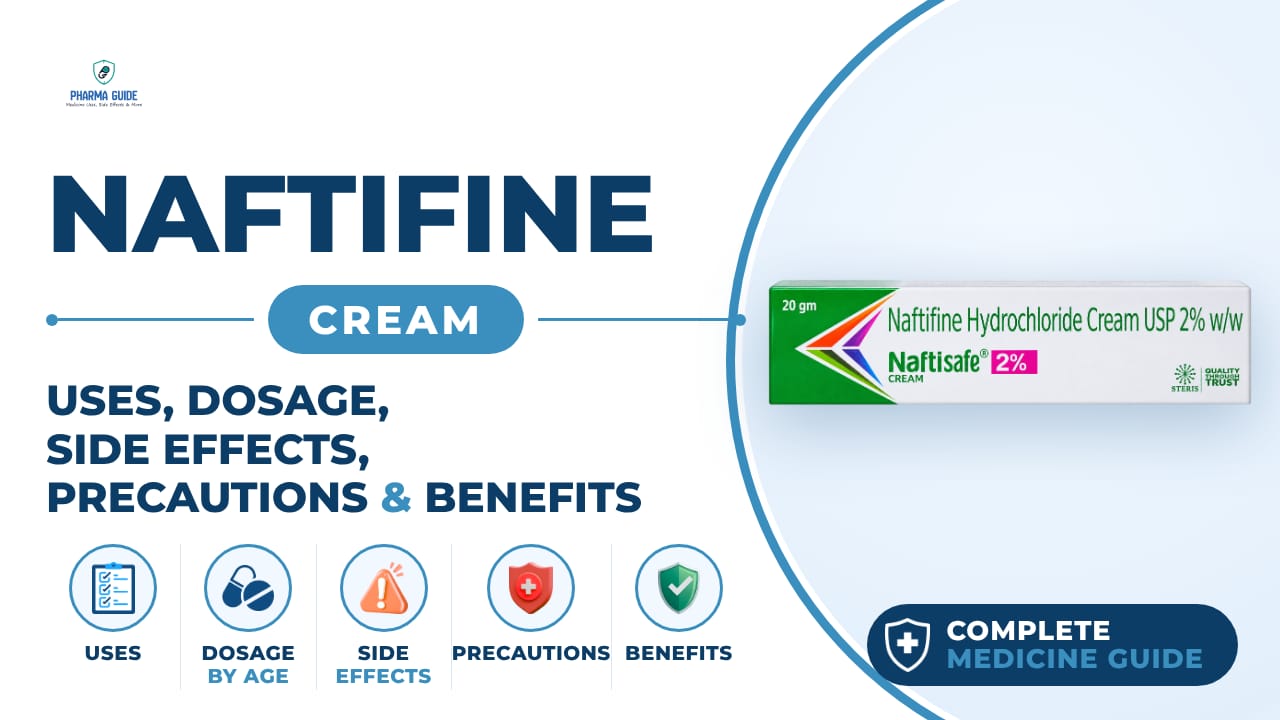
| Generic name | naftifine, naftifine HCl, naftifine hydrochloride |
|---|---|
| Drug class | Topical antifungal |
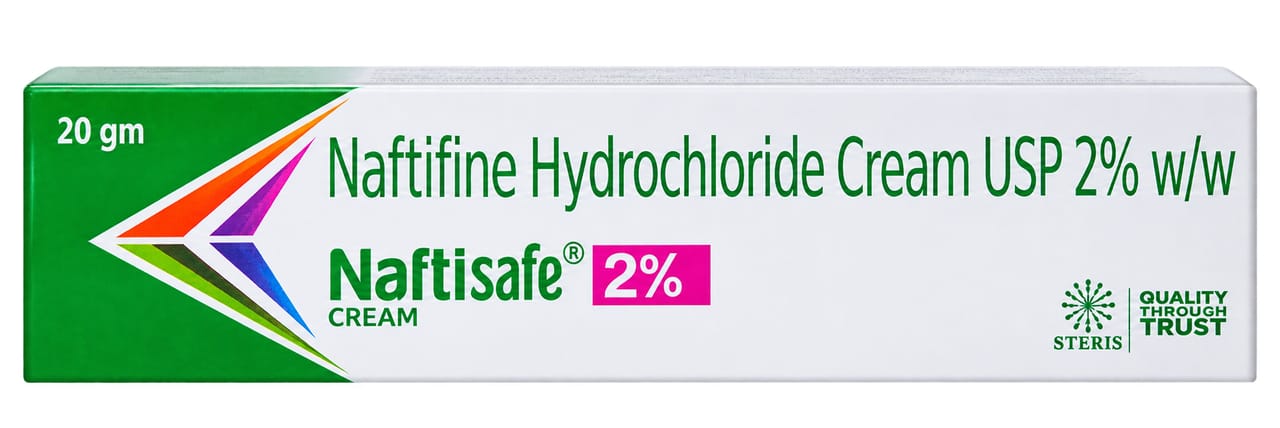
| Forms | 1% topical cream, 2% topical cream, 1% topical gel, 2% topical gel |
Quick overview
Naftifine cream (naftifine, naftifine HCl, naftifine hydrochloride) is a prescription topical antifungal medicine. It is applied to the skin to treat fungal infections such as athlete's foot, jock itch, and ringworm. It works by stopping the fungus from growing, which helps clear the infection and relieve related itching, redness, and irritation.
What is Naftifine Cream
Naftifine cream is a prescription antifungal medicine applied to the skin. It treats fungal skin infections like athlete's foot, jock itch, and ringworm.
Naftifine Cream uses
- Treats athlete's foot.
- Treats ringworm of the body.
- Treats fungal infections of the skin.
- Helps relieve itching caused by fungal infections.
- Helps reduce redness and irritation associated with fungus.
Benefits of Naftifine Cream
- Treats fungal skin infections.
- Helps treat athlete's foot.
- Helps treat ringworm.
- Helps reduce itching caused by fungus.
- Helps relieve redness and irritation.
How Naftifine Cream works
Naftifine stops fungus from growing by blocking an enzyme the fungus needs to build its cell membrane, which keeps it from surviving.
Naftifine Cream dosage
Clean the affected area and let it dry before applying the cream. Apply a thin layer of cream and gently rub it in until mostly absorbed, covering the affected area and a margin of surrounding healthy skin. Wash your hands before and after applying the cream.
Keep taking the full course even if symptoms improve quickly; stopping early can let the infection come back or become resistant to treatment. Do not use bandages or airtight dressings over the treated area unless your doctor tells you to; a light cotton-gauze dressing can be used to protect clothing. Avoid getting the cream in your eyes, nose, mouth, rectum, or vagina; rinse with water if this happens.
Call your doctor if the infection does not improve within four weeks or gets worse. Naftifine cream is approved for use in adults; the gel form has separate age rules.
Use exactly as prescribed by your doctor or pharmacist.
Available forms and strengths
- 1% topical cream
- 2% topical cream
- 1% topical gel
- 2% topical gel
Side effects of Naftifine Cream
Common
- Dryness of treated skin
- Burning or stinging on the skin
- Itching
- Redness
- Rash
- Irritation or stinging
- Skin irritation
Serious
- Hives, skin rash, or pale red bumps on the skin
- Difficulty breathing or wheezing
- Swelling of the face, lips, mouth, tongue, or throat
- Trouble swallowing or throat tightness
- Racing heart
- Fever or general ill feeling
- Swollen lymph nodes
- Nausea or vomiting
- Dizziness, feeling lightheaded, or fainting
- Stomach cramps
- Joint pain
- Severe skin irritation after applying the medicine
- Blistering or crusting of the skin
- Softening of the skin
Warnings and precautions
- Only apply naftifine cream to the skin. Don't put it in your eyes, nose, mouth, rectum, or vagina, as this can cause pain and irritation. If it gets into these areas, rinse with water.
- Stop using the cream if it causes irritation or a sensitivity reaction, and tell your doctor.
- Do not cover the treated area with tight bandages or airtight dressings unless your doctor tells you to; a light cotton-gauze dressing can be used to protect clothing.
- Naftifine cream is not approved for use in anyone younger than 18 years old; the gel should not be used in children younger than 12.
- It isn't known if naftifine cream is safe to use during pregnancy or if it could harm an unborn baby. Tell your doctor if you are pregnant or planning to become pregnant.
- It isn't known if naftifine passes into breast milk, so talk to your doctor about whether it's safe to use while breastfeeding.
- Avoid contact with eyes, mouth, and other mucous membranes.
- Keep out of reach of children.
- It isn't known if alcohol affects naftifine, but heavy drinking can weaken your immune response and make it harder for your body to fight the infection.
- Stop use if severe irritation, swelling, or rash develops.
Storage
- Store at room temperature, between 68 F and 77 F (20 C and 25 C)
- Can be exposed to temperatures between 59 F and 86 F (15 C and 30 C) for shorter periods, such as when transporting it
- Store in a cool, dry place
- Keep the container tightly closed and store it in its original container, out of direct sunlight and away from moisture
- Keep out of the bathroom, where there may be a lot of moisture
- Keep out of reach of children and pets
- Dispose of unused medicine through a drug take-back program; do not flush it or throw it where children or pets could find it; ask your pharmacist or local waste service for safe disposal advice if a take-back option isn't available
When to see a doctor
- Get emergency medical help right away if you have signs of a serious allergic reaction, such as hives, trouble breathing, or swelling of the face, lips, tongue, or throat.
- Call your doctor right away if you have severe skin irritation after applying this medicine.
- Seek medical care or call for emergency help if you have severe headache, confusion, slurred speech, arm or leg weakness, trouble walking, loss of coordination, feeling unsteady, very stiff muscles, high fever, profuse sweating, or tremors.
- Seek medical help right away for serious eye symptoms such as sudden vision loss, blurred vision, tunnel vision, eye pain or swelling, or seeing halos around lights.
- Seek medical help right away for serious heart symptoms such as fast, irregular, or pounding heartbeats, fluttering in the chest, shortness of breath, or sudden dizziness or passing out.
- Get medical help right away if you or someone else uses too much of this medicine.
Alternatives
- Ketoconazole
- Clotrimazole
- Terbinafine
Watch the video
FAQs
What is Naftifine Cream used for?
It treats fungal skin infections such as athlete's foot, jock itch, and ringworm, and helps relieve related itching, redness, and irritation.
How does Naftifine Cream work?
It stops fungus from growing by blocking an enzyme the fungus needs to build its cell membrane, which keeps it from surviving.
How should I apply Naftifine Cream?
Clean the affected area and let it dry, then apply a thin layer of cream and gently rub it in, covering the infection and surrounding healthy skin. Wash your hands before and after applying.
What are the common side effects of Naftifine Cream?
Common side effects include dryness, burning or stinging, itching, redness, rash, and irritation of the treated skin.
Can children use Naftifine Cream?
No, the cream is not approved for anyone younger than 18 years old, and the gel form should not be used in children younger than 12.
General information, not medical advice
Your prescriber and the leaflet in your pack know your situation. This page does not.
- Follow your prescriber and the leaflet
- Don't start, stop, or change a dose on your own
- Doses and warnings differ by country and product
Sources
Video
Related medicines
Loprox Cream: Uses, Dosage, Side Effects, Precautions and Alternates
Topical antifungal
Loprox Cream (ciclopirox) is a prescription antifungal used for athlete's foot, jock itch, ringworm, and tinea versicolor. Learn dosage, uses, and side effects.
Ertaczo Cream: Uses, Dosage, Side Effects, Precautions and Alternates
topical antifungal
Ertaczo Cream (sertaconazole nitrate) is a prescription antifungal used to treat athlete's foot between the toes. Learn uses, dosage, and side effects.