
Safety
General information, not medical advice
Your prescriber and the leaflet in your pack know your situation. This page does not.
- Follow your prescriber and the leaflet
- Don't start, stop, or change a dose on your own
- Doses and warnings differ by country and product
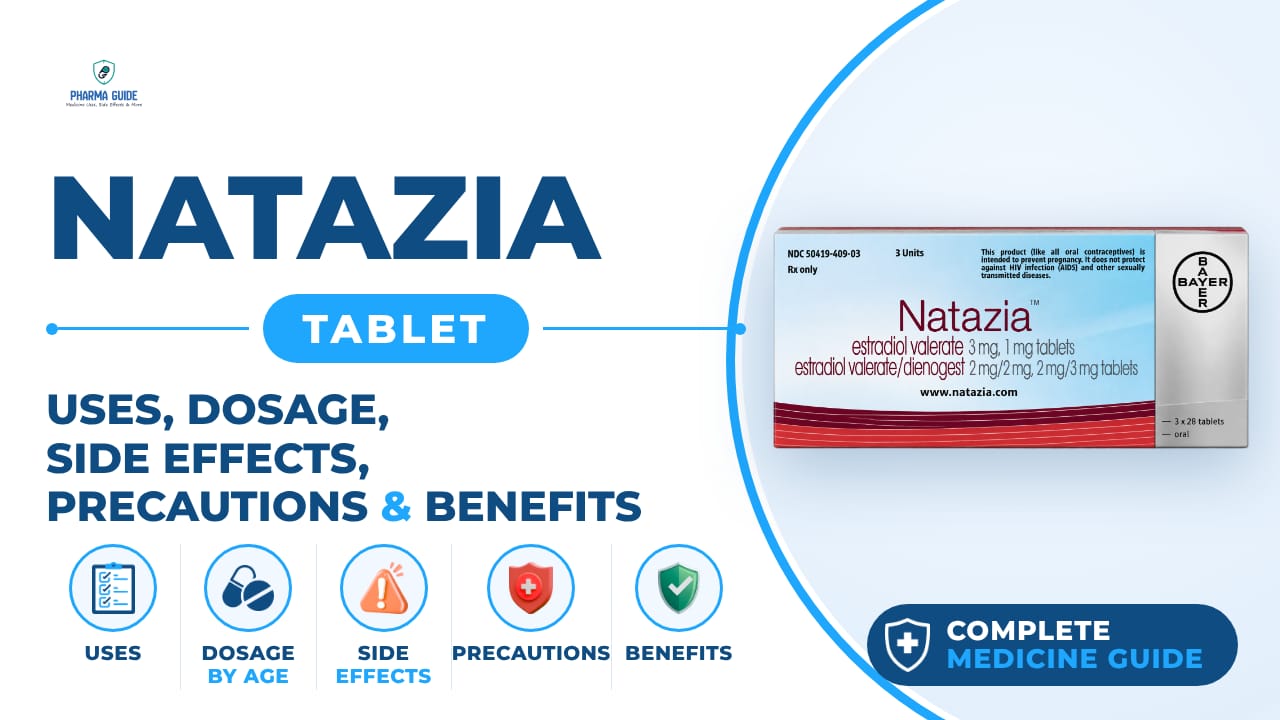
Natazia Tablet: Uses, Dosage, Side Effects, Precautions and Alternates
| Generic name | dienogest and estradiol (estradiol valerate) |
|---|---|
| Drug class | Contraceptives |
| Forms | Tablet (film-coated, in a blister pack) |
Quick overview
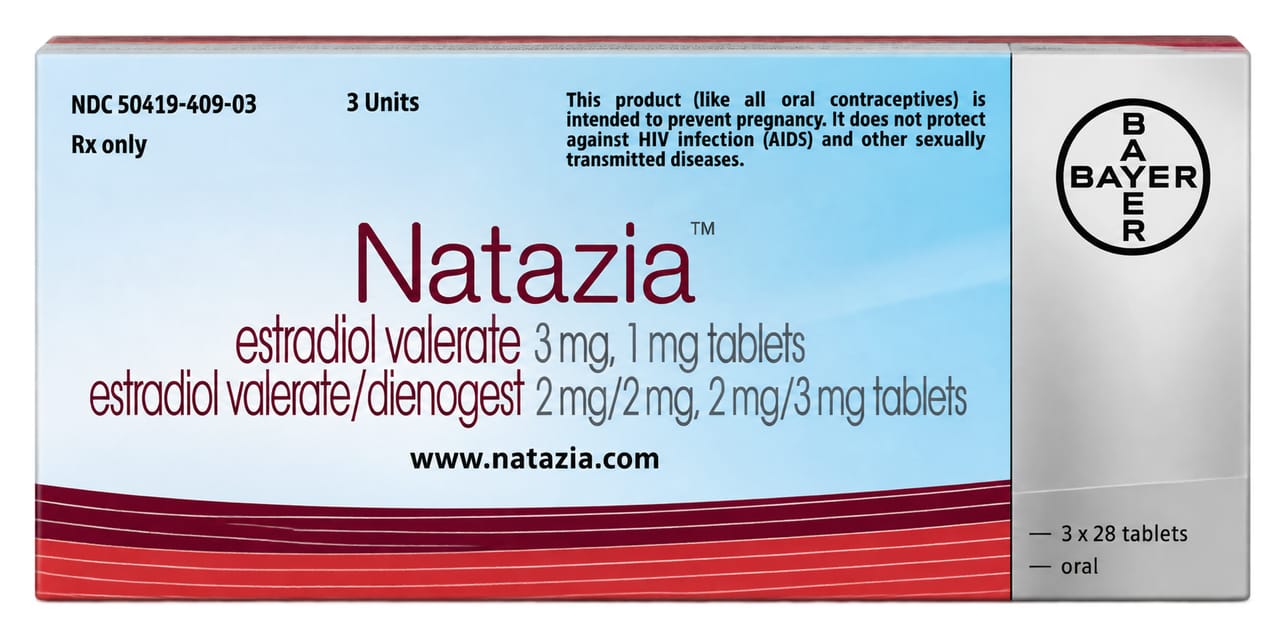
Natazia is a combination birth control pill containing two female hormones, dienogest and estradiol valerate. It is used to prevent pregnancy and to treat heavy menstrual bleeding that is not caused by a problem with the uterus. It works by stopping ovulation, thickening cervical mucus, and thinning the uterine lining. It is taken as one tablet daily in the exact order directed on the blister pack.
What is Natazia Tablet
Natazia is a combination birth control pill that contains two female hormones, dienogest and estradiol valerate. It is used to prevent pregnancy and to treat heavy menstrual bleeding that is not caused by a problem with the uterus.
Natazia Tablet uses
- Preventing pregnancy
- Treating heavy menstrual bleeding that is not caused by any medical condition of the uterus
Benefits of Natazia Tablet
- May make periods more regular
- May decrease blood loss and painful periods
- May decrease the risk of ovarian cysts
- May help treat acne
How Natazia Tablet works
Natazia stops your ovaries from releasing eggs each month. It also thickens cervical mucus so sperm have a harder time reaching the uterus, and it thins the lining of the uterus, which makes it harder for a fertilized egg to attach and reduces menstrual bleeding.
Natazia Tablet dosage
Take one pill every day at the same time, in the exact order directed on the blister pack. Do not skip pills or delay taking a pill by more than 12 hours. Use a back-up birth control method, such as condoms or a spermicide, for the first 9 days of starting the pills. Do not take two different kinds of birth control pills at the same time.
If switching from another birth control pill, start Natazia on the first day of your period; if switching from progestin-only pills, start on the day you would have taken your next pill. If switching from an implant, IUD, vaginal ring, or skin patch, start Natazia on the day the other device is removed; if switching from an injection, start on the day you would have received your next scheduled injection.
Taking the pill after your evening meal or at bedtime may help with stomach upset or nausea. Vomiting or having diarrhea within 3 to 4 hours after taking a pill may mean the dose does not work and should be treated as a missed dose.
You may have very light bleeding, spotting, or no bleeding at all during your periods, especially at first. Tell any doctor or surgeon treating you that you are using Natazia, since you may need to stop it before surgery or a long period of bed rest. You will need to see your doctor regularly while taking this medicine.
| Age group | Dose |
|---|---|
| Under 18 years | 1 tablet once daily for postpubertal adolescents; not indicated before menarche |
| 18–64 years | 1 tablet once daily, following the exact order in the 28-tablet pack |
| 65+ years | Not indicated; Natazia has not been studied in postmenopausal women |
Available forms and strengths
- Tablet (film-coated, in a blister pack)
Side effects of Natazia Tablet
Common
- Light vaginal bleeding or spotting
- Nausea, especially during the first few months of taking this medicine, or vomiting
- Breast pain or tenderness
- Weight gain
- Problems with contact lenses
- Headache
- Acne
- Mood changes
- Stomach pain
- Dizziness
- Fluid build up
- Rash
- Vaginal yeast infection
Serious
- Signs of an allergic reaction: hives, difficult breathing, swelling of the face, lips, tongue, or throat
- Signs of a stroke: sudden numbness or weakness (especially on one side of the body), sudden severe headache, slurred speech, problems with vision or balance
- Signs of a blood clot: chest pain, sudden cough, wheezing, coughing up blood, swelling or warmth in one or both legs
- Heart attack symptoms: chest pain or pressure, pain spreading to the jaw or shoulder, nausea, sweating
- Liver problems: severe stomach pain, fever, tired feeling, loss of appetite, dark urine, clay-colored stools, yellowing of the skin or eyes
- Sudden and severe pelvic pain
- A change in the pattern or severity of migraine headaches
- Swelling in the hands, ankles, or feet
- A breast lump
- Symptoms of depression: sleep problems, weakness, tired feeling, mood changes
- Ruptured ovarian cyst: stomach pain, nausea, vomiting, fever, dizziness, vaginal bleeding
Warnings and precautions
- Do not use this medicine if you are pregnant. Stop taking it and tell your doctor right away if you become pregnant, or if you miss two periods in a row.
- The hormones in this medicine can pass into breast milk and may harm a nursing baby. It can also reduce how much breast milk you make. Talk to your doctor before breastfeeding.
- This medicine has not been specifically studied in people with kidney problems, but a change in dose is not expected to be needed.
- Do not use this medicine if you have liver disease or liver tumors. Stop taking it if you develop yellowing of the skin or eyes, since the hormones may not be processed properly by a damaged liver.
- Women over 35 who smoke should not use this medicine, because smoking greatly raises the risk of serious heart and blood vessel problems, including death from heart attack, blood clots, or stroke.
- This medicine can increase the risk of blood clots, stroke, or heart attack, especially if you have certain other conditions or are overweight. The risk is highest during the first year of use and when restarting after stopping for four weeks or more.
- Do not take this medicine if you have uncontrolled high blood pressure, heart disease, a blood-clotting disorder, circulation problems, diabetic eye or kidney problems, unusual vaginal bleeding, liver disease or liver cancer, severe migraines, a history of breast or uterine cancer, a heart attack, a stroke, or a blood clot.
- Missing a pill raises your risk of pregnancy, so follow the missed-dose instructions carefully.
- Certain other medicines, such as antibiotics, hepatitis C medications, HIV/AIDS medications, seizure medications, or barbiturate sedatives, can make this pill less effective at preventing pregnancy. Tell your doctor about all other medicines you take.
- This medicine does not protect against sexually transmitted diseases, including HIV and AIDS. Use a condom for that protection.
Storage
- Store at room temperature away from moisture and heat.
- Store at room temperature away from light and moisture.
- Do not store in the bathroom.
- Keep all medications away from children and pets.
- Do not flush medications down the toilet or pour them into a drain unless instructed to do so.
- Properly discard this product when it is expired or no longer needed; consult your pharmacist or local waste disposal company.
When to see a doctor
- Get emergency help right away if you have signs of a serious allergic reaction: hives, trouble breathing, or swelling of the face, lips, tongue, or throat.
- Stop taking this medicine and call your doctor right away if you have signs of a stroke, blood clot, or heart attack, liver problems, sudden severe pelvic pain, a change in migraine pattern, swelling in the hands, ankles, or feet, a breast lump, or symptoms of depression.
- Call your doctor if you miss two periods in a row, since you might be pregnant.
- If you think you have taken too much of this medicine, seek emergency medical attention or contact your local poison control center right away. Overdose symptoms may include nausea, vomiting, and vaginal bleeding.
Alternatives
- Yasmin
- Seasonique
- Amethia
Watch the video
FAQs
What is Natazia Tablet used for?
Natazia is used to prevent pregnancy and to treat heavy menstrual bleeding that is not caused by a problem with the uterus.
How does Natazia Tablet work?
It stops the ovaries from releasing eggs, thickens cervical mucus to block sperm, and thins the uterine lining, which reduces menstrual bleeding.
How should I take Natazia Tablet?
Take one pill daily at the same time, in the exact order on the blister pack, without skipping or delaying a dose by more than 12 hours. Use back-up birth control for the first 9 days of starting.
What are the common side effects of Natazia Tablet?
Common side effects include light vaginal bleeding or spotting, nausea or vomiting, breast pain, weight gain, headache, acne, mood changes, stomach pain, dizziness, and vaginal yeast infection.
Who should not take Natazia Tablet?
It should not be used by women over 35 who smoke, or by those with uncontrolled high blood pressure, heart disease, blood-clotting disorders, liver disease or liver tumors, severe migraines, a history of breast or uterine cancer, heart attack, stroke, or blood clot.
General information, not medical advice
Your prescriber and the leaflet in your pack know your situation. This page does not.
- Follow your prescriber and the leaflet
- Don't start, stop, or change a dose on your own
- Doses and warnings differ by country and product
Sources
Video
Related medicines
Plan B Tablet: Uses, Dosage, Side Effects, Precautions and Alternates
Contraceptives
Plan B Tablet is an emergency contraceptive that helps prevent pregnancy after unprotected sex. Learn how it works, dosage, side effects, and precautions.
Opcicon One-Step Tablet: Uses, Dosage, Side Effects, Precautions and Alternates
Contraceptives
Opcicon One-Step Tablet (levonorgestrel 1.5 mg) is an emergency contraceptive for use after unprotected sex. Learn dosage, side effects, and warnings.