
Safety
General information, not medical advice
Your prescriber and the leaflet in your pack know your situation. This page does not.
- Follow your prescriber and the leaflet
- Don't start, stop, or change a dose on your own
- Doses and warnings differ by country and product
Phenelzine Tablet: Uses, Dosage, Side Effects, Precautions and Alternates
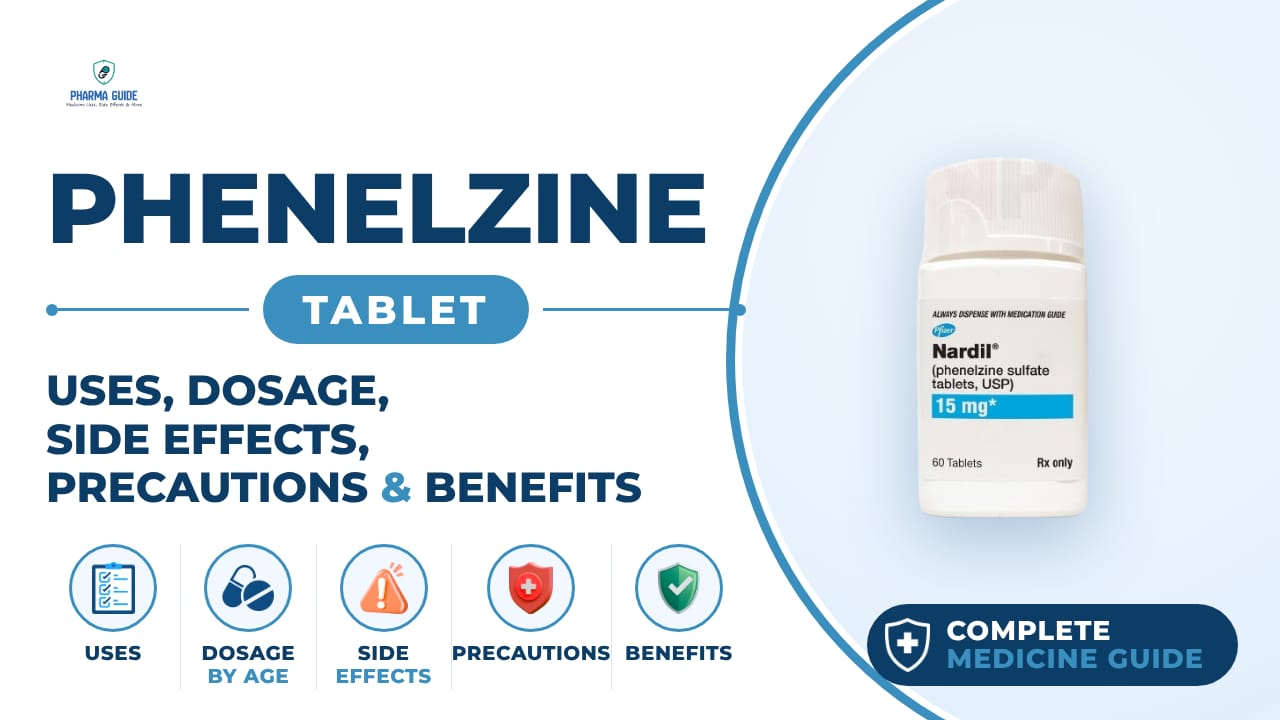
| Generic name | Phenelzine |
|---|---|
| Drug class | Monoamine oxidase inhibitor (MAOI) |
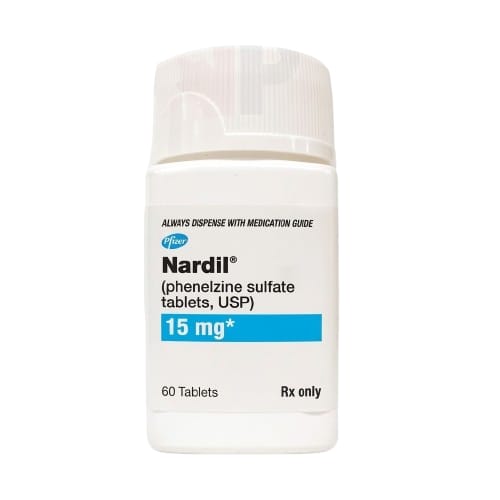
| Forms | Tablet (film-coated, 15 mg) |
Quick overview
Phenelzine Tablet is a prescription monoamine oxidase inhibitor (MAOI) used to treat depression, particularly when other antidepressants have not worked well. It is typically taken several times a day in gradually adjusted doses and may take several weeks to show full benefit. Phenelzine carries important warnings, including the need to avoid certain foods, drinks, and medications due to the risk of dangerously high blood pressure.
What is Phenelzine Tablet
Phenelzine is a prescription antidepressant medicine. It belongs to a group of drugs called monoamine oxidase inhibitors (MAOIs) and is usually used when other antidepressants have not worked well.
Phenelzine Tablet uses
- Treatment of depression, especially "atypical," "nonendogenous," or "neurotic" depression with mixed anxiety, depression, and phobic or hypochondriacal features
- Used in patients who have not responded to more commonly used antidepressants
- Sometimes used off-label for panic disorder, social anxiety disorder (social phobia), and obsessive-compulsive disorder (OCD)
Benefits of Phenelzine Tablet
- Can help improve mood, energy, sleep, and appetite in people with depression
- May reduce panic attacks in panic disorder
- May help reduce symptoms of social anxiety disorder, especially when combined with therapy
How Phenelzine Tablet works
Phenelzine blocks an enzyme called monoamine oxidase, which normally breaks down certain brain chemicals. By blocking this enzyme, phenelzine increases the amount of these natural substances in the brain that help maintain mental balance.
Phenelzine Tablet dosage
Phenelzine is usually taken by mouth three to four times a day, with or without food. Your doctor will usually start you on a low dose and gradually increase it based on how well you tolerate it. After your symptoms improve, your doctor will usually lower your dose slowly over time. It may take several weeks before you feel the full benefit, so continue taking it even if you feel well. Do not stop taking this medicine suddenly without talking to your doctor, since stopping abruptly can cause withdrawal symptoms like nightmares, agitation, nausea, vomiting, and weakness. If you miss a dose, take it as soon as you remember, but skip it if it is almost time for your next dose — do not double up.
| Age group | Dose |
|---|---|
| Under 18 years | Not recommended |
| 18–64 years | 15 mg, three times/day |
| 65+ years | 15 mg, three times/day |
Available forms and strengths
- Tablet (film-coated, 15 mg)
Side effects of Phenelzine Tablet
Common
- Dizziness
- Headache
- Drowsiness
- Trouble sleeping (insomnia) or excessive sleepiness
- Fatigue or weakness
- Tremors or muscle twitching
- Constipation
- Dry mouth
- Upset stomach
- Weight gain
- Low blood pressure when standing up (postural hypotension)
- Swelling (edema)
- Sexual problems, such as difficulty having an orgasm or impotence
- Decreased urination
Serious
- Signs of allergic reaction: hives, difficulty breathing, swelling of face, lips, tongue, or throat
- Hypertensive crisis: sudden severe headache (often at the back of the head), neck stiffness or soreness, pounding or irregular heartbeat, chest pain, nausea, vomiting, sweating, widened pupils, sensitivity to light
- Serotonin syndrome: confusion, shivering, diarrhea, fever, severe muscle tightness/rigidity, seizures, which can be life-threatening
- Seizures or convulsions
- Severe mood changes, agitation, hostility, aggression, restlessness, or hyperactivity
- New or worsening depression or suicidal thoughts
- Liver problems, including yellowing of the skin or eyes (jaundice)
- Low white blood cell counts (leukopenia)
- Lupus-like syndrome
- Swelling of the throat (edema of the glottis) causing difficulty breathing or swallowing
- Hypomania or manic symptoms
Warnings and precautions
- Phenelzine can cause dangerously high blood pressure (hypertensive crisis) which can sometimes be fatal, especially if combined with certain foods, drinks, or medications.
- You must avoid certain foods and drinks high in tyramine, such as aged cheeses, cured or smoked meats, pickled herring, fava bean pods, sauerkraut, beer, wine, and yeast extracts, both during treatment and for two weeks after stopping the medicine.
- Phenelzine must not be combined with certain other drugs, including other MAO inhibitors, serotonergic antidepressants, stimulants, decongestants, meperidine, dextromethorphan, and bupropion, because this can cause severe, sometimes fatal reactions.
- Antidepressants can increase the risk of suicidal thoughts or behavior in children, teenagers, and young adults, especially when starting treatment or after a dose change.
- Phenelzine is not approved for use in children or teenagers under 18.
- You should not have elective surgery with general or spinal anesthesia while taking phenelzine, and it should be stopped at least 10 days before planned surgery.
- Stopping this medicine suddenly can cause withdrawal symptoms such as nightmares, agitation, nausea, vomiting, and weakness, sometimes progressing to psychosis or seizures.
- The safety of phenelzine during pregnancy has not been established. Doctors must weigh the possible benefits against the risks to the mother and baby, and MAOIs are generally not recommended during pregnancy because of the risk of dangerously high blood pressure.
- It is not known whether phenelzine is safe during breastfeeding, so caution is advised and you should discuss this with your doctor.
- Phenelzine should not be used in people with severe kidney disease or impairment.
- Phenelzine should not be used in people with a history of liver disease or abnormal liver function tests.
- Do not drink alcohol while taking phenelzine, as it can worsen depression symptoms and increase side effects, including dangerous blood pressure reactions.
- This medicine can make you drowsy or affect your reactions, so be careful when driving or operating machinery until you know how it affects you.
Storage
- Keep this medication in the container it came in, tightly closed, and out of reach of children
- Store it at room temperature and away from excess heat and moisture (not in the bathroom)
- Store between 15°–30°C (59°–86°F)
- Dispose of unneeded medication using a medicine take-back program rather than flushing it down the toilet
- Talk to your pharmacist about take-back programs in your community
When to see a doctor
- Get emergency help right away if you have signs of an allergic reaction, such as hives, trouble breathing, or swelling of the face, lips, tongue, or throat.
- Call your doctor immediately if you have a sudden severe headache, neck stiffness or soreness, pounding or irregular heartbeat, chest pain, nausea, vomiting, sweating, or increased sensitivity to light — these can be signs of a dangerous blood pressure spike.
- Contact your doctor right away if you or a family member notices new or worsening depression, thoughts of suicide or self-harm, extreme worry, agitation, panic attacks, trouble sleeping, aggressive behavior, irritability, acting without thinking, or severe restlessness.
- Seek emergency care if you suspect an overdose, which may cause drowsiness, dizziness, severe headache, neck stiffness, hallucinations, shallow breathing, fast or uneven heart rate, cold sweats, fainting, or seizures.
- Seek medical attention if you notice signs of serotonin syndrome, including confusion, shivering, diarrhea, fever, severe muscle tightness, or seizures.
Alternatives
- Tranylcypromine
- Isocarboxazid
- Venlafaxine
Watch the video
FAQs
What is Phenelzine Tablet used for?
Phenelzine is a prescription MAOI antidepressant used to treat depression, especially atypical depression with mixed anxiety, depression, and phobic features, in patients who haven't responded to other antidepressants. It's sometimes used off-label for panic disorder, social anxiety disorder, and OCD.
What foods should be avoided while taking Phenelzine?
You must avoid foods and drinks high in tyramine, such as aged cheeses, cured or smoked meats, pickled herring, fava bean pods, sauerkraut, beer, wine, and yeast extracts, both during treatment and for two weeks after stopping the medicine, to prevent dangerously high blood pressure.
What is the typical dosage of Phenelzine Tablet?
Phenelzine is usually taken by mouth three to four times a day, with or without food. The typical dose for adults 18-64 and seniors 65+ is 15 mg three times a day, starting low and gradually increasing based on tolerance. It is not recommended for anyone under 18.
What are the serious side effects of Phenelzine?
Serious side effects include hypertensive crisis (sudden severe headache, neck stiffness, pounding heartbeat, chest pain), serotonin syndrome (confusion, fever, severe muscle rigidity, seizures), allergic reactions, liver problems, low white blood cell counts, and new or worsening depression or suicidal thoughts.
Can I stop taking Phenelzine suddenly?
No, you should not stop taking phenelzine suddenly without talking to your doctor, as abrupt discontinuation can cause withdrawal symptoms like nightmares, agitation, nausea, vomiting, and weakness, sometimes progressing to psychosis or seizures.
General information, not medical advice
Your prescriber and the leaflet in your pack know your situation. This page does not.
- Follow your prescriber and the leaflet
- Don't start, stop, or change a dose on your own
- Doses and warnings differ by country and product
Sources
Video
Related medicines
Marplan Tablet: Uses, Dosage, Side Effects, Precautions and Alternates
Monoamine oxidase inhibitor (MAOI)
Marplan Tablet (isocarboxazid) is an MAOI for depression when other antidepressants fail. Learn uses, dosage, side effects, food interactions, and precautions.
Nardil Tablet: Uses, Dosage, Side Effects, Precautions and Alternates
Monoamine oxidase inhibitor (MAOI)
Nardil Tablet (phenelzine) is an MAOI antidepressant used for depression when other treatments fail. Learn uses, dosage, side effects, and precautions.